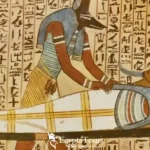
Aswan Nubian City
Nubia is one of the important tourist places in Aswan, as it...



The Nubian Museum in Aswan is a monumental cultural institution dedicated to preserving and showcasing the history, art, and traditions of the Nubian people from prehistoric times to the modern era. Opened in 1997, the museum was the culmination of a massive UNESCO-led international campaign launched in 1960 to salvage ancient monuments threatened by the rising waters of Lake Nasser during the construction of the Aswan High Dam. Spanning 50,000 square meters, the museum beautifully blends traditional Nubian architectural elements with modern design, providing an immersive chronological journey through the Kingdom of Kush, the Pharaonic era, and the Islamic and Coptic periods.
Key Takeaways
The Nubian Museum in Aswan in Upper Egypt overlooking the Nile River is a piece of art that displays a variety of artifacts linking the history of the ancient Egyptians to Nubian culture and civilization.
The museum was opened in 1997, after it was built at the initiative of the United Nations Educational, Scientific and Cultural Organization (UNESCO) following a campaign carried out between 1960 and 1980 to save ancient Egyptian treasures and move them away from places flooded by the Nile River, in preparation for the construction of the High Dam.
During the following lines, we will review All information about the wonderful Nubia Museum, which tells the authentic history of Egypt.

The-Nubian-Museum-In-Aswan-EgyptaTours
The Nubian Museum is a museum located in Aswan, Egypt, dedicated to the history and culture of the Nubian people.
It was established in 1997 to showcase the rich history and cultural heritage of the Nubian people, who lived in the region along the Nile River in southern Egypt and northern Sudan.
The museum includes exhibits on the history, religion, language, customs and traditions of the Nubian people, as well as their art, music and daily life.
It also contains a collection of artifacts and manuscripts from Nubian cemeteries and archaeological sites.
The Nubian Museum is an important destination for history buffs interested in learning more about the culture of the Nubian people.
The museum includes many exhibits showcasing the rich history and cultural heritage of the Nubian people, including their daily lives, religion, dialect, customs, and traditions.
Study artifacts and manuscripts from Nubian cemeteries and archaeological sites, including pottery, jewelry, and textiles.
You can learn about the past and present of the Nubian people, including the Nubian Kingdom and its influence on ancient Egyptian civilization.
The Nubian Museum in Aswan is designed to reflect traditional Nubian architecture, characterized by sandstone walls, domed roofs, and intricate carvings.
The museum includes a film that provides an overview of Nubian culture and history and offers you a glimpse into the lives of the Nubian people.
The Nubian Museum in Aswan was established following a request from the Egyptian government in 1960. Its development involved the expertise of UNESCO specialists as well as academics from universities across the country.
This initiative came in response to the International Campaign to Save the Monuments of Nubia which was launched by UNESCO. The museum provided a dedicated space where people could view and enjoy artifacts and monuments from Nubian history.
UNESCO played a key role in coordinating the funding and government matters, which contributed to the museum’s construction, management and final outcome. A trust fund created in 1960 supported the project with contributions from donor countries as well as the governments of Egypt and Sudan.
Even today, UNESCO and the executive board responsible for the museum continue to work toward the main goal: creating a space to celebrate the cultural heritage of ancient Nubia while preserving artifacts and following proper conservation practices at archaeological sites in the region.
The total area of the museum is 50 thousand square meters, of which seven thousand square meters are allocated to the building while the rest is allocated to gardens.
The museum documents the culture, heritage and history of Nubia, which is one of the ancient kingdoms and civilizations that lived on the banks of the Nile between southern Egypt and northern Sudan, and its people speak the Nubian language. They constitute a large group of Aswan residents.
The Nubia Museum in Aswan is distinguished by Egyptian antiquities dating back to the geological, Pharaonic, Roman, Coptic and Islamic eras, and it is considered the only museum in Egypt that contains artifacts and an ethnographic exhibition of cultural heritage.

The-Nubian-Museum-consists-of-three-floors
The basement contains the main exhibition hall, restoration laboratories, workshops, antiquities stores, a reception center, and an outdoor theatre.
Ground floor: It has the main entrance, an exhibition hall, a lecture hall, a hall for VIPs, security and administration rooms, and the room of the director general of museums.
The first floor includes the cafeteria, library, museum, photography and microfilm rooms, museum administration and services.

The-Nubian-Museum-in-Aswan-City
As soon as visitors pass through the external gate of the museum, the garden welcomes them with an obelisk engraved with hieroglyphic texts.
And surrounded by statues of four sandstone monkeys dating back to the Nineteenth Pharaonic Dynasty, which ruled ancient Egypt about 3,200 years ago.
After passing the main door of the museum, visitors pass a staircase that takes them to the wall of the main exhibition hall, in the middle of which is a standing statue of King Ramses II, eight meters tall, which is the first thing that attracts the attention of visitors from afar as soon as they enter the museum.
The museum also contains many Pharaonic artifacts, including a sandstone statue in the form of a baboon of the god of wisdom Djehuti (Thoth), dating back to the Nineteenth Dynasty.
A quartzite statue of the priest Hor-emakhet dates back to the Twenty-fifth Dynasty.
A limestone statue of the military leader Senbibu dating back to the Twelfth Dynasty, and a small statue of the goddess Isis breastfeeding her child, the idol Horus, dating back to the Late Period, and others.
The design of the museum took into account the codes of all museums, and it has ascending and descending corridors to help disabled visitors move around inside it, and there is no decoration on the ceilings or walls so that the focus is on the displayed pieces.”
The Nubia Museum, which won the Aga Khan Award for Architecture in 2001, was designed by Egyptian architect Mahmoud Al-Hakim, and many visual artists and archaeologists participated in its implementation.
The museum has no outlets for external lights or sunlight so as not to harm the artifacts. The museum also contains a library on the ground floor, antiquities stores, and restoration laboratories in the basement.

The-Nubian-Museum-In-Aswan-artifacts
The Nubia Museum in Aswan has several sections, each of which displays a stage in the history of Nubia from prehistoric times to the Nubian Kingdom of Kush until the Christian and Islamic eras of Nubia.
Many of the artifacts displayed in the museum were rescued from Lake Nasser in Aswan during the UNESCO project to rescue Egyptian antiquities, which lasted 20 years, including Nubian antiquities such as statues, mummies, amulets, utensils, jewelry, pottery, and others.
On the opposite side of the main exhibition hall, there is an entire pavilion for an ethnographic exhibition of Nubian cultural heritage, which includes life-sized models of Nubian customs and traditions.
Such as a Nubian farmer using a shadoof, two Nubian women sitting on a sofa outside the house, Nubian children studying at the kottab, a Nubian wedding party, and more.
This part of the Nubian heritage is the focus of interest of the museum’s visitors from Aswan, while foreign tourists are very attracted to the Pharaonic artifacts.
The statue of King Ramesses II, which is in the middle of the main hall, is one of the most important pieces on display, as Ramesses II combined the Pharaonic and Nubian civilizations and married Queen Nefertari, who was of Nubian origin.
The Nubia Museum attracts dozens of Egyptian and foreign tourists every day, some of whom even visited the museum more than once.
The land of Ancient Nubia stretched across many of today’s countries along the Nile River. The Nubian Museum shows a shared history through archaeological artifacts that reflect a common heritage across the continent.
By establishing the museum, people are given the opportunity to explore and understand a communal history that goes beyond modern national borders.
The museum actively engages with the local community in Aswan. Residents are invited to visit during special hours to learn more about Nubian history and research practices. Educational programs bring local students to the museum to introduce them to research methods and the history of ancient Nubia.
Beyond education, the museum also focuses on community involvement through various events. The museum hosts programs and events that strengthen the connection between the museum and the people of Aswan, creating a meaningful and lasting relationship.
The-Nubian-Museum-in-Aswan-City
The Nubian Museum acts like a magical portal, taking visitors back through time, from the prehistoric kingdom of Kush to the Pharaonic era, the Greco-Roman period, the Coptic and Islamic ages and up to the rescue of ancient monuments from beneath Lake Nasser.
Inside the museum, visitors can explore a wide range of monuments from different historical periods. One of the most famous exhibits is a 20,000-year-old human skeleton found in Aswan in 1982, along with a Paleolithic axe. The museum also features a reconstruction of a traditional Nubian house, giving insight into the daily life of Egyptians in Nubia.
The museum includes a lecture hall, an educational department, a library, a theatre and an open amphitheater where Nubian folklore is displayed. The collection holds around 103 items from the Islamic era, 503 from Ancient Egypt, 52 from the Coptic period and roughly 500 objects of unknown origin, all illustrating the rich heritage of Aswan and Nubia.
Each artifact has a bilingual description in Arabic and English. Visitors can admire exquisite jewelry, crowns and precious stones, as well as tools, furniture, musical instruments, clothing, pottery and household items, all used by Nubians through history. Many pieces show aspects of daily life, including clothing, jobs and craftsmanship.
The museum garden contains over 80 statues of famous Nubian figures and gods from Ancient Nubia. It also has a cave with ancient drawings and artificial lakes representing the Nile River. The museum regularly hosts cultural performances by Nubian artists, giving visitors a glimpse into the region’s lively traditions and customs.
Its impressive collection includes ancient Egyptian artifacts and monuments, from quartz cosmetic palettes to large statues, ivory and ebony objects and important documents and research focused on Nubian culture, archaeology and history.
Shabitko was the 3rd pharaoh of Egypt’s 25th Dynasty, ruling from 707 to 690 BC during Nubian dominance. Though brief, this dynasty challenged centuries of Egyptian control. Shabitko is remembered as one of Nubia’s strongest and most important rulers.
This statue stands 12 meters tall and represents the grandeur of Nubian culture and it is considered one of the museum’s highlights.
These include Pharaoh Taharqo of the 25th Dynasty with his sister Amenirdis II and Anjnesneferibra I, providing insight into Nubia’s royal history.
Horses were important for transport, companionship and religious ceremonies in Nubia. The museum shows objects made to equip and decorate horses, reflecting their cultural role.
Tanutamani who was the son of King Shabako and nephew of Pharaoh Taharqo, led campaigns in the Nile Valley and became pharaoh and ruled Upper Egypt from 664 to 656 BC. Despite early victories, he was later defeated by the Assyrians.
Many relics from the Palace Fortress of Ibrim, which was built between 920 and 800 BC, were saved during the construction of the Aswan Dam. The fortress shows how Nubians defended their lands and now rises above Lake Nasser as a reminder of Nubia’s fortified past.
During Egypt’s imperial rule, Amun, the Theban god with a ram’s head, became widely worshipped in Nubia. Rams were considered sacred and mummified in his honor. The museum preserves these mummies, offering a glimpse into the spiritual life of ancient Nubians.
The Nubian Museum receives visits seven days a week, including holidays and official holidays. The daily visiting hours for the museum are from 9:00 am to 5:00 pm, and the box office closes at 4:45 pm.
In addition, the Nubian Museum operates on Thursday and Friday of each week in two shifts, morning and evening, the first from 9:00 am to 5:00 pm, and the second from 6:00 pm to 9:00 pm, during which the box office is closed. 8:45 pm.
As for the prices of tickets for the exhibition, they are as follows:-
Ticket prices for visiting the Nubian museum in Aswan for foreigners
In the end, the Nubian Museum in Aswan is an important tourist destination in the winter, and it is one of the most important shrines that visitors from different countries of the world come to. It is an embodiment of simple Nubian life from ancient times until contemporary history, with a description of the distinctive customs and traditions of the Nubians.
| Tour Name | Duration |
| Egypt 12 Days : The Ultimate Itinerary | 12 Days – 11 Nights |
| 10 Days Cairo & Nile Cruise and Hurghada Trip | 10 Days – 9 Nights |
| 4 Days Cairo and Aswan Tour Package | 4 Days – 3 Nights |
| 5 Days Cairo, Aswan and Abu Simbel Tour Package | 5 Days – 4 Nights |
| Aswan Sightseeing – One Day Tour | 1 Day – 10 Hours |
You’ll find a rich collection of artifacts showcasing Nubian culture and history, including pottery, jewelry, and statues. The museum also features informative displays about the resettlement of Nubian villages during the construction of the Aswan High Dam.
As of 2023, the entry fee for adults is about 60 EGP. Discounts are available for students and children. It’s always good to check for the latest prices before visiting.
The museum is generally open from 9 AM to 5 PM every day. Keep in mind that hours might change on holidays, so it’s wise to verify before you go.
Yes, guided tours are available for an extra fee. A guide can provide deeper insights into the exhibits and the history of Nubia, enhancing your visit.
Photography is allowed in most areas, but you should avoid using a flash. Some special exhibits might have restrictions, so look for signs or ask a staff member.
Most visitors spend about two to three hours exploring the exhibits. If you’re really into history or archaeology, you might want to allow more time.
The museum is wheelchair accessible, with ramps and elevators in place to facilitate movement. If you have specific needs, contacting the museum in advance could ensure a smoother visit.
There’s a dedicated area for children where they can engage in interactive activitiesrelated to Nubian culture and history, making it educational and fun.
Yes, there’s a gift shop on-site offering a variety of souvenirs like books, crafts, and replicas of artifacts. These make great keepsakes or gifts.
The museum has a small café where you can grab a snack or a drink. Alternatively, several restaurants are located within a short walking distance from the museum.
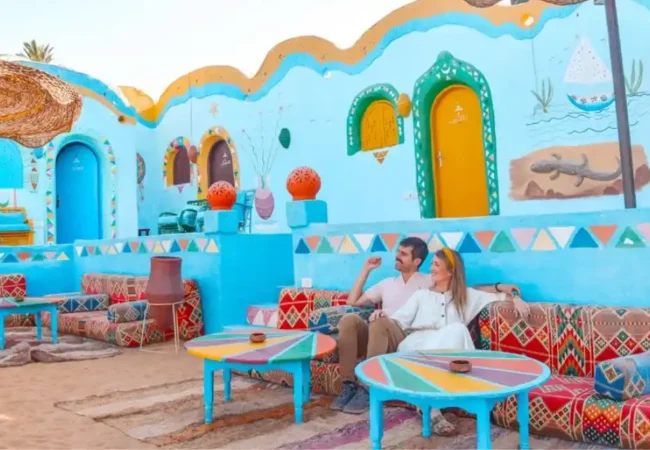

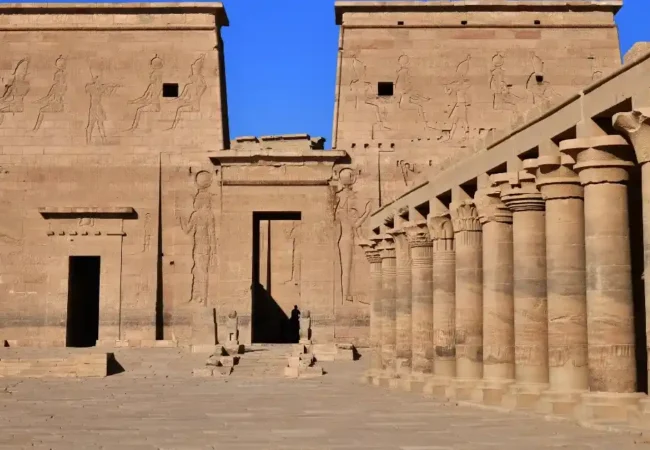

Explore our top-rated Egypt travel packages and embark on an unforgettable journey. From the Pyramids of Cairo to the magical temples of Luxor, Aswan, and Abu Simbel, discover expertly curated tours designed for your perfect Egyptian adventure