50% Off Your Next Trip. Hurry Up For your new Tour! Book Your Tour

thumbnail thumbnail thumbnail thumbnail thumbnail thumbnail thumbnail

Acamar Nile Cruise: Best 2 itineraries

$690/

Per Person
  • 05 Days / 04 Nights
  • Max People : 40
  • Luxor Egypt , Aswan City

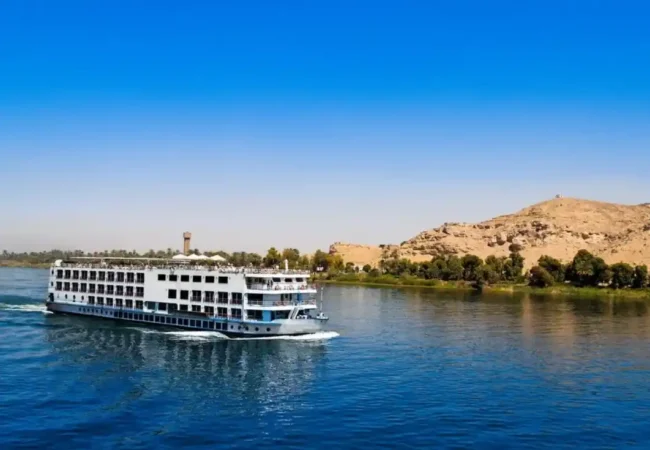
The luxurious MS Acamar Nile Cruise will be a blessed and enjoyable journey through the golden waters of Upper Egypt.

The wonderful Egypta Tours is the best travel agency in Egypt that will offer all our clients the best luxury services which include a specialized Egyptology tour guide, an enchanting Nile cruise, and a private air-conditioned vehicle during this exhilarating Nile tour.

All our guests will sail down the Nile between Luxor and Aswan on board the wonderful Acamar and entertain one of our customized adventures to the best historical places in Upper Egypt.

Step into the beauty and imagination of the Temple of Hatshepsut, Luxor Temple and Karnak Temple, and descend into the magnificent royal tombs of the Valley of the Kings as well as the Temple of Edfu, the Temple of Philae, the Temples of Abu Simbel and more with the best.

The highest level of facilities and services on board the MS Acamar Nile Cruise. Now you can book this epic Nile Cruise and discover the treasure trove of the Nile River.

How do you feel inside Luxor and Aswan trips on the Acamar Nile Cruise?

At first, I felt a little worried, especially about the idea of ​​water moving under the ship. Will I feel it, or will the loads in an opposite direction affect the slope of the sides?

So much so that I walked slowly the first day so as not to shake the ship!!

Just a “childish” feeling that afflicts you for a while when you stay in the water, as it is the moment of comparison when you get out for the first time from the stability of the earth for different types of trips than your feet and yourself are accustomed to.

There is nothing more wonderful than spending a magical trip on the back of a floating hotel in the immortal Nile from Luxor to Aswan, where the warm sun of the south and watching the ruins of the first civilization in history make you feel proud that you grew up on this land. The mid-year vacation is the ideal time to spend this trip.

What are Acamar Nile Cruise services?

Acamar-Nile-cruise-Cabin-King-Size

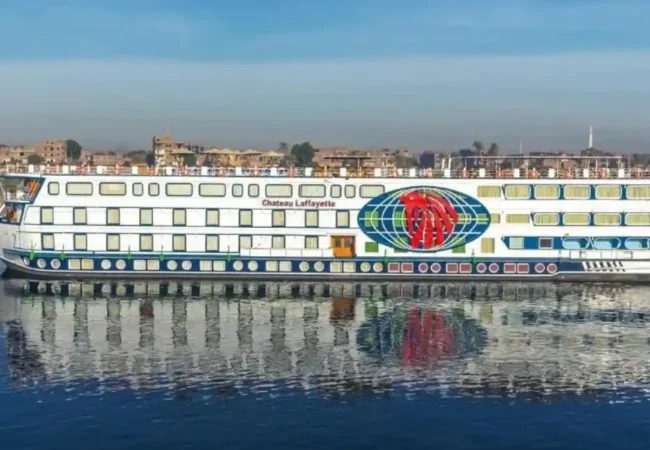
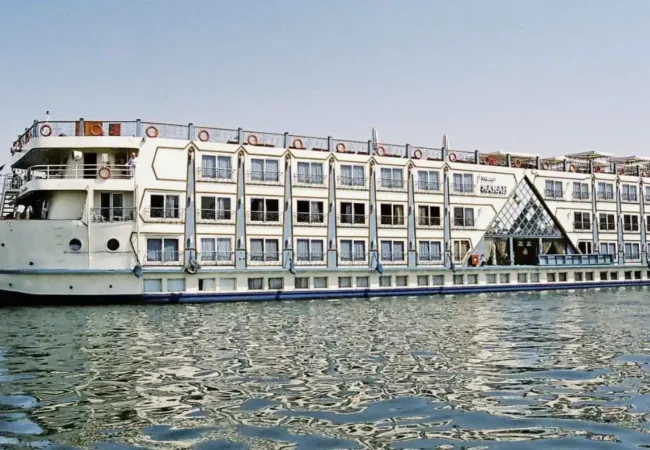
Acamar Nile Cruise is a five-star luxury Nile cruise that is handicapped accessible.  There are 54 cabins in total on the boat including 4 handicapped cabins, 2 presidential suites and 2 royal suites

There is also a lift that can access every deck of the boat.

What are Acamar Nile Cruise Room facilities?

The standard cabin has 226 square feet of space.  The ship features non-smoking dining and lounge areas, a swimming pool, sauna, exercise room with exercise equipment and even a jogging track.  The cottages are fully air conditioned and have TVs, DVD players, minibars and fridges.

Small private lockers.  Bathrooms also feature showers, bathtubs, and hair dryers in each cabin.

composite policies

– Check-in: from 11 am to 13 pm

– Check-out: from 08:00 am to 09:00 am

-Pets: Pets are not allowed

– Please adhere to the boat registration dates, as the boat has specific sailing dates
Included and Excluded

  • Accommodation onboard the MS Acamar Nile Cruise (full-board: breakfast, lunch, dinner).
  • All sightseeing tours as mentioned in the itinerary with entrance fees.
  • Professional English-speaking Egyptologist guide during excursions.
  • Transfers to/from the cruise by private air-conditioned vehicle.
  • Bottled water during tours.
  • Evening entertainment on board (folklore shows, live music, etc.).
  • All taxes and service charges.
  • Any extras not mentioned in the itinerary.
  • Personal expenses such as drinks, laundry, and phone calls.
  • Tipping for guides, drivers, and cruise staff.
  • Optional tours (such as Abu Simbel if not part of your itinerary).
  • Entry inside tombs or special archaeological sites (e.g., Tutankhamun's tomb).
  • Travel insurance and international or domestic flights.

Highlights of the Tour

  • Luxurious cabins and suites with panoramic Nile views and elegant interiors.
  • Spacious sun deck with swimming pool, loungers, and shaded relaxation areas.
  • Onboard spa with sauna, Turkish bath, and massage treatments for total relaxation.
  • Gourmet dining with a mix of international and Egyptian cuisine in a stylish restaurant.
  • Nightly entertainment including traditional music, folkloric shows, and themed parties.
  • Guided tours to iconic temples in Luxor, Edfu, Kom Ombo, and Aswan.
  • Visits to world-famous sites such as Karnak Temple, Valley of the Kings, and Philae Temple.
  • Expert Egyptologist guides providing historical context and storytelling.
  • Seamless private transfers and full-board service for a stress-free experience.

Tour Itinerary

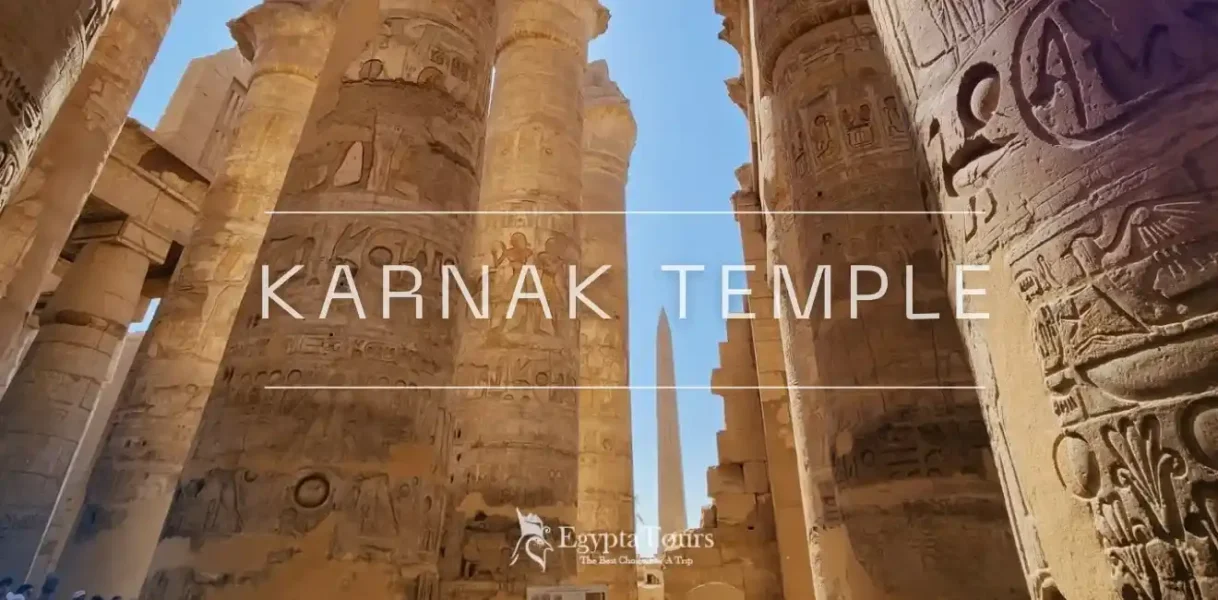
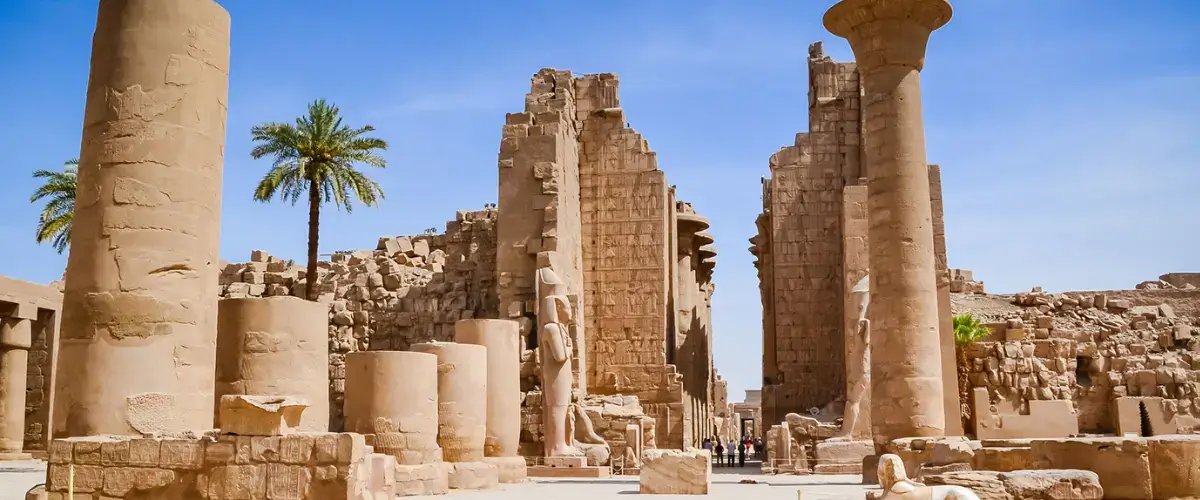
Karnak-Temple-Via-Acamar-Nile-Cruise-EgyptaTours Karnak Temple: Karnak Temple, popularly known as Karnak, contains a huge mixture of temples, chapels, towers and other structures near the city of Luxor in Egypt. Construction on the complex start during the rule of Senusret I (r. 1971–1926 BC) in the Middle Kingdom (ca. 2000–1700 BC) and continued until the Ptolemaic regality (305–30 BC), though most of the exist construct times from modern Kingdom. The area around Karnak was the ancient Egyptian Ibet-esut (“Most Chosen Place”) and the main place of worship for the Theban triad in the Eighteenth Dynasty, whose head was the god Amun. It is part of the ancient city of Thebes, and in 1979 it was added to the UNESCO World Heritage List along with the rest of the city. Karnak terms its name from the nearby and partially inclosed new village of Karnak, 2.5 kilometers (1.6 mi) north of Luxor.

Luxor Temple:

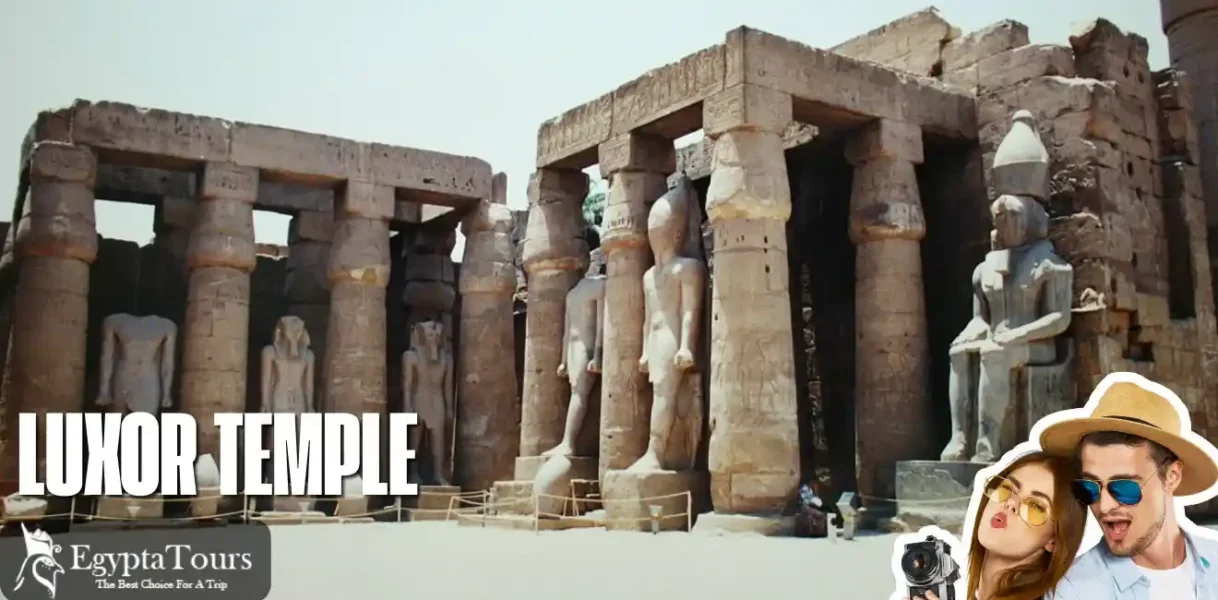
Luxor Temple is considered one of the historical Pharaonic civilizations in Luxor Governorate. It was built during the reign of King Amenhotep III to worship the god Amun-Ra, in addition to confirming its lineage to the god Amun. Ancient Pharaonic traditions called for one of the sons of a previous pharaoh to assume the rule of Egypt, or at least To marry the daughter of a Pharaoh who had previously ruled Egypt. Unfortunately, neither of the two conditions was met for Amenhotep III, so his men and loyal followers advised him to build a huge temple to glorify and worship the god Amun Ra, in an effort to confirm his lineage to him so that he could rule Egypt, and in fact it was fulfilled for Amenhotep. The third completely did not want and was able to rule Egypt. The "Luxor Temple" is considered a giant Pharaonic edifice overlooking the Nile Corniche directly in the center of Luxor, which was built by Amenhotep III in the fourteenth century BC. Then Ramesses II added columns and the first “entrance” pylon in the courtyard, so that it now contains an entrance and two towers, each tower in the form of It is oblique, and in front of it are two seated statues of Ramesses, and next to them are four standing statues. Two of them were returned to their positions after they were destroyed in previous eras. Inside Luxor Temple, there is an obelisk built by Ramesses II to depict his military achievements and his victory over his enemies. It is the first tower, 24 meters (79 feet) high. It was built by Ramesses II. The tower was decorated with scenes of Ramesses’ military victories in the Battle of Kadesh, and the victories of the Pharaohs were recorded at the time. Later, the victories of the 25th Dynasty (Nubian dynasty).

  • Meals: Lunch & Dinner.
  • Overnight: On Board.

Queen-Hatshpseut-Temple-Via-Acamar-Nile-Cruise-EgyptaToursQueen-Hatshpseut-Temple-Via-Acamar-Nile-Cruise-EgyptaTours

Valley of Kings:

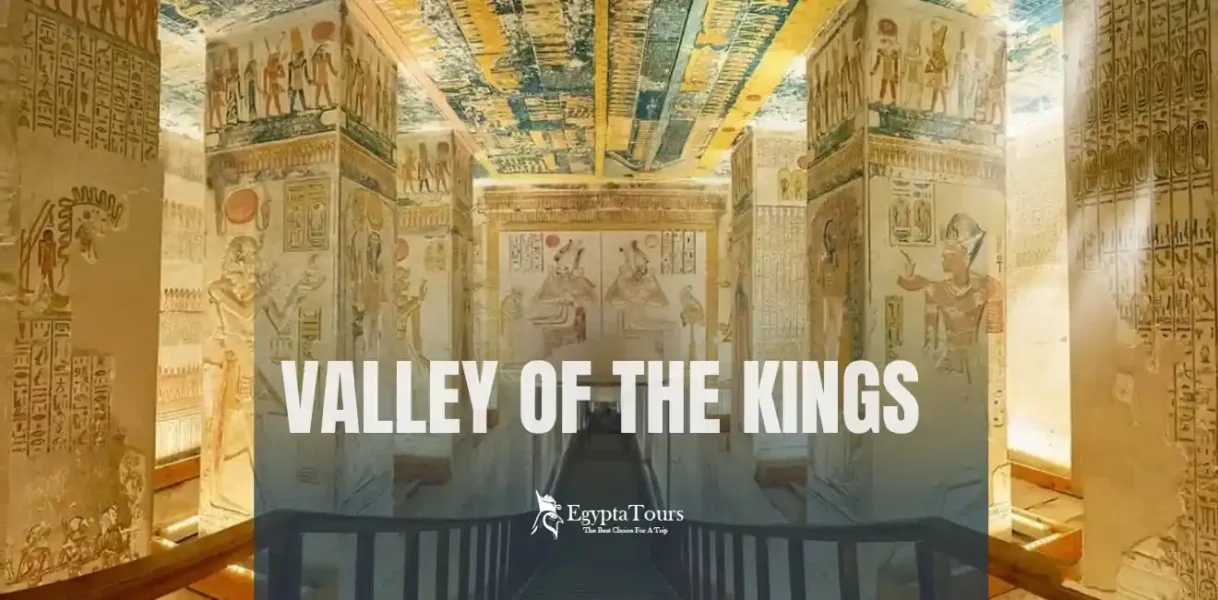
The Valley of Kings, also popular as the “Valley of Biban of the Kings,” is a valley in Egypt that was utilize over a era of 500 years during the period between the sixteenth and eleventh centuries BC to construct tombs for the pharaohs and nobles of the New Kingdom extending during the Eighteenth Dynasty until the Twentieth Dynasty in ancient Egypt. The valley is on the west bank of the Nile River, facing Thebes (now Luxor), in the heart of the ancient funerary city of Thebes. The Valley of the Kings is divided into two valleys: The Eastern Valley (where most of the royal tombs are located) and the Western Valley. With the discovery of the last funeral chamber in 2006, popular as (Cemetery 63), in addition to the discovery of two other entrances to the same chamber during 2008, the number of graves discovered so far has reached 63 graves of varying sizes, ranging from a small hole in the ground to a complex grave containing more than 120. A burial chamber inside. All of these tombs were used to bury the kings and princes of the New Kingdom in ancient Egypt, in addition to some nobles and those who were related to the ruling family at that time. The royal tombs are distinguished by containing drawings and inscriptions from ancient Egyptian mythology that illustrate the religious beliefs and memorial ceremonies of that time. All the discovered graves were opened and looted in ancient times, and despite that, they remain conclusive evidence of the power and prosperity of the kings of that time. This area has been a center for scout excavations to study archeology and Egyptology since the end of the eighteenth century, as its tombs arouse the interest of scholars to expand such studies and archaeological excavations. The valley became familiar in the modern period after the discovery of the entire tomb of Tutankhamun and the hearsay around it regarding the curse of the Pharaohs. The valley remained famous for the archaeological excavations spread throughout it until it was certified as a World Heritage Site in 1979, in addition to the entire funerary city of Thebes. Exploration, excavation and restoration operations are still ongoing in the Valley of the Kings, and a tourist center has recently been opened there.

Hatshepsut Temple:

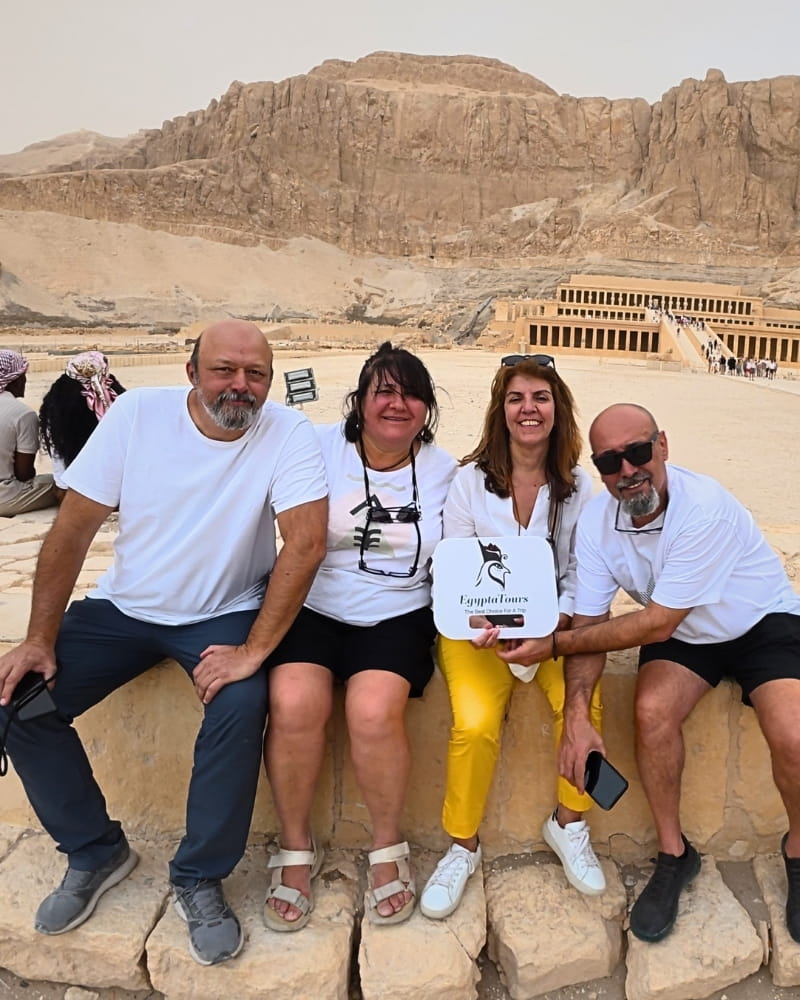
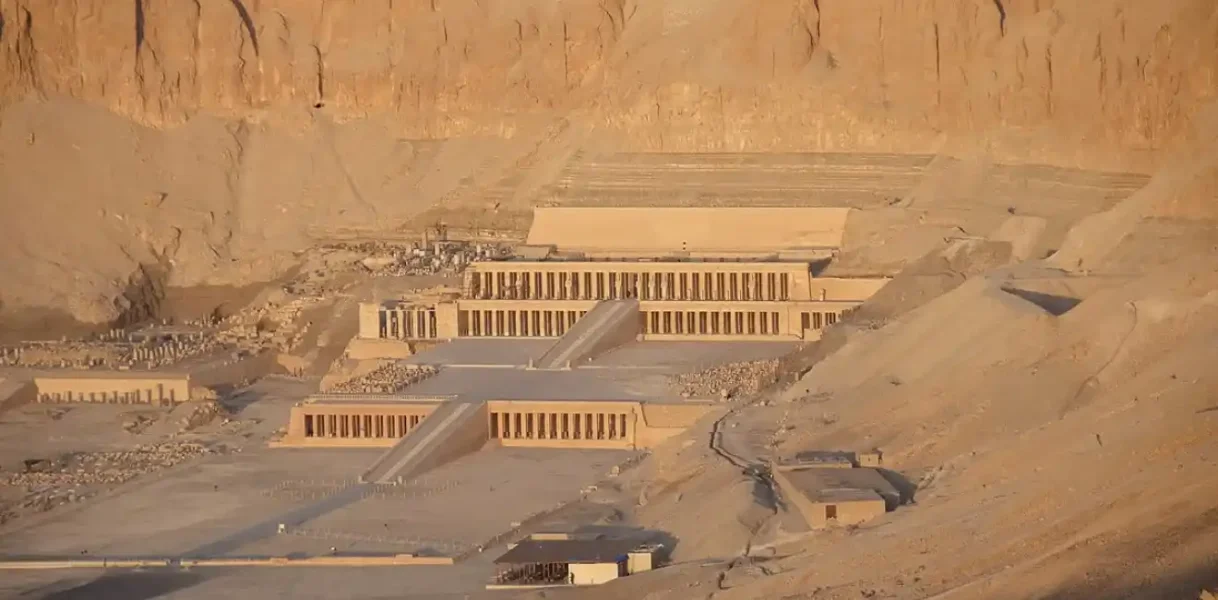
Queen Hatshepsut (about 1473 – 1458 BC) built a wonderful temple in Deir el-Bahri, on the west bank in Luxor, facing the Temple of Karnak, the main sanctuary of Amun, located on the east bank. The Temple of Hatshepsut was called in ancient Egyptian “Gesru Bridge,” meaning the holiest of sanctuaries. It was designed by Senenmut, who held many titles, including director of the estates of Amun. The temple consists of three levels, each of which has a row of columns at its end. On the upper level, there is an open courtyard behind the row of columns, preceded by statues of Hatshepsut in the form of Osiris, the god of the dead. “Jisru Bridge” is considered a funerary temple for Queen Hatshepsut, where rituals are held for her after her death when she transforms into the state of the god Osiris. The temple was not dedicated to her only, as the temple included parts dedicated to her father, King Thutmose I, the goddess Hathor, as well as the god Anubis. A chapel open to the sky, dedicated to the sun god Ra Hor-Akhty. There is a great place dedicated to Amun, and at the end of the upper courtyard, on the main axis of the temple, a passage was cut into the mountain that ends with the Holy of Holies. The walls of the temple were covered with scenes representing the temple rituals and religious holidays, as well as the transfer of obelisks from the quarries to the Karnak Temple. Perhaps the most distinctive scene is that in the middle balcony, which represents Hatshepsut’s mission to the country of Punt, which may currently be located near Eritrea, and its inhabitants were depicted. And its homes as well as the surrounding environment, in addition to the riches and exotic animals that the Egyptians brought with them from there, and on the other hand, it was depicted how Hatshepsut became the legitimate king of the country, not only by confirming her father Thutmose I’s appointment of her as his legitimate heir, but also that her father was the deity Amun. Himself.

Colossi of Memnon: 

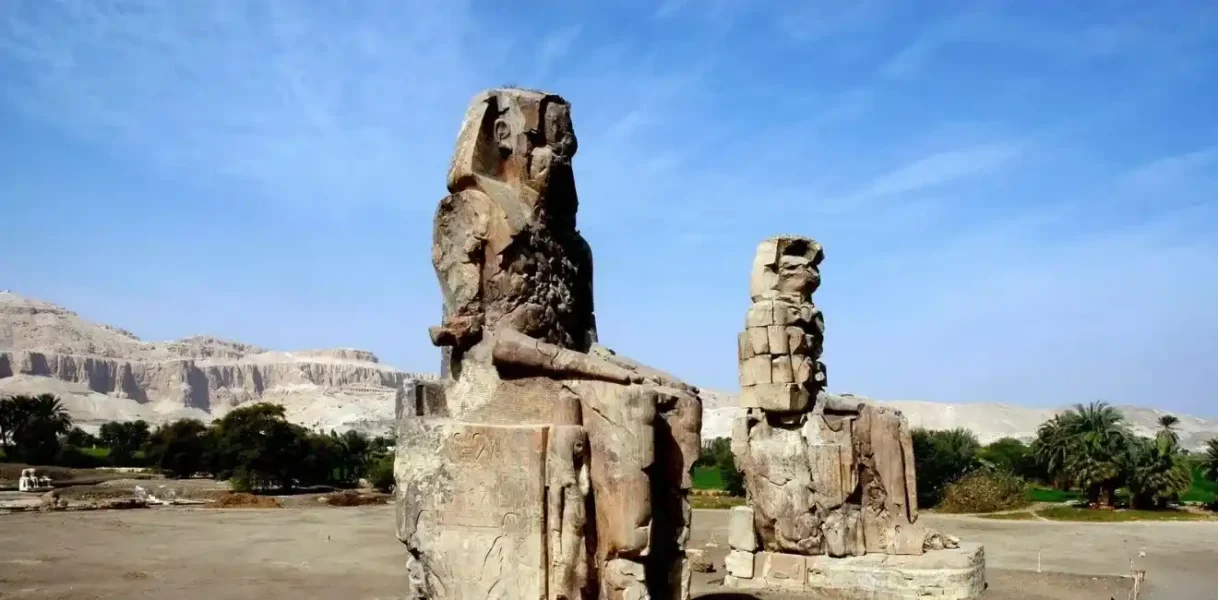
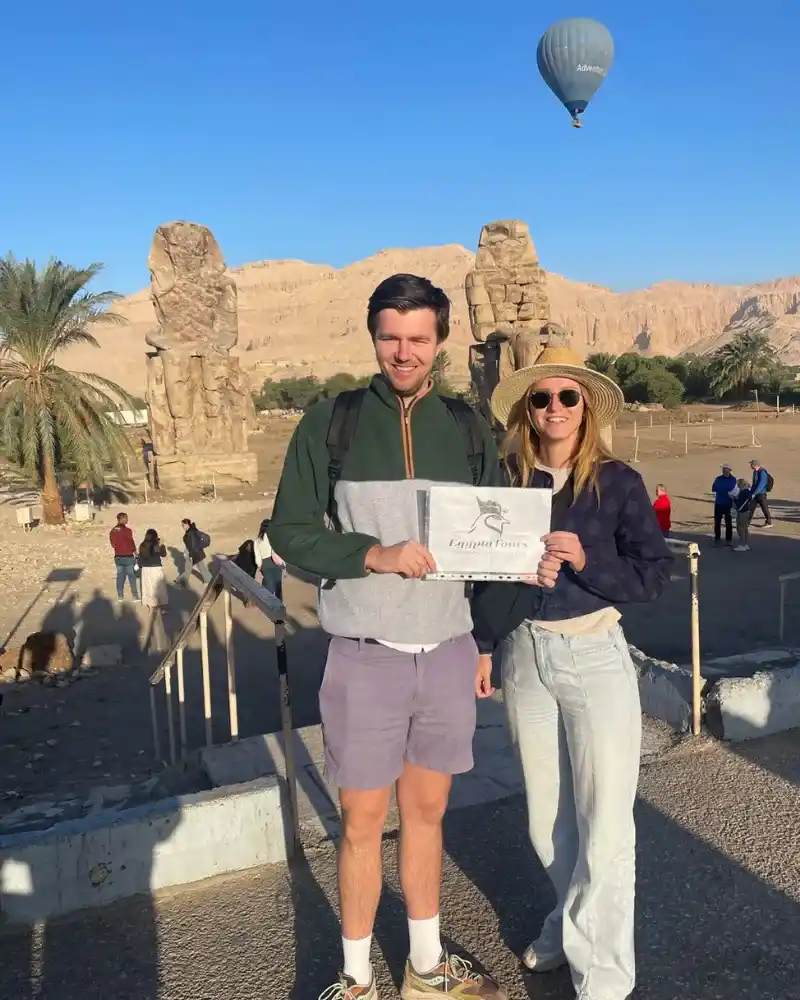
Two large giants that have been entrenched for thousands of years on the right of the road leading to the Tombs of the Dead in the Valley of the Kings and Queens, and the rest of the temples scattered on the western mainland in Luxor Governorate, and they stand guard over the road and all the temples in the west. They are the “Colossi of Memnon” sitting on the road leading to the temples, tombs and monasteries west of Luxor, and it is considered “ The two statues of Memnon are all that remains of the temple commemorating the pharaoh (Amenhotep III), and the height of the statue reaches 21.90 meters. The statue of Memnon belongs to King Amenhotep III, as their construction was supervised by the famous architect Amenhotep ibn Habu. In the past, there was an ancient funerary temple for King Amenhotep III in front of them, and nothing remains of it except the two statues, each of which reaches a height of about 21.90 meters, and they are considered part of the agenda. Tourist attractions for foreigners who enjoy Luxor and its monuments.

  • Meals: Breakfast & Lunch & Dinner.
  • Overnight: On Board.

8-days-acamar-Nile-Cruise-and-Hurghada-Holiday-in-Egypt-Visit-Kom-Ombo-Temple

Edfu Temple:

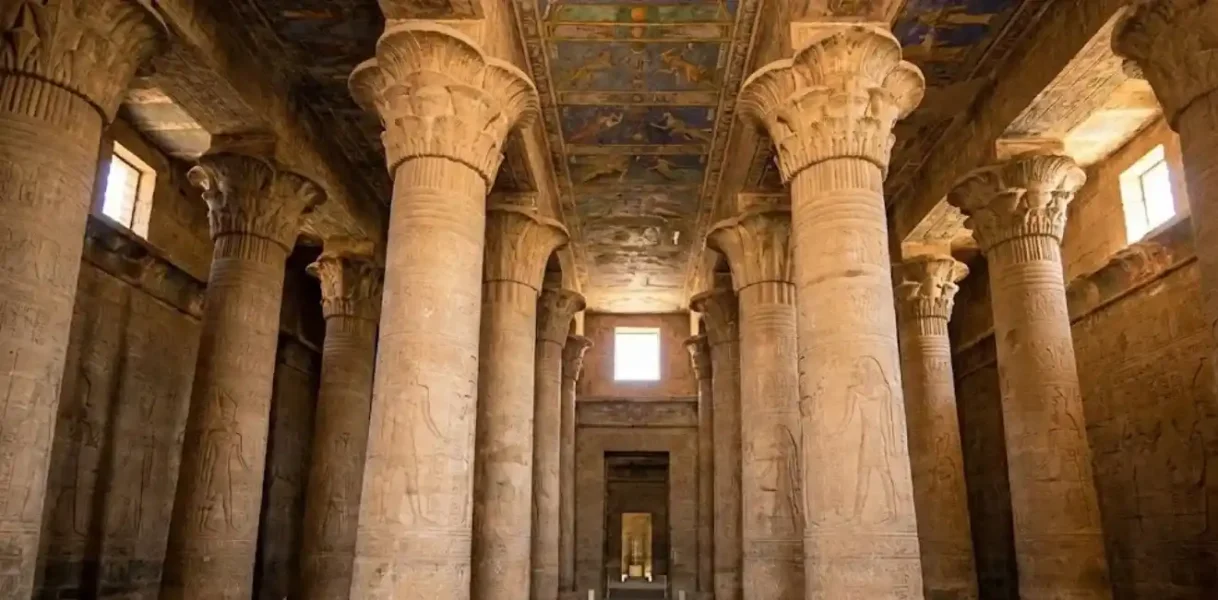
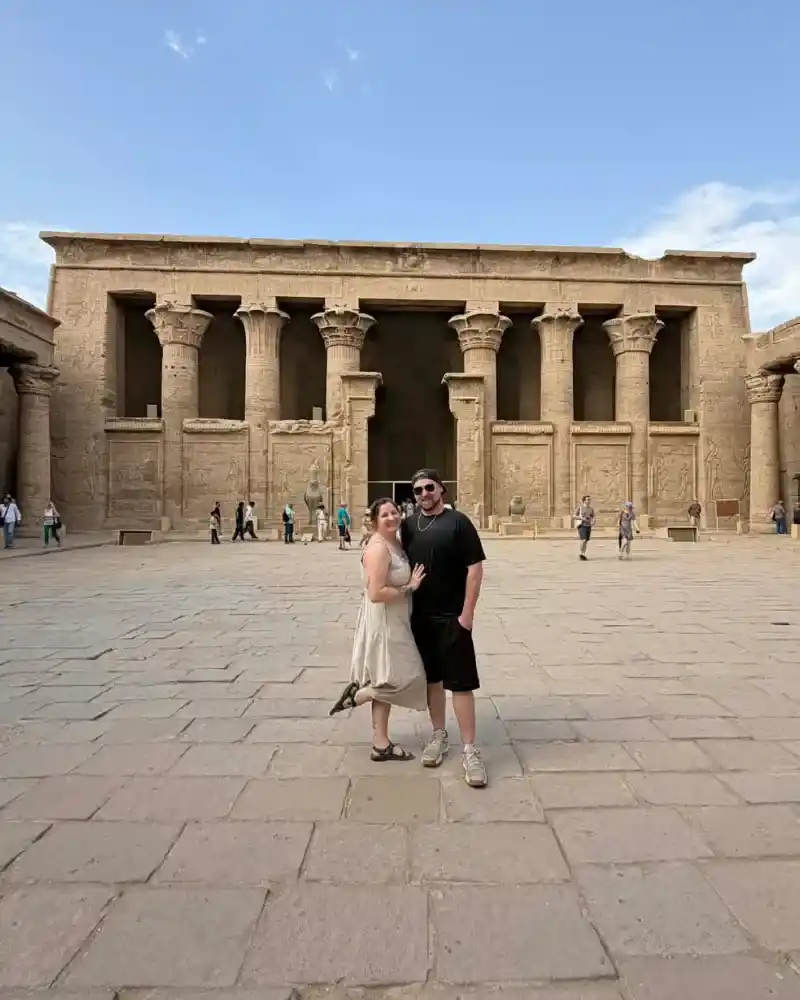
The Temple of Horus is one of the most complete ancient Egyptian temples located on the west bank of the Nile River in the city of Edfu. The construction of the temple took about 180 years since the reign of King Ptolemy III (246-221 BC), in 237 BC. AD, until its construction was completed during the reign of King Ptolemy XII (80-51 BC) in 57 BC. The temple still retains all its picturesque architectural and decorative elements, as it remained buried under the sand for several years until the French archaeologist Auguste Mariette cleaned it and restored some parts of it in 1860 AD. The temple dedicated to the worship of the god Horus consists of a huge edifice with two towers, preceded by two granite statues of Horus in the form of a falcon. While the façade of the edifice is decorated with scenes of King Ptolemy XII as he triumphs over his enemies, and other scenes depict him with deities. The temple’s huge gate leads to an open courtyard containing columns with vegetal capitals, like the Great and Small Hypostyle Hall, and from there to the transverse halls and then the Holy of Holies of the temple. We can also find scenes of the founding of the temple and the king’s relationship with his deities in the Great Hypostyle Hall, while the walls of the Small Hypostyle Hall are decorated with a scene depicting the journey of the sacred boat of the god Horus and the goddess Hathor.

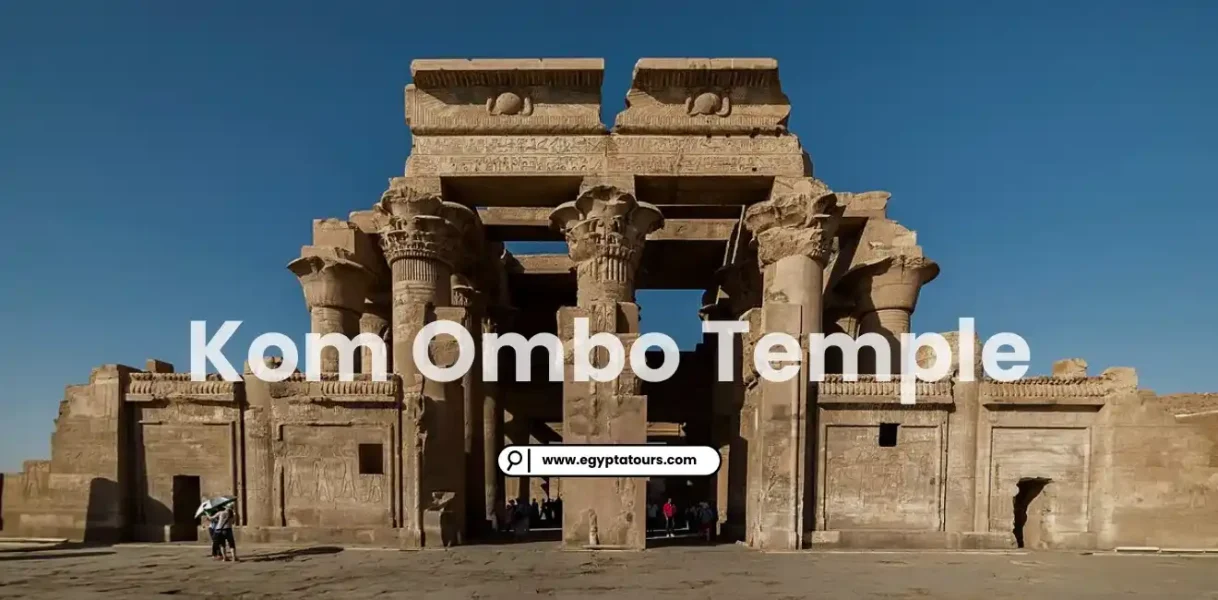
Kom Ombo Temple:

The Temple of Kom Ombo is one of the most important Egyptian temples due to its architectural and religious distinction, as it was dedicated to two deities together, Sobek and Horus. The temple appears to be composed of two parts separated by an imaginary line. The northern part of it was dedicated to worshiping the Holy Trinity of Horus, while the southern part was dedicated to worshiping the Holy Trinity of Sobek. The temple was also distinguished by a group of important scenes, including the division of the temple by the goddess Maat, the goddess of truth and justice, and also depicted a group of surgical and medical tools, and a list of the holidays held in the temple.

  • Meals: Breakfast & Lunch & Dinner.
  • Overnight: On Board.

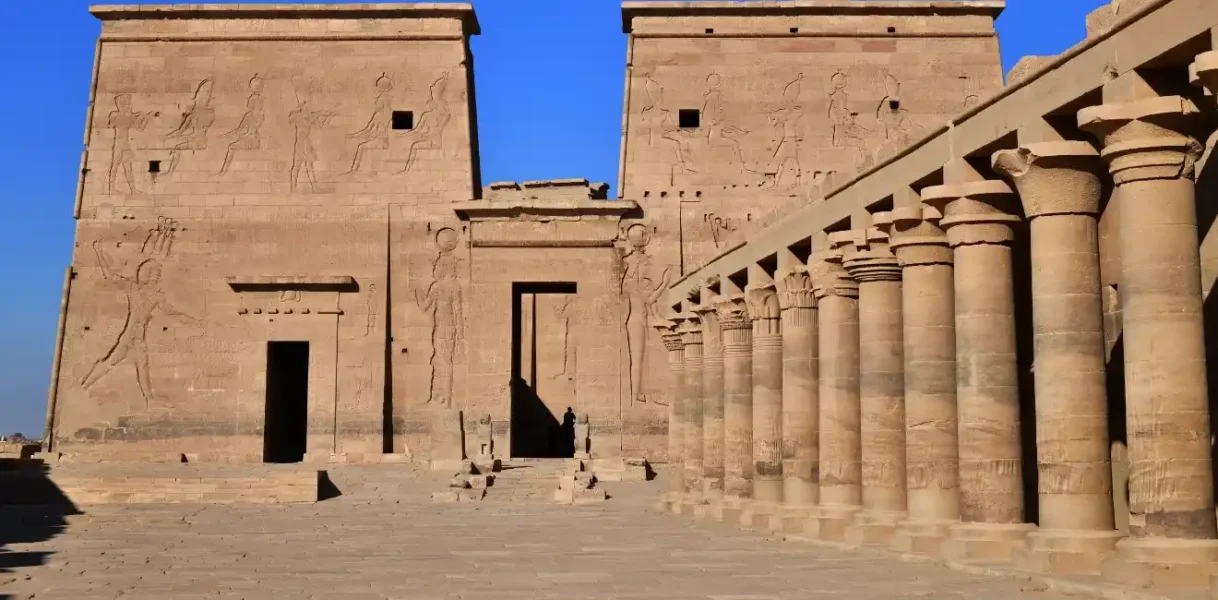
Philae-Temple-Via-Acamar-Nile-Cruise-EgyptaTours

Temple of Philae

The city of Aswan is distinguished by many ancient monuments that Egypt is famous for, the most important of which is the Temple of Philae, which escaped the fate of drowning in the waters of the Nile in the 1960s. Aswan is located on the eastern bank of the Nile River, 899 kilometers south of the Egyptian capital, Cairo, according to the website of the Egyptian State Information Service. The ruins of Philae Island were transferred to nearby Agelkia Island during a UNESCO campaign in the 1960s to save sites that were flooded by the Nile during the construction of the Aswan High Dam. The Temple of Philae, dedicated to the Egyptian goddess Isis, was reassembled in a scenic location to match the original location of the temple on the island of Philae. Philae Island was of great importance to the ancient Egyptians due to its distinguished location, as it formed a natural geographical border with Aswan Island, and was known in Egyptian texts as the dividing line, according to the website of the Egyptian Ministry of Antiquities.

The High Dam:

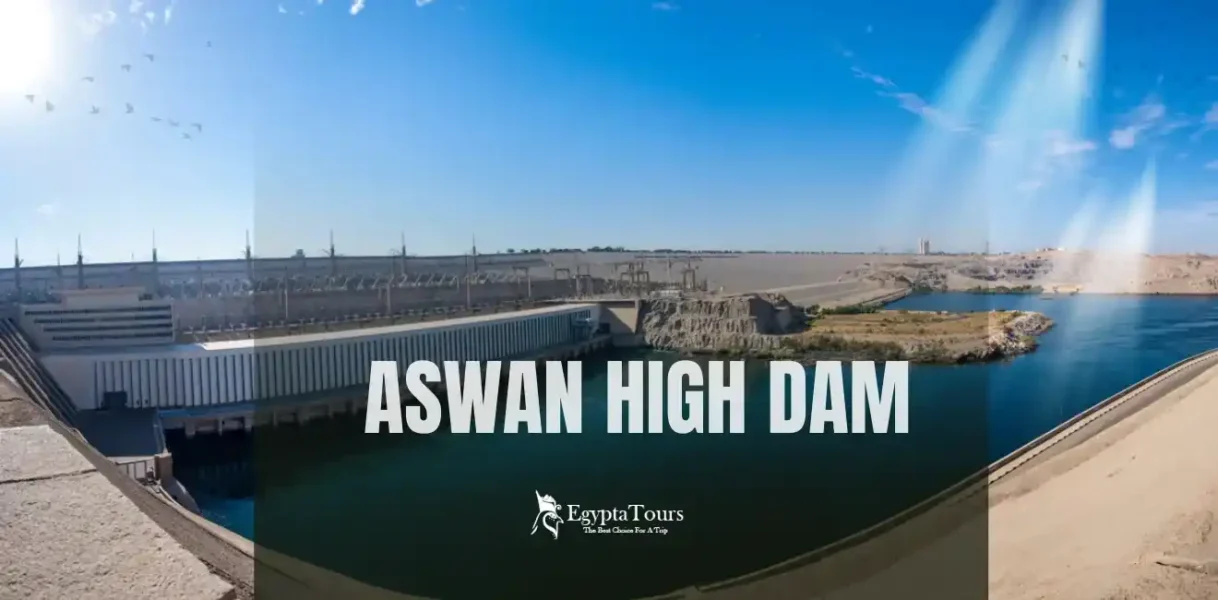
The Aswan High Dam is counted the fantastic and massive engineering project of the twentieth century from an architectural and engineering standpoint, superior to other giant global projects. The High Dam was construct to protect Egypt from the high floods that were flooding the country and submerging large places in it, and to preserve the water that was wasted in the Mediterranean Sea. The Egyptians have realized the importance of the Nile since ancient times. Annual storage projects, such as the Aswan Reservoir and the Jebel Awliya Reservoir, were established on the Nile to control the river’s changing revenues. Barrages were also erected on the Nile to regulate irrigation on the river’s various banks. However, annual storage was only a partial solution to controlling the Nile. Accordingly, the river’s revenue varies greatly from year to year, as it may reach about 151 billion cubic meters or fall to 42 billion cubic meters annually, and this large variation from year to year makes relying on annual storage extremely dangerous, as it can expose agricultural lands to barrenness. In years with low revenues, Therefore, thinking turned to constructing a huge dam on the Nile to store water in years with high revenues for use in years with low revenues. The building of the High Dam was the first constant storage project at the level of the tub countries to be proceeded within the Egyptian borders.

Unfinished Obelisk:

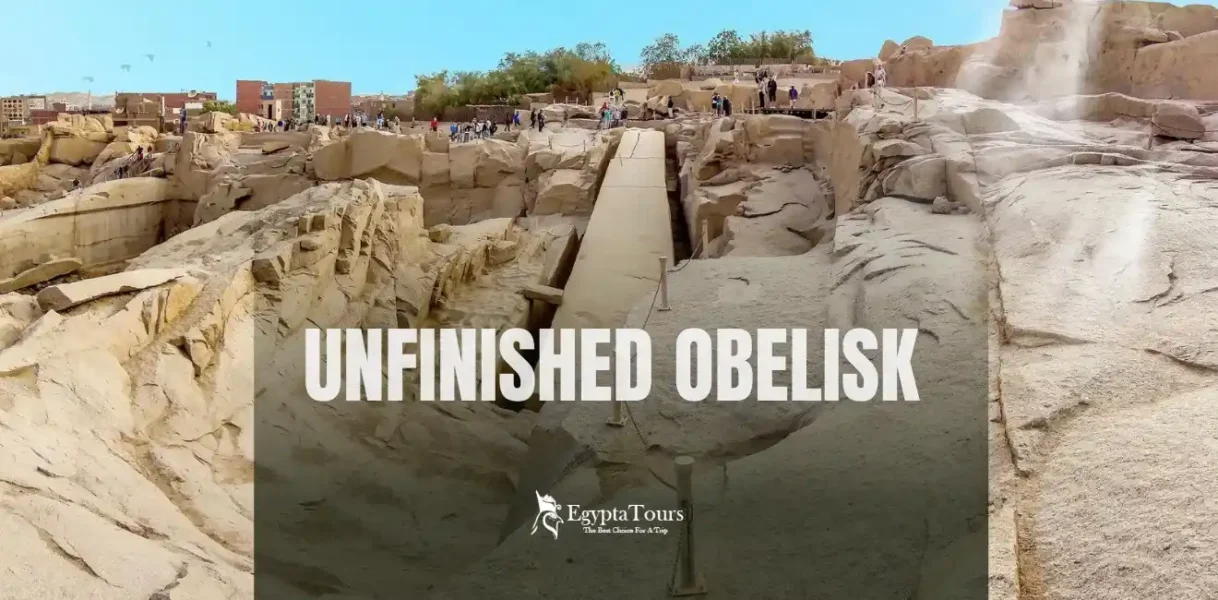
Obelisks are considered one of the most prominent architectural monuments in ancient Egyptian civilization. They are a purely Egyptian innovation that testifies to the ingenuity of the ancient Egyptian engineer. They were erected in towering pairs in front of temples as memorials. The obelisk was known as “Tekhen” in the ancient Egyptian language. It is a rectangular column made of a single block with a gilded pyramidal top that reflects the rays of the sun. The obelisks became the pride of the kings, and they made sure that the obelisks built during their reign bore their names and titles. The unfinished obelisk was founded in the soon twentieth century as it was filled with sand for thousands of years in one of Aswan’s quarries, famous for its hardness and high quality. It is likely that he began carving this incomplete obelisk on the commission of Queen Hatshepsut (ca. 1473-1458 BC) to erect it In front of the Temple of Amun in Karnak, but work on the recumbent obelisk stopped after many cracks appeared in the stone. The incomplete obelisk is considered one of the longest Egyptian obelisks ever, as it reaches 42 meters in length and weighs approximately 1,168 tons if it were to be completed and erected.

  • Meals: Breakfast & Lunch & Dinner.
  • Overnight: On Board.

On the final day of your Nile Cruise journey, enjoy a leisurely breakfast on board while taking in the serene views of the Nile. After checkout, our representative will meet you at the cruise dock to assist with your departure. You'll be transferred to the airport or your onward destination with unforgettable memories of ancient temples, tranquil landscapes, and the timeless charm of the Nile.

  • Meals: Breakfast.
  • Final Departure.

Location Map

Frequently Asked & Questions

The Acamar Nile Cruise typically offers two primary itineraries that are considered the most popular and comprehensive: the 3-night Aswan to Luxor cruise and the 4-night Luxor to Aswan cruise. These are the classic routes for experiencing the highlights of ancient Egypt along the Nile.

The two best itineraries are generally: 3 nights/4 days: Sailing from Aswan to Luxor. 4 nights/5 days: Sailing from Luxor to Aswan.

This itinerary typically starts in Aswan, visiting sites like the High Dam, Unfinished Obelisk, and Philae Temple. It then sails north, stopping at Kom Ombo Temple and Edfu Temple before concluding in Luxor, where you'll explore the Karnak Temple, Luxor Temple, Valley of the Kings, Hatshepsut Temple, and the Colossi of Memnon.

This itinerary begins in Luxor, focusing on the East Bank (Karnak and Luxor Temples) and West Bank (Valley of the Kings, Hatshepsut Temple, Colossi of Memnon). It then sails south, visiting Edfu Temple and Kom Ombo Temple, and culminates in Aswan with visits to the High Dam, Unfinished Obelisk, and Philae Temple.

The main difference is the starting point and direction of travel. Both itineraries cover essentially the same major historical sites, but the 4-night option from Luxor to Aswan allows for a slightly more relaxed pace with an extra night on board. The sequence of site visits will also differ based on the direction of travel.

Both itineraries usually include accommodation on the Acamar Nile Cruise ship, all meals (breakfast, lunch, dinner), guided excursions to the mentioned historical sites with an Egyptologist, entrance fees to the sites, and often evening entertainment on board. Transfers to/from the ship are sometimes included, depending on the booking package.

Your choice often depends on your overall travel schedule and preferences. If you have limited time or prefer a quicker pace, the 3-night Aswan to Luxor is ideal. If you want a more leisurely experience with an extra night on the Nile, the 4-night Luxor to Aswan might be better. Both offer an exceptional experience.

Nile cruises, including those on the Acamar, generally operate year-round. However, specific departure days for each itinerary might vary by season. It's always recommended to check the specific departure dates and availability with your travel agent or the cruise operator.

The most popular time to take a Nile cruise is during the cooler months, from October to April, when the weather is most pleasant for sightseeing. The summer months (June-August) can be very hot, though cruises still operate and offer good value for those who don't mind the heat.

While the Acamar Cruise offers these standard itineraries, you can often arrange pre or post-cruise extensions in Luxor, Aswan, or Cairo through your tour operator. Customization of the cruise itself is usually not possible, as the itineraries are set, but you can choose to add optional excursions (e.g., Abu Simbel, hot air ballooning) to complement your chosen cruise.

Book Your Tour

Reserve your ideal trip early for a hassle-free trip; secure comfort and convenience!

You’re welcome to suggest adding or removing any tours from your itinerary. We’re here to tailor your journey to match your interests and ensure your complete satisfaction.

Pricing Policy

All prices are listed in US Dollars, but you can also pay in Euros or British Pounds.
Please note: Prices are quoted per person.

  • 0 to 01 – Free.
  • From 2 to 5 – You will have a 25% discount on the total value of the tour.
  • From 6 to 11 – You will have a 50% discount on the total value of the tour.
  • With more than 12 you will be treated as an adult and must pay the total price of the tour.
  • If your travel package includes airfare, there may be an extra fee for each child accompanying you.
  • The child policy applies to children who share rooms with their parents (maximum of 1 child sharing the parents’ room)
  • Reservations should be made as soon as possible.
  • The payment of the total amount must be made at the time of booking confirmation and can be made by credit or debit card (Visa and Mastercard) via Verisign Secured system on our website

We don’t charge a cancellation fee for tours canceled for “force majeure” reasons, such as volcanoes, earthquakes, or other reasons. If the cancellation is due to personal or business reasons and we have already incurred costs on your behalf, these costs will be transferred to you.


  • All our packages and tours of Egypt do not include entrance fees to special archaeological sites such as visiting inside the pyramids, the Museum where the Solar Boat is located in the pyramid area, or to enter the Tutankhamun tomb in the Valley of the Kings in Luxor.
  • If you wish to visit one or all of these areas, please contact us by email as soon as possible, so that we can make the necessary arrangements.
  • Tips are not mandatory. And a form of appreciation for the services provided.
  • Whether you offer a tip or not, we thank you for choosing us to help you on your tour and we hope we have pleased you.
Picture of Written & Verified by Fadia Mohamed

Written & Verified by Fadia Mohamed

"Fadia Mohamed is a dedicated Senior Travel Consultant at EgyptaTours with over 10 years of professional experience in the Egyptian tourism sector. She specializes in designing personalized, high-quality travel itineraries that seamlessly blend Egypt's ancient history with modern luxury and traveler comfort."

View all Tours written by Fadia

Read Before Travel

Essential Information

Read Before You Go !

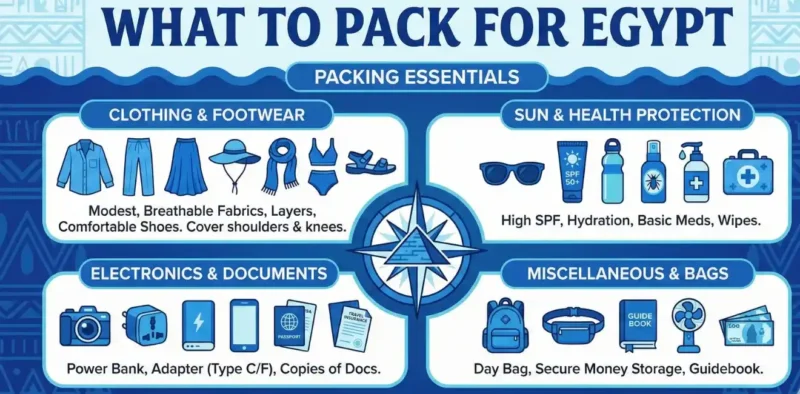
What To Pack For This Tour

Camera

Umbrella

Medication

Comfortable Shoes.

Hat

Sunblock & Sunglasses.

Warm clothes in winter.

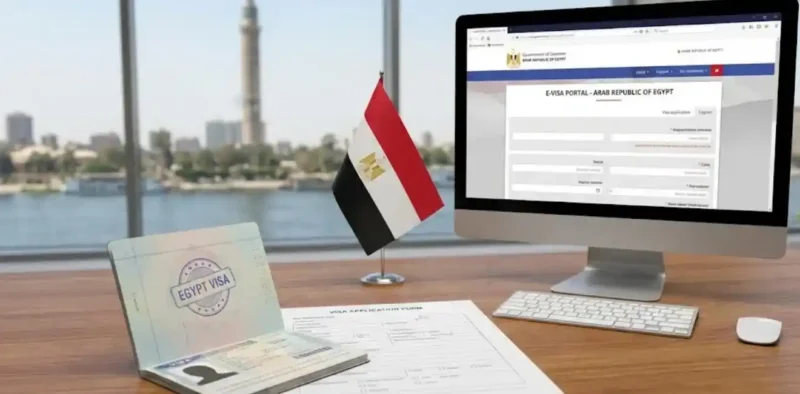
Valid Passport for 6 months.

Cotton clothes in summer.

Our Travelers

Honest Reviews & Real Stories

What They Are Say!

5 Days Cairo and Alexandria Tour

I want to thank you for assisting us on our trip as our tour guide. Aside from being an excellent and informative guide we enjoyed being with him. He made our trip interesting and exciting. This is a vacation that we will talk about for many years to come. Thank You Ahmed Gamal.

Deborah Nicolas

9 Days Cairo, Luxor & Hurghada Tour Package

I highly recommend Egyptatours, if you are planning to travel to Egypt, the tour guides were extremely patient and they have a great knowledge.

Emma N

6 Days Cairo and Sahara Tour

Love Egypt!!!! Thank you, Walaa, for being our tour guide and for an incredible trip! Your stories and descriptions of the sites, and the land, and the history was phenomenal. We learned so much from you. To anyone planning on travelling to Egypt I highly recommend contacting EgyptaTours.

Daniel Scoot

15 Days Family Tour in Egypt

We had an amazing time exploring Egypt with EgyptaTours. I loved everything about the trip from the excellent organization. great food and amazing sights on safari. Our guides spoke excellent English and were so knowledgeable about Egypt. The hotels were excellent and I would not hesitate to recommend EgyptaTours.

Mr. Daniel Scoot
Daney M

Our Partners