Heliopolis
Heliopolis, known in ancient times as the “City of the Sun,” is...



In this article we give you all information you need about the role of women in ancient Egypt.
When we look at the role of women in ancient Egypt, we often assume that they were treated as second-class citizens. However, while ancient Egypt was undoubtedly a patriarchal state – that is, a society based on the principle of men in power – there was also an unexpected amount of gender equality.
In fact, women were so highly regarded legally, spiritually, and socially that modern societies could learn much from the example set by the ancient Egyptians. Let’s take a look at exactly what life was like for women in one of the greatest civilizations ever.
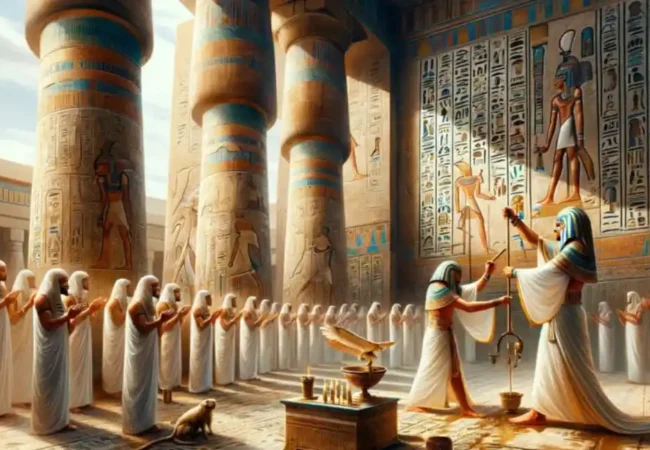
The respect with which women were treated in ancient Egypt had its rule in religion. The main role of women in ancient Egypt is to treat as goddesses.
For the ancient Egyptians, balance and equality were central to their belief system, as were feminine concepts such as fertility and childbirth.
The Egyptian pantheon included many female deities, each with a different area of expertise. These ranged from the everyday (such as brewing beer and monitoring pregnancies) to the divine (such as protecting humanity from evil).
Some of the most significant deities were female including Neith, an early goddess often cited as the primary creator in tales of how the world was created; and Isis, the sister, wife, and equal of Osiris and the god responsible for shepherding the deceased safely into the afterlife. Both Hathor and Isis were at various points considered the divine mother of the pharaoh and widely worshiped with their own cults.

Women-in-Positions-of-Power -The-Role-of-Women-in-Ancient-Egypt-EgyptaTours
It was not only divine females who possessed great power in ancient Egypt. Mortal women also shaped the country’s history usually as an influential wife or mother of the pharaoh but also sometimes in their own right. By asking about the role of women in ancient Egypt, women has a great power and position.
Sobekneferu was not the first female ruler of ancient Egypt; At least one, Meritneith, is thought to have ruled as regent in place of her son since the First Dynasty. However, she was the first woman to fully assume the title of pharaoh, which she did after the death of Amenemhat IV (who was most likely her husband and brother). She was the last ruler of the Twelfth Dynasty, and is believed to have held power for about four years.
The next confirmed pharaoh was Hatshepsut, who ruled for approximately 22 years during the Eighteenth Dynasty – initially as regent for her stepson, Thutmose III, but later in her own right. She is famous as one of the most successful and powerful Egyptian rulers ever.
Its accomplishments included re-establishing valuable trade routes that had been suspended during the Hyksos occupation; A lucrative expedition to the Land of Punt; Military campaigns against Nubia and Canaan; It is one of the most ambitious construction projects the Kingdom has ever seen.
Cleopatra VII was perhaps the most famous female pharaoh, and was the last ruler of the Ptolemaic dynasty. An extremely ambitious stateswoman, who later became the wife of both Julius Caesar and Mark Antony, she gained a reputation in her time and ever since as one of the most powerful and beautiful women of all time. Complete your reading to discover the role of women in ancient Egypt.

Rights-for-Everyday-Women-The-Role-of-Women-in-Ancient-Egypt-EgyptaTours
By asking about the role of women in ancient Egypt, Of course, life for non-royal women was very different; However, many historians believe that men and women had approximately equal status in ancient Egypt. Legally, women have far more rights than their counterparts in some modern societies.
The line of inheritance was matrilineal, meaning that property and wealth passed from mother to daughter rather than from father to son.
This was likely because motherhood (unlike fatherhood) could never be questioned. This means that a woman can not only inherit assets, but she can have her own will and inherit them as she pleases.
During their lifetime, they can manage and dispose of the property as they wish. Women could own and run a property or business even after marriage – in fact, while most tended to perform traditional domestic roles, there was no law preventing them from practicing all types of professions.
Possible professions included writer, priestess (usually in a temple dedicated to a female deity), weaver, dancer, teacher, musician, and even physician. Lower class women usually worked alongside their husbands in the fields.
There were some jobs that would not have been held by women, including administration and civil servant.
In terms of the law, women can serve as executors of wills, witness legal documents, sit on juries, adopt children, and take cases to court. She can even defend herself in court; This was perhaps necessary, because women could be sued and tried just as men (although the penalties were often different). Complete your reading to discover the role of women in ancient Egypt.
Girls were usually married at an early age in ancient Egypt, usually between the ages of 12 and 14. Spouses are often chosen by their families; However, a woman cannot be forced to marry someone, and she has the right to reject the proposal.
While polygamy was common among the pharaohs and not unusual for the wealthy elite, marriage was expensive and the vast majority of marriages were monogamous. Women were expected to fulfill traditional marital and maternal duties in addition to any profession they chose.
This means preparing meals, brewing beer (water was rarely drinkable in ancient Egypt), taking care of the children, keeping the house clean, and washing clothes in the river. Naturally, wealthy women supervised these roles rather than performing them themselves.
This is not to say that divorce did not happen – in fact, it was relatively common and could be initiated by either partner. Before marriage, husbands would enter into a prenuptial agreement, and this would usually favor the wife.
If the husband files for divorce, he cannot claim any property from the marriage and must pay maintenance to his wife and children. In both cases, the wife always received full custody, her original dowry, and any assets acquired or inherited in her name during the marriage.
Unless it was previously owned by the husband’s family, the matrimonial home could also have been given to her. Adultery was illegal for both partners. The most common punishment for unfaithful wives was to have their noses slit – a form of mutilation chosen because it was degrading and because it was impossible to hide.
Complete your reading to know more about the role of women in ancient Egypt.

Pregnancy-Birth-and-Motherhood-The-Role-of-Women-in-Ancient-Egypt-EgyptaTours
The major purpose of marriage in ancient Egypt was to produce an heir. In fact, infertility was one of the most popular reasons for a man to divorce his wife. Ancient Egyptians were so preoccupied with fertility that they are credited with one of the earliest pregnancy tests.
The woman, who was suspected to be pregnant, was urinating into a cloth bag containing wheat and barley grains. If either plant grows, the woman is pregnant. If the wheat grows first, the child is a female, and if the barley grows first, it is a male. As an indicator of pregnancy, this test has actually been fairly accurate: recent studies have shown that it successfully identifies between 70 and 85% of pregnancies.
Giving birth was the role of women in ancient Egypt, a dangerous matter for ancient Egyptian women, with no real medical help available if a problem occurred. Alternatively, the woman would have been cared for by members of her family, who would have used religious amulets and statues to invoke the protection of various deities.
There was a standard birth position as well, in which women would be helped to sit cross-legged on top of a mat held in place by four bricks, each of which was supposed to represent a different goddess.
Women went through this process many times, with the average number of children in a family being between four and six (and often more). This does not mean that all of these children survived into adulthood. Infant mortality rates were high, especially given the prevalence of tropical diseases and infections.
Children who survived were carried in slings and breastfed for up to three years. Lower class girls are usually taught life skills by their mothers rather than receiving a formal education. However, upper-class girls were often taught reading, writing, and subjects such as history and politics. This could have been a preparation for them to run the family business, or to create a suitable wife for a powerful husband.
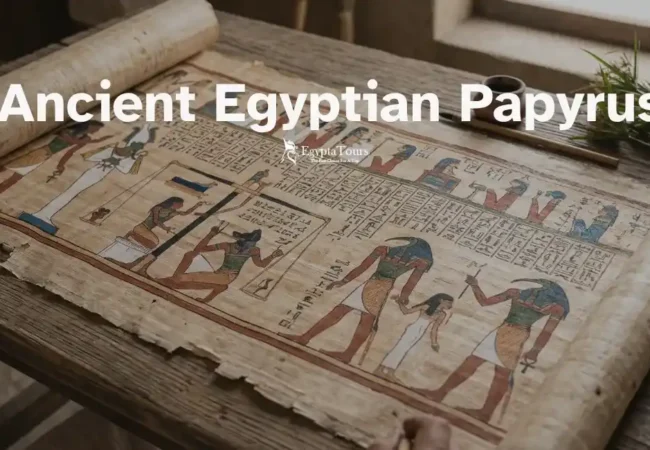
Women who were not ready to have children had options in ancient Egypt, with many different forms of birth control mentioned in various medical papyri. Two of the most popular are seed wood soaked in ground acacia leaves and honey, and crocodile dung mixed with sour milk.
Both mixtures are inserted into the vagina to act as a sperm barrier, and are likely to be at least somewhat effective due to their acidic nature. Cases of miscarriages made possible by drinking herbal mixtures or using vaginal douches and suppositories have also been documented.
Complete your reading to know more about the role of women in ancient Egypt.
Cleanliness was of sacred importance to all ancient Egyptians, regardless of class or gender. As such, women would have bathed almost daily – either in the Nile River, or in the privacy of their homes in tubs filled by their slaves, if they could.
With the dawn of the New Kingdom, baths became common. They had separate departments for each gender and water was provided by slaves (running water only came with the arrival of the Romans). The most popular soap was natron, or soda ash mixed with oil.
It can also be used in its undiluted form as a type of toothpaste. For the elite, cleaning rituals included animal fat, perfume, oil, rubbing salts, and milk (as Cleopatra famously made).
The ancient Egyptians even had their own version of deodorant. But instead of applying it under their armpits, it took the form of a cone of scented wax that was placed on top of their heads at social occasions.
The wearer’s body heat may cause the wax to melt over time, releasing a pleasant fragrance to mask any unwanted odors.
Menstruating women were considered unclean and exempted from activities that were likely to contaminate other family members, such as cooking. Certain sections of the temple would also have been off-limits to women at this time. The ancient Egyptians were a resourceful bunch, developing the first known form of tampons from rolled-up flexible papyrus paper.

Fashion-in-Ancient-Egypt-The-Role-of-Women-in-Ancient-Egypt-EgyptaTours
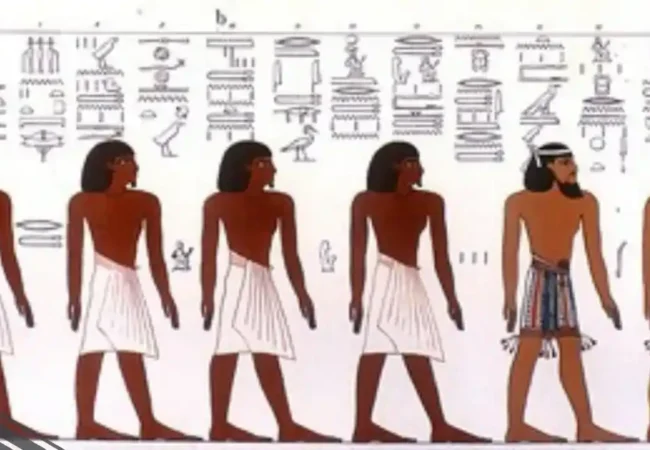
So, once they bathed, what did ancient Egyptian women wear? While little clothing has survived intact from the era of the pharaohs, many inscriptions and paintings on the walls of ancient monuments and tombs tell us that although exact styles varied depending on class and era, the basics remained the same.
Linen is woven into a light, cool fabric that provides effective sun protection. Although the color is usually kept white, it can also be presented in shades like red, blue and yellow with the help of natural dyes. For servants and working-class women, tight ankle-length dresses were the most practical style.
Wealthy women and royalty had similar clothing, albeit decorated with pleats, beads, and gold thread. Later, a sheer wrap or shawl was added as another symbol of wealth; Eventually, open-toe styles crept into fashion as a result of Greek and Roman influences.
In general, most Egyptian women walked barefoot. However, there is evidence that the wealthier classes also made sandals from leather and papyrus.
Hair was loose and long by the lower classes, who sometimes used henna to produce a lighter color.
It was common for elite men and women to shave their heads and wear elaborate wigs instead. For the wealthy, these items were made of human hair; More affordable versions were lined with or made entirely of vegetable fibres.
Both genders also wore makeup. Kohl was widely used around the eyes for beautification and protection from the harsh glare of the sun. Eye shadows were created using ground malachite (green) and galena (dark grey), while red ocher was mixed with oil or fat for application as lipstick and/or rouge. Makeup applicators, mirrors, and perfume containers have been found in ancient Egyptian tombs.
Finally, women of all classes wore jewelry. This also served a dual purpose as adornment and to combine talismans to protect the wearer from evil spirits. From armbands to anklets, necklaces, bracelets, rings, and amulets, jewelry often carried the same common symbols over and over again.
These included the ankh (symbol of life), the scarab (symbol of rebirth), and the Ring of Shen (for eternal protection). While the jewelry of wealthy women was made of precious stones and metals, the jewelry of the working class was made of pottery and inlaid with reflective glass or porcelain.
Finally we wish we give you all information you need about the role of women in ancient Egypt.
In ancient Egyptian history, women held diverse and significant roles, ranging from positions of religious authority to vital societal functions.
The title ” God Wife of Amun,” often bestowed upon royal women, reflects the elevated status some women held within religious institutions, acting as intermediaries between the gods and the people.
Additionally, women were closely associated with revered goddesses like Hathor, the goddess of love, beauty, and motherhood, further highlighting their importance in both spiritual and earthly realms. Women also played essential roles in funeral rites, with professional mourners, often female, participating in these ceremonies to honor the deceased and ensure their safe passage to the afterlife.
These roles underscore the multifaceted contributions of women in ancient Egyptian culture, from the divine to the ceremonial.
It was not only divine females who possessed great power in ancient Egypt. Mortal women also shaped the country’s history – usually as an influential wife or mother of the pharaoh but also sometimes in their own right.
Her responsibilities included bearing children, raising children, keeping the house clean, weaving, and taking care of the family’s finances. Women were not supposed to work outside the home, and it was not appropriate to call a woman by her name. Instead, she will be referred to as her husband.
Over the course of three thousand years of Egyptian history, six women rose to become kings of the fertile land and sit atop the authoritarian power structure. Many of them ruled only briefly, and only as a last resort in their failing family line.
Ancient Egyptian women had many legal rights thanks to their tradition of equality and balance called maat. Women could own and sell land, adopt children, bring suits in court, sue in person, and choose to marry or divorce as they pleased.
In ancient Egypt, a man had only one wife. Husband and wife were viewed as a team and attained high social status as a married couple. In modern Egypt, polygamy is legal, and a man can marry up to four wives. It is regulated, and every wife must be treated equally.
It was said that the most beautiful queen of Egypt was Cleopatra III. With her beauty, she attracted the romantic interest of Julius Caesar and Mark Antony, both from Rome. With their help and dedication, Cleopatra successfully ruled Egypt for many years.



Confidently choose your perfect Egyptian adventure from our selection of trusted, expert-curated tours.





Unlock the true wonders of Egypt with confidence. We combine expert local knowledge, seamless logistics, and round-the-clock support to deliver flawless, responsible, and unforgettable travel experiences.