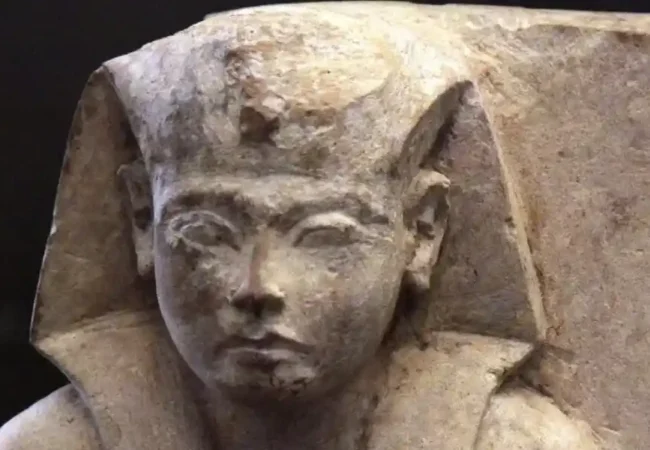
Queen Hatshepsut was one of the most remarkable rulers of Ancient Egypt. As the fifth pharaoh of the 18th Dynasty, born around 1508 BC to King Thutmose I and Queen Ahmose, she stepped into power during an era when society fiercely rejected the idea of a female king.
To secure her unprecedented reign, Hatshepsut did not just rely on political maneuvering—she completely rewrote her own history, elevating herself from a mortal queen to a living god.
The Legend of the Divine Birth
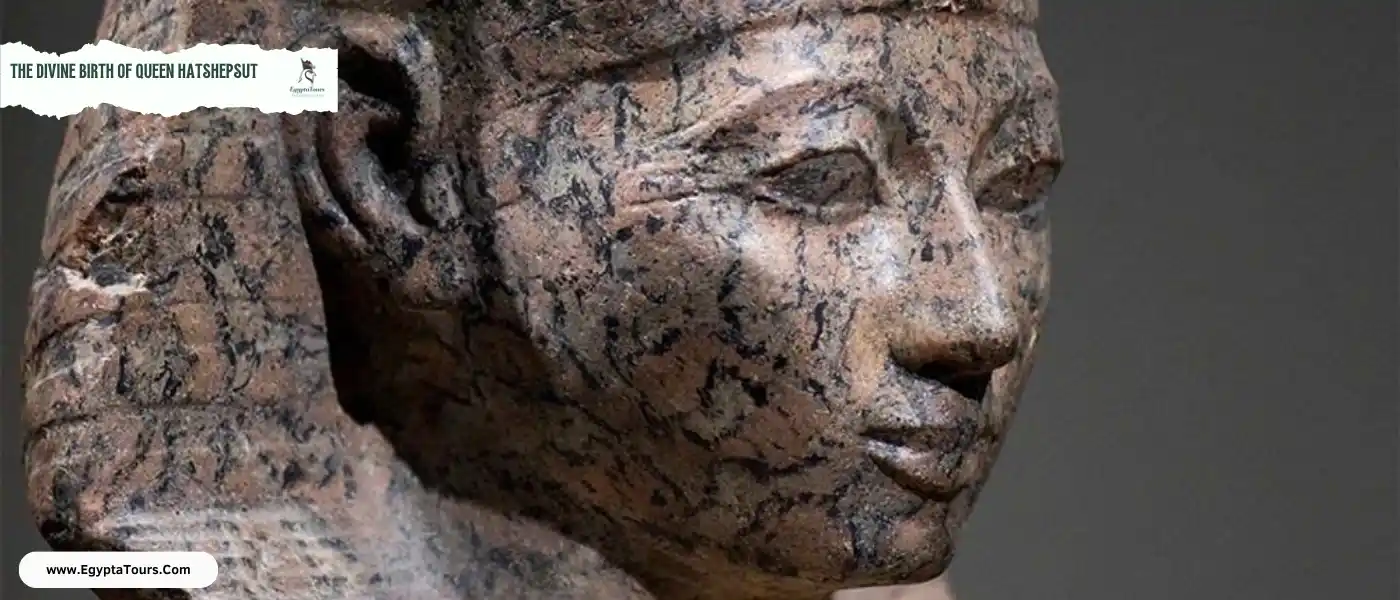
The-Myth-of-the-Divine-Birth-of-Queen-Hatshepsut-EgyptaTours
To justify her claim to the throne, Hatshepsut promoted a fascinating origin story that intertwined her human bloodline with the supreme power of the gods.
According to this legend, the sun god Amun-Ra gathered the deities of destiny to announce his desire to send a divine offspring to rule Egypt. He chose Hatshepsut’s human mother, Queen Ahmose, to carry this child. In the story, Amun-Ra appears before the queen in a majestic aura. With absolute divine calm, he holds the ankh—the symbol of eternal life—to her nose, breathing a royal destiny into her.
Following this conception, Amun-Ra commanded Khnum, the god who crafts human bodies on a potter’s wheel, to sculpt the child with care. Finally, the goddess Heqet breathed life into the creation. This narrative was a brilliant political masterstroke; it made Hatshepsut more than just a regent. In the eyes of the people, she was a deity representing strength, wisdom, and justice.
Carved in Stone: The Scene at Deir el-Bahari
Hatshepsut knew that stories could be forgotten, so she had her divine origin immortalized in stone. The most famous visual representation of this legend is carved into the walls of her spectacular Mortuary Temple at Deir el-Bahari.
These intricate reliefs narrate the entire conception and birth process for all to see. By proudly displaying scenes of Amun-Ra visiting her mother and the gods crafting her body, Hatshepsut turned a myth into a bold state message. It was public proof designed to silence critics and legitimize her right to sit on the throne of the pharaohs.
The Reign of the Female King
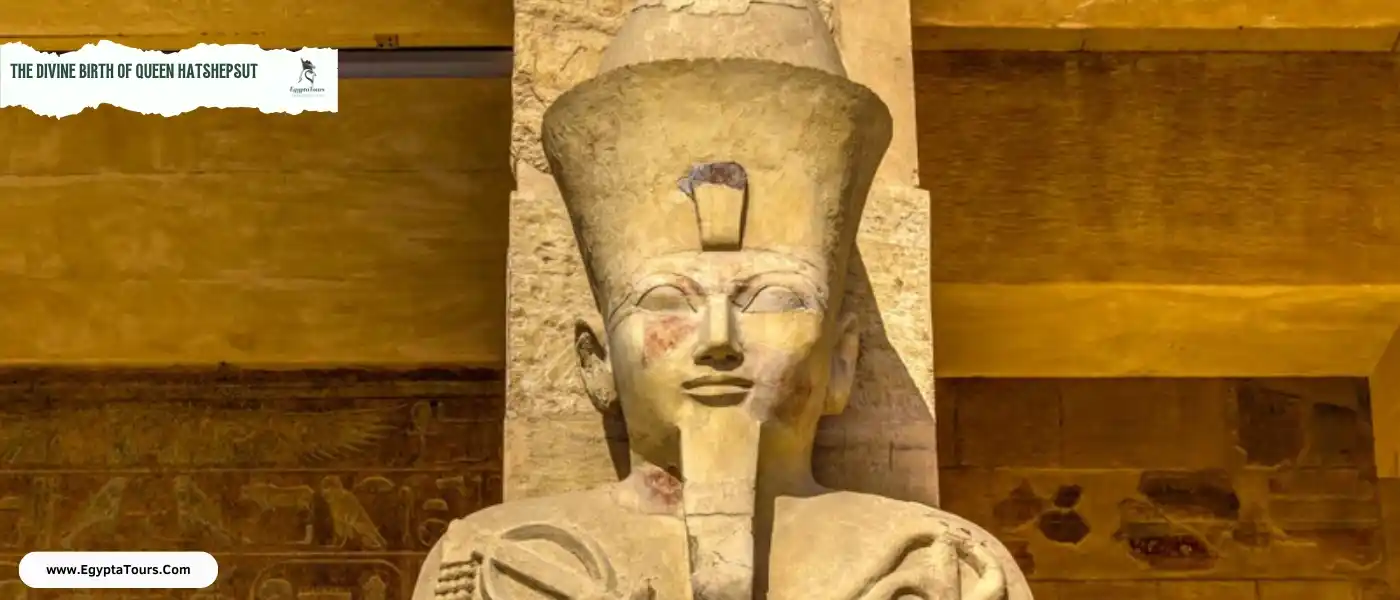
The-Story-of-Queen-Hatshepsut’s-Reign-EgyptaTours
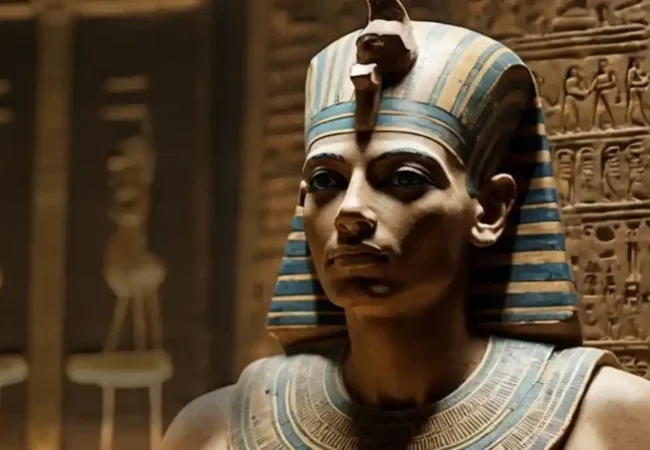
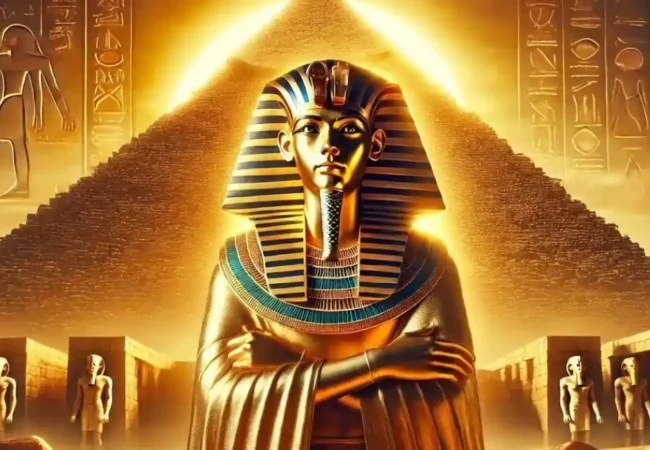
To solidify her authority in a patriarchal society, Hatshepsut made the calculated decision to adopt the traditional, male symbols of a pharaoh. In her statues and carvings, she is famously depicted wearing the shendyt kilt, the Nemes headdress, and even the ceremonial false beard. She was not trying to trick people into thinking she was a man; rather, she was visually claiming the supreme authority of the office.
Her reign (1479–1458 BC) ushered in a golden age of peace and prosperity. Instead of focusing on warfare, she poured Egypt’s resources into monumental building projects and economic expansion:
- The Expedition to Punt: She launched a historic naval fleet to the Land of Punt (modern-day Somalia/Yemen), bringing back unimaginable wealth, including ivory, ebony, spices, and live incense trees.
- The Giant Obelisks: She commanded the extraction of massive granite obelisks from Aswan, transporting them down the Nile to the Karnak Temple. One of her monuments, the famous Unfinished Obelisk, remains in the Aswan quarry today, abandoned after it cracked.
The Woman Behind the Monuments
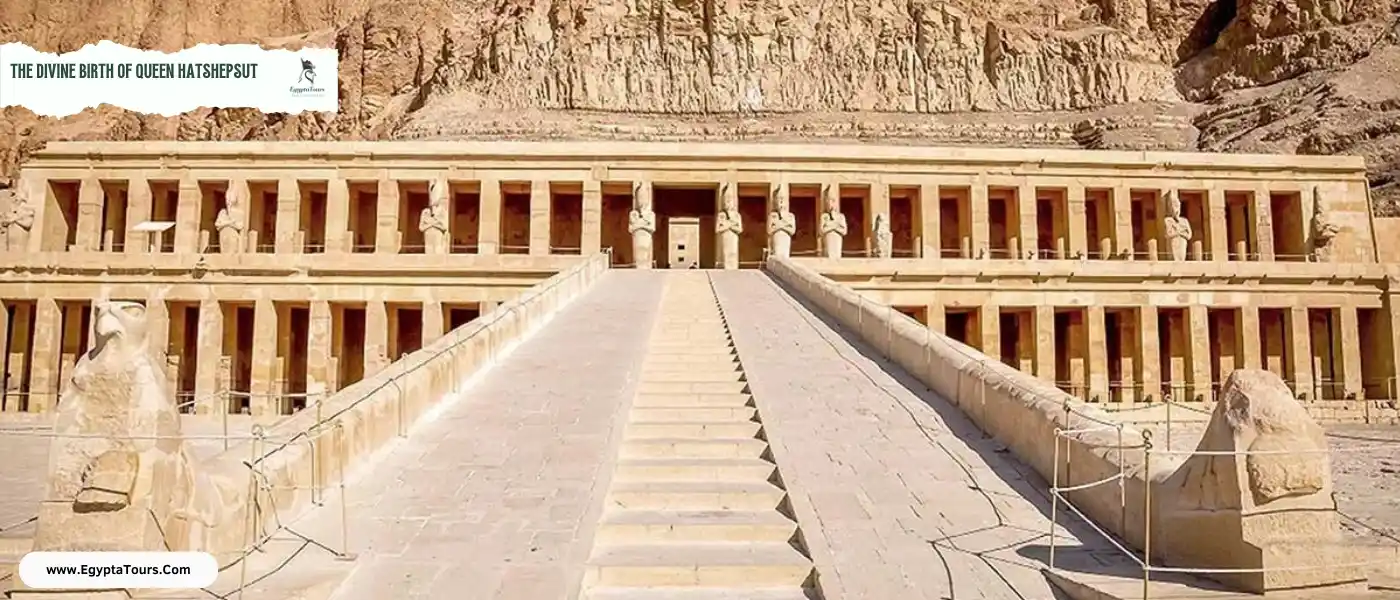
Queen-Hatshepsut-achievements-EgyptaTours
While her statues depict an idealized, muscular king, modern science has given us a glimpse into the real woman. In 2007, a mummy discovered in a modest tomb (KV60) in the Valley of the Kings was finally identified as Hatshepsut.
Radiological studies revealed that she was likely a dignified but plumper woman who suffered from arthritis, dental problems, and possibly bone cancer. She passed away in 1457 BC after ruling for 22 years. She was originally intended to be buried in the spectacular tomb KV20, which she had expanded so she could rest beside her father.
While later rulers, including her stepson Thutmose III, attempted to chisel her name off her monuments and erase her from history, the very stones of Deir el-Bahari refused to let her be forgotten. Today, Hatshepsut is remembered exactly as she intended: as one of the most visionary and successful rulers of the ancient world.
FAQs
When was Queen Hatshepsut born?
Queen Hatshepsut was born around 1508 BC during the 18th Dynasty of Egypt’s New Kingdom. She was the daughter of King Thutmose I and Queen Ahmose.
Has Hatshepsut’s tomb been found?
Yes. In 1903, a mummy was discovered in tomb KV60 in the Valley of the Kings. After decades of research, scientists and archaeologists used dental records and radiological analysis in 2007 to confirm that the mummy was indeed Queen Hatshepsut.
Did Hatshepsut steal the throne from Thutmose III?
Hatshepsut initially served as regent for her young stepson, Thutmose III, before declaring herself pharaoh. While modern historians debate whether this was a usurpation or a necessary political move to maintain stability in Egypt, she successfully ruled alongside him until her death.