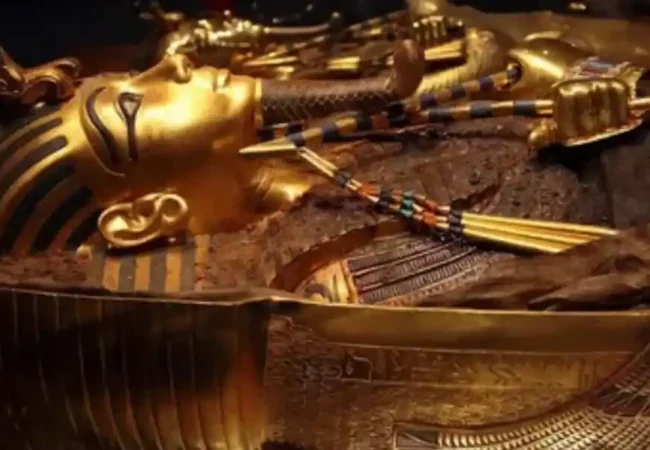
King Tutankhamun’s Death: Theories, Mummification, and the Discovery of KV62
The nearly untouched tomb of Tutankhamun was discovered in 1922 in the...



Pharaoh Ay was one of the final rulers of ancient Egypt’s 18th Dynasty, holding the throne for a brief period of about four years (circa 1323–1319 BC). Before his reign, he was a highly influential court advisor and vizier who served during the turbulent Amarna period under Akhenaten and later guided the young King Tutankhamun. Following Tutankhamun’s unexpected death without an heir, Ay seized power—likely securing his claim by marrying the young king’s widow, Ankhesenamun.
As pharaoh, Ay focused on stabilizing Egypt by restoring the traditional polytheistic religion that had been dismantled by Akhenaten. Although he intended for his military commander Nakhtmin to succeed him, he was ultimately outmaneuvered by General Horemheb, who took the throne after Ay’s death. Horemheb subsequently waged a campaign to erase Ay and the Amarna rulers from history, severely damaging Ay’s tomb (KV 23) in the process.
Key Takeaways
The sequence of events surrounding Ay’s rise and fall reflects the intense political instability at the close of the 18th Dynasty.
Before 1323 BC
Ay serves as a powerful court official and trusted advisor under Akhenaten and Tutankhamun, effectively managing the state during Tutankhamun’s youth.
Circa 1323 BC
Tutankhamun dies unexpectedly at age 18 or 19 without an heir. Ay steps in to perform the funerary rites, positioning himself as the successor.
1323–1319 BC
Ay rules for roughly four years. He marries Ankhesenamun to legitimize his rule, continues restoring the old religion, and builds a mortuary temple at Medinet Habu.
Circa 1319 BC
Ay dies. His plan to pass the throne to Nakhtmin fails as General Horemheb takes power. Horemheb damages Ay’s tomb (KV 23) to wipe his legacy from history.
When the Boy King Tutankhamun died unexpectedly at 19, Egypt was left without an heir. The man who stepped into the power vacuum wasn’t a royal son, but a seasoned advisor: Pharaoh Ay
Pharaoh Ay (also written Aye) was one of the last pharaohs of Egypt’s 18th Dynasty. He ruled for a short time about four years, around 1323 to 1319 BC or possibly 1327 to 1323 BC depending on different historical records. Before becoming king, he was an important advisor to several pharaohs and is believed to have held strong influence during the reign of Tutankhamun, almost acting as a power behind the throne.
His royal name, Kheperkheperure, means Everlasting are the Manifestations of Ra while his original name, Ay it- netjer, can be understood as Ay, Father of the God. Very few monuments or records clearly linked to him still exist today. This is partly because his rule was very short but also because his successor, Horemheb, tried to erase many traces of him and other rulers connected to the Amarna period from history.
King Ay ruled Egypt for about four years. During this short time, he tried to bring stability back to the country after the major religious changes introduced by Akhenaten and the later restoration efforts under Tutankhamun. Ay is believed to have continued the return to traditional beliefs by restoring the worship of Egypt’s old gods and reopening temples that had been neglected during the Amarna period.
A key step in strengthening his position was his marriage to Ankhesenamun, the widow of Tutankhamun. This union is often seen as a political decision since Ankhesenamun was closely connected to the royal family and represented the last direct link to the 18th Dynasty’s main bloodline.
| Royal Name | Kheperkheperure (Everlasting are the Manifestations of Ra) |
| Birth Name | Ay it-netjer (Ay, Father of the God) |
| Reign | ~1323 to 1319 BC (Approx. 4 years) |
| Predecessor | Tutankhamun |
| Successor | Horemheb |
| Burial Site | KV 23 (West Valley of the Kings / Valley of the Monkeys) |
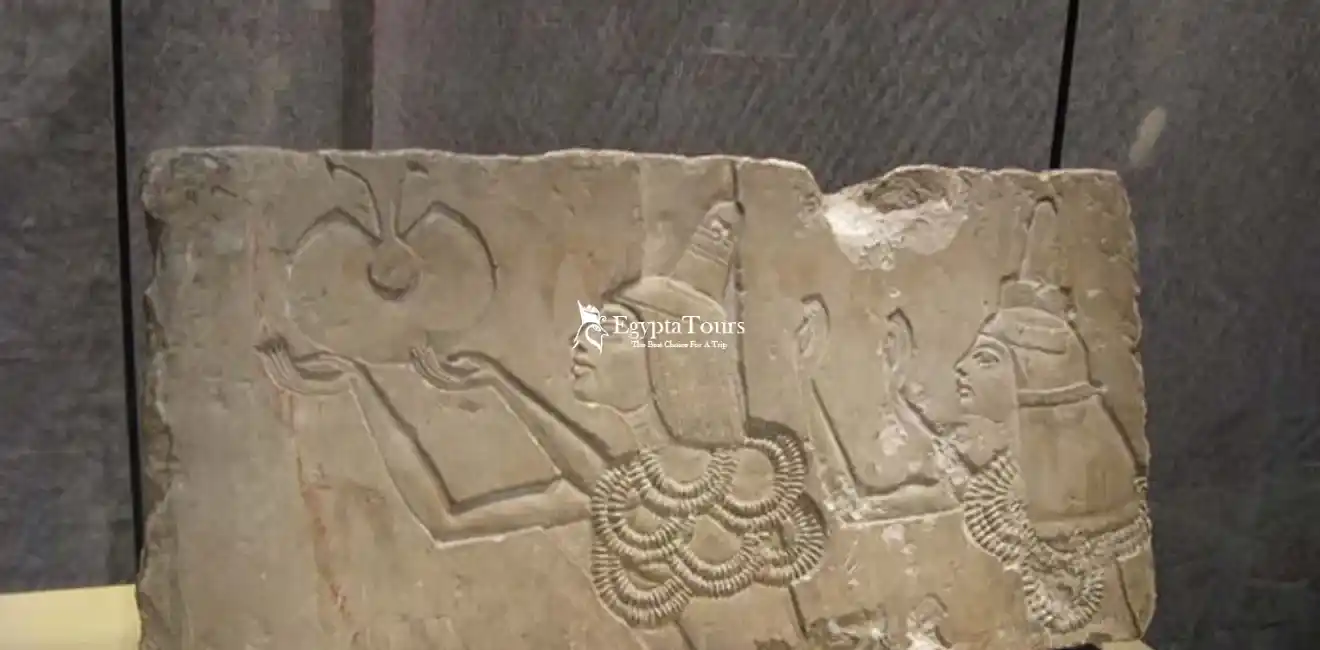
Pharaoh -Ay -family-EgyptaTours
Ay is believed to have been a native Egyptian from Akhmim and is often described as the son of Yuya and Tuya (Tjuyu). Yuya was a priest connected to the cult of the god Min in Akhmim. His name was not very common in Egypt which has led some researchers to suggest he may have had foreign origins, possibly from Syria, although this idea is not confirmed.
Yuya and his wife Tuya also had a daughter, Tiye who later became the Great Royal Wife of Pharaoh Amenhotep III and the mother of Akhenaten. Yuya was highly respected in the royal court and was even given the rare honor of a burial in the Valley of the Kings.
Some inscriptions, including those linked to Ay’s tomb (WV23), have led to theories that Ay may also have been connected to Queen Nefertiti and Mutnodjmet, the wife of Horemheb, though this is not certain and remains debated by historians. The wider family is closely linked to the Amarna period and the final years of Egypt’s 18th Dynasty. Ay later became pharaoh and ruled for a short time around 1325–1321 BC. He is also believed to have had two main wives, Iuy and Tey.
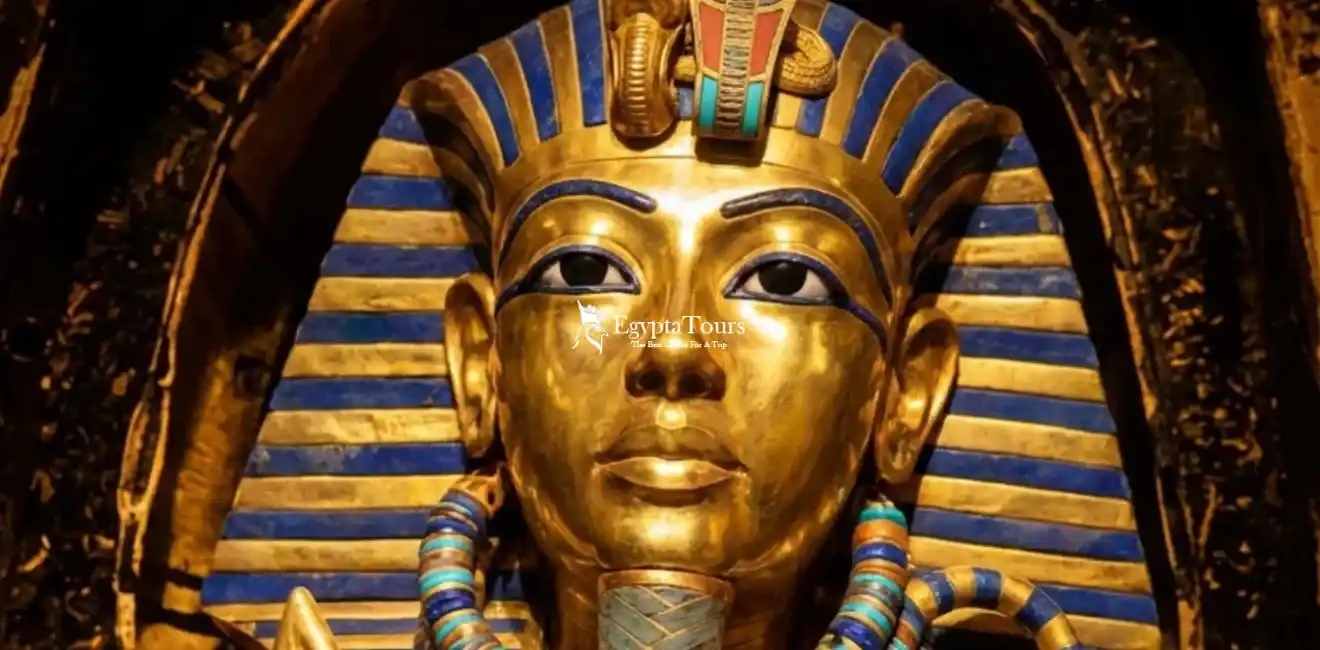
Rule- as -Pharaoh -Ay -EgyptaTours
Tutankhamun died at a young age, around 18 or 19, without leaving an heir which created a gap in power. His Grand Vizier Ay quickly stepped in to take control. Ay is even shown performing the king’s funeral rites which helped him strengthen his position as the new ruler. However, the exact way he secured the throne is still not fully clear.
The army commander Horemheb had been given an important role under Tutankhamun and was widely expected to become the next ruler. Despite this, Ay appears to have taken the throne instead, possibly strengthening his claim by marrying Ankhesenamun, Tutankhamun’s widow. Ay had already been a powerful court official for many years under both Akhenaten and Tutankhamun which placed him at the center of political life.
Even so, his position as pharaoh may still have been weak if he was not of royal birth. To secure authority in a time of instability, marriage into the royal family would have helped. Since Ay was already an older man when he became king, his reign was short, lasting about four years.
During his rule, he continued restoring traditional Egyptian religion after the Amarna period and built a mortuary temple at Medinet Habu. Evidence from inscriptions suggests he may have planned for Nakhtmin, a military officer, to succeed him, though this plan never came to pass.
After Ay’s death, Horemheb ultimately took the throne. Many records about Ay were later damaged or erased, making it difficult to know the exact length of his reign which some estimates place anywhere from a few years up to around a decade.
Ay seems to have planned for Nakhtmin, possibly his biological or adopted son, to become the next ruler after him. However, this plan did not succeed, as Horemheb removed Nakhtmin’s claim and took the throne himself. Because Horemheb also destroyed many traces of Ay’s reign, very little clear information about Ay remains today.
After becoming pharaoh, Horemheb also worked to erase memories linked to the Amarna period and its rulers. As part of this, he damaged Ay’s tomb and broke his sarcophagus, trying to remove his presence from history.
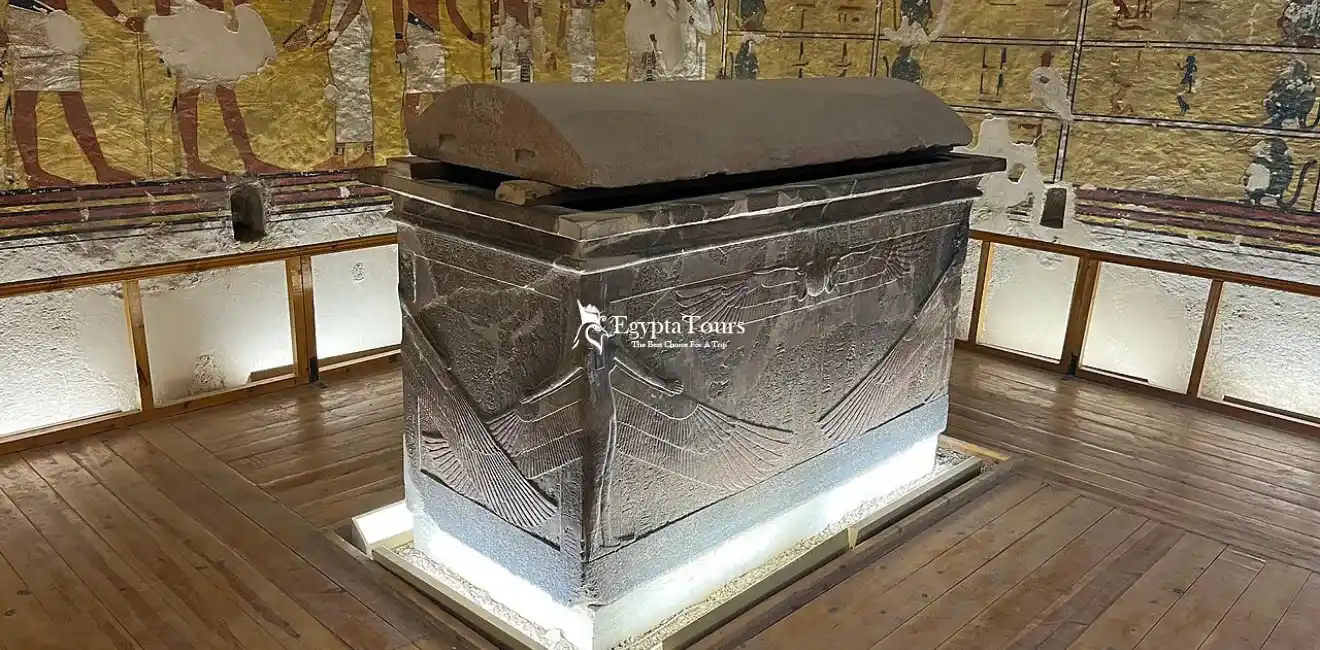
Tomb -of- Ay- (KV 23)-EgyptaTours
KV 23 is located in the western branch of the Valley of the Kings, beyond KV 24 and KV 25. It is believed to be the last tomb built in that area and it is commonly identified as the burial place of King Ay, the second to last pharaoh of Egypt’s 18th Dynasty. The site is also known as WV 23, because it lies in the West Valley (Wadi el-Gurud), sometimes called the Valley of the Monkeys, a name inspired by scenes of baboons from the Amduat found inside the tomb.
So far, no foundation deposits have been found which makes it difficult to confirm the original owner. Some scholars suggest it may have first been planned for Akhenaten, Smenkhkare or Tutankhamun, with Tutankhamun being the most likely. One idea is that the tomb was started but not finished when Tutankhamun died which led to his burial in KV 62 instead. At that time, KV 62 may have originally been intended for Ay who was serving as vizier.
The tomb was discovered by Giovanni Belzoni in 1816 who recorded his name and the date at the entrance. However, it had already been entered and looted earlier and there is also clear evidence of deliberate damage, often linked to Horemheb, Ay’s successor. Although found in 1816, the tomb was not fully excavated until 1908 when Howard Carter and his team cleared it.
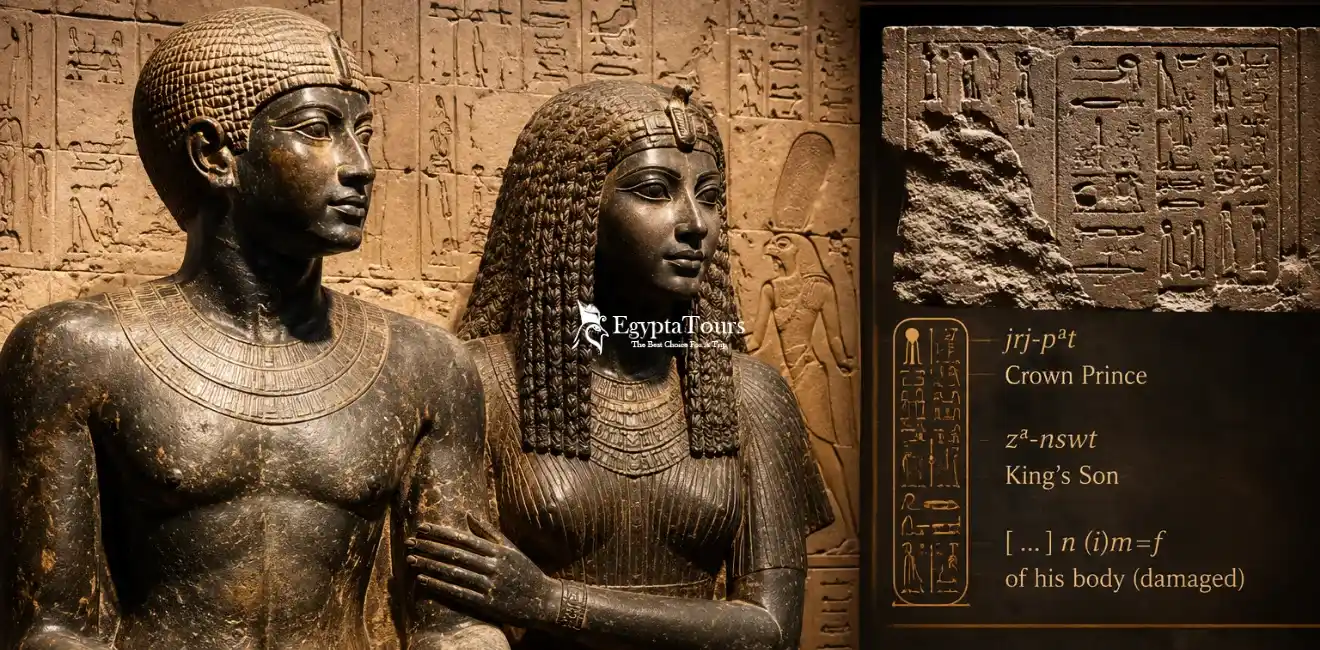
Succession -of -King- Ay-EgyptaTours
Before his death, Ay is believed to have chosen Nakhtmin as his successor to the throne. However, this plan did not succeed, because Horemheb eventually became the last ruler of Egypt’s 18th Dynasty instead of Nakhtmin.
Evidence suggesting Nakhtmin was Ay’s chosen heir comes from a statue of Nakhtmin and his wife, likely made during Ay’s reign. In this inscription, Nakhtmin is given important titles such as “Crown Prince” (jrj-pꜥt) and King’s Son (zꜣ-nswt) which indicates a very high status. Because of this, some scholars think Nakhtmin may have been Ay’s biological son or an adopted son and that Ay was preparing him to take over the throne rather than Horemheb.
Egyptologists Aidan Dodson and Dyan Hilton note that part of the inscription is damaged after the phrase King’s Son of This has led to debate about what originally followed. Some believe it may have said Kush, meaning Nakhtmin was a governor of Nubia while others think it likely said of his body, meaning he was a true royal son. Since there is no other strong evidence linking him to the position of Viceroy of Nubia, the second interpretation is considered more likely.
Another clue is that Nakhtmin donated items to Tutankhamun’s burial before he held such high titles, suggesting that he only gained his royal status later, possibly under Ay. Some damage to his statues has also been linked to later attempts to erase the memory of officials connected to the Amarna rulers.
Pharaoh Ay was one of the last kings of Egypt’s 18th Dynasty. He became ruler after the death of Tutankhamun and is believed to have ruled for a short time. Before becoming pharaoh, he served as an important advisor in the royal court under several kings.
Ay became king after Tutankhamun died without leaving an heir. Since Egypt had no clear successor, Ay took the throne. Some historians believe he strengthened his position by marrying Ankhesenamun, Tutankhamun’s widow.
King Ay ruled Egypt for about four years. However, some historians think his reign may have lasted slightly longer because many historical records about him were later damaged or destroyed.
The exact relationship between Ay and Tutankhamun is still uncertain. Some scholars believe Ay may have been a close advisor or family member through marriage, but there is no clear proof.
Ay is believed to have come from Akhmim and may have been related to Yuya and Tuya, the parents of Queen Tiye. Some theories also suggest he may have been connected to Queen Nefertiti, though this is still debated.
Ay played an important role during a time of change in Egypt. He helped continue the return to traditional religion and ruled during the transition between Tutankhamun and Horemheb.

Explore our top-rated Egypt travel packages and embark on an unforgettable journey. From the Pyramids of Cairo to the magical temples of Luxor, Aswan, and Abu Simbel, discover expertly curated tours designed for your perfect Egyptian adventure