To More Inquiry
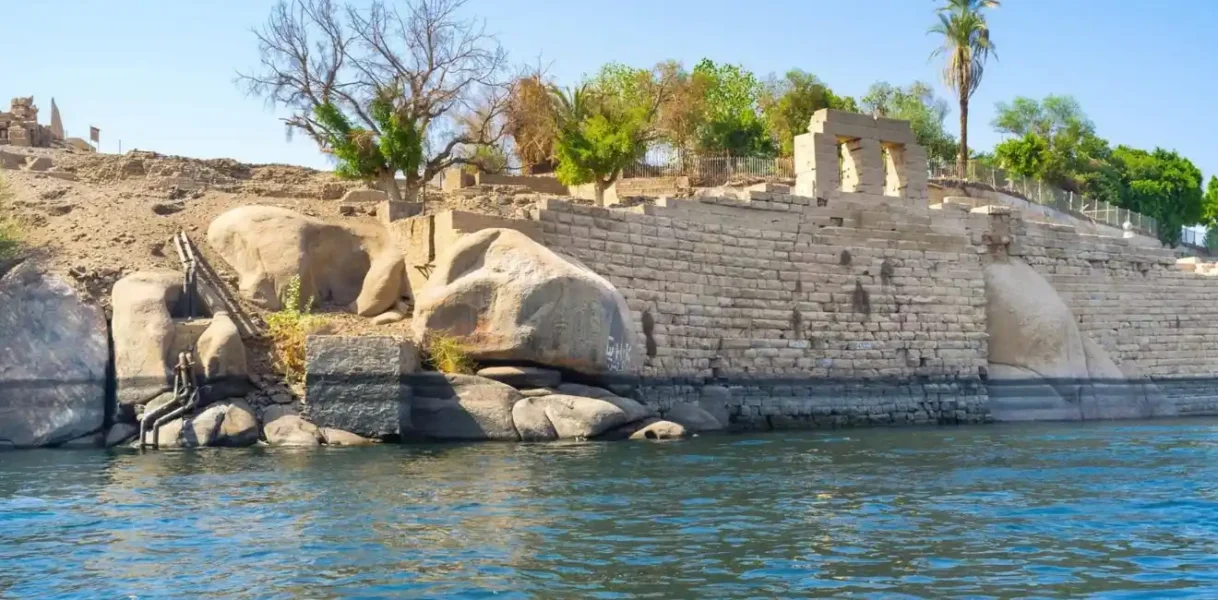
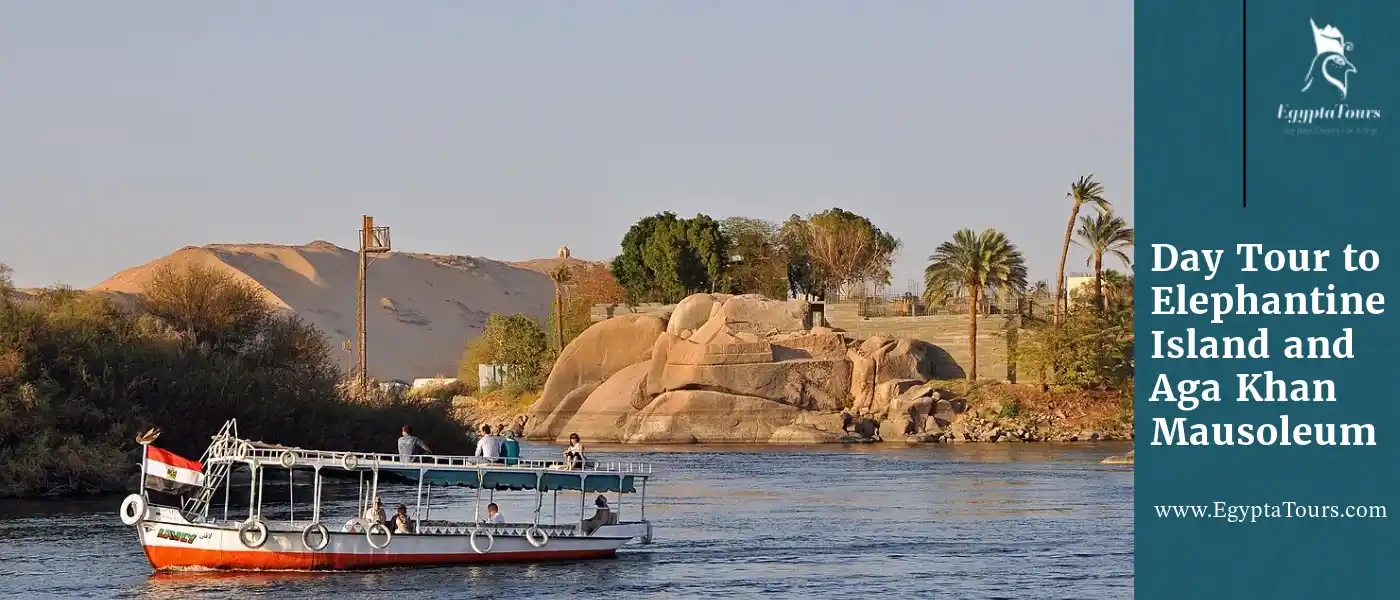

Elephantine Island is considered one of the wonderful tourist destinations in Egypt as it is located in the heart of the Nile River near the beautiful city of Aswan in Upper Egypt.
This island is famous for its stunning natural beauty which makes it an ideal place to visit.
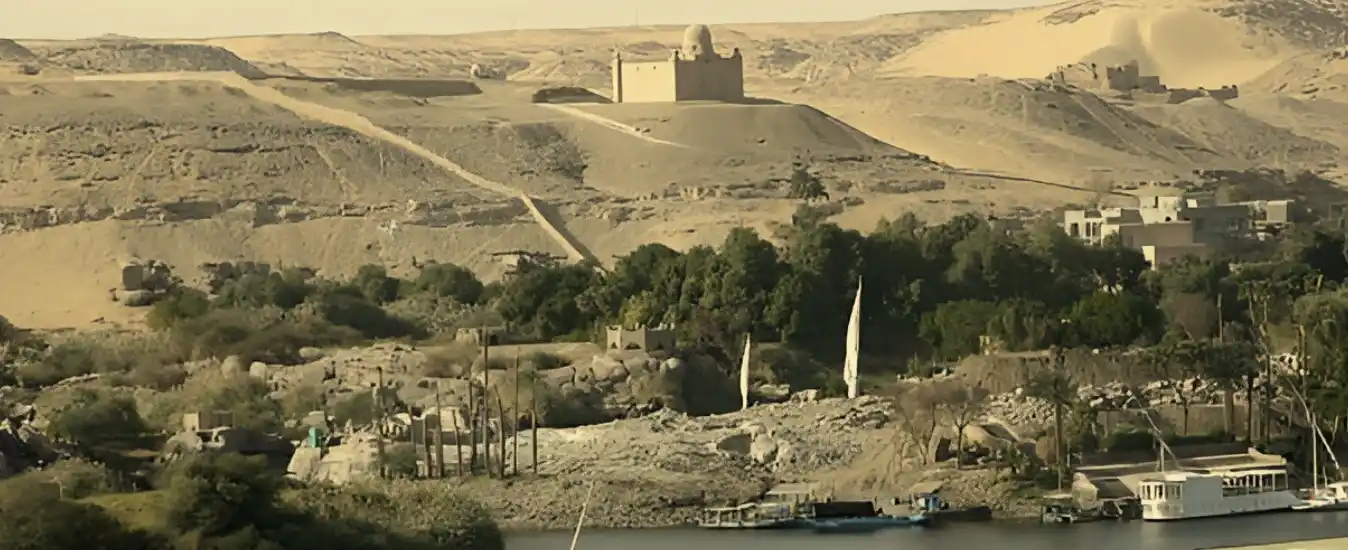
This site also includes the Aga Khan Mausoleum which is considered an important landmark which reflects part of the unique culture and history of this charming region.
A day tour to Elephantine Island and Aga Khan Mausoleum offers a rich cultural experience for all visitors where they can enjoy the stunning natural scenery while exploring historical and archaeological landmarks.
We will talk in this article about Elephantine Island where it is located and the most prominent landmarks found there as well as learn about the Aga Khan Mausoleum and its architectural details.
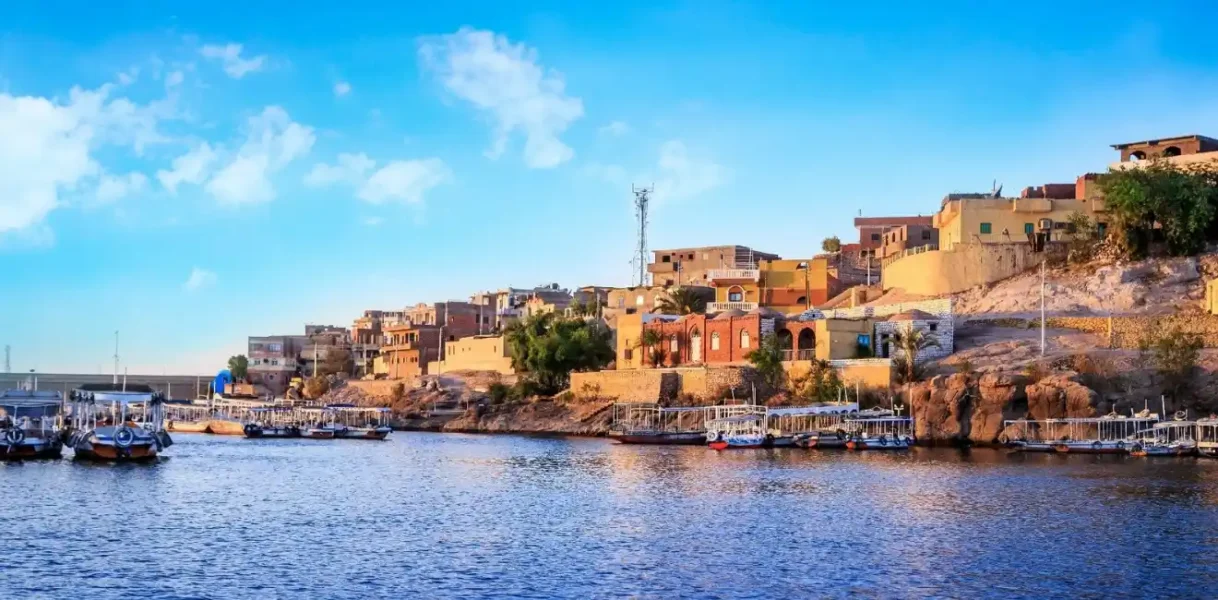
Elephantine Island is one of the unique islands found in the middle of the Nile River and it administratively belongs to the Aswan Governorate.
The area of this island is about 1500 meters long and 500 meters wide and it contains some hotels and Nubian houses which are designated for receiving tourists.
It is also one of the most important areas where palm cultivation and other local crops are widespread.
It also contains some historical landmarks from different eras and therefore many people enjoy taking a day tour to Elephantine Island and Aga Khan Mausoleum which overlooks it.
About 5800 people live on this island and most of them are Nubians and they work in tourism, agriculture and some other handicrafts.
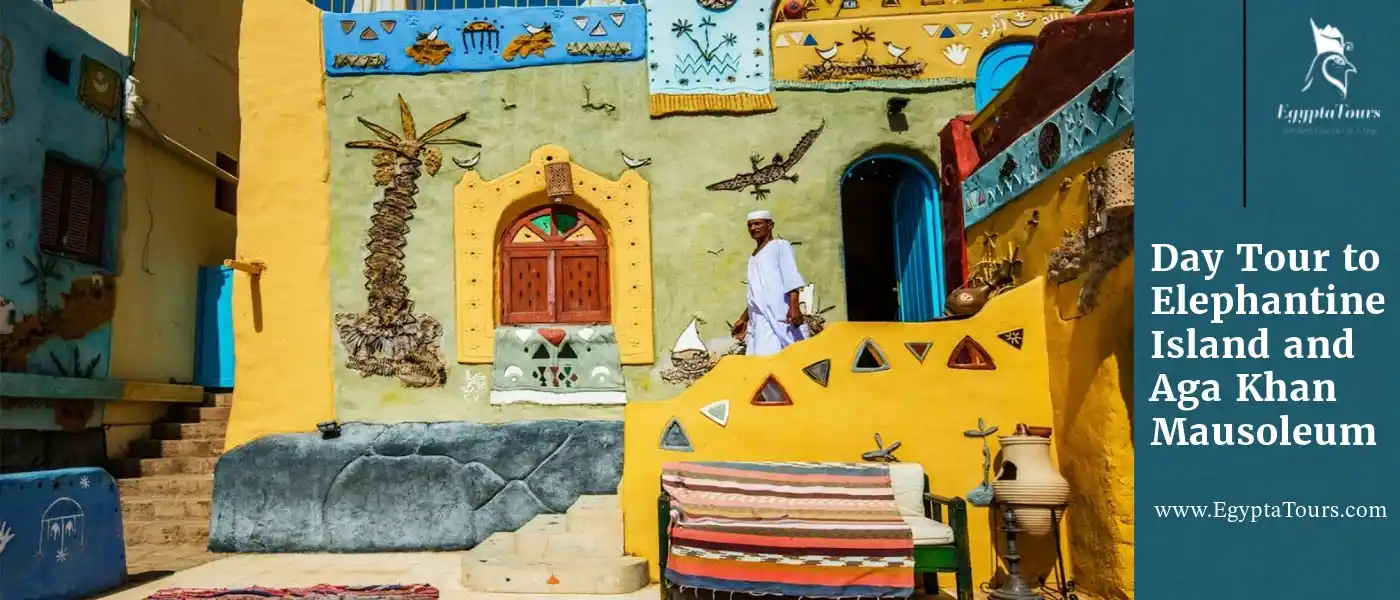
Therefore, this island is dominated by the unique and distinctive Nubian character with its bright colors.
The name of this island was derived from the Greek language.
In ancient times, this island was considered one of the most important southern commercial centers in Egypt where goods were exchanged between Egypt and South African countries via the river.
Aga Khan III was Sultan Sir Muhammad Shah and the title Aga Khan in the Nizari Ismaili sect was given to their spiritual Imam. This man died in 1957 and a mausoleum was made for him in the city of Aswan on a hill which overlooks the Nile.
This mausoleum was designed in the Fatimid style and was built by one of the most important Egyptian architects and was decorated with luxurious Italian Carrara white marble.
However, he was not buried in his mausoleum until two years after his death based on his will.
He had suffered from some bone diseases and tried to treat these diseases in many countries around the world, but these treatments were unsuccessful.
Some doctors advised him to visit the city of Aswan to heal with its dry climate and sands as he used to bury his lower part inside the sands of Aswan for about three or four consecutive hours.
He was able to walk after about a week and then ordered a mausoleum to be built for him in this area which he loved and where he found some healing.
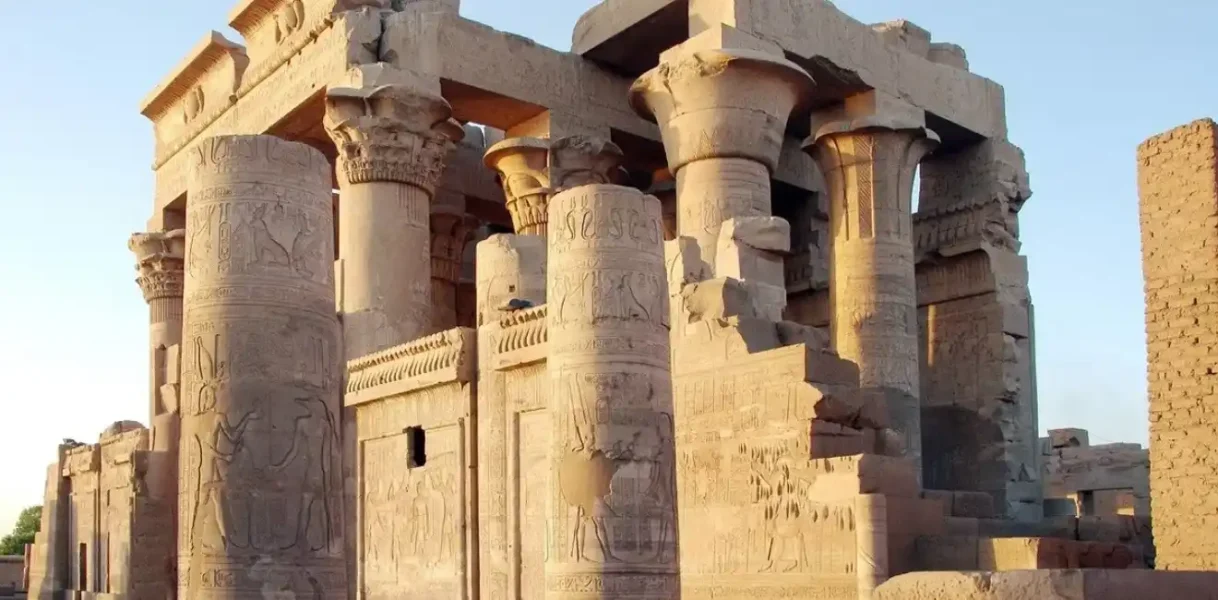
Temples-on-Elephantine-Island-Day-Tour-to-Elephantine-Island-and-Aga-Khan-Mausoleum-EgyptaTours
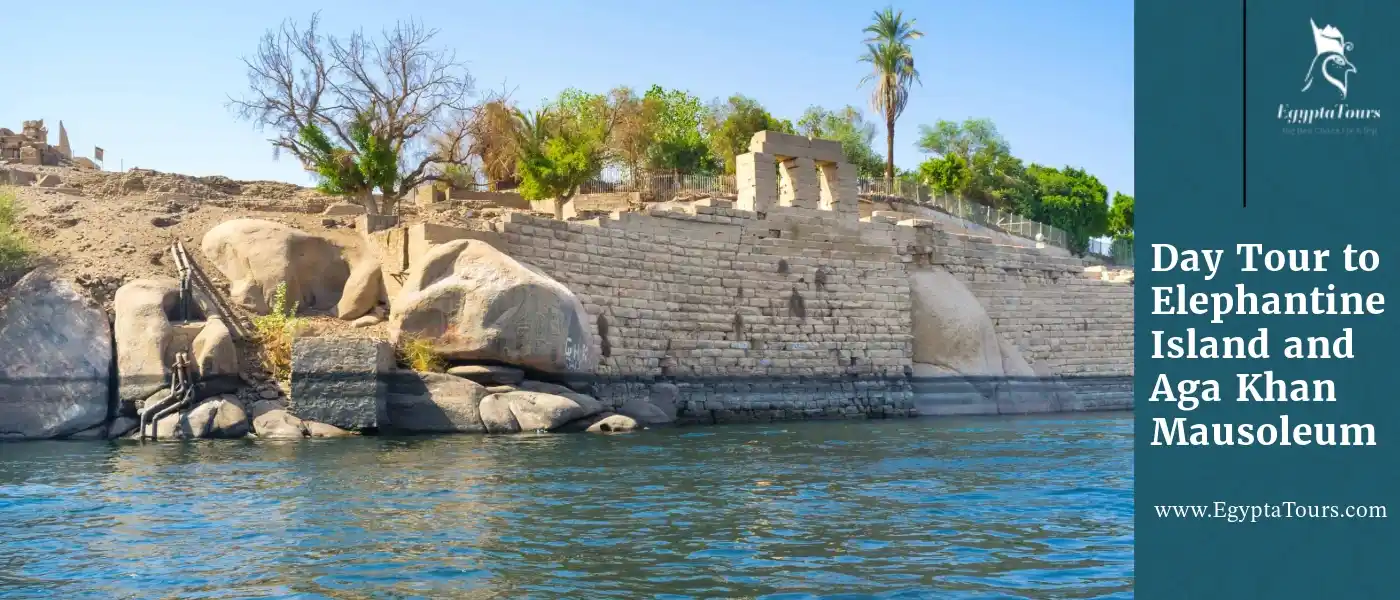
Some people take a day tour to Elephantine Island and Aga Khan Mausoleum to enjoy seeing the remains of ancient Egyptian temples found on the island.
Some temples were built there which were dedicated to the goddess Satet who was known to the ancient Egyptians as the lady of the flood and protector of the southern borders.
More than one temple was built for this goddess; one was built during the First Dynasty era, another was built during the Sixth Dynasty era, the third was built by King Senusret I and the fourth was constructed by Queen Hatshepsut during the New Kingdom era.
There are also remains of a temple for the god Khnum on the island.
Only two main columns at the main entrance of the temple remain after it was looted and subjected to the factors of time and there is also a symbolic tomb of rams in it.
The Romans and Greeks recorded their names on the walls of these temples.
A statue of Alexander the Great was made which depicts him offering sacrifices to the god Khnum according to the inscriptions.
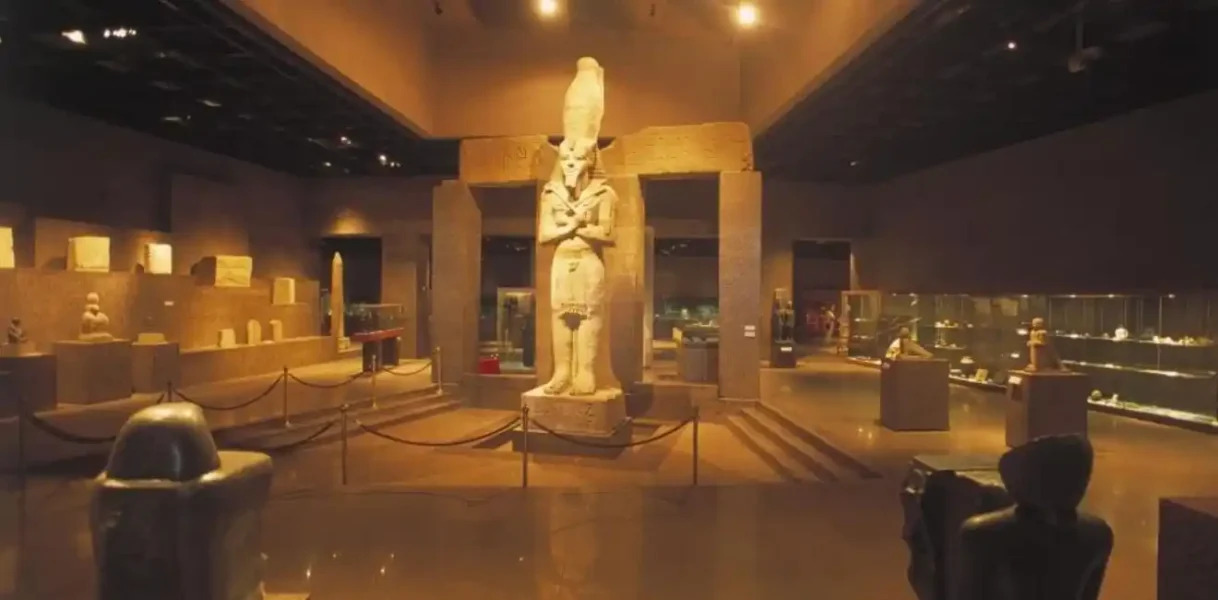
The Aswan Museum is also located on the island and since its establishment, it was the headquarters for the chief British engineer who built the old Aswan Dam.
Then it was later converted into a museum where some artifacts which were extracted by foreign missions during their excavations on the island and neighboring areas were displayed such as some mummies, statues of some kings, some daily tools which were used by ancient Egyptians, their funerary stelae and other collectibles.
Nubian-Village-Best-tourist-activities-you-can-do-on-Elephantine-Island-EgyptaTours
Wandering inside the ancient Egyptian archaeological sites located on the island is considered one of the most important activities that can be done when taking a day tour to Elephantine Island and Aga Khan Mausoleum which is located on the opposite bank.
It is also possible to take a tour of some beautiful and colorful Nubian villages, learn about the authentic culture of these hospitable residents and buy some handmade products from them.
Likewise, one can enjoy relaxing and watching the stunning natural scenery on the banks of the Nile River, enjoy the calm and nerve-soothing natural views and take some photographic pictures in these attractive places.
Dokah Restaurant is considered one of the most important restaurants where you can eat authentic Egyptian and Nubian foods inside Elephantine Island when taking a day tour to Elephantine Island and Aga Khan Mausoleum.
It also serves some foods from other cuisines, but one of the most important dishes that must be tried is the delicious Nubian dishes such as the distinctive Nubian tagine.
You can also enjoy drinking refreshing Aswan hibiscus tea and local coffee with its strong and special flavor.
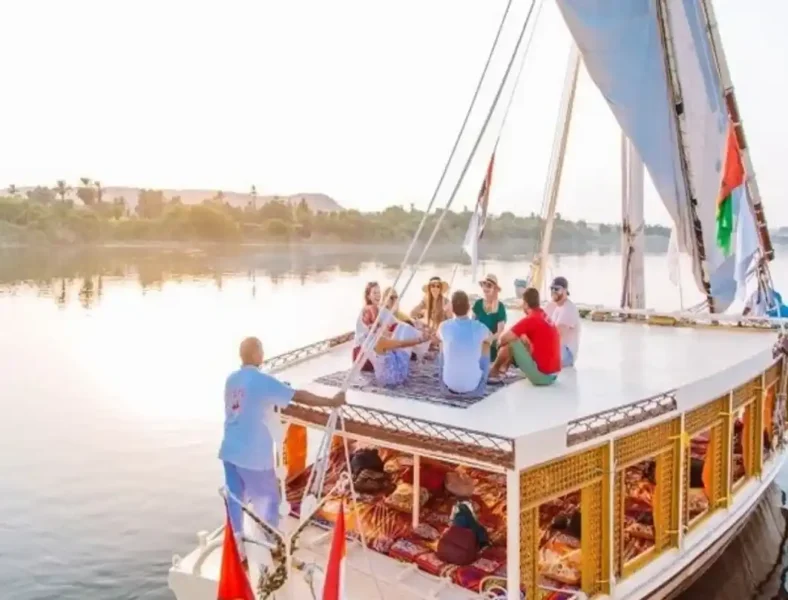
Felucca-trip-on-Day-Tour-to-Elephantine-Island-and-Aga-Khan-Mausoleum-EgyptaTours
Traditional sailing felucca trips are considered one of the most important things that can be enjoyed in Aswan to see the blue waters and clear sky and enjoy relaxation and tranquility on the surface of the eternal Nile.
One of the most important times to ride a felucca during a day tour to Elephantine Island and Aga Khan Mausoleum is at sunset time where you can enjoy seeing the golden sun rays which reflect on the blue Nile waters in a magical scene.
It is also possible during this trip to see some dense plants on the banks and rare birds which are found near the island and the small neighboring islands.
Aswan Governorate can be reached either by plane which is the fastest option, or by using the train, especially the comfortable sleeper trains.
Then, one can easily transfer by local boats or public ferries across the Nile River water to reach Elephantine Island or near the mausoleum to view it from the outside as the mausoleum itself is located on the west bank and cannot be reached directly by the public ferry to the island.
One of the best times to enjoy a day tour to Elephantine Island and Aga Khan Mausoleum is particularly in the winter season (from November to February) as this region is characterized by its warm and sunny weather during the day and pleasant at night which is suitable for carrying out many tourist activities and touring comfortably without severe exhaustion from the heat.
You can seek assistance from the best local or international tourism companies to create a special program where you can visit many other tourist attractions which are found in Aswan such as the Philae temples, the High Dam and the Unfinished Obelisk, including Elephantine Island and the Aga Khan Mausoleum and enjoy seeing many tourist and archaeological landmarks within a very suitable and effective time frame.
We will now provide some important tips that should be kept in mind to enjoy a day tour to Elephantine Island and Aga Khan Mausoleum and make the most of your visit:
One of the best things you can enjoy when visiting the city of Aswan is taking a day tour to Elephantine Island and Aga Khan Mausoleum, because they are among the most important places where you can enjoy seeing the remains of historical landmarks, interacting with the living Nubian culture and the beauty of the eternal and unique Nile nature in this charming region.
Your day begins with a warm welcome from your EgyptaTours guide, who will pick you up from your Aswan hotel or cruise ship. Enjoy a relaxing felucca ride (or motorboat, depending on weather) across the Nile to the legendary Elephantine Island one of the most ancient sites in Aswan.
Step back in time as you wander the ruins of ancient temples, including the Temple of Khnum, and discover the remains of an ancient nilometer used to measure the river’s water levels.
You’ll also visit the Aswan Museum, which houses artifacts from the island and nearby Nubian sites.
If time permits, enjoy a brief walk through a traditional Nubian village on the island. Learn about their colorful culture, local crafts, and warm hospitality.
Continue your tour with a boat ride across the Nile to the Aga Khan Mausoleum, majestically perched on the west bank. This serene structure, built in pink limestone, honors Sultan Mohammed Shah Aga Khan III—a spiritual leader of the Ismaili Muslims.
While the interior is not open to visitors, the panoramic views from the hilltop and the mausoleum’s architectural elegance are breathtaking.
Take time to snap some stunning photos of Aswan’s desert cliffs, the Nile River, and the lush greenery around you. A peaceful moment of reflection with incredible views.
After a culturally rich and scenic morning, your EgyptaTours guide will escort you back to your hotel or cruise ship with memories that will last a lifetime.
Reserve your ideal trip early for a hassle-free trip; secure comfort and convenience!

We have a wide variety of travel packages that suits your desires.
We Offer The Finest Prices For Various Vacations and Countless Tour Packages.
Fast reservations for a smooth travel experience
Tailor-made tours designed to match your style, pace, and interests.
Our Tour Operators Will be With You Live Chat , WhatsApp and Mail.
Use your debit card or credit card. Your transactions are protected by 3D Secure and Secure Code.