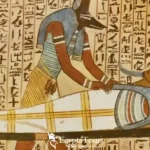

Atum God
The Egyptian civilization is considered one of the oldest ancient civilizations, known...



The treasures of ancient Egypt show a civilization that lasted for thousands of years. Their importance goes beyond Egypt and has become part of our shared human heritage. Throughout history because of expeditions and excavations done without strong laws to protect artifacts, many Egyptian pieces were taken out of the country. A great example of this is the bust of Nefertiti, a stunning work of art that has become a symbol of Egyptian beauty and culture.
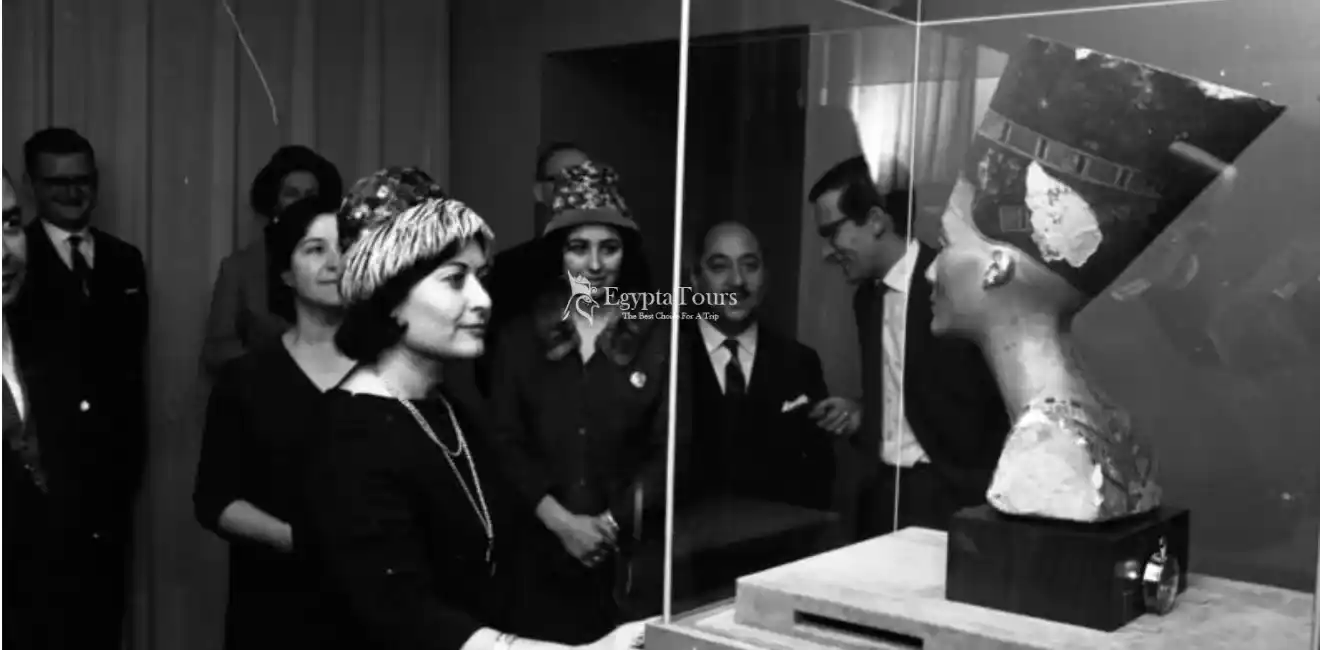
Today, these treasures are displayed in major museums in Europe and America which has led to many discussions about ownership and the right to return them. The Nefertiti Bust is now in the Neues Museum in Berlin, Germany. It is one of the most famous and amazing sculptures of ancient Egyptian art. The bust is believed to have been made by the royal sculptor Thutmose during the 18th dynasty.
The bust has also become a focus in discussions about artifact trafficking and the right of countries to reclaim their cultural heritage, linking art, history and identity. Its presence in Germany has caused controversy. Egypt says it was taken illegally and should be returned.

About- The- Nefertiti -Bust
The Nefertiti Bust is one of the most famous works of ancient Egyptian art. It is made of limestone and coated with colored stucco. The bust was created around 1345 BC by the Egyptian sculptor Thutmose, showing Queen Nefertiti, the Great Royal Wife of Pharaoh Akhenaten. This work made Nefertiti one of the most famous women of the ancient world and an icon of feminine beauty.
The bust was discovered in 1912 by a German archaeological team led by Egyptologist Ludwig Borchardt, during excavations in Thutmose’s workshop at Tell el Amarna, Egypt. After its discovery, the bust was kept in several locations in Germany including a salt mine in Merkers-Kieselbach, the Dahlem Museum in West Berlin, the Egyptian Museum in Charlottenburg and the Altes Museum. Since 2009, it has been permanently displayed at the Neues Museum in Berlin.
The Nefertiti Bust has become a cultural symbol not only for Berlin but also for ancient Egypt. It has also caused a major dispute between Egypt and Germany as Egypt continues to demand the return of the bust, claiming it was taken out of the country illegally while Germany and the Berlin Museum maintain their ownership based on an official protocol signed between the German excavators and the Egyptian Antiquities Service at the time of its discovery.

The- Historical- Background- About-The- Nefertiti -Bust
Queen Nefertiti’s name means “the beautiful one has come” and she was the Great Royal Wife of Pharaoh Akhenaten who was one of the kings of the 18th dynasty in the 14th century BC. Her name is associated with a significant religious and political period in ancient Egyptian history as Akhenaten introduced a new religion known as Atenism which was based on the worship of the sun disk Aten.
Nefertiti appears alongside her husband in many inscriptions and representations reflecting her high status and prominent role in the religious and family life of that period. There is a “house altar” dating back to around 1350 BC depicting Akhenaten, Nefertiti and three of their daughters in a family scene. Nefertiti is shown wearing a distinctive crown similar to the one she wears in her famous bust.
Not much is known about Nefertiti’s origins with different opinions about her ancestry. Some believe she belonged to the Egyptian royal family while other theories suggest she may have been a foreign princess or the daughter of a high ranking government official named Ay who became pharaoh after Tutankhamun.
Nefertiti had six daughters including Ankhesenpaaten who later changed her name to Ankhesenamun after the abandonment of Aten worship and married Tutankhamun.
It was previously believed that Nefertiti disappeared from historical records in the 12th year of Akhenaten’s reign either due to her death or because she changed her name. However, an inscription found on a limestone quarry in Deir Abu Hinnis on the east bank of the Nile, north of Tell el Amarna, indicates that she was still alive in the 16th year of her husband’s reign.
The Nefertiti bust is believed to have been created around 1345 BC by the sculptor Thutmose and was found in his workshop in Tell el Amarna. This bust has become one of the most famous works of art in ancient Egypt and has greatly contributed to cementing Nefertiti’s image as one of the most famous women of the ancient world and an eternal symbol of feminine beauty.

Nefertiti- Bust- And -Its -Discovery
The Nefertiti Bust is considered one of the most exquisite and famous works of art surviving from ancient Egypt and its discoverer expressed his astonishment upon finding it saying: “Suddenly, we had in our hands the most vibrant Egyptian artwork, indescribable in words, it must be seen.” The Bust was discovered on 6th December 1912, in Tell el Amarna, inside the workshop of the sculptor Thutmose by a German archaeological mission funded by the German Oriental Society, led by archaeologist Ludwig Borchardt.
The bust was found alongside other incomplete busts of Nefertiti and Borchardt’s diary is the main written source for details of the discovery. In 1924, a document was uncovered in the archives of the German Oriental Society, relating to a meeting held on 20th January 1913, between Borchardt and a senior Egyptian official to discuss the division of the 1912 excavation finds between Egypt and Germany.
According to the society’s secretary who attended the meeting, Borchardt was determined to have the bust go to Germany and it is suspected that he deliberately concealed the true artistic value of the bust, despite later denying it.
He presented a poorly lit photograph of the bust to the French Inspector of Antiquities, Gustave Lefebvre which did not show it in its best light and hid the bust in a box during the inspection falsely claiming it was made of plaster rather than limestone.
Some researchers and journalists have described what happened as an unfair acquisition, Philip Vandenberg considered the bust one of the most famous looted artifacts and Time magazine listed it among the top ten looted artworks in the world.
In response, the German Oriental Society blamed the Inspector of Antiquities for negligence, insisting that the division of artifacts was fair and that the Nefertiti bust was clearly listed in the division lists and that the inspector could have examined all the pieces carefully.
Despite the ongoing controversy surrounding its removal from Egypt, the Nefertiti bust remains a global symbol of ancient Egyptian art and one of the most famous works of art in human history.
Nefertiti- Bust- In- Germany
The statue of Nefertiti arrived in Germany in 1913, shipped to Berlin and given to Henry James Simon, an antiquities dealer who funded the Amarna excavations. Simon kept the statue in his home and later lent it to the Berlin Museum along with other artifacts from the same excavations.
Although the rest of the Amarna collection was displayed from 1913, the Nefertiti statue remained hidden at the request of Ludwig Borchardt. In 1918, museum officials discussed showing it to the public but it stayed hidden. In 1920, the statue officially became the property of the Berlin Museum and it was shown to the public for the first time in 1923 with written permission from Borchardt. In 1924, it was officially displayed in the Egyptian Museum in Berlin and attracted worldwide attention.
The statue remained in the New Berlin Museum until it closed in 1939 at the start of World War II when the artifacts were moved to safe locations. First, the statue was hidden in the Prussian State Bank vault then moved to a fortified military site in Berlin in the fall of 1941.
In 1943, the New Berlin Museum was bombed and on March 6, 1945, the statue was moved to a salt mine in Thuringia. In the same month, the U.S. The army found the statue and sent it to the Army’s Department of Fine Arts and Archaeology then to the German Central Bank in Frankfurt. In August 1945, it was shipped to the American collection point in Wiesbaden where it was displayed in 1946.
In 1956, the statue returned to West Berlin and was displayed at the Dahlem Museum. East Germany, since 1946, requested it to be returned to Museum Island in East Berlin where it had been before the war. In 1967, it was moved to the Egyptian Museum in Charlottenburg and stayed there until 2005 then moved to the Old Museum. Finally, it returned to the New Berlin Museum when it reopened in October 2009, becoming the museum’s main piece. The statue’s insurance value is about 390 million U.S. dollars or 300 million euros.
Since it was first displayed in 1924, Egypt has repeatedly demanded the return of the statue with threats to stop excavations or exhibitions, requests for UNESCO intervention and continuous cultural and media campaigns. Germany, on the other hand, refuses to return it, citing official documents that show its export from Egypt was legal and the difficulty of moving it due to its fragility.
Since the official unveiling of the bust of Nefertiti in Berlin in 1924, Egypt has demanded its return. In 1925, Egypt threatened to stop German archaeological digs in the country if the bust was not returned. In 1929, Egypt offered to exchange it for other artworks but Germany refused. In the 1950s, Egypt tried again to start negotiations, but there was no response. Despite Germany’s strong refusal, in 1933 Hermann Göring suggested returning the bust to King Fuad I as a political move but Hitler rejected the idea and told the Egyptian government that he would build a new Egyptian museum for the bust.
When the bust came under U.S. control, Egypt asked the United States to return it but the request was refused and Egypt was advised to discuss the matter with the new German authorities. In 1989, Egyptian President Hosni Mubarak visited the bust and called it “the best ambassador for Egypt” in Berlin.
Zahi Hawass, Secretary General of the Supreme Council of Antiquities, stated that the bust belongs to Egypt and left the country illegally so it should be returned. He also said that the Egyptian authorities were misled in 1912 and asked Germany to prove its legal possession. In 2005, Hawass asked UNESCO to intervene for the return of the bust.
In 2007, Hawass threatened to stop Egyptian exhibitions in Germany if the bust was not loaned and he also called for a global boycott of German museums, in what he called a “scientific war.” In 2012, he asked Germany to loan the bust for the opening of the new Egyptian Museum near the pyramids. At the same time, cultural associations in Hamburg launched a campaign called “Nefertiti’s Journey,” distributing postcards with the bust and the words “Return to Sender” and sending an open letter to the German Minister of Culture Bernd Neumann supporting the loan. When the bust returned to the Neues Museum in Berlin in 2009, questions arose again about whether Berlin was the right place for it.
Some German art experts tried to reject Hawass’s claims that Borchardt misled the Egyptian authorities, based on a 1924 document. Germany argued that the bust is very fragile and could break during transport and that the legal claims for its return are not correct. According to The Times, Germany fears the bust might not be returned if it is loaned to Egypt.
In December 2009, Friedrich Seifried, director of the Egyptian Museum in Berlin, showed Egyptians documents about the discovery of the bust, including Borchardt’s protocol with the Egyptian Antiquities Authority which described the bust as a painted plaster statue of a princess. But in his diary, Ludwig Borchardt clearly wrote that it was the head of Nefertiti which proves he wrote the description to help his country get the bust.
Hawass said this shows that Borchardt acted unethically to deceive Egypt. Seifried added that the decision to return the bust lies with the Prussian Cultural Heritage Foundation and the German Minister of Culture.
“Egypt was under British protection since 1882. So Nefertiti came to Germany under foreign rule, and no Egyptian was asked. The system for dividing discoveries was created by the British and French authorities who managed the antiquities. They shared the discoveries among themselves. The scientific evidence is clear, Nefertiti was stolen. No one should justify it with the colonial powers’ rights at that time.

The -Description- Of- Nefertiti- Bust- the -Shape-, Materials- and- Examination
The bust of Nefertiti, discovered in 1912, stands about 47 or 48 cm tall and weighs around 20 kilograms. Made of limestone covered with a layer of colored plaster, the bust has been remarkably well preserved. While the face is almost perfectly symmetrical and in good condition, the left eye is missing the inlay present in the right eye, whose pupil is made of black-painted quartz fixed with beeswax.
Nefertiti wears her iconic blue crown, the “Nefertiti crown,” adorned with a golden band and above her forehead is a cobra which is now broken. She also wears a wide necklace decorated with flowers, and both ears show slight damage.
Although Borchardt, who published the first detailed study of the bust in 1923, insisted that “description is useless, must be seen,” he still provided a meticulous account of the sculpture. He notes minor damages: the erect portion of the cobra is broken, small pieces of the wig’s upper edges are missing, a section of the plaster coating on the left side has flaked off and traces of moisture have left faint marks.
Despite these imperfections, Borchardt emphasized the extraordinary delicacy of the work: the muscles of the nape and sides of the neck are rendered so finely that one can imagine them flexing beneath the skin which appears in a healthy hue.
Egyptian sculptors rarely tried to convey emotion in their works, yet Nefertiti’s face embodies serenity and composure. Viewed from the front, it exhibits perfect mirror symmetry but the viewer still perceives a realistic and highly individual likeness rather than an idealized image. Borchardt’s detailed observations of the mouth, nose and eyes express his admiration for the bust’s beauty.
From an art historical perspective, David Silverman notes that the bust reflects the classical style of Egyptian art, rather than the unusual Amarna style associated with Akhenaten’s reign.
The exact purpose of the bust remains uncertain but it likely served as a model for official images or as a guide for sculptors in Thutmose’s workshop. Gardner’s Art Through the Ages interprets the large head and long neck as Thutmose’s attempt to depict a “heavy flower on a slender stem” while Silverman views it as a reflection of classical Egyptian ideals of beauty. Borchardt’s conclusion remains relevant: “In any case, the finished and colourful portrait is the finest and most elaborate one I know.”
The striking impact of the Nefertiti bust lies in its vibrant colors, which are unique in their state of preservation and give the sculpture an unusually lifelike quality. Without the painting and the inlaid eye, the bust would remain a masterpiece of craftsmanship but its effect would be entirely different.
The pigments used align with the known spectrum of ancient Egyptian natural pigments including red ochre, yellow orpiment, green frit and black carbon, in addition to the artificially produced “Egyptian blue” applied in a variety of shades to render the queen’s skin tone precisely.
Borchardt analyzed the colors chemically and published the results in his book The Image of Queen Nefertiti in 1923:
The multilayered application of paint was meticulously documented in non-contact tests conducted by the Rathgen Forschungslabor of the Staatliches Museum zu Berlin in 2009, confirming the absolute precision of ancient Egyptian artists from the near-perfect facial symmetry to the finely rendered individual hairs of the eyebrows, applied in intersecting lines. The face received the utmost attention to perfection while the necklace was treated more superficially. The right iris was made of black-dyed beeswax, covered with a thin piece of polished rock crystal as a cornea.
The bust’s structure consists of a limestone core, overlaid with a variably thick layer of plaster for final modeling. The consistency of the limestone and the thickness and layering of the plaster were documented in a CT scan produced in 2006 in collaboration with the Charité, Siemens Institute for Imaging Sciences, revealing details not visible in earlier images from 1992 at the Virchow-Klinikum, Charité.
All these details confirm the skill of the ancient Egyptian artists and their ability to combine realism with technical precision, making the Nefertiti bust more than just a portrait, it is a living masterpiece that conveys the queen’s serene and majestic beauty.
When the bust was discovered, there was no left iris and it was not found despite extensive searches. Borchardt assumed it fell out when Thutmose’s workshop collapsed. The missing eye led to speculation that Nefertiti might have lost it due to disease or infection but this is uncertain since other statues show her left eye.
Dietrich Wildung suggested the Berlin bust was a model for official images, used by the chief sculptor to teach his students how to carve the inner eye structure so the left iris was not added. Both Art Through the Ages and Silverman agree the bust was intentionally left incomplete. Zahi Hawass believes Thutmose did make the left eye but it was later destroyed.
The first CT scan of the bust was done in 1992 producing cross-sections every 5 millimeters. In 2006, Dietrich Wildung while adjusting the display lighting in the Altes Museum, noticed wrinkles on Nefertiti’s neck and swelling under her eyes suggesting the sculptor tried to show signs of aging. CT scans confirmed this showing that Thutmose added layers of plaster under the eyes and cheeks to refine the details.
The 2006 study led by Alexander Huberts revealed a wrinkled inner face carved inside the limestone core. Results were published in Radiology in 2009. The scans showed Thutmose applied layers of different thickness over the stone core with wrinkles around the mouth and cheeks and a swelling in the nose which was smoothed by the outer plaster to reflect the aesthetic ideals of the time. This 2006 scan provided more detailed information than the 1992 scan showing features under the plaster with a precision of one or two millimeters.
In 2003, the Egyptian Museum in Berlin allowed Hungarian artists Andras Galik and Havas Palint to place the bust of Nefertiti on a nearly naked bronze statue of a woman and film it for display at the Venice Biennale, a contemporary art festival.
The project was called “The Body of Nefertiti.” The artists said the goal was to honor and show respect for the bust and museum director Dietrich Wildung saw it as a connection between ancient art and modern art. However, Egyptian authorities considered the display unacceptable and an insult to one of Egypt’s historic symbols, which led to Wildung and his wife being banned from continuing their research in Egypt. Minister of Culture Farouk Hosni said the bust was “not in safe hands.”
There were also claims that the bust was fake or made recently. Some historians suggested that Borchardt created the statue to test pigments or that the current version was made in the 1930s by order of Hitler, or that Borchardt’s wife was the model.
Dietrich Wildung rejected these claims, confirming that scientific tests, X-rays and pigment analysis proved the bust is authentic. A 2006 examination also confirmed it is genuine and Egyptian authorities rejected the claims as well with Zahi Hawass stating that these accusations were false.
The bust of Nefertiti has become one of the most famous images of ancient Egyptian art and a symbol of global beauty with its distinct features: a long neck, curved eyebrows, high cheekbones, a narrow nose and a subtle smile on red lips. It is considered the most famous ancient bust after Tutankhamun’s mask and attracts around half a million visitors every year.
The bust has also become a cultural symbol for Berlin and has appeared on postcards and German stamps. In the 1930s, German media called it “their new queen statue” and described Nefertiti as an artistic treasure that would strengthen national identity after 1918.
Hitler called it “a unique masterpiece” and promised to build a museum to house it. In the 1970s, the bust became a symbol of national identity in both East and West Germany. In 1989, Nefertiti’s face appeared on Berlin postcards and German stamps and in 1999, it appeared on election posters for the German Green Party as a symbol of a multicultural world, under the slogan “The Strong Woman of Berlin.” Some researchers also say the bust’s link to German identity reflects competition with the British who discovered Tutankhamun’s tomb and controlled Egyptian artifacts.
The Nefertiti Bust is a famous ancient Egyptian sculpture made of limestone coated with colored stucco, created around 1345 BC by Thutmose, showing Queen Nefertiti, the Great Royal Wife of Pharaoh Akhenaten. It became an icon of feminine beauty and one of the most famous women of the ancient world.
The bust was discovered on 6th December 1912 in Thutmose’s workshop at Tell el-Amarna by a German archaeological mission led by Ludwig Borchardt. After its discovery, it was kept in several locations in Germany and has been permanently displayed at the Neues Museum in Berlin since 2009.
The bust caused controversy as Borchardt allegedly concealed its true value to take it to Germany. Egypt has repeatedly demanded its return, claiming it was removed illegally, while Germany maintains ownership based on official protocols.
Nefertiti’s left eye is missing and she wears her iconic blue crown and decorated necklace. Scientific studies including CT scans, confirm the bust’s fine craftsmanship and authenticity.
The bust is a cultural symbol for both Berlin and ancient Egypt, appearing in exhibitions, postcards, stamps and inspiring discussions about art, history and cultural heritage.
The bust of Nefertiti has become one of the most famous images of ancient Egyptian art and a symbol of global beauty with its distinct features: a long neck, curved eyebrows, high cheekbones, a narrow nose and a subtle smile on red lips.
It is considered the most famous ancient bust after Tutankhamun’s mask and attracts around half a million visitors every year. The bust has also become a cultural symbol for Berlin and has appeared on postcards and German stamps.
In the 1930s, German media called it “their new queen statue” and described Nefertiti as an artistic treasure that would strengthen national identity after 1918. Hitler called it “a unique masterpiece” and promised to build a museum to house it. In the 1970s, the bust became a symbol of national identity in both East and West Germany.
The multilayered application of paint was meticulously documented in non-contact tests conducted by the Rathgen Forschungslabor of the Staatliches Museum zu Berlin in 2009, confirming the absolute precision of ancient Egyptian artists from the near-perfect facial symmetry to the finely rendered individual hairs of the eyebrows, applied in intersecting lines. The face received the utmost attention to perfection while the necklace was treated more superficially. The right iris was made of black-dyed beeswax, covered with a thin piece of polished rock crystal as a cornea.
The bust’s structure consists of a limestone core, overlaid with a variably thick layer of plaster for final modeling. The consistency of the limestone and the thickness and layering of the plaster were documented in a CT scan produced in 2006 in collaboration with the Charité, Siemens Institute for Imaging Sciences, revealing details not visible in earlier images from 1992 at the Virchow-Klinikum, Charité.
The Nefertiti Bust is considered one of the most exquisite and famous works of art surviving from ancient Egypt and its discoverer expressed his astonishment upon finding it saying: “Suddenly, we had in our hands the most vibrant Egyptian artwork, indescribable in words, it must be seen.
” The Bust was discovered on 6th December 1912, in Tell el Amarna, inside the workshop of the sculptor Thutmose by a German archaeological mission funded by the German Oriental Society, led by archaeologist Ludwig Borchardt.
The bust was found alongside other incomplete busts of Nefertiti and Borchardt’s diary is the main written source for details of the discovery. In 1924, a document was uncovered in the archives of the German Oriental Society, relating to a meeting held on 20th January 1913, between Borchardt and a senior Egyptian official to discuss the division of the 1912 excavation finds between Egypt and Germany.
The Nefertiti Bust is one of the most famous works of ancient Egyptian art. It is made of limestone and coated with colored stucco. The bust was created around 1345 BC by the Egyptian sculptor Thutmose, showing Queen Nefertiti, the Great Royal Wife of Pharaoh Akhenaten. This work made Nefertiti one of the most famous women of the ancient world and an icon of feminine beauty.
Queen Nefertiti‘s name means “the beautiful one has come” and she was the Great Royal Wife of Pharaoh Akhenaten who was one of the kings of the 18th dynasty in the 14th century BC. Her name is associated with a significant religious and political period in ancient Egyptian history as Akhenaten introduced a new religion known as Atenism which was based on the worship of the sun disk Aten.
Nefertiti appears alongside her husband in many inscriptions and representations reflecting her high status and prominent role in the religious and family life of that period. There is a “house altar” dating back to around 1350 BC depicting Akhenaten, Nefertiti and three of their daughters in a family scene. Nefertiti is shown wearing a distinctive crown similar to the one she wears in her famous bust.




Confidently choose your perfect Egyptian adventure from our selection of trusted, expert-curated tours.
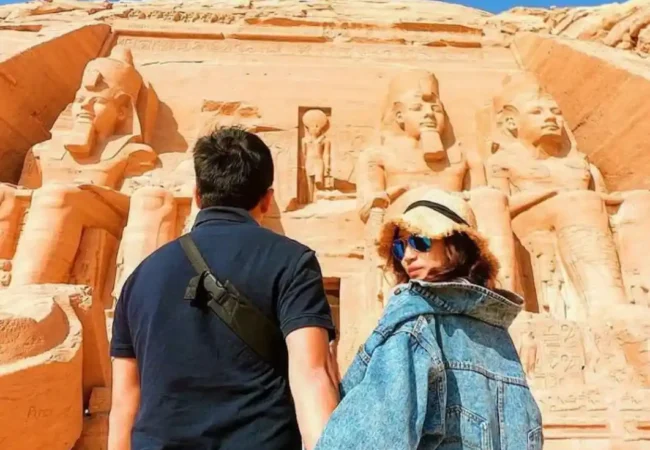

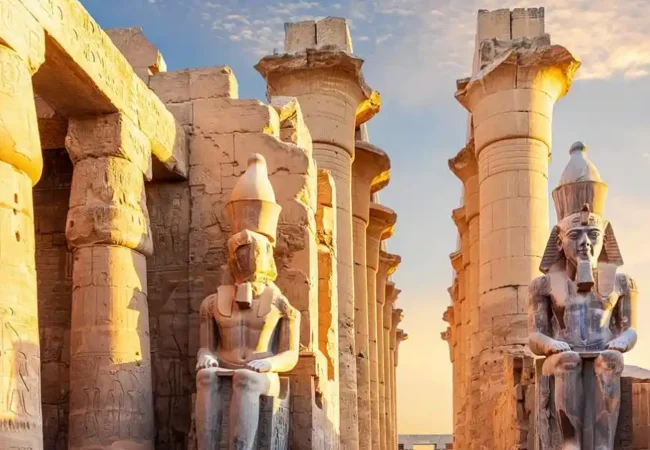

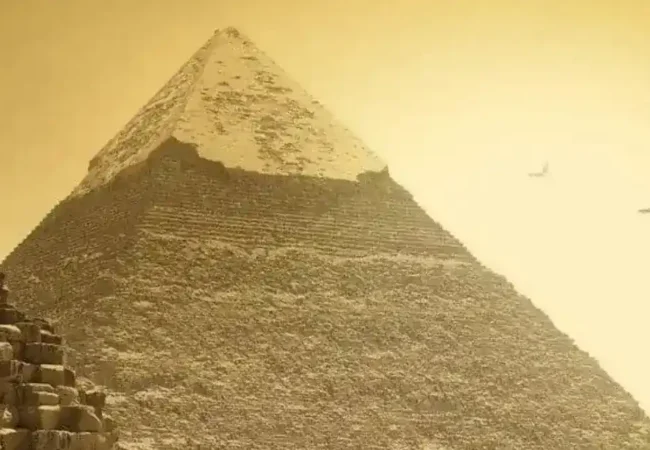

Unlock the true wonders of Egypt with confidence. We combine expert local knowledge, seamless logistics, and round-the-clock support to deliver flawless, responsible, and unforgettable travel experiences.