Anubis God: Powerful Egyptian God of the Afterlife Explained
Anubis is one of the most famous gods in ancient Egyptian mythology....



The Eye of Horus, also known as the wedjat or udjat, is one of ancient Egypt’s most enduring and powerful symbols of health, healing, and divine protection. Rooted in the epic mythological battle between the sky god Horus and his rival Set, the eye was famously torn out, magically restored by deities like Thoth or Hathor, and subsequently offered to Osiris to grant him life in the underworld.
Because of this profound origin story, the sacred emblem became the ultimate representation of religious offerings, medical healing, and cosmic balance (maat). From being painted on the bows of boats and the sides of coffins to serving as a popular protective amulet for mummies across thousands of years, the symbol’s legacy seamlessly intertwined ancient myth, practical medicine, and protective magic.
Key Takeaways
Mythological Origins: The symbol stems from a fierce rivalry between Horus and his uncle Set over the throne of Egypt. During combat, Set destroyed the eye, but it was later miraculously restored and made whole again.
The Ultimate Offering: Horus’s act of giving his healed eye to his deceased father, Osiris, to revive him made the symbol the eternal blueprint for all ancient Egyptian temple and funerary offerings.
A Cornerstone of Egyptian Medicine: Because the eye was successfully healed in myth, ancient doctors and magicians frequently invoked the emblem in medical spells and rituals, especially to ward off diseases of the face and vision.
Lunar Connections: The mythological process of “filling” or restoring the eye was directly compared by the ancient Egyptians to the waxing of the moon, growing from a crescent to a full moon over fifteen days.
An Enduring Protective Amulet: For over two thousand years, the wedjat was one of the most popular protective amulets. It was placed inside mummies, carved into stone slabs, and painted on the fronts of ships to help them “see” safely ahead—a maritime tradition that still survives in the Mediterranean today.
The Eye of Horus, also called the wedjat or udjat eye, is an ancient Egyptian symbol. It stands for health, healing, and protection. The symbol comes from a myth about the god Horus and his enemy Set. During their fight, Set damaged or tore out one of Horus’s eyes. Later, another god, such as Thoth, healed or restored the eye.
After Horus recovered his eye, he gave it to his dead father, Osiris. The power of the eye helped Osiris live in the afterlife. Because of this, the Eye of Horus became a symbol of offerings given to the dead and to the gods during temple rituals.
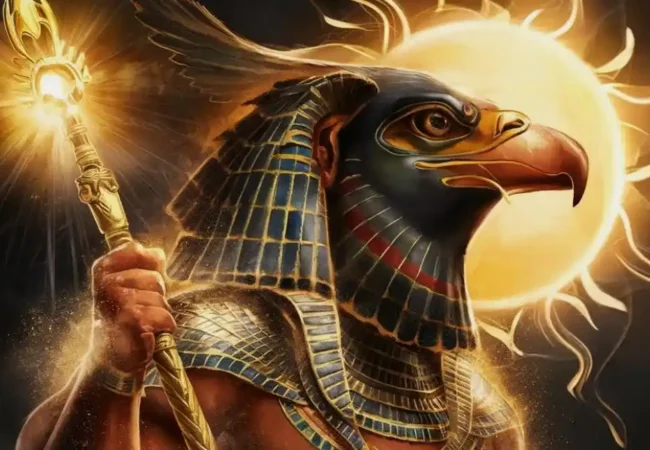
In ancient Egypt, the falcon deity was considered a god of the sky.
Many Egyptian writings say that his right eye was the sun and his left was the moon.
These celestial bodies were sometimes linked to Egypt’s red and white crowns.
Some texts use the wedjat and the Eye of Ra as if they mean the same thing.
In other stories, the solar emblem represents the power of the sun god Ra and is often shown as a female goddess.
The Egyptologist Richard H. Wilkinson thinks that over time, the two symbols became seen as two different things: the lunar mark and the solar Eye of Ra. However, other Egyptologists disagree.
They state that no ancient text clearly connects the deity’s vision with the sun and the moon until the New Kingdom period (about 1550–1070 BC). Another scholar, Rolf Krauss, believes that the protective symbol first represented the planet Venus as the morning and evening star, and only later came to represent the moon.
Katja Goebs says that the stories about these celestial objects come from the same basic myth idea. Instead of thinking that there was one original story about a single object in the sky that later mixed with other stories, she suggests a different view. She believes it is more helpful to see these myths as flexible stories built around the idea of something important being lost or far away from its owner.
In solar myths, the goddess runs away from Ra and is later brought back by another god. In the wedjat stories, the organ is usually lost because of a battle with the main enemy, the god Set. This fight happened as they competed for control of Egypt after the death of Osiris.
Eye -Of -Horus
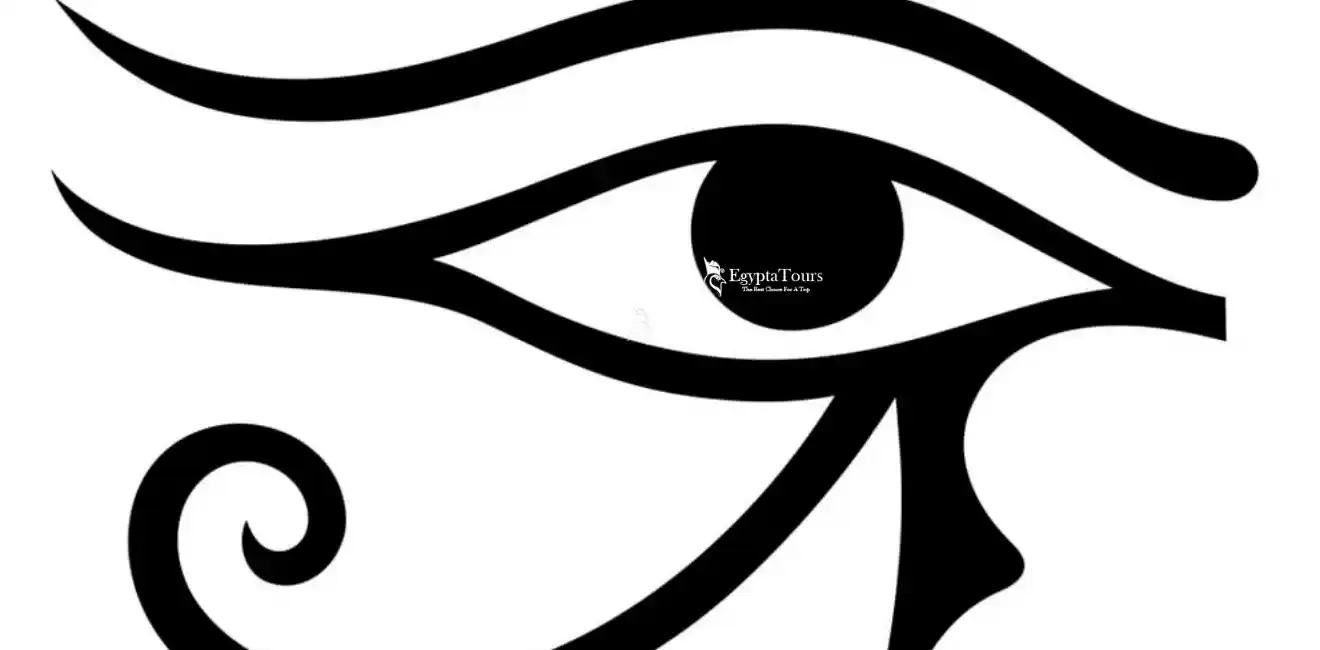
Horus was often shown as a falcon, such as a lanner or peregrine falcon, or as a man with the head of a falcon. The iconic protective mark is a simplified drawing of a human or falcon eye. The symbol usually shows an eyebrow, a dark line going back from the corner of the eye, a mark on the cheek below the eye, and a line that goes down and back, ending in a curl or spiral. The cheek mark looks like the markings seen on real falcons.
The Egyptologist Richard H. Wilkinson suggests that the curved line in the symbol comes from the face markings of a cheetah. Ancient Egyptians connected cheetahs with the sky because the spots on their fur reminded them of stars.
The stylized eye symbol was also used to represent the Eye of Ra. Because of this, Egyptologists often simply call the symbol the wedjat eye.
Eye -Of -Horus-In- Ritual
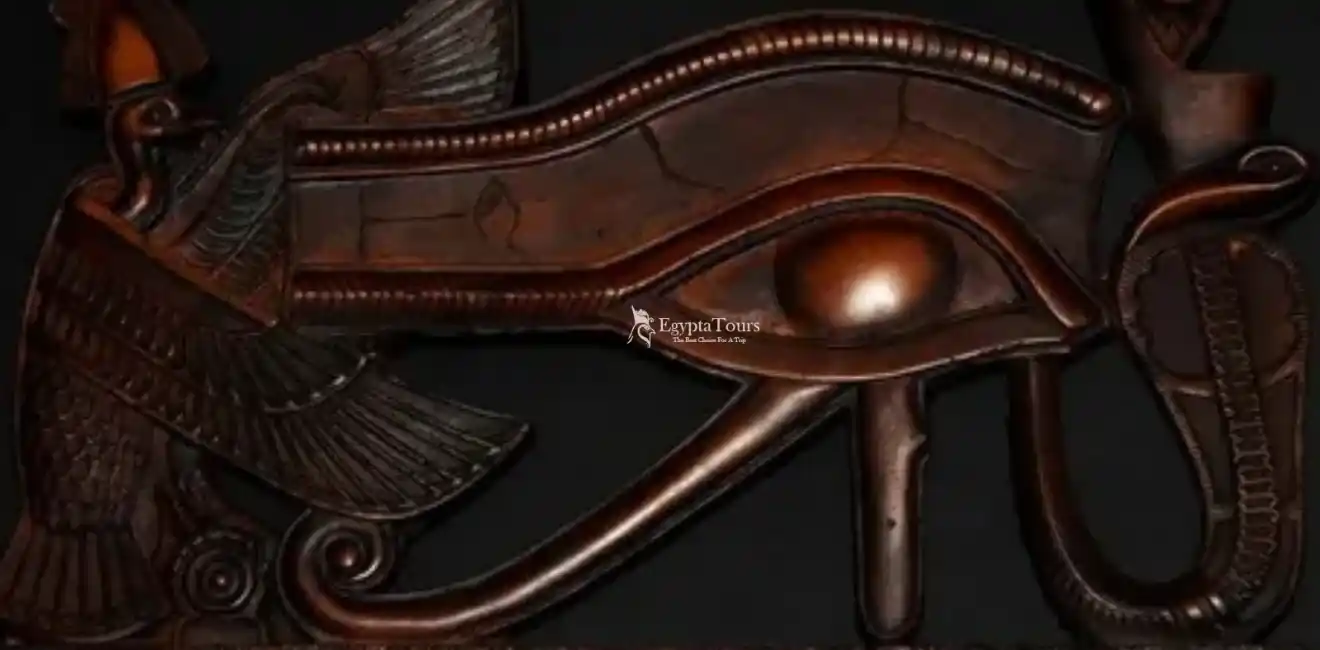
In the story of Osiris, Horus offering his eye to Osiris became the model for all funeral offerings, and even for all religious offerings. When a person gave an offering to a god, they were compared to Horus, and the god receiving the offering was compared to Osiris.
Also, in the Egyptian language, the word for eye sounded similar to the word for action. Because of this wordplay, the Eye of Horus came to represent any ritual action. For these reasons, the wedjat symbolized all the food and support given to the gods in temple worship
In some versions of the myth, flowers or grapevines grow from the buried eyes. This strengthens the link between the eye and religious offerings, because perfumes, food, and drink made from these plants were often used in rituals.
The eye was also connected to maat, the Egyptian idea of balance and order in the universe. This order depended on temple worship, and maat could also represent all kinds of offerings given to the gods.
The ancient Egyptians celebrated several festivals each month that followed the phases of the moon. These included the Blacked out Moon Festival at the start of the month, the Monthly Festival on the second day, and the Half-Month Festival. During these celebrations, living people gave offerings to the dead.
These festivals were often mentioned in burial texts. Starting in the Middle Kingdom, especially in the Coffin Texts, these writings compared the order of the festivals and the growing light of the moon to the healing of the wedjat
Ancient Egyptian medicine used both practical treatments and religious rituals, and medical texts do not clearly separate the two. Healing rituals often compared the patient to Horus, so the person could be healed like Horus was in the myths. For this reason, the Eye of Horus is often mentioned in these spells.
For example, the Hearst Papyrus says the doctor performing the ritual is like Thoth, the doctor of the Eye of Horus, and the tool used to measure medicine is like the measure Horus used for his eye. This protective symbol was especially called upon to protect against eye diseases. In another text, Papyrus Leiden I 348, each part of a person’s body is linked to a god for protection, and the left side of the face is linked to the udjat.
The Pyramid Texts, from the late Old Kingdom (around 2686–2181 BC), are some of the oldest sources of Egyptian myths. They often tell the story of the fight between Horus and Set. The Eye of Horus is mentioned in about a quarter of these texts. In the stories, Set is said to have stolen Horus’s eye, and sometimes even stepped on it or ate it.
Horus eventually gets his eye back, usually by force. The texts often tell about Horus losing his eye at the same time that Set loses his testicles, which are also later healed. The fight over the eye is described in many later writings. In most stories, another god, usually Thoth, restores the eye and helps make peace between Horus and Set. In some versions, Thoth puts the eye back together after Set tore it into pieces. In the New Kingdom’s Book of the Dead, Set is said to have turned into a black boar when he attacked Horus’s eye.
In the story The Contendings of Horus and Set, from the late New Kingdom, Set tears out both of Horus’s eyes and buries them. The next morning, the eyes grow into lotus flowers. In this story, the goddess Hathor restores Horus’s eyes by putting gazelle’s milk on them.
In another text, Papyrus Jumilhac, from the early Ptolemaic Period (332–30 BC), Horus’s mother Isis waters the buried eyes, and they grow into the first grapevines.
The healing of Horus’s eye was often called filling the eye. In the myths, Hathor filled Horus’s eye sockets with gazelle’s milk. Later temple texts from the Greco Roman period say that Thoth, along with fourteen other gods, filled the eye using special plants and minerals.
This filling of the Eye of Horus was compared to the moon growing from new to full. The fifteen gods in the Greco Roman texts represented the fifteen days between the new moon and the full moon.
After defeating Set and becoming king, Horus gives gifts to his dead father to bring him back to life and keep him alive in the afterlife. This story became the model for giving offerings to the dead, which was an important part of ancient Egyptian burial traditions. It also influenced the way people made offerings to gods in temples. One of the gifts Horus gives is his own eye, which Osiris eats.
Amulets shaped like the Wedjat Eye first appeared in the late Old Kingdom and were made until Roman times. Ancient Egyptians were often buried with amulets, and the Eye of Horus was one of the most popular and commonly used amulets.
It is one of the few amulets often found on Old Kingdom mummies, and it continued to be widely used for the next two thousand years, even as many new types of burial amulets appeared. Before the New Kingdom, wedjat amulets were usually placed on the chest. During and after the New Kingdom, they were commonly placed over the cut where the body’s internal organs were removed during mummification.
Wedjat amulets were made from many different materials, such as Egyptian faience, glass, gold, and semi precious stones like lapis lazuli. Their shapes also differed a lot. The amulets could show either the right or left eye. Some were detailed, while others were part of a flat plaque or were very simple, showing only the basic eye shape with little detail for the pupil and eyebrow.
During the New Kingdom, more detailed designs appeared. A uraeus, or standing cobra, could be added to the front of the eye. The spiral at the back could look like a bird’s tail, and the cheek mark could be shaped like a bird’s leg or a human arm. Cobras and cats often stood for the Eye of Ra, so Eye of Horus amulets that include cobra or cat features may show a connection between the two eyes. Some amulets also showed the wedjat eye on one side and a goddess on the other.
In the Third Intermediate Period (about 1070–664 BC), designs became even more complex, with small figures of animals or gods placed between parts of the eye, or with eyes grouped in sets of four.
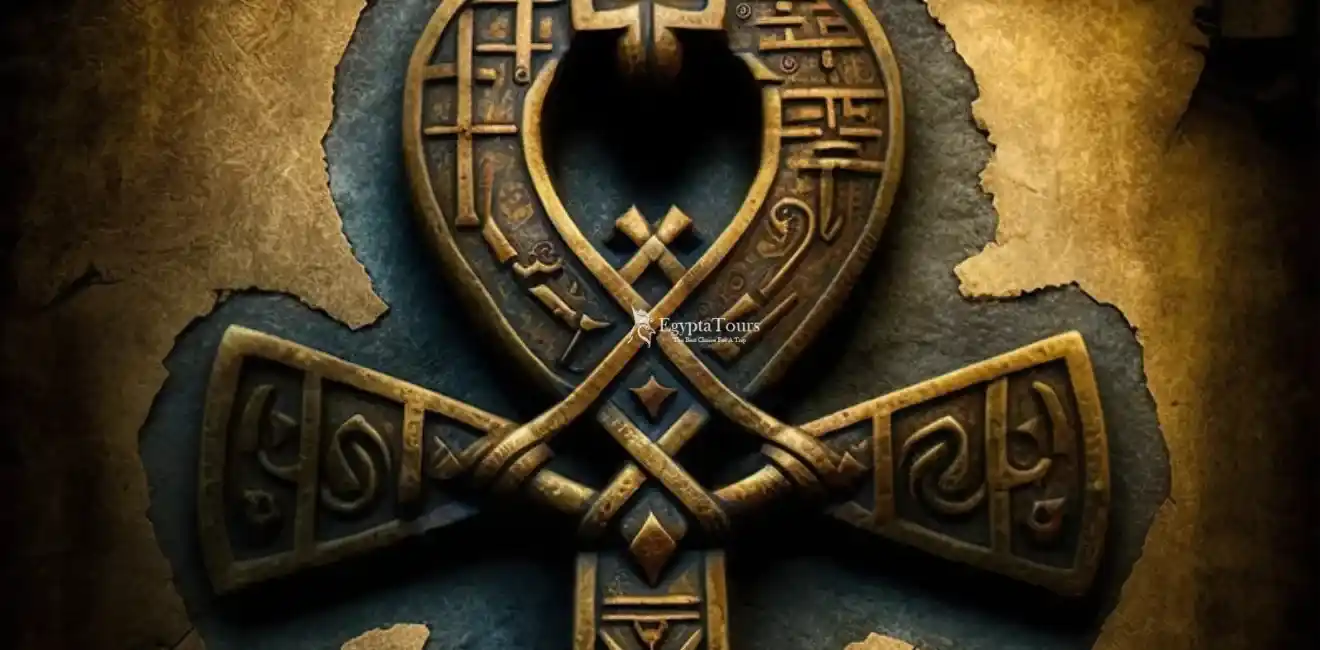
The eye symbol was also used in larger pieces of jewelry together with other protective symbols, such as the ankh, the djed sign, and symbols of different gods. Starting in the 13th century BC, glass beads with eye-like designs were used on necklaces along with wedjat amulets. These beads may be the early form of the modern nazar, a bead believed to protect against the evil eye.
Sometimes, temporary amulets were made to give protection in dangerous situations, such as sickness or childbirth. Ritual instructions often told the person to draw the wedjat eye on linen or papyrus so it could be used as a temporary amulet.
Eye- Of -Horus-Other- Uses
Wedjat eyes appeared in many different ways in Egyptian art. During the First Intermediate Period (about 2181–2055 BC) and the Middle Kingdom, coffins often had a pair of wedjat eyes painted on the left side. Mummies at that time were usually placed to face left, suggesting the eyes helped the deceased see outside the coffin, but they were likely also meant to protect them. Similarly, Horus’ eyes were often painted on the fronts of boats, possibly to protect the boat and help it see the way ahead. Sometimes, wedjat eyes were shown with wings, hovering protectively over kings or gods.
Stelae, or stone slabs, were often engraved with wedjat eyes. In some periods of Egyptian history, only gods or kings were shown directly beneath the winged sun symbol that appeared on the top part of stelae, while Eyes of Horus were placed above images of ordinary people.
The symbol was also used in tattoos, as seen on the mummy of a woman from the late New Kingdom, who had many tattoos, including several wedjat eyes.
Some cultures near Egypt began using the wedjat symbol in their own art. During the Middle Bronze Age, some Egyptian art styles spread to Canaan and Syria. The wedjat was sometimes used in their art, but it was rarer than other Egyptian symbols like the ankh.
On the other hand, the wedjat appeared often in the art of the Kingdom of Kush in Nubia during the first millennium BC and early AD, showing Egypt’s strong influence on Kush. Even today, eyes are painted on the fronts of ships in many Mediterranean countries, a tradition that might come from the use of the wedjat eye on boats.
The Eye of Horus, also called the wedjat or udjat eye, is an ancient Egyptian symbol. It stands for health, healing, and protection. The symbol comes from a myth about the god Horus and his enemy Set.
In the wedjat stories, the organ is usually lost because of a battle with the main enemy, the god Set. This fight happened as they competed for control of Egypt after the death of Horus’s father, Osiris.
Horus offering his eye to Osiris became the model for all funeral offerings, and even for all religious offerings. When a person gave an offering to a god, they were compared to Horus, and the god receiving the offering was compared to Osiris.
Ancient Egyptian medicine used both practical treatments and religious rituals, and medical texts do not clearly separate the two. Healing rituals often compared the patient to Horus, so the person could be healed like Horus was in the myths. For this reason, the sacred emblem is often mentioned in these spells.
Amulets shaped like the Wedjat Eye first appeared in the late Old Kingdom and were made until Roman times. Ancient Egyptians were often buried with amulets, and the Eye of Horus was one of the most popular and commonly used amulets. It is one of the few amulets often found on Old Kingdom mummies, and it continued to be widely used for the next two thousand years, even as many new types of burial amulets appeared.

Explore our top-rated Egypt travel packages and embark on an unforgettable journey. From the Pyramids of Cairo to the magical temples of Luxor, Aswan, and Abu Simbel, discover expertly curated tours designed for your perfect Egyptian adventure