Essential Books About Ancient Egypt You Must Read
The ancient Egyptian civilization contains many myths and stories that have attracted...



The idea of ancient Egypt Electricity has generated widespread controversy and scientific curiosity combining the overwhelming genius of Egyptian civilization with researchers’ desire to interpret its great architectural and artistic achievements From the majestic pyramids to the delicate inscriptions within temples and tombs theories have emerged suggesting that the ancient Egyptians may have possessed knowledge of electrical energy before its discovery in modern times.
Proponents of these theories cite symbols such as the inscriptions at the Temple of Hathor at Dendera which some consider evidence of ancient electrical lighting Although these hypotheses are intriguing and fuel the imagination most Egyptologists assert that Egyptian civilization achieved its remarkable progress using advanced traditional technologies without the need for any source of electrical power.

Ancient-Egypt-electricity-The-Dendera-Light-Hypothesis-EgyptaTours
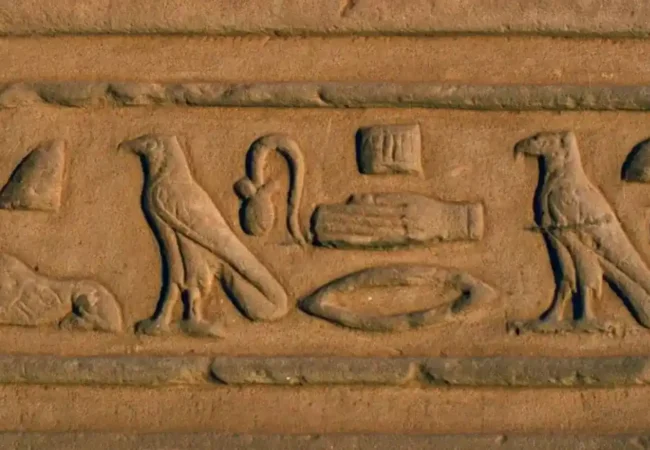
The Dendera Light Hypothesis is based on inscriptions found inside the Temple of Hathor in Dendera Upper Egypt dating back to the Late Ptolemaic period around 225 BC. The inscriptions depict objects resembling large lamps with a snake coiled within a lamp or tube-like shape connected to a base that resembles an electrical outlet Some of the shapes also appear to be cables.
Proponents of this theory of electricity in ancient Egypt such as Erich von Däniken who proposed it in his famous 1968 book Chariots of the Gods believe that the ancient Egyptians may have possessed means of producing electrical lighting using primitive devices similar to ancient batteries.
Egyptologists however reject these interpretations and consider the inscriptions merely religious symbols alluding to the creation myth The lotus flower represents the birth of life, and the snake represents the sun god Ra who emerges from it. They interpret the cable-like structures as plant stems symbolizing the continuity of creation and have no connection to modern technology.
Although the hypothesis of ancient Egypt electricity is of interest to the general public all available archaeological evidence to date confirms the absence of electrical devices wiring, or any infrastructure that indicates the use of electricity in ancient Egypt Even the evidence some put forward regarding the absence of traces of soot on the ceilings of temples and tombs can be explained by simpler means such as the use of mirrors to reflect sunlight inward, or oil lamps with well-ventilated wicks that reduce smoke formation.
Egyptologists point out that the mistake lies in projecting our contemporary perceptions onto an ancient civilization with its own distinctive symbols and methods.
These exciting theories often result from a superficial reading of inscriptions without taking into account the religious and artistic context in which they originated leading to inaccurate conclusions.

The-Baghdad-Battery-and-its-Presumed-Connection-to-Egyptian-Technology-EgyptaTours
In 1938, archaeologist Wilhelm König discovered a pottery vessel in an area near Baghdad later known as the “Baghdad Battery,” dating back to the Parthian period, between 250 BC and 224 AD This vessel contained a copper cylinder and an iron rod. When filled with an acidic liquid such as vinegar or fermented grape juice it could produce a weak electric current of no more than one volt.
König hypothesized that this battery may have been used in ancient Egyptian electricity electroplating metals This led to some theories linking this discovery to similar technologies in ancient Egypt particularly in the manufacture of gold and jewelry However, no similar batteries or electrical devices have been found in Egypt Furthermore the Egyptians used methods such as fire-hammering or the bonding of thin gold sheets to decorate metals, making any connection between the two civilizations in this area unsupported by any tangible archaeological evidence.

Why-Nikola-Tesla-was-Obsessed-with the-Egyptian-pyramids-EgyptaTours
The Serbian-American scientist and inventor Nikola Tesla (1856–1943) was a pioneer in the development of alternating current and one of the most prominent dreamers of providing wireless to ancient Egypt electricity on a global scale His projects relied on transmitting energy through the air using electromagnetic waves and resonant frequencies.
Some proponents of alternative theories believe that the ancient Egyptians applied this idea primitively in the construction of the pyramids, and they considered the Great Pyramid of Giza a giant power generation device They base this argument on the materials used, such as limestone and granite which have conductive or piezoelectric properties.
They also point to the design of the internal rooms and passages as energy conduits, but Egyptologists and archaeologists deny these claims emphasizing that there is no evidence of energy storage or transmission devices in Egyptian civilization Moreover, inscriptions and historical evidence prove that the pyramids were royal tombs designated for the burial of the pharaohs, not electricity generation facilities.

Debunking-Myths-About-Electricity-in-Ancient-Egypt-EgyptaTours
Egyptologists assert that all theories alleging the ancient Egyptians’ use of electricity in ancient Egypt lack any tangible archaeological or scientific evidence There are no remains of metal wires, batteries, generators, or even traces of engineering plans at archaeological sites indicating electrical infrastructure.
Experts emphasize that inscriptions that some believe to be electrical devices such as the Dendera Temple inscriptions actually reflect religious beliefs related to the creation myth and the god Ra rather than instructions for making lamps or other lighting devices.
Attempting to interpret religious and artistic symbols with the logic of modern science creates misconceptions as the ancient way of thinking differs from our current perceptions Therefore Egyptologists warn against being swept away by these hypotheses which are prevalent in popular books and science fiction films because they diminish the true achievements of the ancient Egyptians who built a great civilization based on their own skills and practical experience not on electrical technologies that were nonexistent at the time.

The-Real-Technologies-of-Egyptian-Civilization-EgyptaTours
Egyptian civilization was distinguished by its amazing innovations in architecture engineering, and metallurgy, all without any need for electricity The ancient Egyptians were able to cut and transport huge stones weighing hundreds of tons from quarries to construction sites using wooden sleds and sand tracks moistened with water to reduce friction.
They also designed precise systems for measuring angles and directions using simple astronomical instruments to ensure precision in the construction of pyramids and temples.
In the metalworking industry they excelled in producing durable copper and bronze tools and devised methods for crafting gold and silver with extreme precision using processes such as hammering heating, and welding They also excelled in engraving and engraving decorations and in creating gem-studded jewelry reflecting an advanced level of practical and craftsmanship in electrical engineering in ancient Egypt ,These achievements prove that the Egyptians did not need any form of electricity to achieve their architectural and artistic masterpieces, but rather relied on careful planning, tight organization, and a skilled workforce.
The idea that ancient civilizations possessed advanced technology such as ancient Egypt electricity attracts people’s attention because it represents a sense of mystery and awe at human achievement Many feel that the Egyptian pyramids and temples are beyond the capabilities of primitive tools, and they tend to search for supernatural explanations or lost technologies rather than studying the actual methods used by the ancient Egyptians.
The media and sensationalist books also play a role in amplifying these theories because they present exciting stories that attract readers and viewers However recent research reveals that the Egyptians’ genius lies in their optimal use of scarce resources and their meticulous organization of labor and knowledge, not in their possession of extraordinary technology This psychological attraction to the idea of “lost secrets” reflects humanity’s desire to connect the past to the present and the perception that our civilization was not the first to touch the frontiers of science and innovation.
Ultimately, the idea of ancient Egypt electricity remains one of the most controversial and fanciful theories yet it lacks any scientific evidence to support it These hypotheses, despite their appeal may distract from the actual achievements of Egyptian civilization which achieved its greatness using advanced technologies and innovative methods without any electrical power sources.
Understanding ancient Egypt requires a conscious reading of its symbols and a study of its achievements within their correct historical and cultural context free from modern projections.
People are drawn to this idea because the ancient Egyptians’ achievements such as building the pyramids and carving temples seem so astonishing that it’s hard to imagine them being achieved with conventional tools However, archaeological studies have proven that these achievements were achieved thanks to ingenious planning and highly organized labor using simple tools with great skill, not to supernatural technology or unknown electricity.
Proponents of the “electric lighting” theory cite the fact that the walls of tombs and temples are virtually free of smoke. However, scientists have explained that the Egyptians used reflective mirrors or well-ventilated oil lamps which reduced soot accumulation without the need for an electrical source.
Despite the widespread theories no device battery, or metal wire has yet been found in Egyptian archaeological sites that could prove the presence of electricity All inscriptions such as those found at the Temple of Dendera, are interpreted by Egyptologists as religious symbols, not drawings of technical devices.



Explore our top-rated Egypt travel packages and embark on an unforgettable journey. From the Pyramids of Cairo to the magical temples of Luxor, Aswan, and Abu Simbel, discover expertly curated tours designed for your perfect Egyptian adventure