Fayoum Oasis
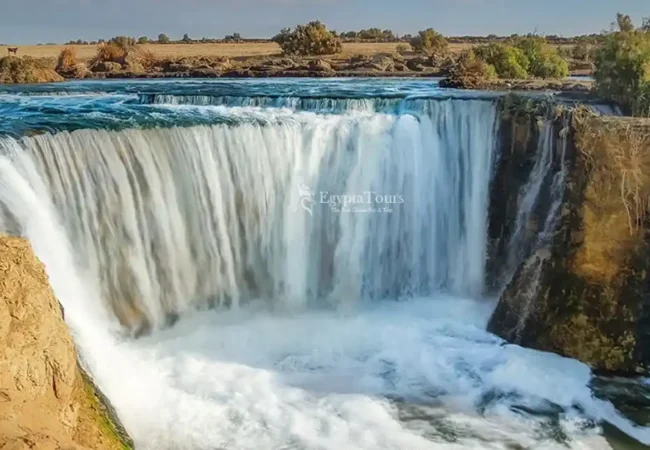
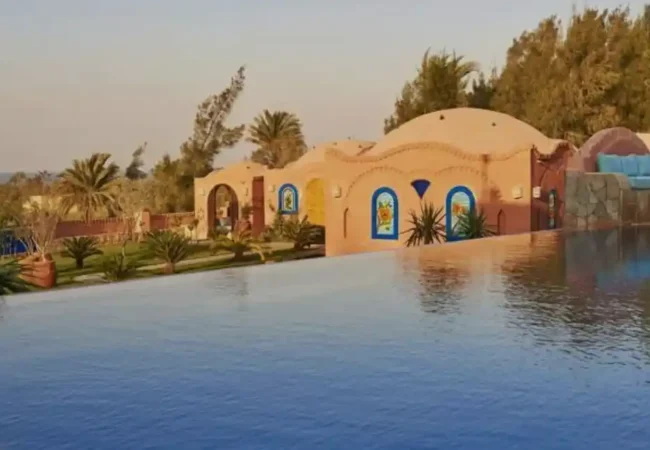
The Fayoum Oasis (Arabic: Waḥet El Fayoum) is a basin or depression in the desert instantly west of the Nile River, 62 miles south of Cairo, Egypt.
The size of the basin region is rating at between 1,270 km2 (490 mi2) and 1,700 km2 (656 mi2). The basin floor includes fields watered by a channel of the Nile, the Bahr Yussef, as it banks into a desert blank to the west of the Nile Valley.
The Bahr Yussef turn west through a tight neck of land north of Ihnasya, between the archaeological places of El Lahun and Gurob near Hawara; it then sections out, providing agricultural land in the Faiyum basin, draining into the large saltwater Lake Moeris (Birket Qarun). It was a freshwater lake in prehistory, but is today a saltwater lake. It is a origin for tilapia and other fish for the regional site.
Differing from ordinary oases, whose fertility rely on water obtained from springs, the cultivated land in the Faiyum is formed of Nile clay brought by the Bahr Yussef canal, 24 km (15 miles) in length. Between the start of Bahr Yussef at El Lahun to its end at the city of Faiyum, many canals branch off to water the Faiyum Governorate.
Fayoum Egypt Attractions
Snors encloses numerous worth visiting much that date back to different ages including the Greek, Roman, Coptic, Islamic ages. On first of the Pharaonic Monuments in Snores are the foundation of Amen-Em-Hat II statues overlooking Moris Lake.
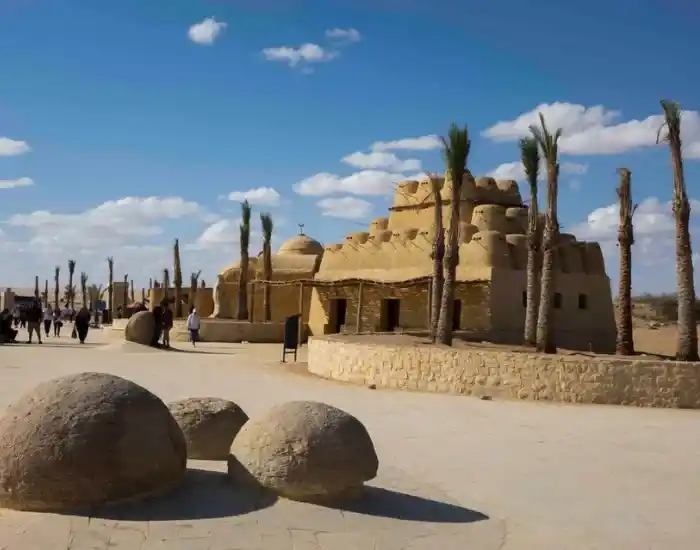
There are also some Coptic tourist attractions like the remnant of Snores Monastery, and Abu Sayfein Monastery with its church of twelve domes that date back to the modern ages. In addition to that most of the visitors of El Fayum choose visiting Ayn El Seleen Gardens which is one of the amusement centers of all refreshing and facilities that permit the visitor enjoying calmness and peace of mind.
Qasr Qarun
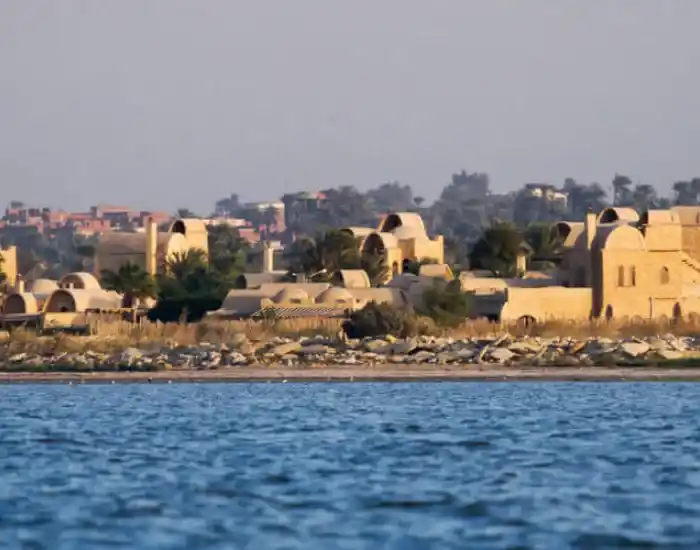
Qasr Qarun is one of the main tourist attractions in El Fayum City that signs the site of the ancient Greek city of Dionysias. It locates the western brink of Qarun Lake in El Fayoum Governorate about 40km from the metropolis El Fayum.
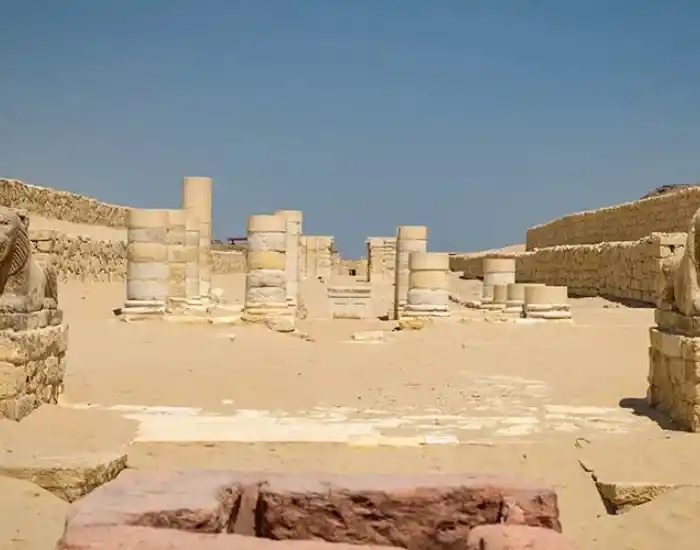
The place had enjoyed great importance during the Greco-Roman time as here was the starting of the caravan route to The Western Desert Oasis. The palace is surrounded by some residue of a Roman bath, two temples, a figure of fresco-decorated houses, and a fortress.
Om El Atl city
Om El Atl is a town in El Fayoum Governorate in the Western Desert of Egypt. It is situated 8 kn east of the city of Karanis. The major reason behind the importance of the city is the entity of a number of old houses and a mud-brick temple dating back to the Greek time, dedicated to Sobek, the crocodile god.
Madinet Maadi
Madinet Maadi or old Narmouthis is a village that situated 30 km south-west of El Fayoum City in the Western Desert. It is also an archeological place that include a Middle Kingdom temple and a Ptolemaic one as well as a Roman town with more than 10 churches. In the area, other small temples, thousands of papyri in addition to crocodile nurseries with many eggs were discovered.
Kom Oshim
Kom Oshim (Kum Ushim) is a town in El Fayoum Governorate in the Western Desert of Egypt, on 130 Kilometers south-west of Cairo. Kom Oshim goes back to the 3rd century BC, when Greek mercenaries founded it.
It is an archeological site housing the remnant of some Roman baths as well as the remains of the Greek ancient city, Karanis. Moreover, it includes two temples built to worship variations of the god Sobek (the crocodile god); namely, Petesouchos and Pnepheros. Having the same building, the Temple of the South is slightly better protected than the Temple of the North.
Both temples include the house of the crocodile.
El Lahun
El Lahun is a hamlet in El Fayoum Governorate in the Western Desert, about 120 kilometers south-west to Cairo. The village’s new name, “El-Lahun”, was driven from the old Egyptian name ‘R3-hnt’ which means ‘the Mouth of the Lake’.
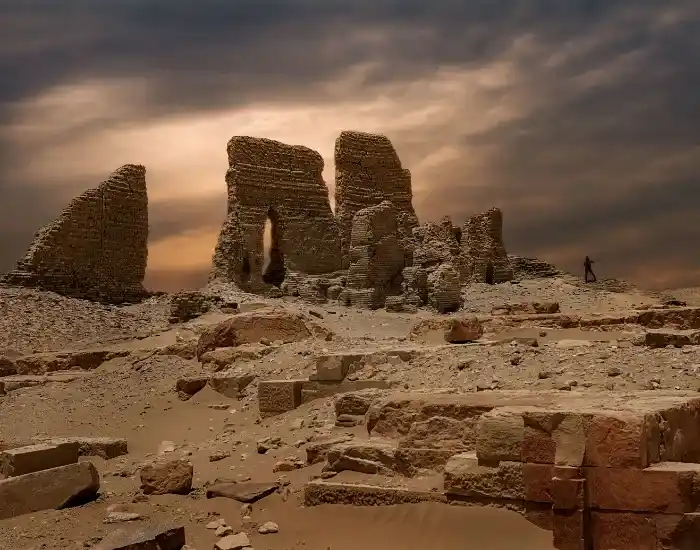
Among the most remarkable monuments found at this site are the mud-brick Pyramid of Senusert II, a queen’s pyramid, some debris of Senusert Mortuary Temple, and a jubilee chapel. Interestingly, between the Finds in a small tomb belonging to a princess, Petrie discovered, in 1914, was a treasure of jewelry, cosmetic vessels and other things, which are now show in the Egyptian Museum and the Metropolitan Museum of New York.
Unearthing the Rich Cultural Heritage of the Oasis
Archeological Park of Wadi Al-Hitan
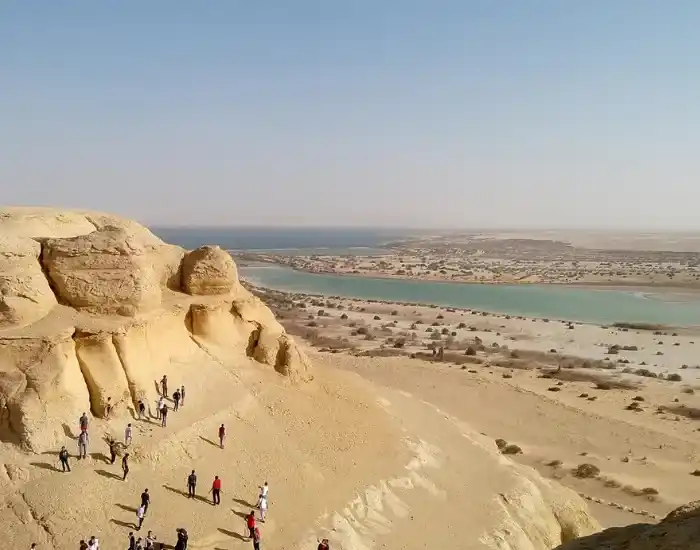
Wadi Al-Hitan (‘Whale Valley’) is located in the Western Desert of Egypt, in El-Fayoum Governorate, about 150 km south-west of Cairo. It includes countless fossil remains of one of the earliest species of the extinct suborder of whales, Archaeocyte.
Besides being a protected place, the Place was declared a world natural heritage place by the UNESCO in 2005. The Valley of the Whales (or the Zeuglodon Valley) was found in 1936 and ever since, it became an open museum that dates back to 45 million years and contains solidify primitive whales’ skeletons, shark teeth, shells and roots of mangroves protected in soft rocks. Some of the surprising discoveries in the valley is the huge walking whale, which once had feet and used to walk on the beach before getting into water.
It is named Ambulocetids natans, moved easily between land and sea. Having the volume of a walrus, it inhabited coastal environments. With the fossils found, much input about the life of fauna and flora are driven.
It is worth observation how clearly these fossils represent one of the main stories of evolution: the appearance of the whale as an ocean-going mammal from a past life as a land-based animal.
This significant step of evolution is vividly demonstrated at this place. What also characterized the region is the existence of movable sand dunes, four natural sulfuric springs, plant groups that include 15 species of desert plants, about 15 kinds of wild mammals (like the white deer, the Egyptian deer, fennec fox , red fox and others), 16 sorts of reptiles, as well as over 100 sorts of resident and migrating birds.
Qaroun Lake
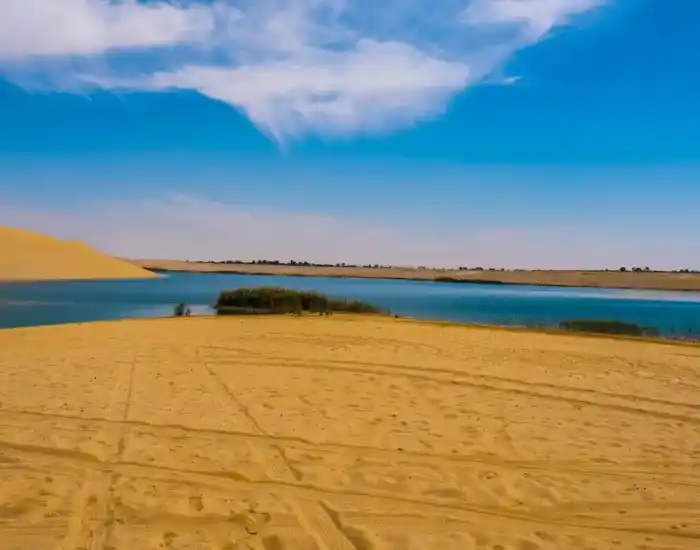
Lake Qaroun (old Lake Moeris) is a nature reserve in the governorate of El-Fayoum. It was announced a nature reserve in 1989 with a vision to protecting and talking the area’s biological, archaeological and geological variety.
The reserve comprises 1155 km2 of land and 230 square km of water. The lake is rich with different kinds of fish 45 m below sea level in addition to many magic species of mammals, reptiles and birds. Besides, many archaeological and geological formations can be acqired from the unusual fossils the reserve includes.
One can submerge in the splendid view of 88 sorts of birds (including flamingoes) gracefully flying around their nests close the lake. For a long time, the lake was too salty for fish, until some marine sorts – including eel, mullet, sole and shrimp – were brought in the 1970’s. Among the many monuments the reserve contains are: El-Sagha (Goldsmiths) Palace from the Middle Kingdom, Abu Lifa Monastery, as well as the remnants of the old town of Skitnopius.
Ain El Sileyin
The natural Springs of Ain EI-Sileyin (Ayn of Silieen or Ein EI Saileen) are located in the heart of the Fayoum Delta, 8 km far from the city of El-Fayoum. Ain EI-Sileyin’s orchards are popular for their productive apricot and mango trees. Here, one can eagerly devour the most delicious and freh honey ever.
At the site, there are many accommodating facilities, among which are a swimming pool, cafeteria, and chalets for rent. One can also enjoy viewing different sorts of date palms and products on regular display. One of the area’s attractiveness is the Water Mill (now obsolete), which was construct in 1950 to grist wheat and corn.
Sawaqui El Hadir
The Sawaqui (or waterwheels) were initial introduced to El Fayaoum by the Ptolemies (305-30 BC) to serve their planting plans in Egypt. They were used in the watering fields and orchards in the city. Fayoum has a great figure of water wheels, perhaps as many as 200.
Sawaqui El Hadir (the Seven Waterwheels of El Hadeer) are still working in El-Fayoum by rising up water to a level where it could be transported into the fields for irrigation. They had their axial role in pushing the economical wheel of the city in special and the whole country in general beginning from the 3rd century BC.
The Pyramid of El Lahun
Once envoloped by a layer of limestone, the Pyramid of El Lahun (popular as the Pyramid of Senusert II) was the first huge mud-brick pyramid. Its limestone layer was removed during the Nineteenth Dynasty, by Ramses II, who used the pyramid as a quarry to construct his temples.
The pyramid is individual in that its essence was a knoll of the bed-rock, on which the mud-brick pyramid itself was construct, similar to the pyramid of Hawara, and then all cased with limestone.
The pyramid measures 48 meter in height with a rule measuring 106 m in each side. Usually, the inlet of the pyramid is not situated in its northern face. Instead, its architect had a way of dissimulation the corridor that leads into the burial chamber: that was by digging two wells perpendicularly outside the major building of the pyramid, to the south of it.
These two wells are attached one to the other. The largest well was used to lower the king’s sarcophagus to the depth of 12 m. Then, after passing over some corridors, one can reach the burial chamber, inside which was found a pink granite magnificent sarcophagus as well as an alabaster offer table.
Beside the burial chamber is a room in which a golden cobra– probably once decorated a regal crown– was discovered. To the east of the pyramid was found the simply-prepared mortuary temple surrounded by a limestone enclosure wall. To the north of the pyramid are 8 rock-cut tombs side by side to the remnant of a queen’s pyramid.
Pyramid of Amenemhat III
Amenemhet III, the last strong king of the Twelfth Dynasty, construct two pyramids: the Black Pyramid in Dahshur and later the Pyramid of Hawara. So, based on this fact, it thought that Amenemhat was buried in Hawara. The Pyramid of Hawara was construct of mud brick, and then tilt with fine Tura limestone. Its pyramid was found next to the pyramid. The rising of the pyramid is about 58 m and each side of its rule measures around 100 m.
Since the pyramid’s limestone blocks were reused in later constructions, its effective aspect now resembles a small mud-brick mountain. There are also a few remnants left from the mortuary temple located to the north of the pyramid.
The entrance to the pyramid situated in its southern face. Leading to a dead passage, that access was cunningly prepared to deceive the robbers. Of the passage, there were 20 tons of stones that slip sideways to open a door to a second passage leading to the burial chamber. In 1889, Petrie get in the pyramid and arrive the burial chamber which is made of one large block of quartzite, the weight of which is 110 tons.