Where Start Nile River
The history of the Nile River goes back thousands of years. The...



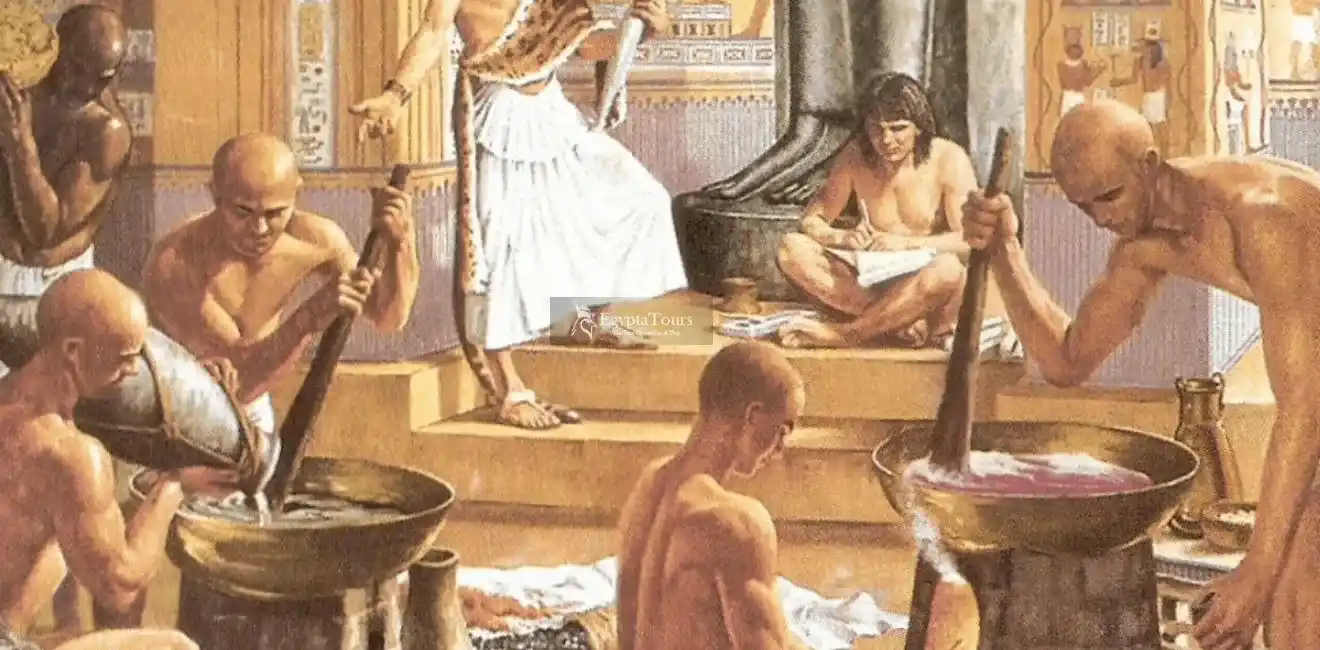
The ancient Egyptian human was not familiar with the current recipes, so he had to invent ancient Egyptian recipes to help with his life, healing, and building his civilization. Among them were medical recipes
Ancient Egyptian Recipes For Medicine
The ancient Egyptians used various medical recipes, relying heavily on natural products from plants and animals. recipes was Among the most famous of these the use of honey and herbal substances as antiseptics and antibiotics to treat wounds and infections. They treated eye pain with a mixture of black kohl and some animal fats, and treated constipation and digestive problems with castor oil.
Caraway was added to treat stomach problems and gases, in addition to the use of garlic and onions to strengthen general health and fight respiratory diseases. Meanwhile, they used an extract of the mallow plant to treat coughs, and they used complex recipes such as a mixture of eye abscess, pine, ground donkey teeth marrow, and black kohl.
The ancient Egyptians also used medical recipes derived from animals and other materials. They utilized animal fats and greases in some therapeutic recipes and employed honey and beeswax as a base for ointments. Linen was used to treat bone wounds, and they applied splints and bandages to immobilize and support broken bones. Henna was used to treat liver inflammation, smallpox, and skin lesions. Additionally, they used a mixture of iron oxide, colocynth, and linseed oil to treat diabetes, hemorrhoids, and wounds.
One of the oldest plants known in Egypt and playing a significant role in their religious beliefs and medical treatments is the sycamore fig tree. The Egyptians used its sap in many of their medical prescriptions, particularly for skin diseases like psoriasis. They would mix the milky sap with certain chemical substances, especially iron compounds, to create an ointment.
Scientific experiments and chemical research have shown that the milky sap of the sycamore fig tree contains a rubber-like substance similar to “klodium”, which acts as a protective film for the affected areas when used.
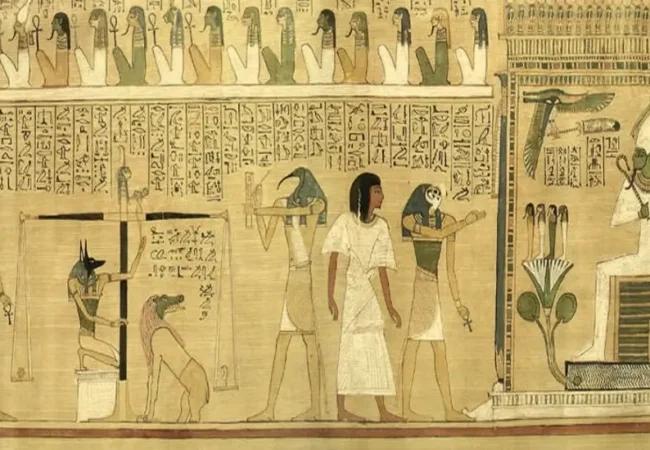
Ancient Egyptians distinguished the medical profession from others, allowing only those who studied medicine in special institutes attached to temples to practice it. The life of ancient Egyptians remains documented on temple and tomb walls and in papyrus papers, which are among the oldest medical records in history. These papyri contain medical prescriptions and preparation methods and are named after their discoverers or places of preservation.
One of the most famous papyri is the Ebers Papyrus, dating back to 1552 BC, now housed in the Leipzig Museum in Germany.
Some herbal remedies mentioned include castor oil for constipation and hair care, garlic, onion, coriander, celery, dill, anise, fennel, cumin, cinnamon, licorice roots, pomegranate for worms, saffron, sycamore fig, and more.
Among these papyri is also the Hearst Papyrus, which dates back to 1550 BC.
This papyrus was discovered in Deir el-Ballas and includes herbal recipes for hair growth using bishop’s weed seeds and chufa, along with other recipes made from barley water, honey, and plant-based oils. It is currently preserved at the University of California.
The Edwin Smith Papyrus, dating back to 1700 BC, was discovered in Luxor and written in red and black ink. It contains descriptions of surgical cases, tumors.
The Kahun Papyrus, dating back to 1900 BC, 18th dynasty, was discovered in the Lahun archaeological site in Fayoum, from which it got its name.
The papyrus contains 35 medical prescriptions for women’s diseases and childbirth.
It is preserved at the Metropolitan Museum in New York., along with their treatments. It is preserved at the New York Historical Society.
The Berlin Papyrus, dating back to the 19th dynasty during the reign of Ramses II, contains 170 medical prescriptions for treating various diseases that were prevalent at that time. It is now preserved at the Berlin Museum in Germany.
The London Papyrus contains prescriptions for treating eyes, burns, and women’s diseases. Some of the most notable plants mentioned in this papyrus include dates, doum palm, figs, grapes, sycamore fig, pomegranate, garlic, onion, leek, lupine, fenugreek, green mint, cloves, licorice, and aloe vera. It is currently preserved at the British Museum in London.
Ancient Egyptian Recipes For Food
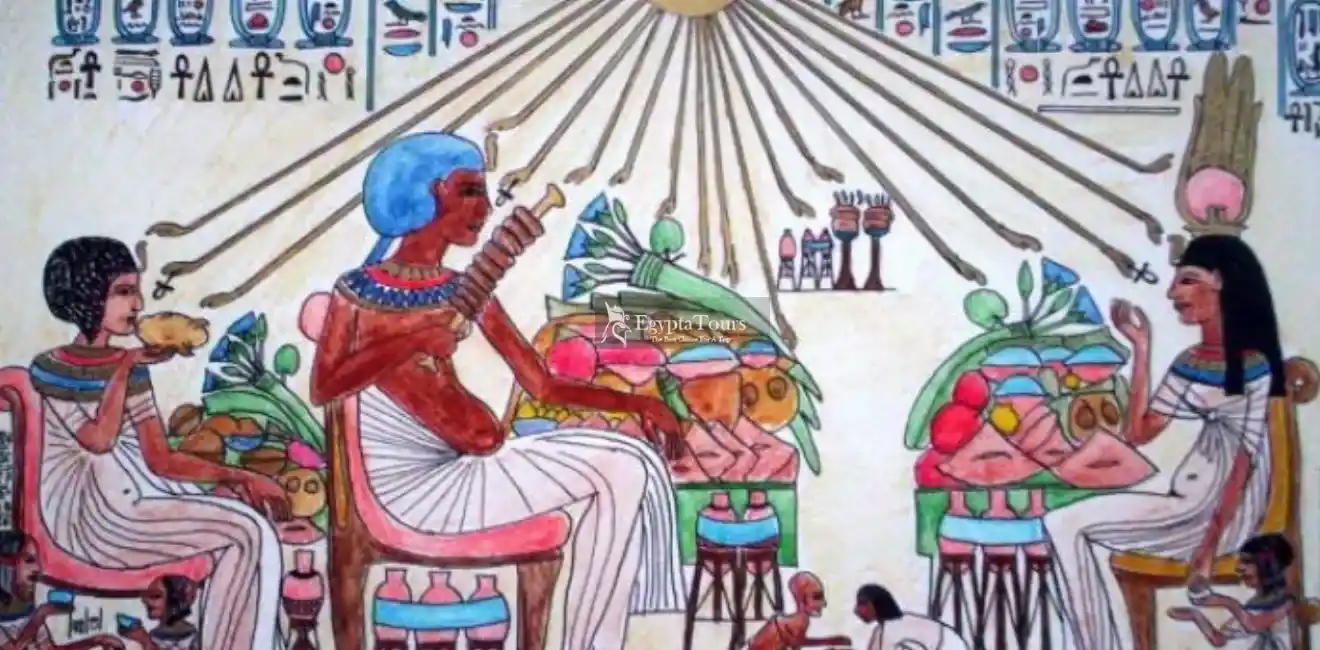
Ancient Egyptians loved diversity in their daily meals, but they mainly relied on bread, with around 40 types of bread.
The fertile land of Egypt allowed for a wide variety of crops to be grown, including vegetables and fruits.
They loved fruits like sycamore figs, watermelon, cantaloupe, pomegranate, and mulberries, which they ate fresh, cooked, or as a drink. They also preferred meats, especially beef, mutton, and goat, and birds like geese, ducks, and pigeons.
The Nile River provided them with a variety of fish, which was one of their favorite foods.
They also ate grains and legumes, like lentils, fava beans, and cowpeas. They extracted oil from sesame, castor beans, and radish, dried grapes, dates, and figs, and made cheese and butter from milk.
Their diet was healthy and balanced, which helped them live a healthy life free from diseases.
Ancient Egyptian Recipes For Beauty
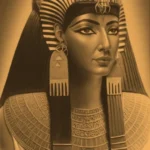
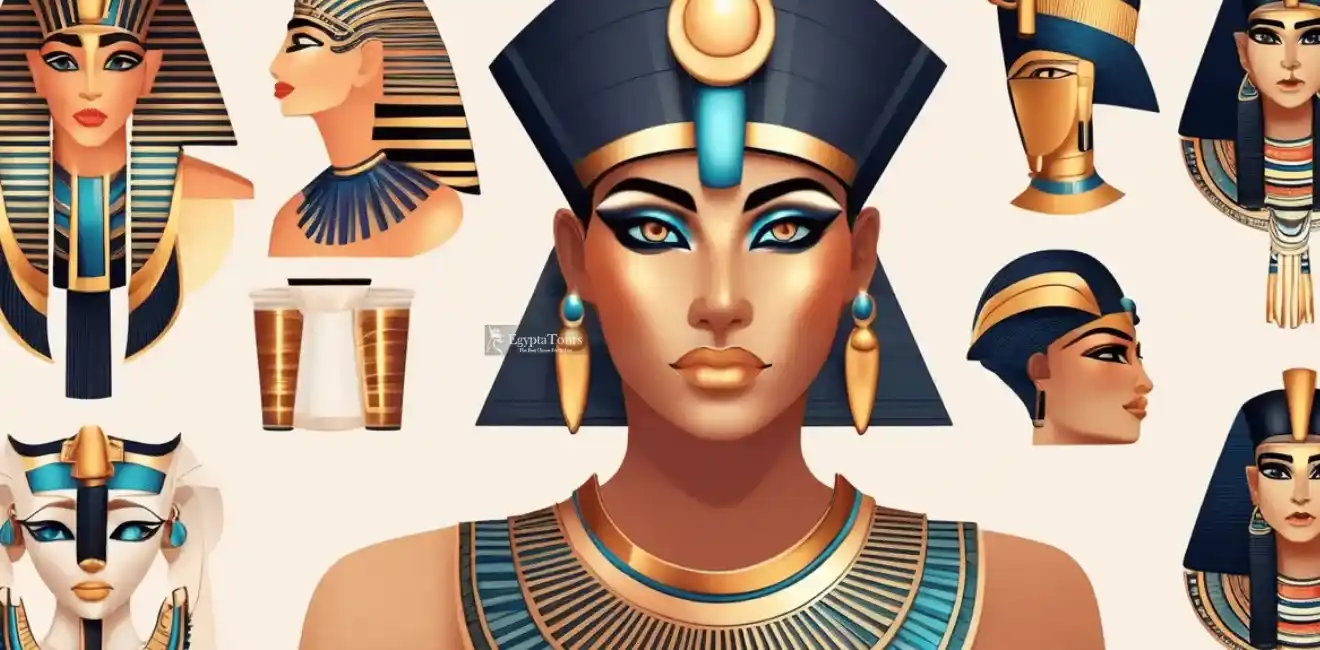
The ancient Egyptians gave great importance to cosmetics, where many cosmetic tools were found inside the tombs of kings. There was a job in the pharaonic palace called “beauty specialist” and its tasks were defined in bringing cosmetics for the king and queen and selecting them carefully and preparing many beauty recipes to maintain the beauty of the face and hair for the pharaoh and his wife.
The use of makeup was not limited to the fair sex only, but for both men and women, as many pharaonic statues showed the concern of women in ancient Egypt for their beauty.
They used many natural recipes from the elements available in their environment and surroundings. They used masks for the skin, such as milk baths, which is one of the most famous methods of skin care and beauty from the pharaonic era,
to refine the skin and increase its softness. They also used a scrub for their skin made from salts extracted from the Dead Sea, due to the ability of these salts to renew cells and also remove negative energy from the body.
They also used masks and creams made from honey and fenugreek, and added some drops of chamomile to resist wrinkles, delay their appearance, eliminate freckles, moisturize their skin, and nourish it.
They also made many beauty recipes to treat wrinkles, as they challenged signs of aging skin through a recipe consisting of a mixture of frankincense gum, wax, and an amount of oils, in addition to adding a mixture of chufa according to specific proportions. Burns on the face were also treated through another mixture consisting of a mixture of iron oxide and an amount of kohl.
They also took care of their hair and preserved it, as they were the first to treat baldness. They used slices of deer on the affected area, and if the baldness was natural, they used fir tree oil mixed with animal fat. They were also able to treat gray hair by making an ointment from deer horns after grinding them and mixing them with natural oils, or treating white hair by boiling bull’s blood in oil and applying it to the hair.
They also treated bad breath by using a mouthwash made from milk or by chewing on frankincense. They also treated body odor by grinding carob and mixing it with aromatic oils, then applying it to the body to prevent bad odor, and also through a mixture of honey, natron salt, and sea salt. They also used henna to dye their nails.
Cosmetic tools such as brushes and combs were made from pottery and wood. Oils such as almond oil or walnut oil were the main ingredient in the manufacture of cosmetics.
The ancient Egyptian was also the first to make lipstick from red pigment, and kohl was made from minerals such as lead sulfide and other stones and minerals, mixed together to obtain kohl to decorate the eyes. There were two types of kohl, the first in black color called “msadem” and the second in green color.
The ancient Egyptians were also the first to know about natural massage therapy because they understood the importance of the body and took care of its rest during leisure time.
Among the most famous of these is the use of honey and herbal substances as antiseptics and antibiotics to treat wounds and infections. They treated eye pain with a mixture of black kohl and some animal fats, and treated constipation and digestive problems with castor oil. Caraway was added to treat stomach problems and gases, in addition to the use of garlic and onions to strengthen general health and fight respiratory diseases. Meanwhile, they used an extract of the mallow plant to treat coughs, and they used complex recipes such as a mixture of eye abscess, pine, ground donkey teeth marrow, and black kohl
They also took care of their hair and preserved it, as they were the first to treat baldness. They used slices of deer on the affected area, and if the baldness was natural, they used fir tree oil mixed with animal fat. They were also able to treat gray hair by making an ointment from deer horns after grinding them and mixing them with natural oils, or treating white hair by boiling bull’s blood in oil and applying it to the hair.
They were either roasted, boiled, or dried using sunlight, or salted by adding salt and spices to be eaten later as a way of preserving food, such as mullet fish.
Using milk baths to refine the skin and increase its softness, and they also used a scrub made from salts extracted from the Dead Sea due to the ability of these salts to renew cells and also remove negative energy from the body.They also used masks and creams made from honey and fenugreek, and added some drops of chamomile to resist wrinkles, delay their appearance, eliminate freckles, moisturize their skin, and nourish it.
also took care of their hair and preserved it, as they were the first to treat baldness. They used slices of deer on the affected area, and if the baldness was natural, they used fir tree oil mixed with animal fat. They were also able to treat gray hair by making an ointment from deer horns after grinding them and mixing them with natural oils, or treating white hair by boiling bull’s blood in oil and applying it to the hair.




Explore our top-rated Egypt travel packages and embark on an unforgettable journey. From the Pyramids of Cairo to the magical temples of Luxor, Aswan, and Abu Simbel, discover expertly curated tours designed for your perfect Egyptian adventure