Luxor International Airport: Your Gateway to Magical Adventure
Luxor International Airport is considered one of the most important airports in...

No one can be identified with certainty as the person who destroyed the entire Library of Alexandria. In 48 BC, a fire associated with Julius Caesar's military operations in Alexandria damaged parts of the harbor area and may have destroyed books. The destruction of the Serapeum in AD 391 is another event linked to theories about the loss of ancient collections. However, the library's exact fate remains disputed, and there is no conclusive evidence that a single person or event destroyed everything it contained.
Who burned the Alexandria Library? There is no definitive answer, because the ancient Library of Alexandria’s decline and destruction remain subjects of historical debate. One major account links a fire in 48 BC, during Julius Caesar’s conflict in Alexandria, to the destruction of books and buildings near the harbor. Other theories focus on later events, including the destruction of the Serapeum in AD 391. However, historians disagree about how these events relate to the fate of the original Great Library.
The Great Library of Alexandria was one of the ancient world’s most celebrated centers of learning. Established during the Ptolemaic period, it attracted scholars who studied subjects such as mathematics, astronomy, literature, and geography. Its story has inspired centuries of fascination, particularly because the exact circumstances surrounding the loss of its collection remain uncertain.
The ancient Library of Alexandria was one of the most celebrated centers of learning in the ancient world. Established under the Ptolemaic dynasty, it was associated with the Mouseion, an institution devoted to scholarship and intellectual research.
The library aimed to collect and preserve written works from different cultures and areas of knowledge. Its collection was associated with subjects such as philosophy, poetry, mathematics, medicine, astronomy, and geography.
Alexandria attracted important scholars, including Eratosthenes, who made influential contributions to geography and mathematics. The city’s scholarly community helped establish its reputation as a major center of intellectual activity.
However, the library’s history is difficult to reconstruct. Ancient sources describe fires, political conflicts, and religious changes in Alexandria, but they do not provide a clear, continuous account of the library’s destruction.
Rather than disappearing in one definitively documented catastrophe, the original library may have declined over time. The precise relationship between different fires, later institutions, and the eventual loss of its collection remains debated.
The question of who burned the Alexandria Library has inspired many theories, but the available historical evidence does not identify one person as responsible for the destruction of the entire institution.
Several events are often mentioned in discussions of the library’s fate. The first is the fire associated with Julius Caesar’s campaign in 48 BC. Another is the destruction of the Serapeum in AD 391, during a period of religious conflict in the Roman Empire.
A third explanation appears in much later accounts that blame the Arab conquest of Alexandria. However, this story is disputed and should not be presented as an established historical fact.
To understand what may have happened, it is important to examine each theory separately and distinguish historical evidence from stories recorded centuries later.
In 48 BC, Julius Caesar became involved in the conflict between Cleopatra VII and her brother Ptolemy XIII. During the fighting in Alexandria, Caesar’s forces set fire to ships in the harbor area. Ancient accounts associate the resulting fire with the destruction of books.
The incident has become one of the most famous explanations for the loss of the Library of Alexandria. However, the extent of the damage remains uncertain. The fire may have destroyed books stored near the harbor, but it is not established that the entire Great Library was located there or that the institution was completely destroyed.
The geographer Strabo later described Alexandria and its scholarly institutions, providing important evidence for the city’s intellectual life after Caesar’s campaign. His account complicates the idea that the whole library disappeared in a single fire in 48 BC.
For this reason, it is more accurate to say that Caesar’s campaign was associated with a damaging fire that may have caused losses to Alexandria’s book collections than to state that Caesar definitively burned the entire library.
Another theory connects the loss of ancient library collections with events in Alexandria in AD 391. During this period, religious tensions between Christians and followers of traditional Roman and Egyptian religions led to the destruction of the Serapeum, a major pagan sanctuary dedicated to the god Serapis.
Theophilus, the bishop of Alexandria, was associated with the campaign against pagan religious institutions. The destruction of the Serapeum was an important event in the city’s religious history.
Some accounts and modern interpretations suggest that the Serapeum housed a collection of books that survived from, or was connected with, the earlier Great Library. However, the relationship between the original library and any collection at the Serapeum is uncertain.
Consequently, the destruction of the Serapeum cannot be treated as definitive proof that Theophilus destroyed the original Library of Alexandria. It is better understood as a significant event that has contributed to continuing debates about the disappearance of ancient Alexandria’s literary collections.
A different story claims that the Library of Alexandria was destroyed after Arab forces conquered the city in the seventh century. According to this account, the conquerors ordered the destruction of the remaining books.
However, this story is not supported by reliable contemporary evidence establishing that the original Great Library still existed as an intact institution at the time of the conquest. The account became known through much later historical writing, making its reliability a subject of scholarly debate.
Historians therefore do not treat the story as conclusive proof that the Arab conquest destroyed the ancient library. The claim should be distinguished from the better-documented political and religious events that affected Alexandria during earlier centuries.
The safest historical conclusion is that the fate of the original Library of Alexandria remains uncertain. No single person, religious community, or military campaign can be identified with confidence as responsible for destroying the entire institution.
The Library of Alexandria is generally associated with the Ptolemaic dynasty, which ruled Egypt after the death of Alexander the Great. Although Alexander founded the city of Alexandria in 331 BC, there is no firm evidence that he personally established the Great Library.
Ptolemy I Soter, one of Alexander’s successors, is commonly connected with the early development of the library and the scholarly institution known as the Mouseion. Some historical traditions also associate Demetrius of Phalerum, a Greek scholar and statesman, with the library’s planning and organization.
Ptolemy II Philadelphus, who succeeded Ptolemy I, is also frequently linked with the library’s expansion and development. The institution became part of the Ptolemaic rulers’ wider effort to make Alexandria an important center of scholarship and culture.
The exact date of the library’s foundation remains uncertain. Rather than crediting a single individual with building the entire institution, it is more accurate to describe the library as a project associated with the early Ptolemaic rulers and the scholarly ambitions of their court.
The disappearance of the Library of Alexandria does not necessarily mean that every book in its collection was destroyed in one event. The institution’s history extended across different political periods, and its collections may have been affected by fires, changes in royal support, conflict, and the decline or transformation of scholarly institutions.
Books in the ancient world were copied by hand, and important works could circulate between different libraries and private collections. As a result, some texts associated with ancient Alexandria may have survived through copies made elsewhere, even though the original collection did not survive as a complete institution.
However, there is no complete inventory that allows historians to determine exactly which works were lost. The scale of the losses and the precise circumstances surrounding them remain uncertain.
The library’s disappearance is therefore best understood as a historical problem involving incomplete evidence, rather than a story with one confirmed culprit and one definitive moment of destruction.

The modern Bibliotheca Alexandrina in Alexandria, Egypt
The modern Bibliotheca Alexandrina was established to revive the intellectual and cultural legacy of the ancient Library of Alexandria. Located in Alexandria, Egypt, it serves as a major center for learning, research, cultural activities, and international exchange.
The project received support from Egypt and UNESCO, and an international architectural competition was held to select its design. The competition was won by the Norwegian architectural firm Snøhetta, whose distinctive design features a large, circular building with sloping walls and extensive reading spaces.
Although inspired by the ancient library, the modern Bibliotheca Alexandrina is a separate institution. It does not represent the restoration of the original ancient collection, and its relationship to the precise location of the ancient library should not be overstated. Instead, it honors Alexandria’s historic role as a center of scholarship and the preservation of knowledge.
The Bibliotheca Alexandrina officially opened on 16 October 2002. Today, it welcomes readers, researchers, and visitors and offers library collections, museums, exhibitions, research facilities, and educational and cultural programs.
The Bibliotheca Alexandrina contains more than a main library. Its facilities include museums, specialized collections, exhibition spaces, research centers, and a planetarium.
Among its attractions are the Antiquities Museum, the Manuscripts Museum, the Sadat Museum, and the History of Science Museum. These facilities explore different aspects of Egyptian history, written heritage, and scientific development.
Visitors can also explore exhibitions and cultural programs that connect Egypt’s past with contemporary research and international scholarship. The modern library therefore serves as both a place for reading and an important cultural destination in Alexandria.
The question of who burned the Alexandria Library remains unanswered. Julius Caesar’s campaign in 48 BC, the destruction of the Serapeum in AD 391, and later stories about the Arab conquest have all been connected with theories about the loss of Alexandria’s ancient collections. However, the available evidence does not establish that any one person or event destroyed the entire Great Library.
The library’s history illustrates how difficult it can be to reconstruct the past when ancient accounts are incomplete and later traditions conflict. Although the fate of its original collection remains uncertain, the Library of Alexandria continues to symbolize the importance of scholarship, cultural exchange, and the preservation of knowledge.
Today, the Bibliotheca Alexandrina carries forward part of that legacy, welcoming readers, researchers, and visitors to a modern institution inspired by Alexandria’s historic role in the intellectual life of the ancient world.
No individual can be confirmed as the person who destroyed the entire Library of Alexandria. Julius Caesar’s military operations were associated with a fire in 48 BC that may have destroyed books, while later theories focus on the destruction of the Serapeum in AD 391. The library’s ultimate fate remains debated.
During his campaign in Alexandria in 48 BC, a fire associated with his military operations damaged parts of the harbor area. Ancient accounts connect the fire with the loss of books, but the extent of the destruction and whether the entire Great Library was affected remain uncertain.
In AD 391, the Serapeum, a major pagan sanctuary in Alexandria, was destroyed during religious conflict. Some scholars connect this event with the loss of a later library collection, but the relationship between the Serapeum and the original Great Library is disputed.
A story blaming the Arab conquest for the library’s destruction appears in much later accounts. Historians generally treat this story cautiously because its reliability is disputed and it does not establish that the conquerors destroyed the original Great Library.
The ancient Library of Alexandria is generally associated with the Ptolemaic dynasty, which ruled Egypt after Alexander the Great’s death. Ptolemy I and Ptolemy II are commonly connected with its establishment and development, although the precise details of its founding remain uncertain.




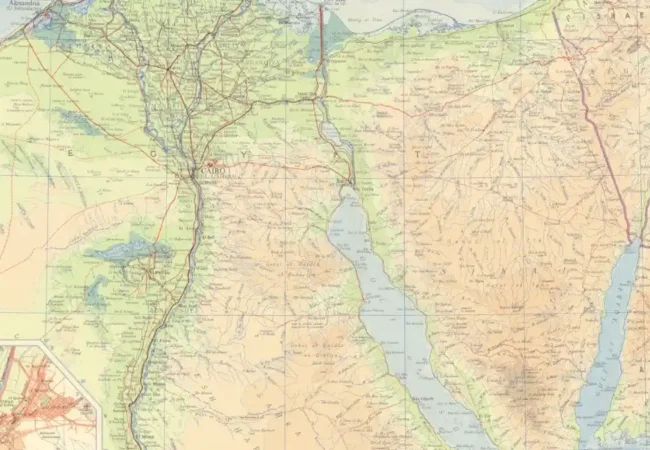


Explore our top-rated Egypt travel packages and embark on an unforgettable journey. From the Pyramids of Cairo to the magical temples of Luxor, Aswan, and Abu Simbel, discover expertly curated tours designed for your perfect Egyptian adventure