Ancient Egyptian Mummies
Ancient Egyptian mummies are human bodies preserved in specific ways to prevent...



King Menes, widely identified by historians as Narmer, was the founding pharaoh of ancient Egypt’s First Dynasty. Around 3100 BC, he successfully unified the distinct regions of Upper and Lower Egypt into a single centralized kingdom. By adopting the symbolic Double Crown and establishing the capital city of Memphis, Menes initiated Egypt’s 3,000-year dynastic era.
Key Takeaways
First Pharaoh of a Unified Egypt: Founded the First Dynasty around 3100 BC, merging the northern and southern regions into a single sovereign state.
The Double Crown (Pschent): Symbolized his dual authority by wearing the combined white crown of Upper Egypt and the red crown of Lower Egypt.
Establishment of Memphis: Built a new central capital—originally a white-walled fortress called “Nefer”—strategically located between the two previously divided lands to control trade and regional defense.
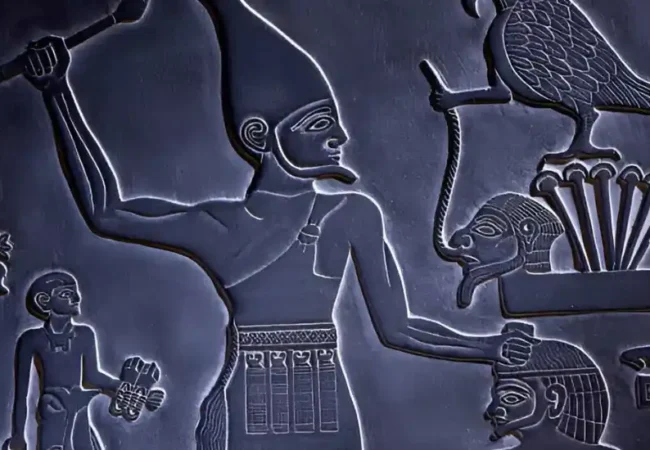
The Narmer Palette: Serves as the primary archaeological artifact documenting this historic unification, depicting the king striking down his enemies.
National Military Framework: Created a strong, self-reliant Egyptian army based on mandatory national conscription rather than the use of foreign mercenaries.
62-Year Reign: According to ancient historians like Manetho, Menes established a lasting era of peace, economic stability, and architectural development before legend claims he was killed by a hippopotamus.
King Menes and The Unification of Upper and Lower Egypt was in the First Egyptian Dynasty between the years 03100 – 2980 BC, led by King Narmer, the founder of the First Dynasty, and the beginning of the Dynastic Era.
The word “Narmer” means “catfish” and “mar” means the coming catfish. Most scholars agree that Narmer or Narmer, who is the same King Menes who unified the two countries.
Narmer was from the city of Tenes, headquartered near the city of Abydos in Suhag. Narmer also founded the city of Memphis to be the seat of government in the middle of the two countries of Upper and Lower Egypt.
The scientist Flinders Petrie discovered the head of a statue in the Umm al-Jaab tombs of King Narmer, which is preserved in the Petrie Museum in London.
King Narmer, or Menes, who unified the two countries, was one of the greatest kings of Egypt. He was the first to unify Egypt to become one state, and he was the first to establish the city of Memphis, and during his reign as the first king in the first Egyptian dynasty, Egypt was also a strong country and a broad, united kingdom.

The-Monumental-Achievements-of-King-Menes’-Reign (King-Menes-and-The Unification).
King Menes, the ruler of the Kingdom of the South, was able to unify Lower Egypt with the tribal side around the year 3200 BC. He created a strong central government for all of Egypt, and he became the first ruler to hold several titles, such as: King of the Two Lands, Owner of the Two Crowns, Eagle of the South, Serpent of the North, and he was all of that. In praise of the deeds done by this great hero.
Thus, King Menes became the founder of the first ruling dynasty in the history of Pharaonic Egypt, and indeed in the history of the entire world, and he wore the double crown of the northern and southern kingdoms.
King Menes realized the necessity of building a city in a medium location, from which he could supervise the coastal and sea sides, so he founded a new city on the western shore of the Nile in the place of the current village of “Mit Rahina” in Giza Governorate.
It was initially a military fortress surrounded by a white wall, and its owner wanted it to It fortifies and protects the kingdom from the raids of the owners of the north, and Menes had called it “Nefer”, meaning the beautiful port, and later it was called “Memphis” in the time of Greece, then the Arabs called it Memphis, and the city of “Memphis” became the capital of all of Egypt during the era of the Old Kingdom until the end of the dynasty Six

King-Menes-and-The-Unification
King Menes and The Unification of the two countries in 3200 BC and the elimination of separatist strife, Egypt became a meek country enjoying peace due to its geographical nature, which it closed to itself.
The Egyptian army in all dynasties was one of the strongest, especially in the New Kingdom, where the Egyptians defeated the Hittites, Romans, and Greeks in a series of wars that destroyed the Egyptian king Ramesses II.
One of the reasons for the strength of the Egyptian army is that it did not depend on foreign mercenaries, but it relied on summonses and compulsory service during the war, so the Egyptian army was entirely Egyptian and did not contain any other foreign elements.
Starting from the era of building the pyramids, the Egyptians were compulsory conscripts to build and construct buildings seasonally during flood days, and the rich would pay an allowance to exempt them.
The armament of soldiers in the Old Kingdom was primitive and consisted of clubs and sticks with a hole attached to the top, daggers, and spears of copper.
Egypt was immune to foreign wars in this ancient period due to its natural immunity.
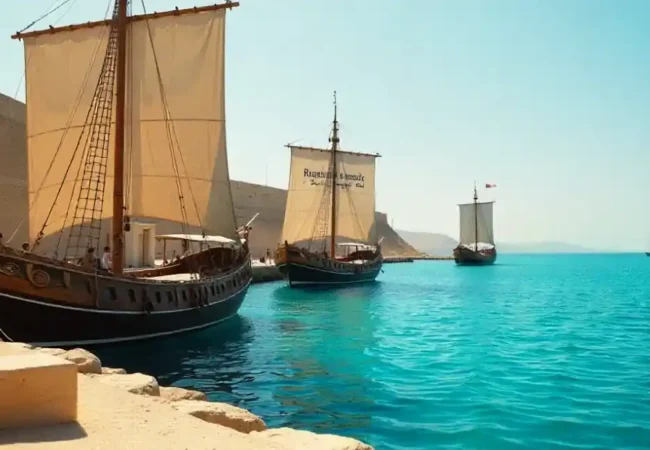
Because Egyptian society, by its nature, is not aggressive against others. Its army was obligatory service during strife and internal wars. Soldiers were transported across the Nile in boats to areas of conflict and local crises in the days of the Old Kingdom

Lessons-from-the-Life-of-King-Menes-for-Modern-Leaders-(King-Menes-and-The-Unification)
He met with the army chiefs and after his elements of power were complete, the flower of the youth of the south joined the army after they had completed their training.
All they needed was a sign from King Menes to destroy the unjust ruler in the north, remove injustice and humiliation from their brothers in the north, and place a common crown on Menes’ head.
Mina smiled happily and showed signs of satisfaction. Then he directed his speech to the army and said: “I do not doubt for a moment about the strength of my army, its determination, the valor of its officers and soldiers, and the perfection of its equipment and weapons, But I like to benefit from the lessons of the past, so that nothing happens to me like what happened to my grandfather “Scorpion” when he tried to unify.
The country was victorious in some locations and he died before he took control of the entire delta, so the army returned to the country, But I determined, by God’s will, that the victory would be decisive this time and that comprehensive union would be our goal.
I will inform you soon about the date when our valiant army will move to a holy war whose goal is to unite the good land.
And our dear country. After several months, the army left and its ranks were organized, carrying flags and beating the drums of war. Mina walked majestically at the head of his army, wearing war clothes, going forward to cleanse the northern land of corruption.
When the army was outside the city, he ordered them and they were divided into two halves, one of which sailed the Nile River in private boats, while the other was on its side.
The Nile is within sight of the first one. The army of the north gathered to fight Mina, and he was at the forefront at the head of his army, distributing death to his enemies with his large ax that he carried in his right hand, and carrying his heavy shield in his left hand, until they inflicted terror on the ranks of the army of the north.
Mina made his way to their leader, “Wash”, and struck him with a blow that knocked out his weapon, so he knelt down to ask for mercy.
From Mina, Mina struck him with a blow that killed him, causing the northern army to suffer the death of its commander. Thus, Mina’s hope of uniting the northern and southern countries was fulfilled.
He became accustomed to visiting the regions himself and hearing for himself the demands of the people in order to achieve them, and thus he was welcomed wherever he went.
King Menes, often identified with Narmer, is a pivotal figure in Egyptian history, renowned for the unification of Upper and Lower Egypt during the early dynastic period. He is credited with founding the 1st Dynasty, marking the beginning of a new era in ancient Egyptian civilization.
The Narmer Palette, a significant archaeological artifact, depicts this unification, showcasing Menes wearing both the white crown of Upper Egypt and the red crown of Lower Egypt, symbolizing his dual authority.
According to the ancient historian Manetho, Menes reigned for approximately 62 years, and his legacy is preserved in various king lists that chronicle the rulers of Egypt.
Despite his great accomplishments, legends also tell of his demise, with some accounts stating he was killed by a hippopotamus, underscoring the dangers of the Nile. The seal impression of Menes further cements his historical significance, illustrating the power and influence he wielded in shaping the foundations of ancient Egyptian civilization.
King Menes, a legendary figure in the history of Ancient Egypt, is often credited with uniting Upper and Lower Egypt into a single kingdom, marking the beginning of the First Dynasty.
According to an Egyptian historian, Menes’ achievements laid the foundation for a unified state that thrived along the course of the Nile. The Greek historian Herodotus also mentioned Menes, though his accounts differ from native Egyptian records.
Despite the variations, Menes’ role as the first pharaoh is widely recognized, symbolizing the dawn of one of the world’s oldest and most influential civilizations.
King Menes, often identified with Narmer, was the first pharaoh of a unified Egypt. He is credited with uniting Upper and Lower Egypt around 3100 BCE, marking the beginning of the First Dynasty and the Early Dynastic Period.
King Menes united the two regions—Upper (southern) and Lower (northern) Egypt—under a single centralized government, establishing the first true Egyptian kingdom and setting the foundation for 3,000 years of dynastic rule.
King Menes is believed to have ruled around 3100 BCE, though exact dates vary depending on historical and archaeological interpretations.
Menes achieved unification through conquest and diplomacy, symbolized by the double crown (the Pschent), combining the white crown of Upper Egypt and the red crown of Lower Egypt.
The main evidence comes from ancient king lists, such as the Palermo Stone and writings by Manetho, along with archaeological findings like the Narmer Palette, which depicts a king (possibly Menes/Narmer) uniting Egypt.


Confidently choose your perfect Egyptian adventure from our selection of trusted, expert-curated tours.




Unlock the true wonders of Egypt with confidence. We combine expert local knowledge, seamless logistics, and round-the-clock support to deliver flawless, responsible, and unforgettable travel experiences.