The Block Statues of hetep
Block statues of hetep are considered one of the most important types...



Ancient Egyptian mummies are human bodies preserved in specific ways to prevent decomposition. The mummification process began in ancient Egypt thousands of years ago.
Its religious purpose was to preserve the body after death. Over time this method became widespread among wealthy families.
Mummification was not the only method used by Egypt other civilizations, such as China, Peru, and the United States also practiced it.
Many people today do not know the true facts about mummies, and some believe incorrect information about the method or reason for its use.

Important-Facts-About-Ancient-Egyptian-Mummies-EgyptaTours
When ancient Egyptian mummies are mentioned the first thing that comes to mind is a body covered in cloth and preserved from decay. The ancient Egyptians did not do this by chance. They believed that if a person died while free of sin they could live in another world after death.
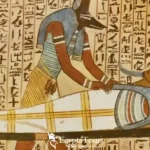
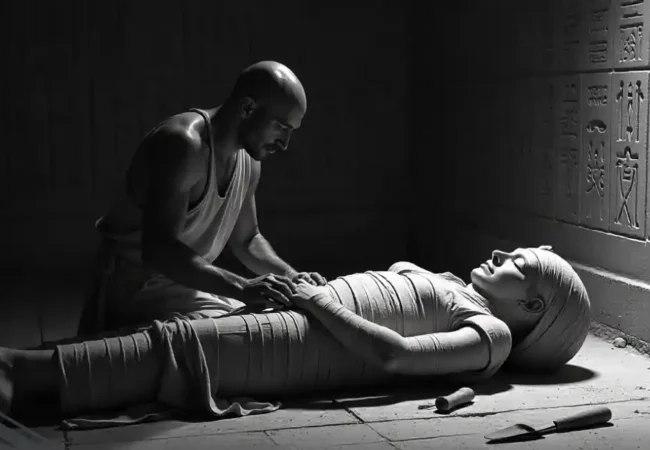
The mummification process began immediately after death. Specialists called embalmers performed the process.
They would open the body and remove all internal organs except for the heart which in their view, contained everything a person had done in life both good and bad.
After the organs were removed whatever was possible was rearranged inside the body.
The body was then wrapped in a piece of linen soaked in a sticky substance to prevent decay. This substance protects the body from bacteria and odors. In this way the ancient Egyptians believed they were preserving the body for its journey after death.

What-are-the-types-of-mummies-in-Egypt-EgyptaTours
Throughout the ages not all ancient Egyptian mummies were alike. They differed in terms of the mummification method, the materials used, and even the preservation conditions. Some bodies were carefully preserved using specific materials while others dried naturally without human intervention.
This diversity in preservation methods has provided researchers with important information about burial methods and the prevailing beliefs of each period.
These types are as follows:
The mummies of kings were carefully prepared using oils and resins with strong scents which helped preserve the body in excellent condition over thousands of years. These materials prevented deterioration and significantly slowed decomposition.
Some bodies found in deserts were not manually mummified but dried naturally due to the intense heat and lack of humidity. This type is called “dried mummies” because no mummification tools or materials were used, but rather were preserved solely by the environment.
Ancient Egyptian mummies are living proof of the lifestyle of people who lived in ancient times. Through them we can learn about how people thought what they believed, and what their daily lives were like. Egyptian mummies have helped scientists gain accurate information about the customs of ancient society.
Through studying these mummified bodies previously unknown details have emerged such as the fact that some women had simple drawings on their faces or chests, and that the use of wigs was common often made from natural hair.
We learned that many men regularly shaved their heads because they believed it gave them a younger appearance. Some mummies were not wrapped carefully enough causing them to deteriorate later. This revealed errors that occurred during the mummification process itself.

What-are-the-most-famous-ancient-Egyptian-mummies-EgyptaTours
No mention of ancient Egyptian civilization is complete without ancient Egyptian mummies at the forefront. They are among the most important pieces of evidence that preserved the features of kings and queens who lived throughout different eras.
Although thousands of mummies have been found some have gained widespread fame due to their historical significance or the secrets they revealed upon study.
These mummies are:
Ancient Egyptian mummies are preserved in museums using meticulous methods aimed at preventing deterioration for as long as possible. In some cases bodies are placed in cool places to reduce bacterial activity while in other cases heat drying or chemicals are used to prevent moisture.
Some museums have dedicated halls to display these mummies along with information explaining their mummification process and history.
Scientific advances have facilitated the study of mummies without harming them. CT scans allow us to see the internal details of the body without having to open it. This method is known as virtual dissection.
X-rays also provide accurate data on a person’s health such as dental or bone problems. Since 1998, scientists have begun using DNA techniques. Samples were extracted from the remains of Ramses II confirming his identity and revealing that he had been infected with malaria before his death.

How-We-Explore-Ancient-Egyptian-Mummies-Today-EgyptaTours
To learn more about ancient Egyptian mummies it is recommended to visit well-known museums such as the Egyptian Museum and the Museum of Egyptian Civilization.
These sites display original models and provide reliable information about mummification methods burial conditions, and beliefs There are also other sources such as specialized references or documentaries that explain the development of mummification and its motivations over time.
Mummies are displayed in a controlled environment within museums, and visitors can view them directly with a detailed explanation of each case.
Tourist programs within Egypt include tours of various archaeological sites such as Luxor, Aswan, and Cairo, and provide services that help understand the historical background of each monument.
Mummies are not merely the remains of people from past eras they are considered a part of human history. Mummification was designed to preserve the body in preparation for what was believed to be a later life. Often the body was buried with belongings such as food or jewelry as part of specific rituals.
Despite the adoption of modern methods to study these bodies such as CT scanning and genetic analysis many aspects remain unclear. Some questions remain about the details of mummification and why Egyptian mummies are so unique. Therefore viewing them directly remains the best way to understand their value rather than relying solely on theoretical sources.
In conclusion, we would like to remind you that ancient Egyptian mummies are among the most important archaeological evidence that has helped document accurate information about the lifestyle health habits, and religious beliefs of ancient Egypt.
Continuous studies into them have contributed to uncovering previously unknown medical and social details. Their presence in international museums has also enabled researchers and visitors to directly observe the stages of mummification and preservation methods.
Despite the development of analytical methods mummies continue to contain new information that emerges with each scientific discovery.
There are 22 known royal mummies in Egypt which were officially transferred in a historic procession in 2021 to the National Museum of Egyptian Civilization.
This collection includes kings and queens from various eras, such as Ramses II, Thutmose III, and Queen Hatshepsut. These mummies are among the most important mummies preserved to this day.
Mummies in ancient Egypt were bodies preserved after death through mummification. This process according to religious beliefs preserved the body’s shape and prepared it for the afterlife. Internal organs were removed, the body dried using natural materials then wrapped in cloth and buried with personal belongings to ensure the deceased’s comfort in the afterlife.
Among the most important ancient Egyptian mummies are those of King Ramesses II, Queen Tiye King Amenhotep I, Queen Meritamun, and King Seqenenre. These mummies belong to royal families that ruled during various eras. They are preserved to this day and are displayed in Egyptian museums under careful scientific supervision.


Explore our top-rated Egypt travel packages and embark on an unforgettable journey. From the Pyramids of Cairo to the magical temples of Luxor, Aswan, and Abu Simbel, discover expertly curated tours designed for your perfect Egyptian adventure