Death in Ancient Egypt
In the belief of the ancient Egyptians, death was not the end...



Trade was one of the most important economic activities in ancient Egypt, and the Nile River was used as one of the most important trade routes between Egypt and Sudan. Trade also spread between Egypt and all parts of the Arab world.
One of the most important things that led to the prosperity of trade in ancient Egypt was the prosperity of agriculture and industry, which led to a surplus of crops and manufactures that could be sold to other countries. The ancient Egyptians were also able to exploit the minerals found in the desert of ancient Egypt for the prosperity of trade.
In this article, we will learn about the trade in ancient Egypt, its development through the different Pharaonic eras, and the most important trade goods in ancient Egypt.
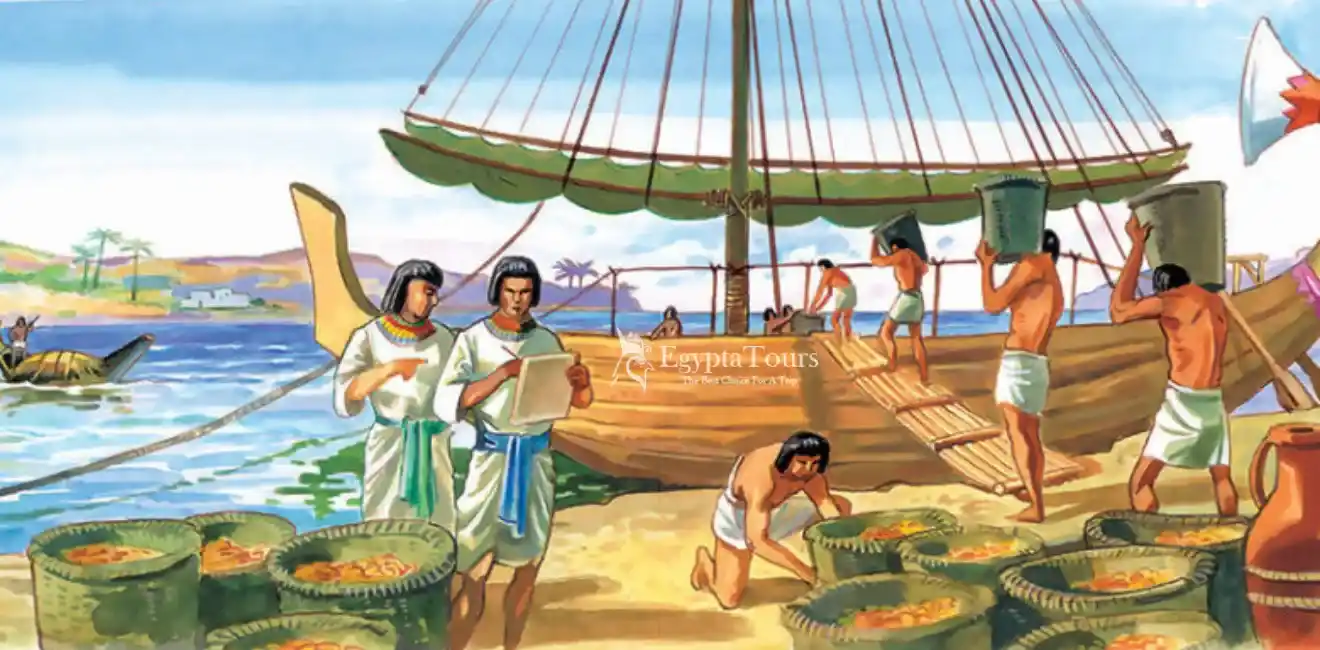
The-Origin-of-Trade-in-Ancient-Egypt-EgyptaTours
The ancient Egyptian lived a primitive life in the Archaic Period, where he relied on hunting and the fruits of some trees for food, and at that time, he lived on the plateaus. When the plateaus dried up, the ancient Egyptian descended to the banks of the Nile River in search of water. Then he discovered agriculture in the predynastic period, and at that time trade emerged as a result of the increase in crops.
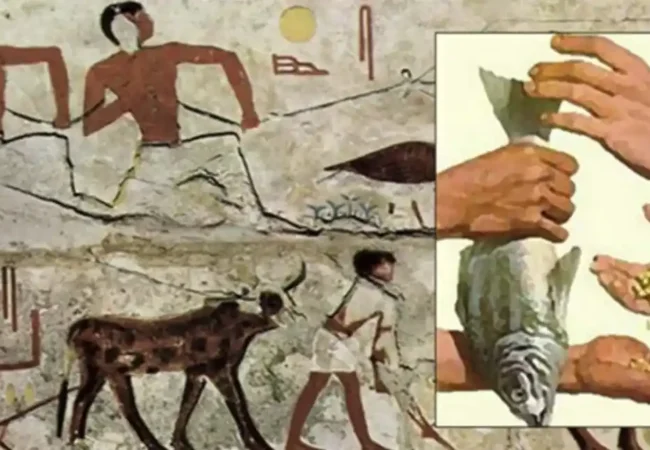
At this time, it relied on the barter system, where some goods or services were exchanged, and the trade of the ancient Egyptians at that time depended heavily on the commercial exchange between northern Egypt and its south.
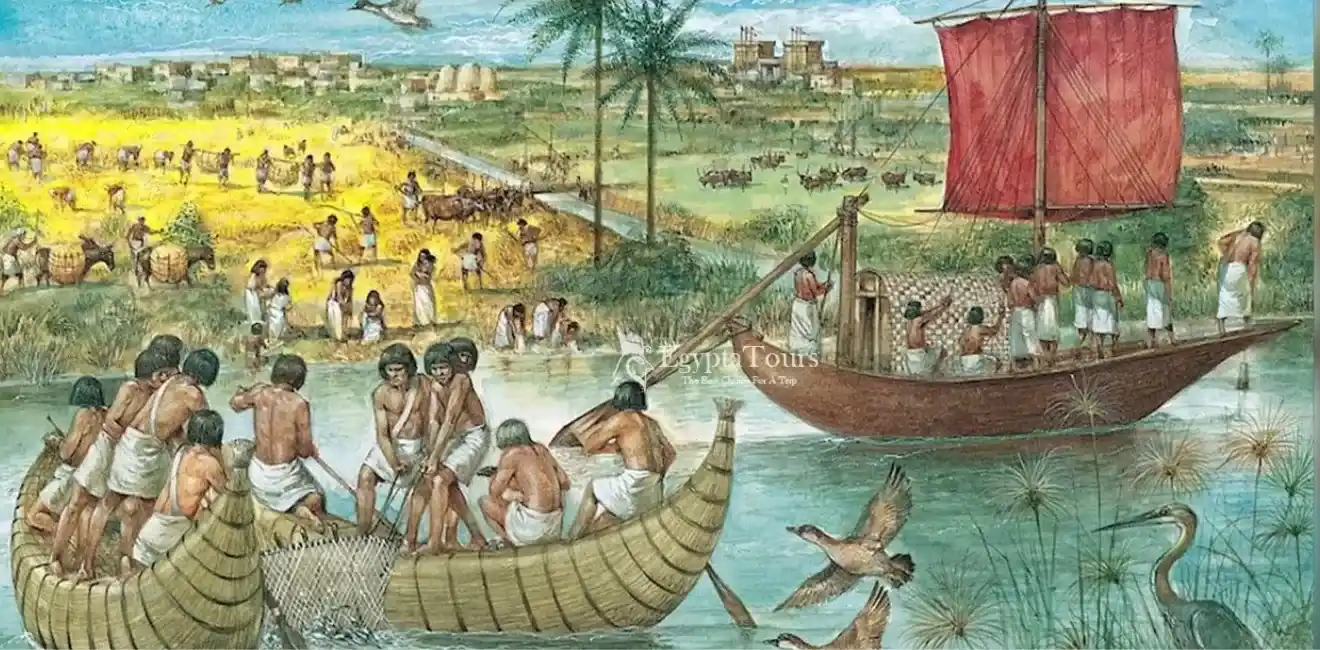
The-Development-of-Trade-Across-the-Pharaonic-Eras-EgyptaTours
King Menes Narmer then unified the northern and southern lands to make Egypt one great kingdom, and this led to the significant prosperity of industry and trade in Egypt. The Egyptians discovered minerals that greatly helped them in the trade process, and Egyptian goods spread to neighboring countries such as Sudan, the Levant, and Libya.
Trade in ancient Egypt spread through different routes, including the land route through Wadi Hammamat and the sea route through the Nile River.
The ancient Egyptians first created boats from papyrus and then built wooden ships that were used for trade on the Nile River and the Red Sea. Many negotiations and trade agreements were made between Egypt and other countries, and Egypt’s strong army at that time helped protect the trade in ancient Egypt.
Due to the presence of the Nile River, which was the lifeline in ancient Egypt, this led to the existence of fertile land suitable for agriculture on both sides of the Nile, and crops and grains increased in ancient Egypt. Therefore, the ancient Egyptians exported them to some other countries.
The desert of Egypt was also rich with many treasures at that time, so mines full of minerals appeared, which the ancient Egyptians sold to neighboring countries. They also sold precious stones that were extracted from the Egyptian desert.
As a result of the lack of wood in ancient Egypt, it was one of the most important things that were imported in the trade in ancient Egypt. The ancient Egyptians also imported gold and incense from the south and oil from Palestine. In the predynastic period, Egypt imported pottery from Canaan, and ivory, some wild animals, tin, and copper were imported.
Among the most important trade expeditions of the Trade in Ancient Egypt were:

Local-Markets-in-Ancient-Egypt-EgyptaTours
Markets were of great importance in the trade of the ancient Egyptians as they were a hub of their daily lives. In them, handicrafts, agricultural products, and other products were bought and sold to provide the daily needs of the Egyptians, and women participated extensively in the ancient Egyptian market.
Many products were sold in the ancient Egyptian markets, such as vegetables, fruits, pottery, barley, wheat, clothes, and others. Some markets and commercial transactions in ancient Egypt were depicted on the walls of some temples.
The trade in ancient Egypt began with the barter system, where some goods were exchanged for other goods, especially grains such as wheat or barley. Then trade developed at that time, and some goods began to be exchanged for some metal pieces, whether gold or silver.
Then trade developed after that, and currencies were used, as the ancient Egyptians were influenced by Greek currency models. Some coins were made that bore the images of some ancient Egyptian kings, such as Ptolemy I and Cleopatra VII.
The coin industry in Egypt then developed, and there became places for minting coins in Alexandria and Memphis. These coins combined Greek and Egyptian culture, and Egypt prospered economically to a great extent at that time, and the currencies reflected its political power and facilitated commercial exchange.
There are many ancient Egyptian coins that have been discovered in many tombs, and they were greatly influenced by all the countries that invaded Egypt and were influenced by the Ptolemaic, Roman, and Byzantine civilizations. Some coins carried images of some ancient Egyptian symbols and gods according to the beliefs of the ancient Egyptians at that time.
Internal conflicts over power increased in ancient Egypt, and many kings and princes competed for authority. This led to the emergence of corruption, conflict over resources, and economic deterioration. The markets became volatile, and citizens faced many difficulties in obtaining job opportunities.
This led to the intervention of some foreign countries in Egypt’s affairs, and Egypt was occupied by the Assyrians, then the Persians, the Greeks, and the Romans. Egypt remained in this weakness until the Islamic conquest, after which Egyptian trade began to flourish again, and the economic life of the Egyptians prospered.
Trade in Egypt flourished in general, and among the most prominent goods that were exported were grains, precious stones, and minerals. It especially flourished during the Middle Kingdom era.
Trade in ancient Egypt began since the predynastic period, where the ancient Egyptians exchanged goods among themselves. It then expanded with the progress and prosperity in ancient Egypt and spread to all parts of the world.
The Nile River is one of the most important Egyptian trade routes. Nubia was the center where commercial exchange between Egypt and African countries took place. The Darb el-Arbain was the most famous vital trade route south of Asyut, where some goods were exchanged. The Mediterranean Sea was also used to bring some goods like wood.
Many kings of ancient Egypt contributed to the expansion of Egyptian trade, such as Queen Hatshepsut and King Amenhotep III. They also conducted exploratory trips to some neighboring countries.
The trade in ancient Egypt expanded greatly due to the ability of the ancient Egyptian to be creative and innovative. He was also a lover of work and excelled in all industrial, agricultural, commercial, and other fields. Many kings also paid attention to trade, which led to the great prosperity of Egypt’s economy and the formation of a strong economic kingdom at that time.


Explore our top-rated Egypt travel packages and embark on an unforgettable journey. From the Pyramids of Cairo to the magical temples of Luxor, Aswan, and Abu Simbel, discover expertly curated tours designed for your perfect Egyptian adventure