Avenue of Sphinxes is considered one of the most prominent historical cultural and political landmarks in Egypt, It is a link between many cultural and archaeological landmarks in the history of ancient Egypt, as it extends from the Karnak Temple to the Luxor Temple and is characterized by the presence of rams which were embodied by the Egyptians at that time as a symbol of strength and greatness.
This reflects the art of sculpture and architecture in which the ancient Egyptians excelled Many religious celebrations and rituals took place on the Avenue of Sphinxes.
In this article we will talk about the Avenue of Sphinxes and how it was discovered, so follow us.
History of the construction of the Avenue of Sphinxes
History-of-the-construction-of-the-Avenue-of-Sphinxes-EgyptaTours
The ancient city of Luxor was called Thebes and was one of the capitals during the era of the Pharaohs The Avenue of Sphinxes was built starting from the era of the New Kingdom and then completed by one of the rulers of the 30th Dynasty known as Nectanebo I.
These statues were carved with efficiency and skill as is known to the ancient Egyptians, as they built a road more than 2.7 miles long and about 250 feet wide where statues in the shape of a ram’s head are lined up on both sides This road is more than 3,500 years old and is still one of the most important discoveries for many historians and those interested in ancient Egyptian history.
Discovery of the Avenue of Sphinxes
The discovery of the Avenue of Sphinxes began for the first time by the Egyptian archaeologist Zakaria Ghoneim in 1949, where about eight statues of rams were discovered near the Luxor Temple With the developments and discoveries in the field of ancient Egyptian history about 17 other statues were discovered, and then about 55 other statues were discovered.
The Egyptians then determined the entire walking path between 1984 and 2000, and the Egyptian government then carried out some projects to develop this road to become the way it is now, and many tourists come to see this road and take many souvenir photos on it.
Description of the Avenue of Sphinxes
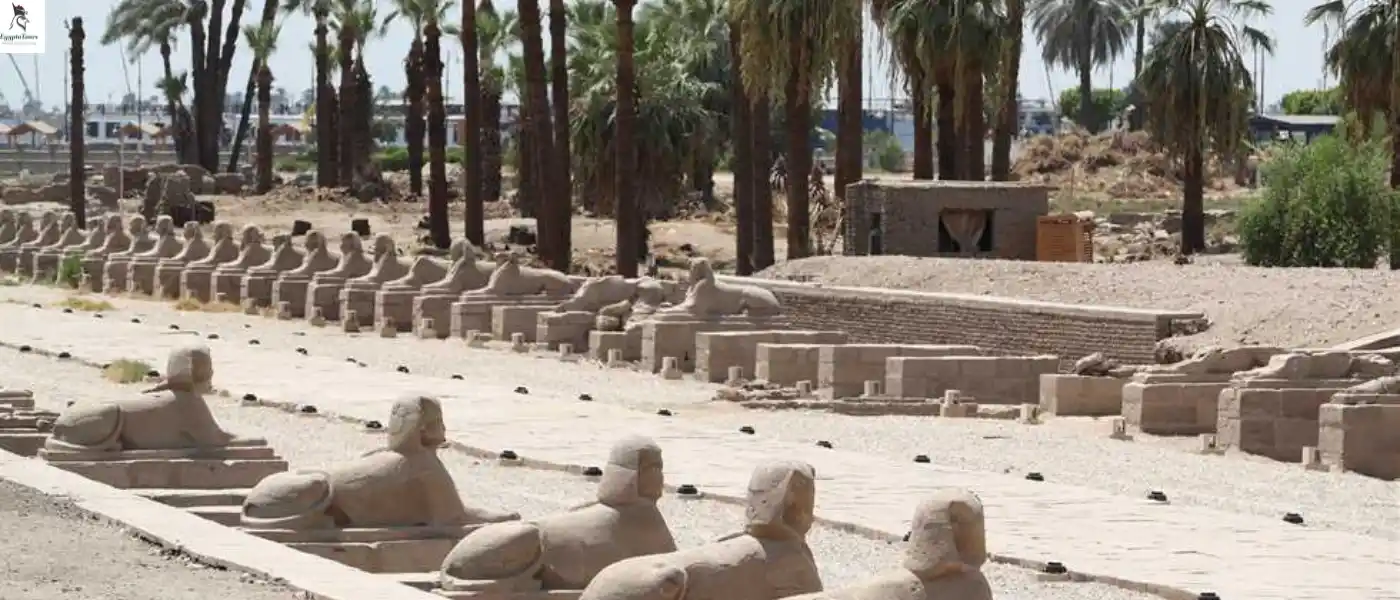
Description-of-the-Avenue-of-Sphinxes-EgyptaTours
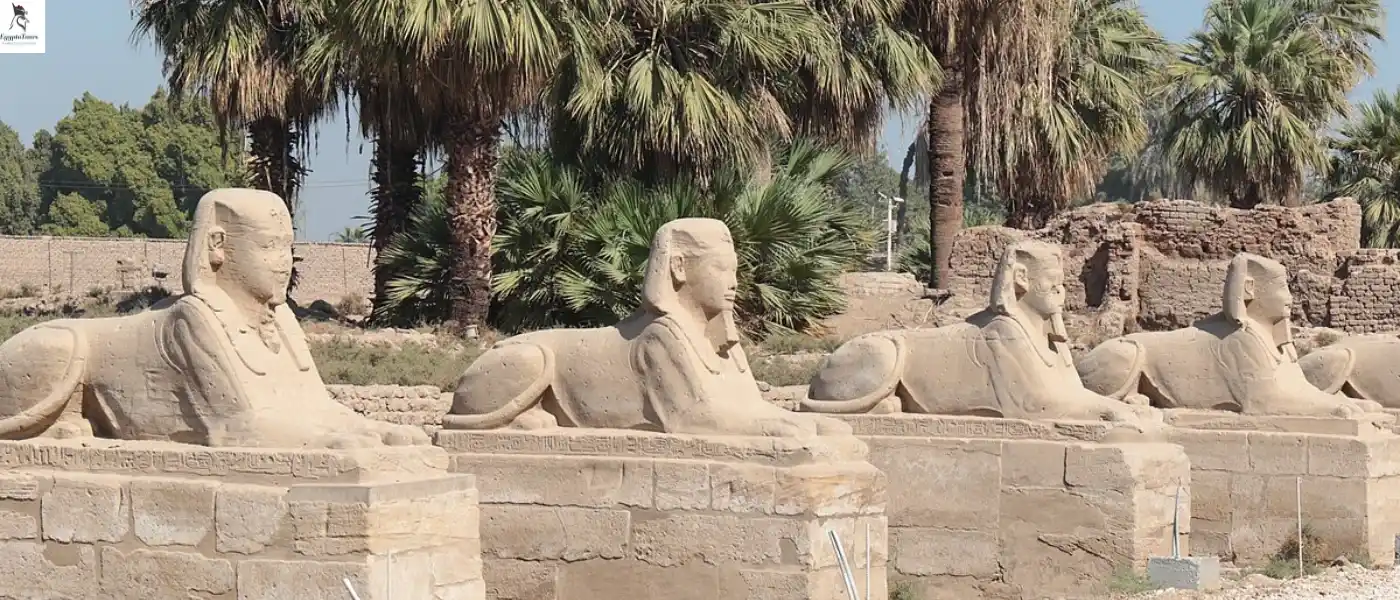
The Avenue of Sphinxes is a stone road that connects the Karnak Temple and the Luxor Temple, and it is a large number of statues approximately 1300 statues, and all of these statues are in the shape of rams’ heads and lions’ bodies and all of these statues were carved from sandstone.
It contains about 1057 original statues including three shapes The first shape is a lion’s body with a ram’s head and represents about 1000 statues, The second shape is a complete ram statue and was built during the 18th Dynasty by King Amenhotep III.
The third shape represents the largest part of the displayed statues which is a lion’s body with a human head All of these statues represent the strength and greatness of the ancient Egyptians.
It is one of the most important archaeological landmarks in Luxor now especially after its development which began in 2007 and continued until 2021.
Opening of the Avenue of Sphinxes
The Avenue of Sphinxes was opened after its development was completed in 2021 in the city of Luxor amidst a great media hype attended by many photographers and media professionals from all over the world. It was also attended by President Abdel Fattah El-Sisi President of the Arab Republic of Egypt The ceremony included many participants who wore pharaonic costumes and created some light and sound effects related to the pharaohs.
At the beginning of the opening of the Avenue of Sphinxes the Egyptians placed three sacred boats that were specially designed in the Pharaonic style to sail in the middle of the Nile River and were surrounded by dazzling lights.
These boats symbolized the Holy Trinity of the ancient Egyptians as they referred to Amun Mut and Khonsu These celebrations were very similar to some of the celebrations that the ancient Egyptians had previously performed as these rituals were performed twice the first on the harvest festival and the second on the feast of the king’s accession to the throne Therefore the Avenue of Sphinxes is considered the oldest ceremonial road in history.
Some of the difficulties facing the Egyptians during the discovery and development of the Avenue of Sphinxes
One of the most important difficulties that made this road unknown for a long period of time is the burial of all this road underground and the construction of many homes, mosques, churches and buildings on this road Therefore all of these things were demolished to discover the new road and their owners were financially compensated and alternative places were provided for them.
The Egyptians also faced some technical difficulties because the burial of this road made it difficult to restore it and most of the rams that were discovered at that time were in poor condition, so the project to develop the Avenue of Sphinxes continued for many years and the state faced many material and technical challenges until the Avenue of Sphinxes returned to light.
The ancient Pharaonic Opet Festival
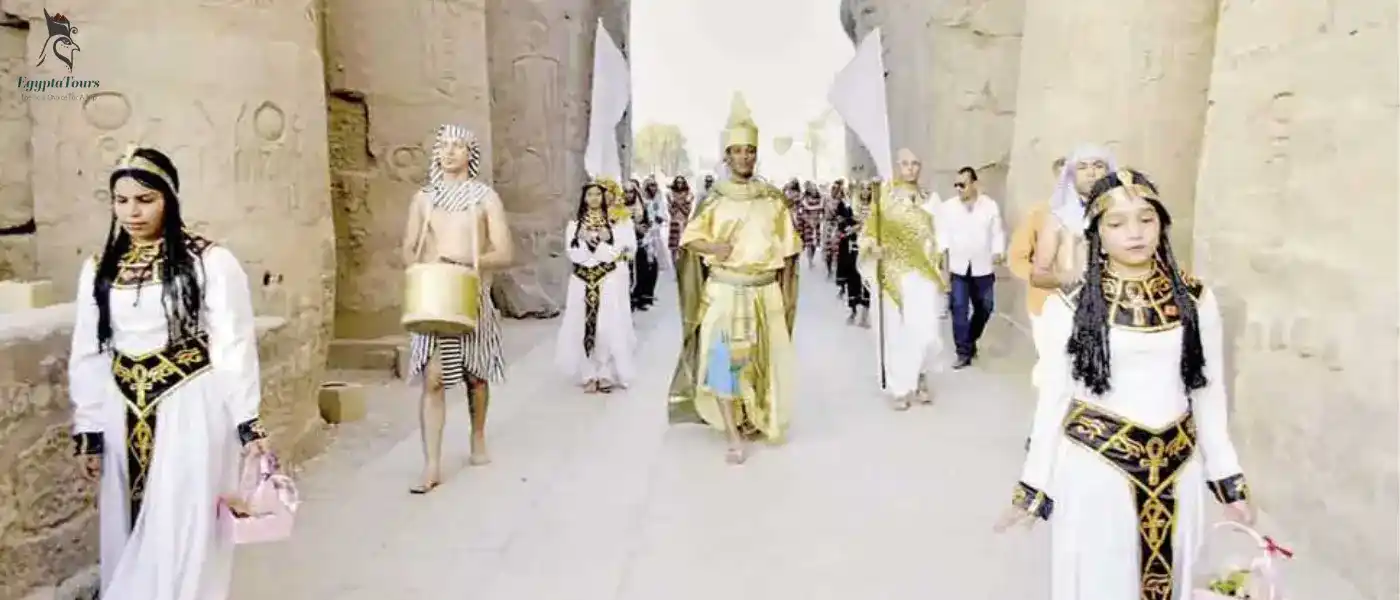
This festival is considered one of the oldest festivals of the ancient Egyptians and was celebrated annually and some statues were transferred to the Avenue of Sphinxes where the god Amun-Ra, god of the Karnak Temple, and the god Mut met with their two sons the god Khonsu in some holy places with the god Amun god of the Luxor Temple, and the king was re-crowned again and his legitimacy as ruler of the country was renewed This festival is considered one of the most famous festivals of the ancient Egyptians.
The Minister of Tourism recently decided to celebrate the Opet Festival annually in order to stimulate tourism because this celebration has received a lot of great attention from the media and all those interested in ancient Pharaonic antiquities from inside and outside Egypt.
Tourism is one of the most important sources of income that Egypt relies on as many tourists come from all over the world to see the archaeological and cultural landmarks that the ancient Egyptians excelled in thousands of years ago.
Significance of the Avenue of Sphinxes
The reopening made Luxor famous around the world. Tourists come to see the sacred road and also visit the Valley of the Kings, Karnak and Luxor Temple. This increase in visitors helps Egypt’s economy and supports its cultural tourism.
The restoration of the avenue has brought new interest in Egypt’s religious festivals and helped modern Egyptians feel closer to their ancient heritage. For many people, it is a living symbol of cultural pride and tradition.
The Golden Parade Celebration
The avenue opened to the public again in November 2021 during the Golden Parade ceremony. President Abdel Fattah el-Sisi led celebrations with lights, music and processions similar to ancient Egyptian religious festivals. Modern lights shine on the sphinx statues at night making them look impressive and showing the fine details made by ancient Egyptian artists.
New drainage systems keep the avenue safe from seasonal floods helping to protect this important archaeological site for the future. The reopening came after almost twenty years of restoration and work by archaeologists from around the world.
Visiting the Avenue Today
We suggest starting your visit to the Avenue of Sphinxes at Karnak Temple where the road begins. The northern entrance gives great views of the ram-headed sphinxes that guard the way to Amun’s temple.
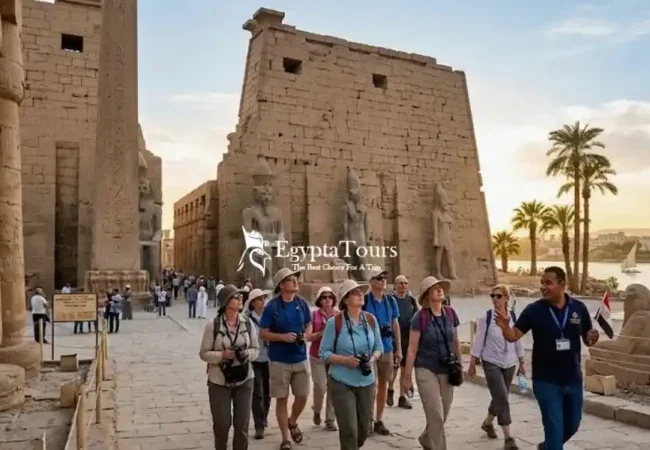
Walking the full 2.7 kilometer path usually takes 45–60 minutes, depending on your speed and time spent taking photos. The path has modern walkways and signs in several languages, making it easy for visitors from around the world. There are rest areas with shaded seats along the way which are especially useful in Egypt’s hot afternoons.
The southern end at Luxor Temple is just as impressive, with human-headed sphinxes leading up to the temple’s tall entrance. Many visitors like to see both temples in one day, using the Avenue of Sphinxes as a scenic path between these two UNESCO World Heritage sites.
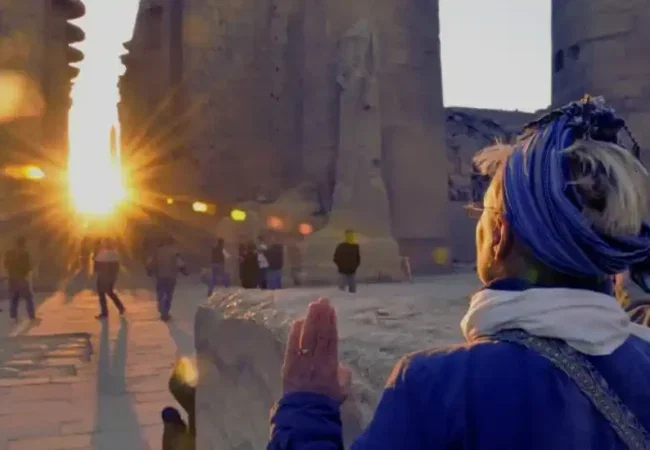
There are lots of chances for photos along the avenue. Sunrise and sunset give especially beautiful light. We suggest coming early, around 7:00 am, to avoid crowds and enjoy the calm atmosphere. The soft morning light makes the sandstone sculptures look even more striking, perfect for taking memorable pictures.
For visitors from the U.S. a tourist visa is needed. You can get one when you arrive at Cairo International Airport or apply online through the Egyptian e-visa system. European visitors follow the same rules while some Latin American countries have different rules. It’s best to check the latest requirements with Egyptian consulates before you travel.
FAQS
Why was the Avenue of Sphinxes named this name?
It was named this because most of the statues on it on the right and left are in the shape of rams These rams remained buried underground for many years until an archaeologist discovered them and began excavating the rest of the rams until the road appeared as it is today.
How many statues are there on the Avenue of Sphinxes?
The number of original statues on the Avenue of Sphinxes is about 1057 statues, and they were divided into 250 statues on the side of the Karnak Temple in the form of a ram and 807 statues on The Sphinx has a human head while the rest of the statues are statues in the form of a ram’s head and a lion’s body, All of these statues express the ingenuity of the ancient Egyptians in art and architecture, and at that time they were a symbol of strength and courage.
Was the Avenue of Sphinxes moved?
The Avenue of Sphinxes was not moved but work was done to develop and extract it because it was completely buried under the surface of the earth This development took many years until it was opened in 2021 in the presence of President Abdel Fattah El-Sisi President of the Arab Republic of Egypt in a luxurious ceremony attended by many media professionals from all over the world.
At the end of this article we have learned about the Avenue of Sphinxes which is one of the most important cultural and archaeological landmarks in the city of Luxor, as the Egyptian state has recently worked to develop this road in an effort to develop and flourish tourism in Egypt.
What is the Avenue of the Sphinxes?
A ceremonial road lined with sphinx statues that once connected Karnak Temple to Luxor Temple in Thebes (Luxor), Egypt.
Where is it located?
In Luxor, along the ancient Theban temple complex route between Karnak and Luxor.
How old is it?
The concept dates to the New Kingdom (roughly 18th Dynasty, c. 1550–1292 BCE); the avenue and its sphinxes were built and modified over centuries.
How long was the full avenue?
About 2.5–3 kilometers (roughly 1.5–1.9 miles) in its ancient extent; today only restored segments are accessible.
What do the statues along it look like?
Sphinx statues with human/pharaoh heads mounted on lion bodies; many depict rulers and priests.
When was it rediscovered or restored?
Explorations and excavations occurred in the 19th–20th centuries, with major restoration and partial reopening in the late 20th and 2000s–2010s.
Can visitors walk the avenue today?
Access is limited; some restored stretches can be viewed from Karnak and Luxor temples, with occasional guided walks during special openings.
Why was the avenue built?
To symbolize the sacred connection between Karnak (the cult center of Amun) and Luxor (the cult center of Opet) and to parade divine power.
How many sphinx statues were part of the avenue?
The ancient plan involved hundreds of sphinxes lining the route; many have been relocated, damaged, or lost over time.
Are there any notable variations among the sphinxes?
Some depict different crowns or facial styles, reflecting local rulers and periods; most are human-headed on a lion body.
What is the significance of the site today?
It remains a symbol of Theban religious life, royal propaganda, and the ceremonial axis of ancient Thebes.
How does the Avenue relate to Karnak and Luxor temples?
It physically linked the two major temples, creating a processional route for priests, royalty, and festivals.
Is there any ongoing restoration?
Yes—ongoing conservation aims to stabilize remaining statues, reconstruct segments, and improve visitor access, under Egyptian authorities and UNESCO guidelines.
What should I expect to see if I visit?
Remnants of sphinx-lined avenues, fragments of columns, and the broader temple precincts; interpretive guides help imagine the full historic promenade.
Can I learn more online or virtually?
Yes—many museum and UNESCO pages offer virtual tours, photos, and historical background of the Karnak–Luxor.