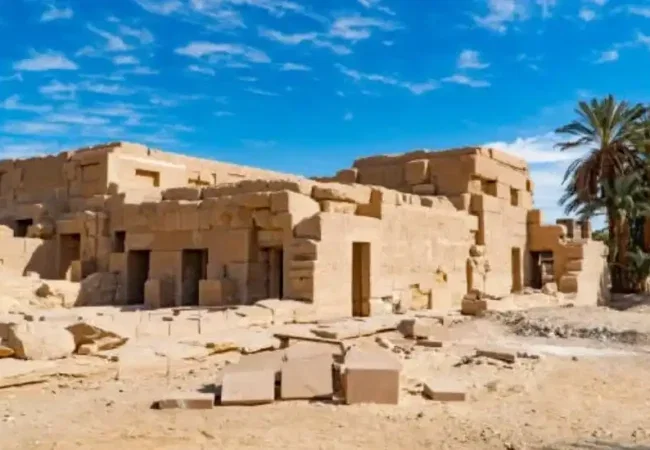
The ancient Egyptians knew the importance of writing and its role in documenting their events and preserving their heritage. So they resorted to inventing a unique system of writing, which is the Hieroglyphics Alphabet that they used to document their religious, political, and cultural history. They inscribed it on the walls of temples, tombs, and papyri. This writing was distinguished by the beauty of its symbols and their harmony, as it combined images, sounds, and meanings to become an integrated and unique alphabet through which the ancient Egyptian expressed himself and documented his history full of victories and battles, so that all Egyptians after them could be proud of this history.
What is hieroglyphic writing?
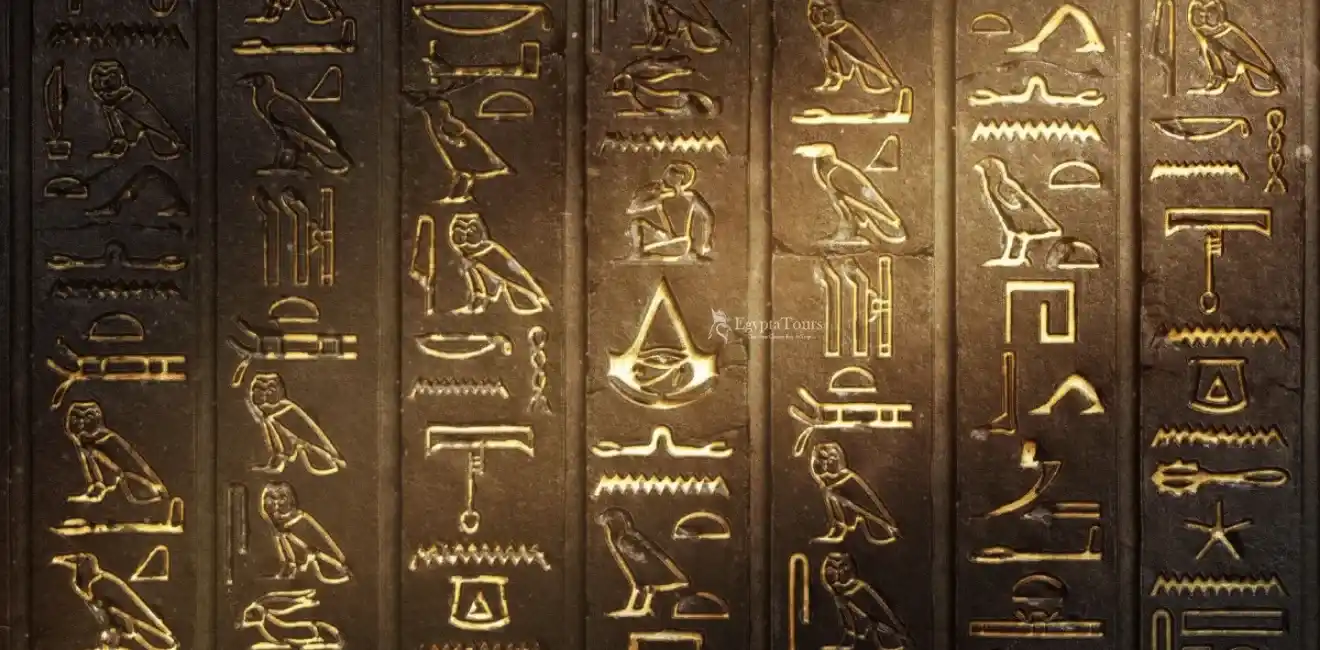
Hieroglyphics -Alphabet
Hieroglyphic writing is the writing system that the ancient Egyptians discovered and used to record their historical events. The meaning of the word “hieroglyphic” is “sacred writing,” which appeared approximately 3000 years BC.
The Hieroglyphics Alphabet was a great discovery among the discoveries of the ancient Egyptians, as they relied in its invention on the nature around them. They used symbols inspired by living creatures, plants, and tools found around them in the environment. It is considered the oldest method of writing known to mankind.
How did the ancient Egyptians invent the Hieroglyphics Alphabet?
The ancient Egyptians were able to arrive at the method of writing with the Hieroglyphics Alphabet gradually. They began by using pictorial symbols that represent things. So if a human was drawn, it was intended to mean a human. Then they linked these symbols to the sounds of words until they came to represent letters and phonetic syllables.
Thus, hieroglyphic writing evolved into an integrated writing system in which phonetic signs and letters were used, which they used for inscriptions on the walls of temples and tombs. Simpler versions of it appeared which they used in daily writing due to their great conviction of the importance of recording and writing important events.
The difference between the Hieroglyphics Alphabet and other languages in ancient times
The Hieroglyphics Alphabet relied on pictorial symbols that represented sounds and ideas at the same time. It was a mixture of phonetic signs represented by letters and syllables, and semantic signs that indicate the meaning of the word, which made it complex and required scribes who were well-trained in this method.
As for other ancient languages such as cuneiform writing, which was in Mesopotamia, it was much easier because it was in the form of wedges representing only phonetic syllables. Then came the Phoenician writing, which used symbols representing only the sounds of letters, so it was a simple and easy method that was used as a basis for modern alphabets such as Arabic and Greek.
Types of symbols in hieroglyphics: sounds, words, and meanings
Three types of symbols combine in the Hieroglyphics Alphabet to form the full meaning of the texts, which are:
- Phonetic symbols that represent the sounds of letters, such as the symbol of an owl which indicates the sound of the letter “m.”
- Ideographic symbols that refer to words or ideas, such as the symbol of the sun which means the word “Ra.”
- Determinative symbols that indicate a specific meaning without being pronounced, such as the symbol of a seated man which symbolizes that the word relates to a person or a profession.
How are hieroglyphic symbols written and read?
The Hieroglyphics Alphabet is written from right to left or vice versa, and it is also written from top to bottom. The direction is known through the direction of the faces of the symbols. If the faces of people or animals are facing to the right, the text is read from the right, and vice versa. As for vertical inscriptions, they are read from top to bottom.
They would inscribe these symbols on the walls of temples or write them with ink on papyrus with a harmonious arrangement that makes the shape of the texts beautiful. The words were read without spaces between the letters, and their meaning was understood from the context and the determinative symbols used.
Writing tools used by the ancient Egyptians for inscriptions on walls and papyri
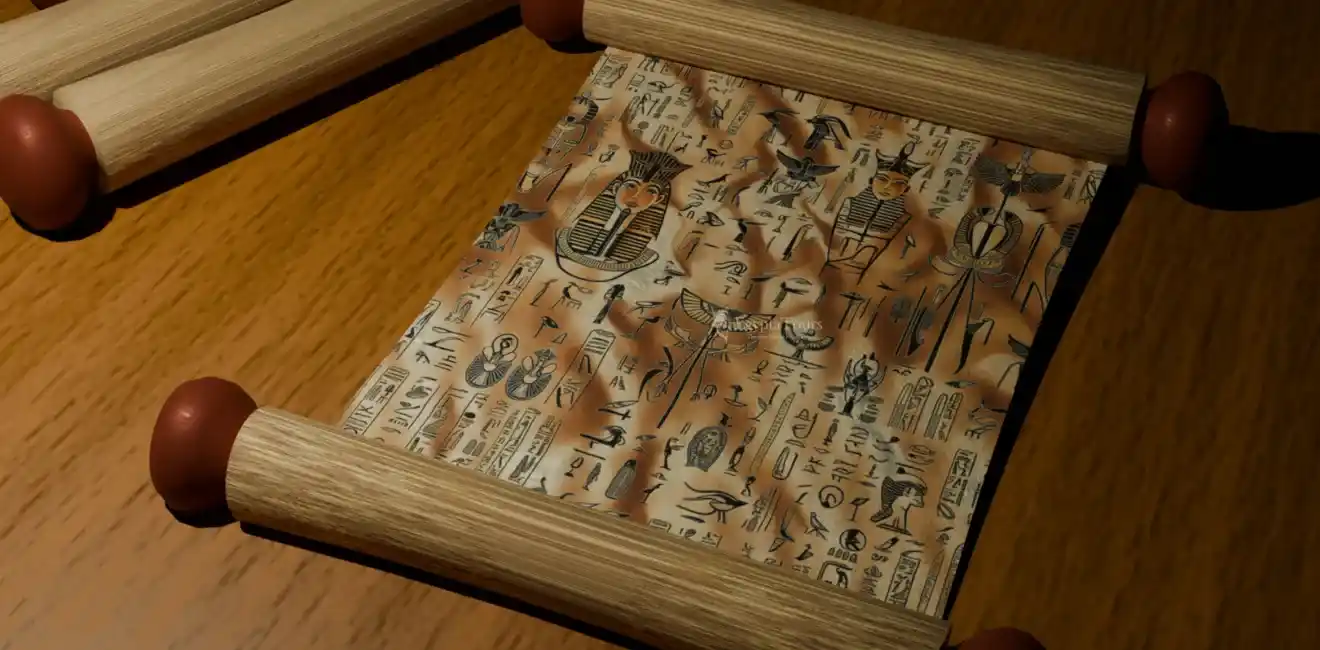
Writing-Tools-Used-By-The-Ancient-Egyptians-For-Inscriptions-On-Walls-And-Papyri
The tools used by the ancient Egyptians for inscribing with the Hieroglyphics Alphabet differed according to the material they were going to inscribe on, whether it was hard walls or papyrus. If the requirement was to inscribe on walls, they used hard tools such as stone hammers and chisels, where the scribe would draw the symbols with ink or charcoal, then the carver would inscribe them in the stone.
As for papyrus, they used pens made from reeds, with their tips sharpened to become pointed. This pointed tip would be dipped in black or red ink, and they would draw these inscriptions with high skill.
The most famous hieroglyphic inscriptions discovered in temples and tombs
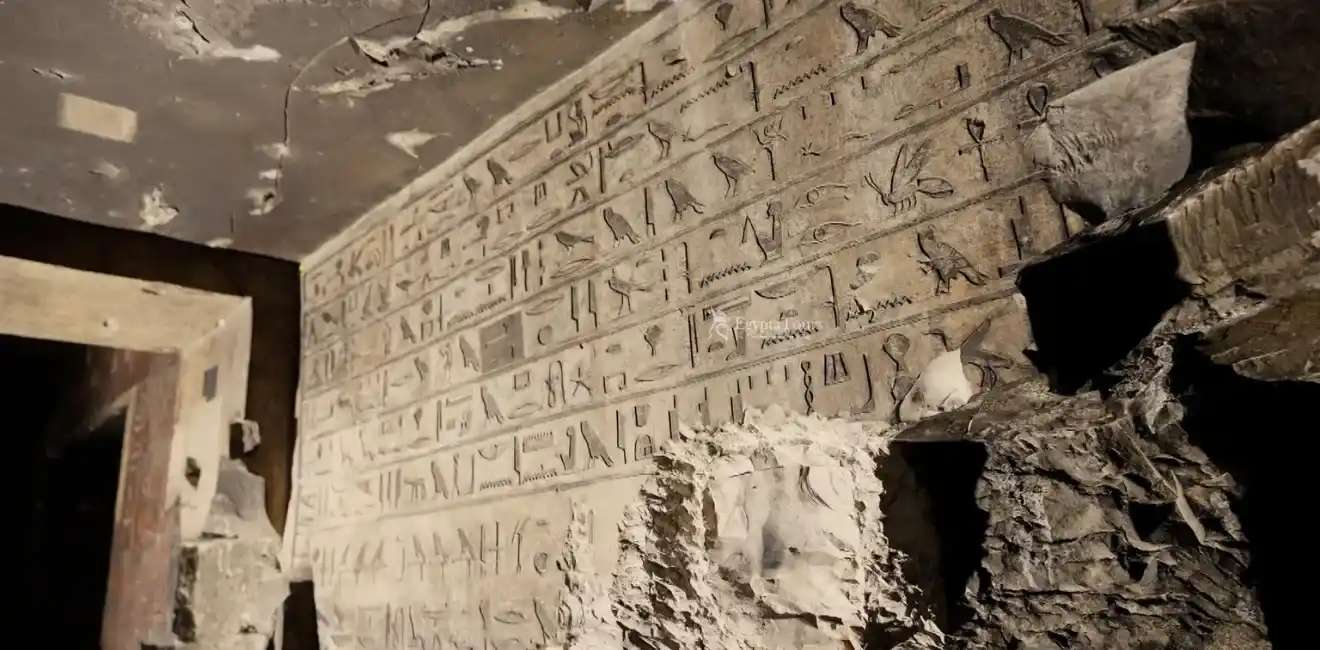
The-Most-Famous-Hieroglyphic-Inscriptions-Discovered-In-Temples-And-Tombs
Egyptian temples and tombs are rich with distinctive historical symbols that are considered a living record through which we learn about the lives and beliefs of the ancient Egyptians. Among the most prominent inscriptions found in temples are the inscriptions of the Karnak temple, which document the worship rituals of Amun-Ra and his victories, as well as the inscriptions of the Abu Simbel temple, which document the Battle of Kadesh.
The walls of the tombs were also a rich treasure of distinctive inscriptions, such as the tomb of Tutankhamun, whose walls contain religious texts from the Book of the Dead to guide him on his journey in the eternal life, in their belief. Also, the tomb of Ramesses VI, which contains astronomical drawings representing the journey of the sun.
How did Champollion help in reading the Egyptian alphabet for the first time?
Jean-François Champollion helped to decipher the Hieroglyphics Alphabet for the first time in 1822 AD, after a great effort that lasted for years of research and study. What helped him decipher these symbols was his discovery of the Rosetta Stone, which was found in 1799 AD.
The Rosetta Stone had the greatest role in understanding the Hieroglyphics Alphabet because it contained the same text written in three languages: hieroglyphic, Demotic, and also Greek, which was used by Napoleon.
Because its texts were understandable, he compared them with the hieroglyphics. Through this comparison, Champollion came to the fact that the hieroglyphic symbols do not represent only pictures but also represent sounds.
The evolution of the Egyptian alphabet until the Coptic era
The Egyptian alphabet went through several stages, starting with the complex pictorial symbols in hieroglyphic writing that the Egyptians used for inscriptions on the walls of temples and tombs, which required skilled and trained scribes.
Then, the hieratic script was developed, which the priests used to write daily and religious texts. Then, the Demotic script appeared, which was the simplest of these scripts, and therefore it spread among the common people and they used it in administrative and commercial affairs.
Then, with the entry of the Greek era into Egypt, the Egyptian language began to be influenced by Greek, so the Coptic language appeared, which was used in the Christian era. Coptic relied on Greek letters with the addition of seven letters from Demotic to represent Egyptian sounds.
With this great development, the Egyptian alphabet became a unique example of a distinctive linguistic history that preserves the authenticity of the Egyptian identity.
Conclusion
The Hieroglyphics Alphabet remains an important symbol of the ancient Egyptian civilization and conclusive evidence that attests to the genius of the ancient Egyptian man and his great interest in documentation and recording events.
It was not just symbols engraved on walls, but an integrated language that expresses a long history of creativity and knowledge. As a result of deciphering this language, we were able to learn about our Egyptian history, which is full of achievements.
FAQs
Does the Hieroglyphics Alphabet contain vowels?
The ancient Egyptian Hieroglyphics Alphabet relied only on consonants without vowels, as the reader would infer the pronunciation from the context.
How many symbols are in the Hieroglyphics Alphabet?
The Hieroglyphics Alphabet combined pictorial symbols, symbols that represent phonetic syllables, as well as symbols that were used to represent the sounds of letters, so the number of its symbols reached approximately more than a thousand symbols.
In which direction is hieroglyphic writing read?
The Hieroglyphics Alphabet is read from right to left or from left to right, depending on the direction of the faces of the symbols. It can also be written vertically from top to bottom, and the direction is determined according to the context.
What is the role of the Rosetta Stone in deciphering hieroglyphics?
The Rosetta Stone was the key that contributed to deciphering the hieroglyphic writing, as it contained the same text in three languages: hieroglyphic, Demotic, and Greek. By comparing these texts, Champollion was able to determine the meanings of the symbols and read the ancient Hieroglyphics Alphabet.