The Holy Family in Egypt: Journey, Sites & Spiritual Significance
The Holy Family in Egypt was a sacred journey at the command...



When you hear the phrase “ancient Egyptian Language,” what comes to mind?
I’m almost certain that the first thing that comes to mind is hieroglyphic writing!
But is this concept completely correct? Or is it somewhat incomplete? Or is it perhaps fundamentally wrong?
Let’s discover the answer together in the following lines so let’s begin the journey!
The-Ancient-Egyptian-Language-EgyptaTours
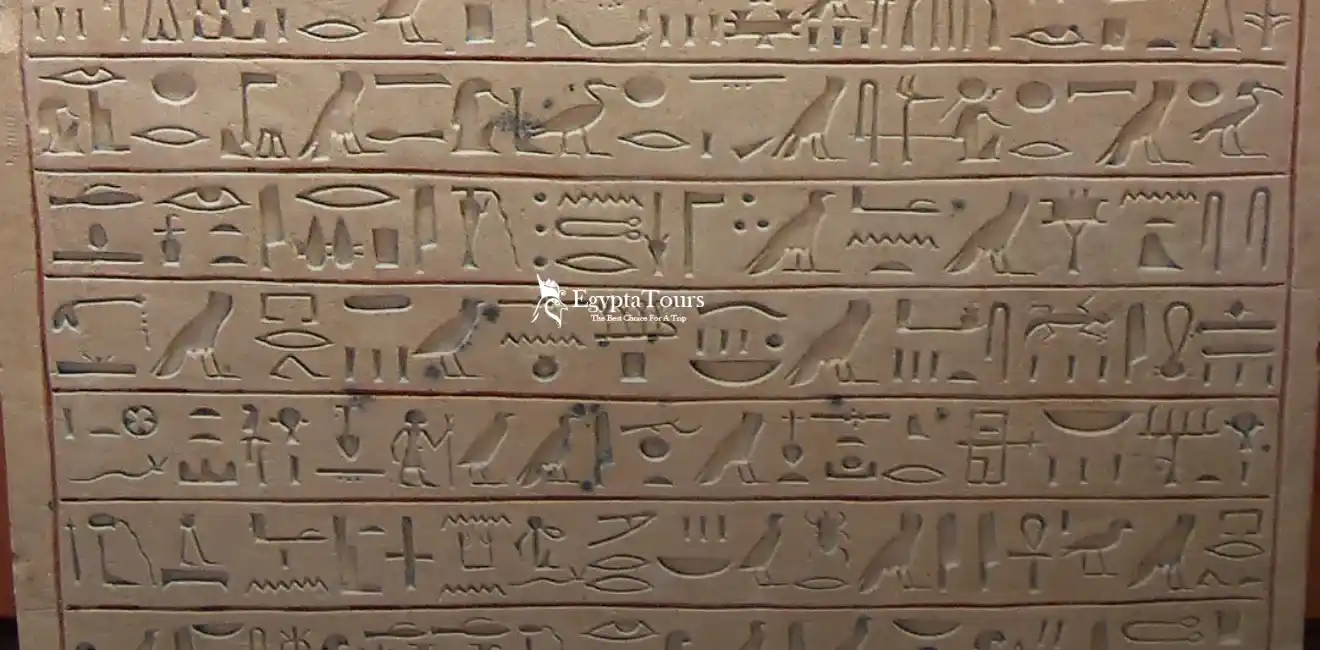
When you mention the ancient Egyptian language you find yourself at the gates of a civilization whose roots stretch back thousands of years. Many may associate this language with the famous hieroglyphic writing, but it was more than just symbols engraved on temple walls.
The language evolved over multiple historical stages beginning with Ancient Egyptian around 2600 BC moving on to Middle and Late Egyptian, and finally reaching the Demotic and Coptic stages.
What distinguishes the ancient Egyptian language is not only the variety of writing systems used such as hieroglyphs hieratic, and demotic but also its ability to accurately express daily life and the world of religion and politics.
The ancient Egyptian language was a powerful tool for preserving history documenting myths, and recording prayers and spiritual beliefs.
It also contributed to the formulation of laws and the recording of official transactions reflecting its role in organizing society and the state.
Its writing relied on precise pictographic symbols, and over time it evolved to suit both daily use and rituals. Although its use declined in comparison to foreign languages during the Greek and Roman eras its influence remained present and testified to the greatness of the ancient Egyptians.
It is not just a language it is a window onto a profound cultural heritage that tells endless stories inspiring researchers and those interested to this day, and confirming that the ancient Egyptian language was a true mirror of the Egyptian mind and immortal spirit.
How-was-ancient-Egyptian-written-EgyptaTours
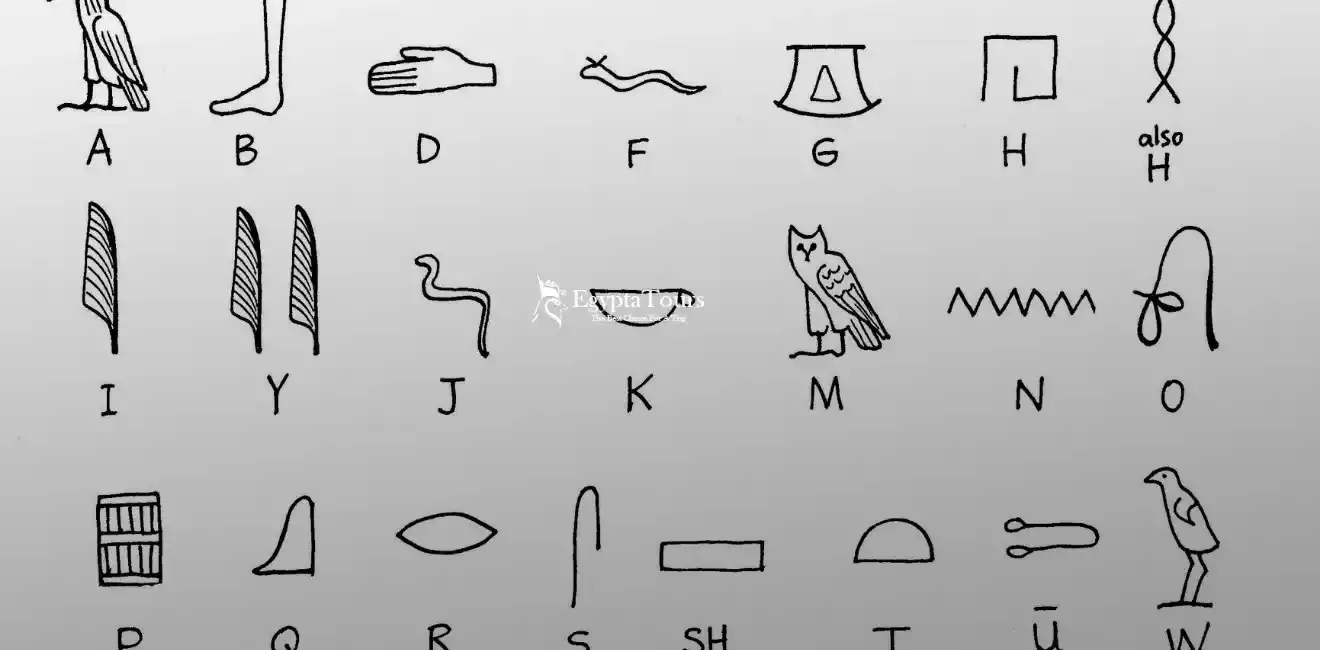
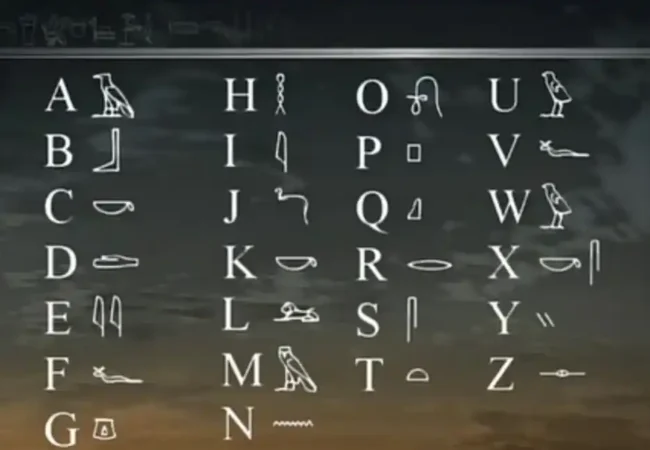
The ancient middle, and late Egyptian languages were written using both hieroglyphic and hieratic scripts. The ancient Egyptians used the hieroglyphic alphabet with great flexibility writing it in all directions from right to left, from left to right, and sometimes from top to bottom.
This is likely because the ancient Egyptians often incorporated their writing into artistic scenes requiring the texts themselves to have an aesthetic appeal that harmonized with the overall landscape.
Hieratic script on the other hand was a simplified version of hieroglyphics developed for practical use particularly in daily life, administrative documents, and religious texts written on papyrus such as medical papyri accounting papyri, and literary texts. It was characterized by its speed and ease of use making it an effective writing tool.
Over time writing methods developed further. Demotic emerged in the Late Period as the everyday language of the people used in contracts and commercial records.
The development of the Egyptian language was capped by Coptic which combined Greek letters with some ancient Egyptian symbols and was used primarily in Christian religious contexts.
The grammar of the ancient Egyptian language is one of the oldest linguistic systems in history characterized by a grammatical structure that reflects the depth of ancient Egyptian thought and the precision of its expression.
The language relied on the “verb-subject-object” (VSO) system in sentence construction a pattern common in Semitic and Afro-Asiatic languages. It did not rely on verb tenses in a traditional way, but rather expressed time through context or the verbal and static states.
It was characterized by the use of diverse pronouns (joint and separate) the distinction between masculine and feminine using the suffix “-t”, and the distinction between singular dual, and plural. It also included precise grammatical tools such as prepositions and conjunctions which helped clarify meanings and form complex sentences.
One of the most prominent features of ancient Egyptian grammar is the use of determinatives which are non-verbal symbols added to clarify the precise meaning of a word, such as distinguishing between “lion,” “man,” and “god.”
This system reflects the extent of linguistic and cultural development achieved by ancient Egypt and highlights how this language was able to keep pace with the demands of daily religious, and political life over thousands of years.
The stages of development of the ancient Egyptian language underwent linguistic and cultural transformations that reflect the depth of Egyptian history over more than 4,000 years.
The first stage began with “Old Egyptian” (c. 2600–2000 BC) which appeared in pyramid texts and funerary inscriptions. It was a ritual language associated with belief and kingship.
Then came “Middle Egyptian” (c. 2000–1350 BC), considered the most prominent classical and literary stage during which wisdom writings and formal religious texts flourished, and were most commonly used in texts inscribed on the walls of temples and tombs.
This was followed by “Late Egyptian” (1350–700 BC) which saw changes in pronunciation and vocabulary influenced by colloquial dialects making it more closely aligned with the spoken language of the time.
In the subsequent period “Demotic” emerged a simplified language used in everyday documents administrative transactions, and letters. It was characterized by its speed of writing and less complexity compared to hieroglyphics.
The final stage of the language was “Coptic,” which began in use in the third century AD and was written in Greek letters with some Egyptian symbols. Coptic retained a linguistic structure that closely resembled the original roots of the Egyptian language and is still used today in religious rituals in the Coptic Church.
This chronology reflects the evolution of ancient Egyptian from a sacred language to a means of everyday communication making it one of the longest-lived languages in history and a true reflection of Egyptian civilization in all its forms.
Writings-and-inscriptions-in-the-ancient-Egyptian-language-EgyptaTours
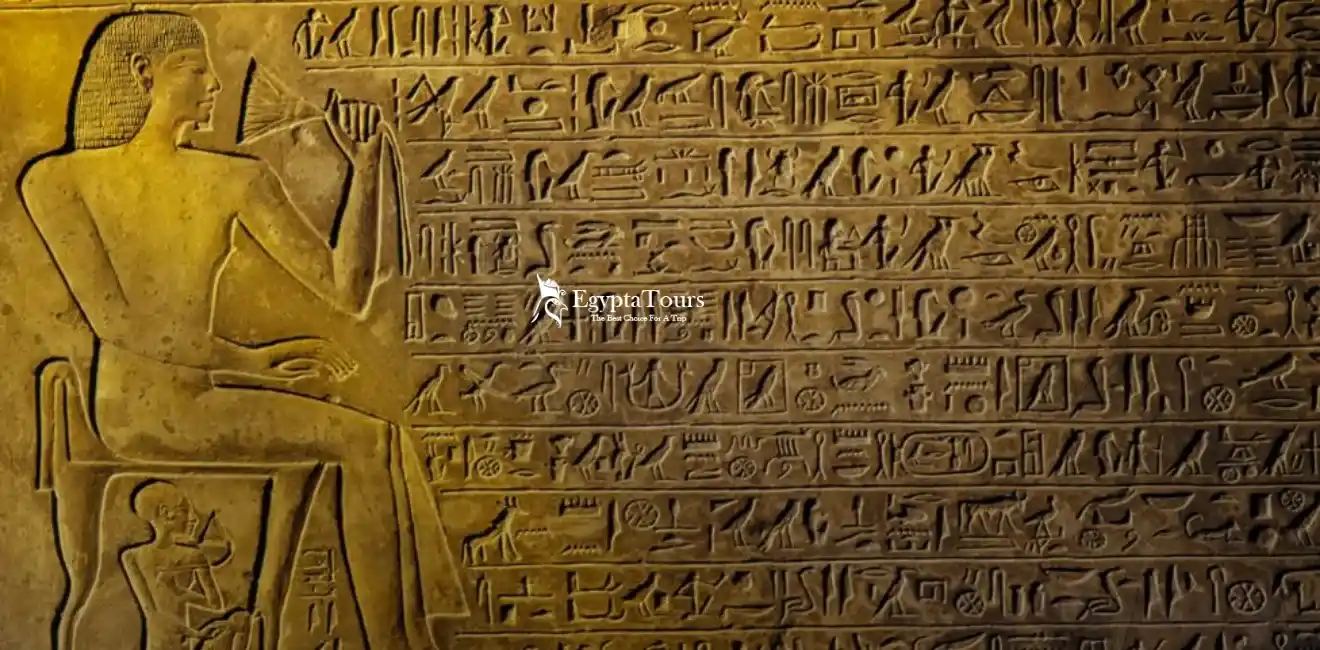
Writing and inscriptions in the ancient Egyptian language were an essential part of the cultural and civilizational identity of ancient Egypt as they were. It was more than just a means of documentation or expression.
Writing transcended its traditional role to become an art form that deeply reflected the religious social, and political values that shaped the fabric of ancient Egyptian society.
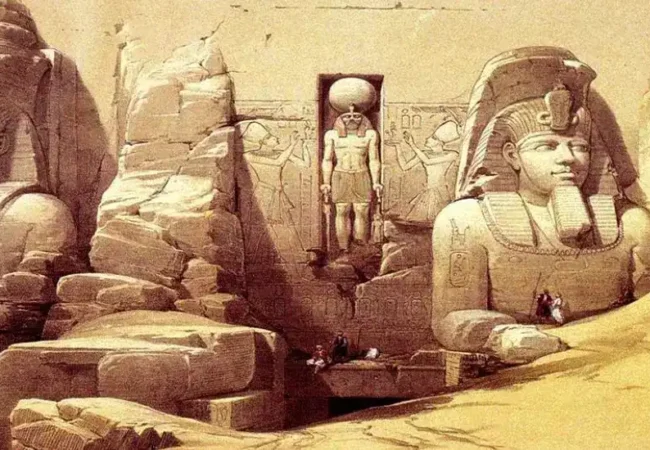
Texts were often combined with pictorial scenes on the walls of temples and tombs requiring the texts to be visually harmonious with the surrounding drawings in terms of direction and overall composition.
The ancient Egyptians used three main writing systems:
Hieroglyphic writing famous for its symbolic and religious character was reserved for official and religious texts such as the Pyramid Texts and the Book of the Dead.
Hieratic writing a simplification of hieroglyphics, was used for texts written on papyrus to facilitate pen writing especially for literary and religious purposes.
Demotic writing which emerged in later periods and was closer to everyday colloquial language was used in legal transactions and personal correspondence.
One of the distinguishing features of ancient Egyptian script was its flexibility in direction It was written from right to left vice versa, or even from top to bottom depending on the artistic design of the inscription.
These inscriptions are an invaluable resource for studying daily life religion, and the ancient Egyptian language.
They are also living testimony to a civilization whose innovations were not limited to building the pyramids but also devoted great attention to documenting its beliefs and ideas in timeless stone texts. Thus the ancient Egyptian language remains vibrant in these inscriptions recounting the secrets of a civilization unshaken by the wheel of time.
Ultimately, the ancient Egyptian language remains one of the most prominent testaments to the genius of the Egyptian people combining artistic beauty linguistic precision, and expressive depth.
It was not merely silent symbols it was the language of a vibrant civilization that spoke of beliefs sciences arts, and life spanning thousands of years.
With the advancement of research and discovery tools the importance of studying this language increases in understanding Egyptian history from its original sources. Reviving interest in the ancient Egyptian language is not limited to archaeologists alone.
It represents a cultural responsibility towards a civilization that established the rules of writing and established concepts of identity and expression thousands of years ago, and continues to inspire the world today.
The ancient Egyptian language is considered a fundamental key to understanding the Pharaonic civilization. It documented beliefs, sciences and rituals, and its decipherment helped reveal the secrets of temples the texts of the sages, and the spirit of ancient Egyptian society.
The ancient Egyptian language is called “Medun-Netr,” meaning “the word of the god,” due to its sacredness. It was used in inscriptions and religious texts and is a tool for understanding the profound Pharaonic faith and thought.
The ancient Egyptian language is one of the oldest written languages having emerged around 3200 BC. Its writing systems varied between hieroglyphs hieratic, demotic, and Coptic which was written using Greek letters. Used in religious, scientific literary, and philosophical inscriptions and texts it was key to understanding ancient Egyptian civilization history cultural identity, and its global influence.

Explore our top-rated Egypt travel packages and embark on an unforgettable journey. From the Pyramids of Cairo to the magical temples of Luxor, Aswan, and Abu Simbel, discover expertly curated tours designed for your perfect Egyptian adventure