Fayum Mummy Portraits: Stunning Ancient Faces Preserved in Time
Fayum Mummy portraits are considered among the oldest and most significant works...



Ancient Egypt witnessed a long and complex period of decline driven by a combination of political, economic, military, and environmental factors.
The Fall of Ancient Egypt was not the result of a single event but rather occurred gradually over centuries culminating in its annexation to the Roman Empire in 30 BC.
Despite this collapse the cultural influences of ancient Egypt continued to shape the ancient world and their imprints remained evident in culture, religion, and the arts throughout the ages.
Internal political turmoil was a major factor in the decline of ancient Egypt’s power, After the death of King Ramses III in 1155 BC the authority of the central state began to erode.
His assassination led to internal conflicts and divisions between regions with rival factions emerging to claim power.
A succession of weak rulers unable to unify the country or confront the growing challenges led to a decline in public confidence in the ruling system and the fall of ancient Egypt.
The Egyptian entity became increasingly vulnerable to external interference and internal divisions.
Ancient Egypt witnessed profound shifts in the balance between religious and political authority, The priests’ control over wealth and land increased leading to a social gap between the ruling classes and the common people.
Power was also concentrated in the hands of the clergy who owned vast lands, and the traditional role of the pharaoh in managing state affairs declined.
This gap contributed to the weakening of the state and the fall of ancient Egypt as rulers became preoccupied with internal struggles for influence rather than confronting external threats or addressing the worsening economic crises.
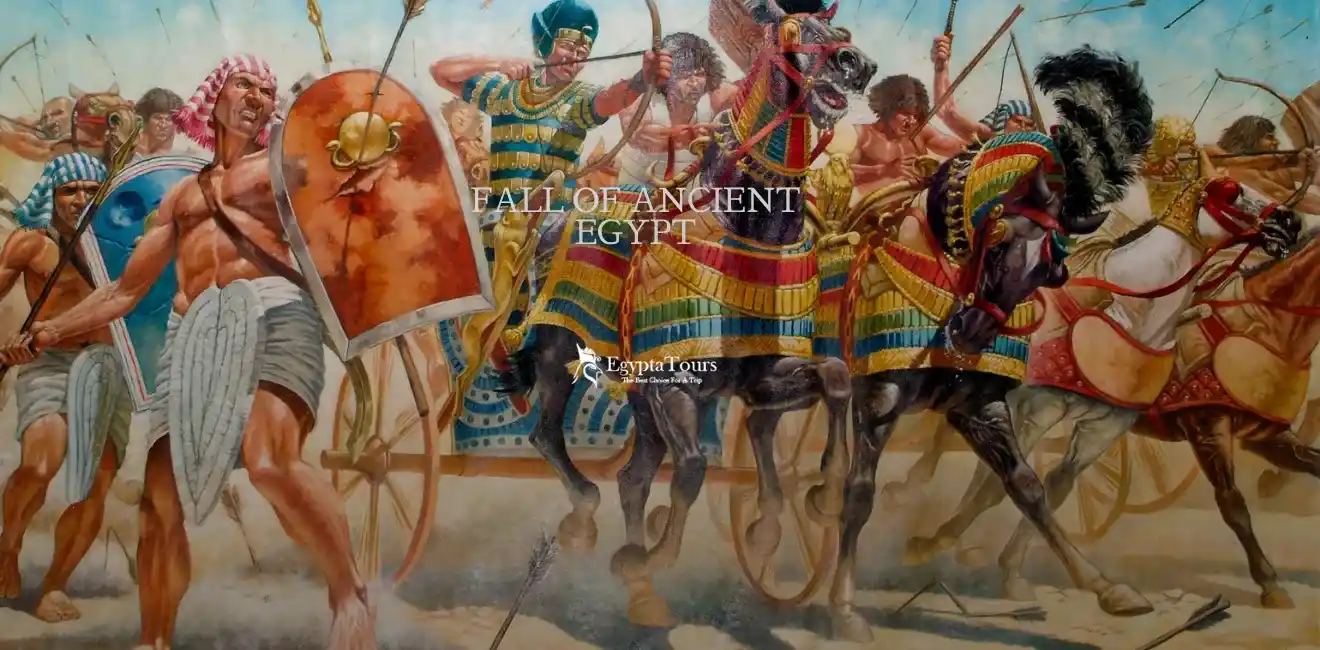
External-Invasions-and-Egypt’s-Fall-to-Foreign-Powers-EgyptaTours
Ancient Egypt was subjected to numerous external invasions that contributed to the deterioration of its stability.
This began with the Assyrian invasion in 671 BC, Egypt was subjected to a period of occupation, and rulers loyal to the Assyrians assumed control of the government weakening its political and military independence.
In 525 BC the Persians led by Cambyses II conquered Egypt and annexed it to the Achaemenid Empire. They imposed heavy taxes and forced the population to pay tribute increasing economic pressure.
Later with the death of Alexander the Great the Ptolemaic dynasty assumed power. However it faced severe internal crises until Egypt finally fell into Roman hands after the defeat of Cleopatra VII in 31 BC, and was officially annexed to the Roman Empire the following year.
The economy played a role in the downfall of ancient Egypt as it relied heavily on agriculture which was affected by the fluctuations in the Nile River’s flooding.
Irregular flooding caused periods of drought leading to poor harvests and famine.
Repeated wars and taxes imposed by invaders also depleted the public treasury making it unable to finance public projects or support infrastructure which led to economic chaos and social instability.
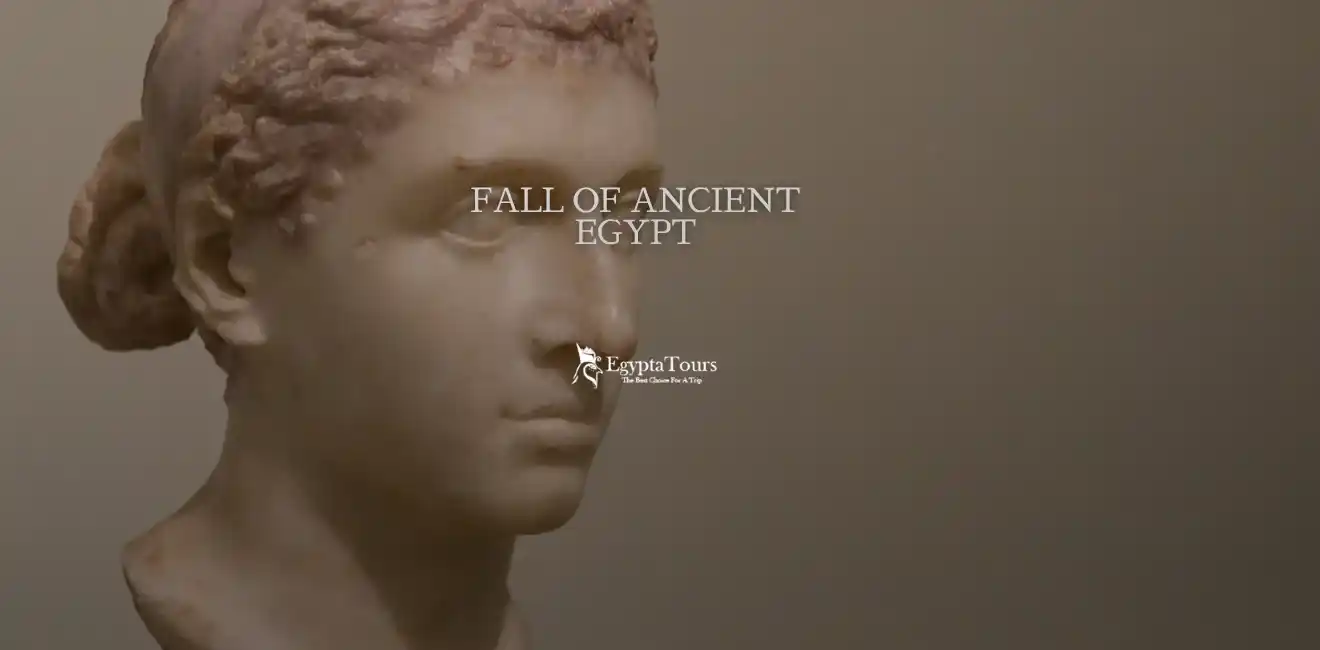
Cleopatra-VII-EgyptaTours
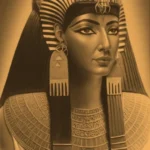
Queen Cleopatra VII represented another symbol of ancient Egypt’s attempts to maintain its sovereignty and independence in the face of rising powers.
Cleopatra was not just a captivatingly beautiful ruler she was a sharply intelligent and skilled politician who understood the magnitude of the challenges facing her throne.
She sought to consolidate her rule and strengthen her political position by establishing strategic alliances with the most important figures in the Roman Empire most notably the famous leader Julius Caesar with whom she entered into a complex relationship that combined political interests and romantic interests.
She bore him a son known as Caesarion, This move was also a clever attempt by Cleopatra to secure the throne and consolidate her influence at a time when Rome was becoming a global political center of gravity.
However, Caesar’s death tipped the scales and contributed to the fall of ancient Egypt leaving Cleopatra once again at the center of the power struggle within Rome.
The queen also sought to preserve Egypt’s interests through a new alliance with the leader Mark Antony with whom she developed a close relationship that amounted to a political and emotional partnership.
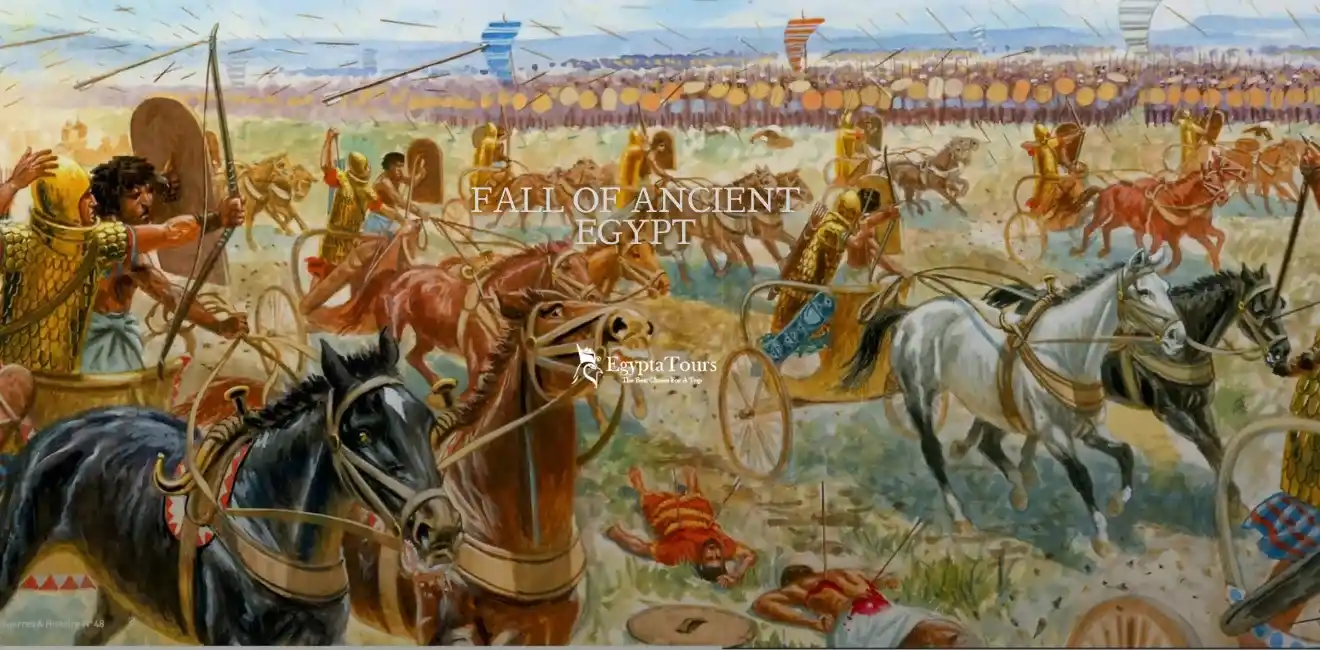
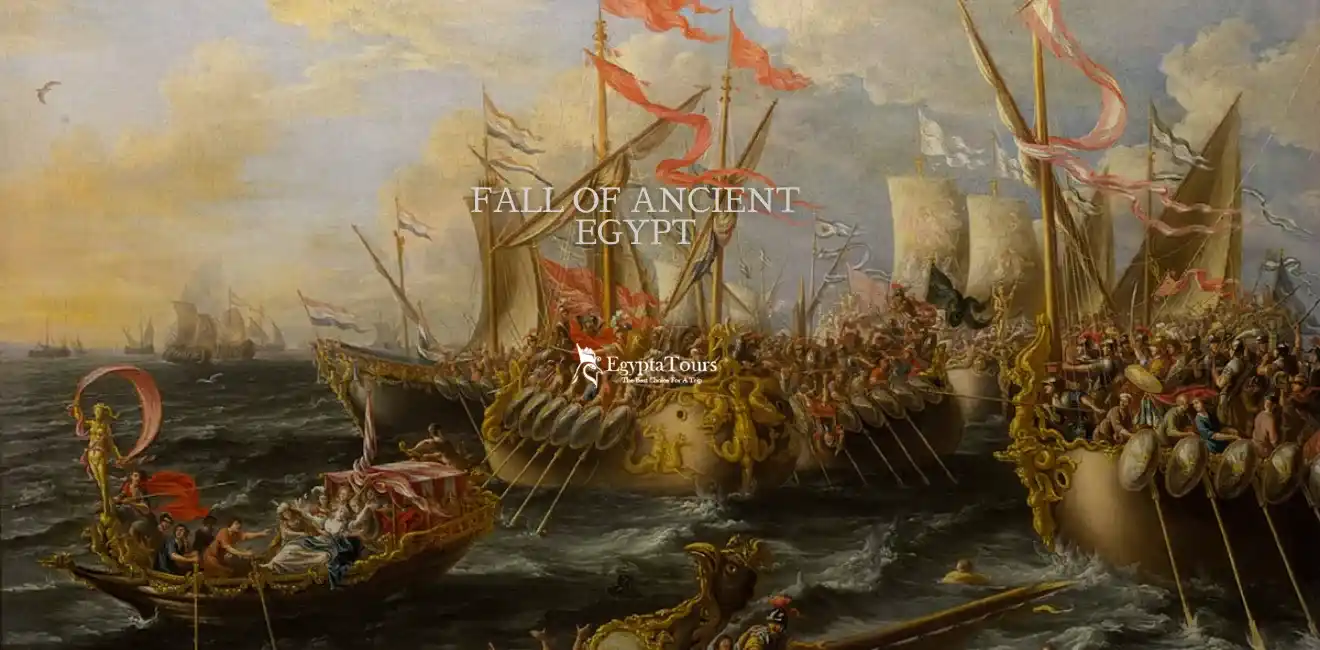
Their interests united in confronting Octavian (later Augustus) Antony’s arch-rival leading to a series of military confrontations, Despite Antony and Cleopatra’s resistance the naval Battle of Actium in 31 BC proved decisive.
Their forces suffered a crushing defeat at the hands of Octavian’s fleet paving the way for the end of the Ptolemaic dream of restoring Egyptian influence.
After the crushing defeat, Cleopatra had no choice but to commit suicide thus ending a long chapter in the history of the Ptolemaic kings who had ruled Egypt since the reign of Alexander the Great.
In 30 BC, Egypt was declared an official Roman province under the rule of the empire ending ancient Egypt’s independence and beginning a new era marked by subservience to the authority of the Roman emperors.
The Nile River played a central role in Egypt’s prosperity, but climate change led to irregular floods and prolonged droughts, These changes also reduced agricultural production.
The spread of famine and the rise of disease among the population, in turn contributed to the fall of ancient Egypt.
These disasters weakened the state’s ability to meet the needs of its people and created popular discontent which further fragmented society and led to a decline in production and military power.

The-Cultural-Legacy-of-Ancient-Egypt-After-Its-Fall-EgyptaTours
Despite its political decline, ancient Egyptian civilization left a tremendous cultural legacy whose art, architecture, and religious beliefs influenced major civilizations such as Greece and Rome.
It also inspired the European Renaissance and led to the emergence of Egyptology, which rediscovered many of the secrets of Pharaonic civilization, and even today ancient Egypt remains one of the world’s most fascinating and fascinating historical periods.
Facts-About-the-Fall-of-Ancient-Egypt-EgyptaTours
There are many little-known facts about the fall of ancient Egypt:
The-Battle-of-Actium-and-the-End-of-Egyptian-Sovereignty-EgyptaTours
The Battle of Actium in 31 BC marked a pivotal moment in the history of ancient Egypt as the forces of Cleopatra VII and Mark Antony were defeated by the forces of Octavian (later Augustus).
Following Cleopatra’s escape and suicide in 30 BC Egypt officially became a Roman province. Thus the last Egyptian royal dynasty ended, and the decline of ancient Egypt began bringing to an end the millennia-long reign of national rule.
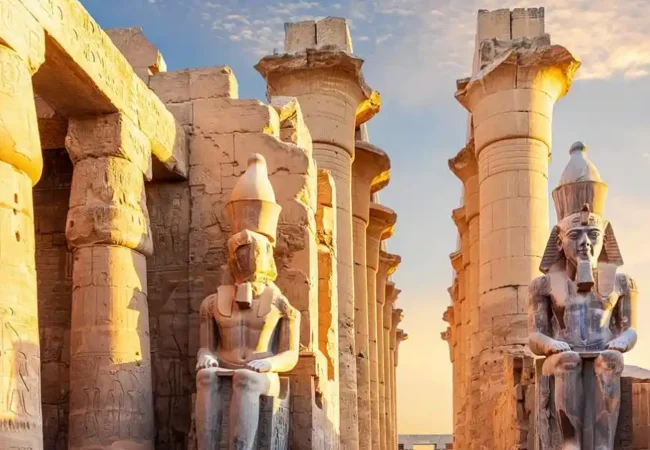
Ancient Egyptian civilization boasts unique characteristics that combine philosophical depth scientific precision, and architectural brilliance, The pyramids, the Karnak statues and the papyrus manuscripts remain the focus of the world’s attention even after the fall of ancient Egypt for their timeless symbols and spiritual and human meanings.
Egypt continues to attract researchers and visitors from all over the world to this day.
Ultimately, the fall of ancient Egypt was a natural result of the accumulation of several factors, most notably the weakness of the central authority and the interference of foreign powers in the country’s affairs.
Over time Egypt became unable to maintain its political and military independence which facilitated the Roman Empire’s control after the end of the Ptolemaic rule. Thus the Pharaonic era ended definitively, and Egypt entered a new phase of its history under Roman rule.
The era of the Pharaohs officially ended in 30 BC following the suicide of Queen Cleopatra VII and Mark Antony. Egypt was annexed to the Roman Empire becoming a Roman province thus ending both Pharaonic and Ptolemaic rule.
The causes of the fall of ancient Egypt were numerous the most important of which were the weakness of the rulers in the later periods the deterioration of the economic situation internal divisions within the government, and repeated foreign interventions especially from the Persians then the Greeks, and finally the Romans who exploited this weakness to impose their complete control over the country.
The Romans were the force that ended the rule of the pharaohs in Egypt specifically after the victory of Emperor Octavian (who later became Emperor Augustus) in the naval Battle of Actium in 31 BC in which he defeated the forces of Cleopatra and Mark Antony bringing Egypt under direct Roman rule.






Explore our top-rated Egypt travel packages and embark on an unforgettable journey. From the Pyramids of Cairo to the magical temples of Luxor, Aswan, and Abu Simbel, discover expertly curated tours designed for your perfect Egyptian adventure