Ancient Egyptian Recipes
The ancient Egyptian human was not familiar with the current recipes, so...



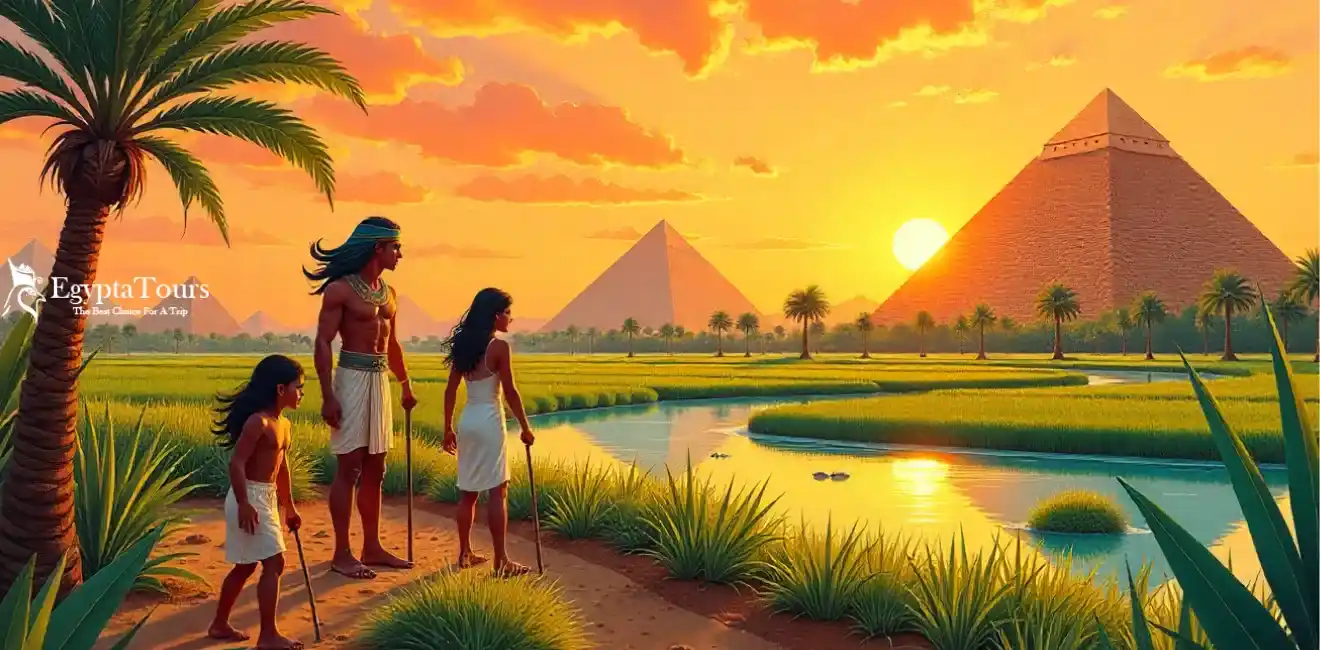
The question: Why is Egypt called the gift of the Nile? is a common one in many people’s minds. To know the answer, one must first address the importance of the Nile River, which is the lifeline for Egypt. It is what enabled it to establish its ancient civilization, as it is the basis of agriculture, economy, and trade in Egypt. It is now an important tourist and cultural destination for Egypt.
Why-is-Egypt-Called-The-Gift-of-the-Nile-EgyptaTours
The answer to the question: Why is Egypt called the gift of the Nile? revolves around the Greek historian Herodotus, who was the first to give Egypt this title. This is because Egypt was an arid desert land in North Africa, and when the Nile cut through Egypt, it turned it into fertile agricultural land. Thus, the Nile River was a blessed gift to Egypt, as it is the main reason for Egypt’s existence and the formation of its ancient civilization.
The role of the Nile River was not limited to providing water for Egypt only, but its flood also helped fertilize Egypt’s land annually by depositing silt and mud sediments, which contributed to the cultivation of various crops. In addition, it provided protection from any foreign intervention, turning it from a barren land into a sophisticated and advanced society.
The-Role-of-the-Nile-River-in-Ancient-Egyptian-Agriculture-EgyptaTours
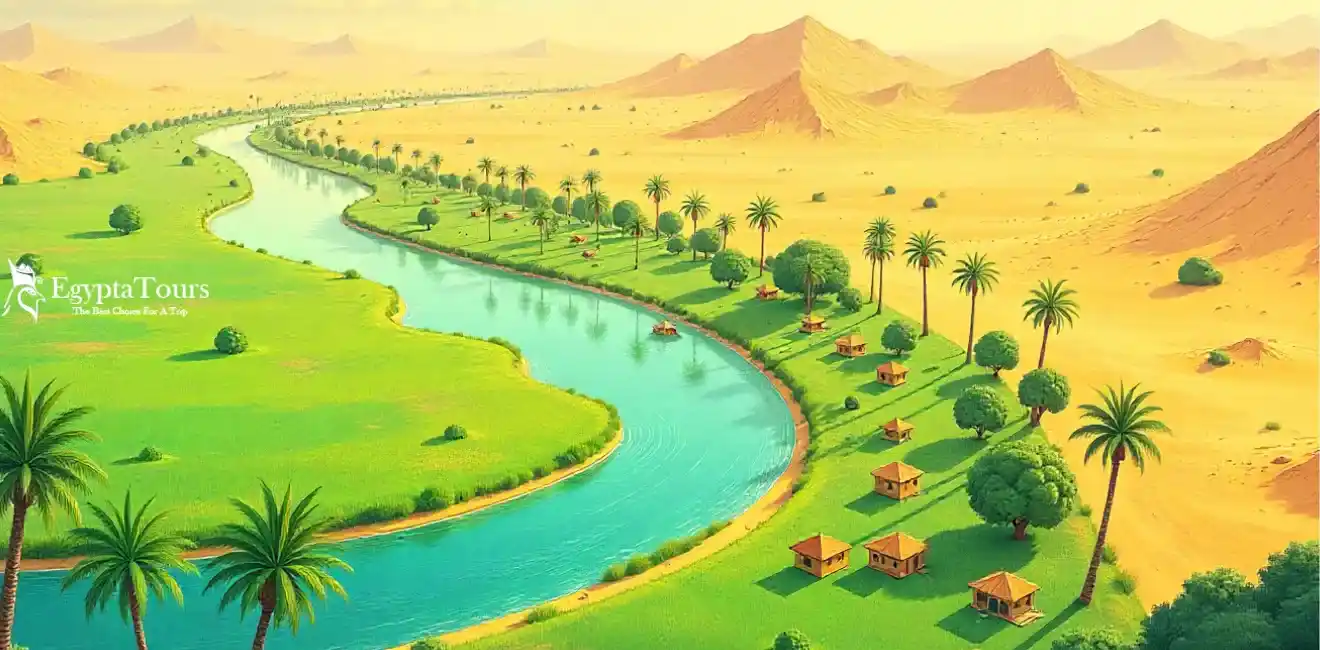
The answer to: Why is Egypt called the gift of the Nile? is related to the Nile’s role in agriculture. The annual Nile flood helped deposit abundant silt on the banks of the Nile, thus providing a bountiful harvest for all agricultural practices, which helped in the emergence of the Egyptian civilization.
The Egyptians knew how to calculate days and years and knew the time of the flood, so they prepared for it well. The annual flood in August and September was sufficient to provide fertile silt along the Nile Valley and the Delta, which contributed to the start of the agricultural process in October, providing the necessary harvest between the months of May and March.
The Egyptians learned to dig canals and irrigation systems to deliver water to various lands, which helped them cultivate various agricultural crops such as wheat, barley, onions, and garlic, in addition to legumes like beans and lentils, as well as various fruits such as dates, grapes, watermelons, apples, and figs.
The Nile River is the basis for the rise of ancient Egyptian civilization for several reasons:
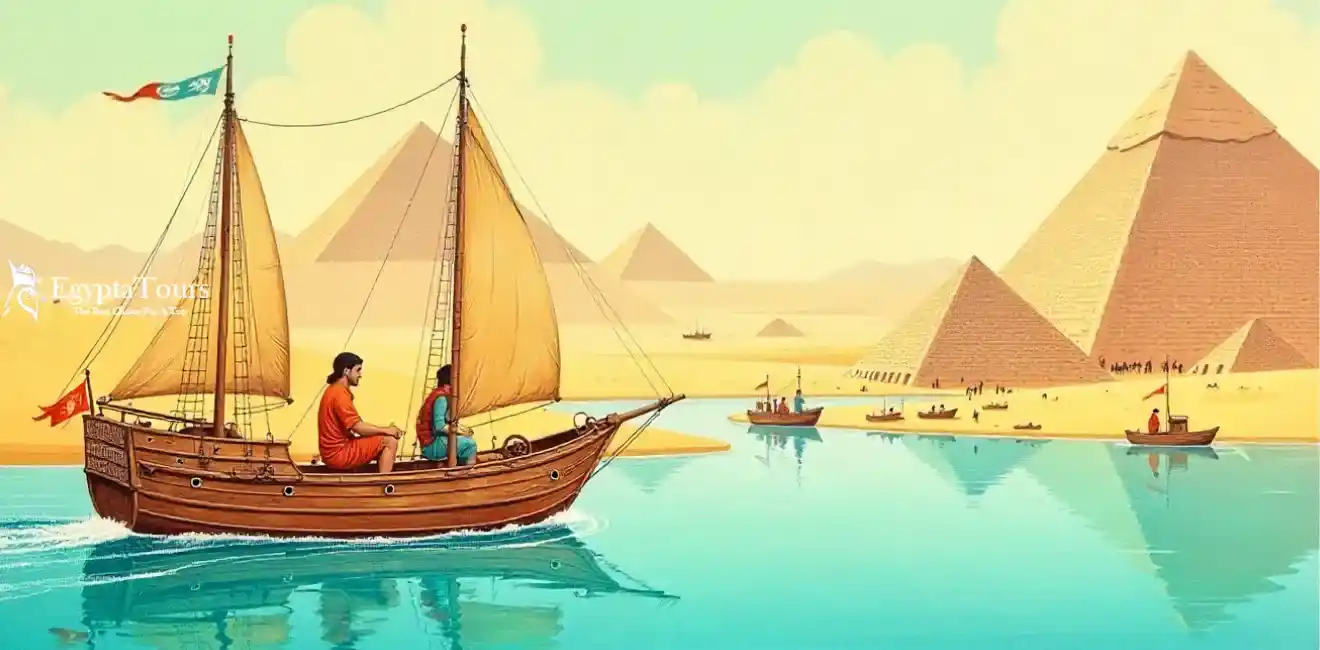
Trade-and-Transport-via-the-Nile-River-Why-is-Egypt-Called-The-Gift-of-the-Nile-EgyptaTours
The Nile River is the primary means of transport for large goods and products, especially during the ancient Egyptian civilization. It was a highway for transport between different regions of Egypt, via boats that transported people, goods, and various building materials such as huge stones, which were used in building temples and pyramids.
The ancient Egyptians were advanced in building sturdy boats for use in transport, which is evident from the remains of boats found in ancient temples and the solar boats of King Khufu. Thus, trade on the Nile was one of the answers to the question “Why is Egypt called the gift of the Nile?”.
The Nile River was considered sacred, and they named it after the god Hapi, who was called the god of fertility and the nurturing father. The god was depicted as a slightly plump young man, as evidence of luxury and wealth in Egypt. His chest was adorned with jewelry, his belly was coated with fat, and words in hieroglyphs were written above him: ankh, udja, seneb, which mean life, health, and strength.
The Nile River affected the social life of the ancient Egyptians and contributed to the building of cities and villages, which led to the settlement of the ancient Egyptians, as it provided them with food and care and achieved economic prosperity. The Nile’s impact on religious life was one of the answers to the question: Why is Egypt called the gift of the Nile?.
The Nile flood occurs periodically in August and September, due to the monsoon winds that arise in May and August, which cause heavy rainfall on the Ethiopian plateau. This caused a large discharge of water from the Atbara River and the Blue Nile into the Nile River, carrying with it silt that is deposited on the banks of the Nile Valley.
These scientific concepts about the flood were not known to the ancient Egyptians. Instead, according to their religious beliefs, the flood was the tears of Isis for her deceased husband, the god Osiris. However, they realized the levels of the flood and its start dates by transferring the Aswan Nilometer to the Lower Egypt Nilometer.
Based on the Nile flood, the Egyptian calendar was divided into three seasons: the flood, planting, and harvest, which were called Akhet (Inundation), Peret (Growth), and Shemu (Harvest).
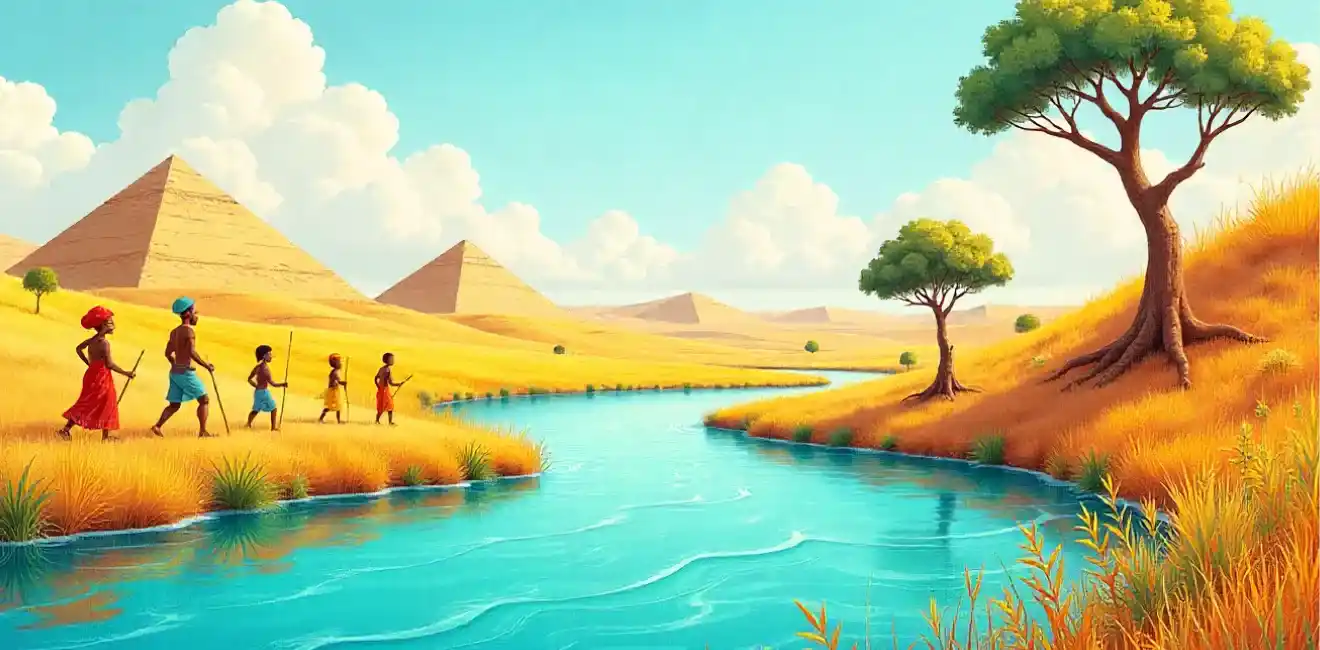
Major-Cities-that-Arose-on-the-Banks-of-the-Nile-EgyptaTours
There are many major cities that arose on the banks of the Nile, as follows:
The Nile River had paramount importance in ancient Egyptian literature and mythology, which was ingrained in the minds of the Egyptians for many periods. In the belief of the ancient Egyptians, it was the afterlife or the gateway from life to death. For this reason, the Greek historian Herodotus gave Egypt the title “the gift of the Nile.”
The ancient Egyptians divided the Nile River into two directions: the eastern direction, which they believed was the gateway to emergence and development, while the western direction was the gateway to the world of the dead. For this reason, all the tombs of the Egyptian kings were placed in the west, as is found in the Valley of the Kings, as they believed that reaching the other life required burial on the side that represents death.
The Nile River also played a distinctive role in understanding the myth of Isis and Osiris, as the story of Osiris’s resurrection was linked to the Nile’s flood and its decline. The myth says that Osiris was killed by his brother Set, and his parts were scattered in the Nile River. Then his wife Isis worked to revive his body and gave birth to the god Horus, who avenged the god Osiris and killed his brother Set.
Animals in the Nile River also had symbolic importance, such as crocodiles and hippos, which were considered symbols of protection from evil. The crocodile god Sobek was a sacred god worshipped in the temple of Kom Ombo.
The Nile River is the lifeline for Egypt, due to its contribution to cultivating various lands of Egypt, developing the Egyptian economy and trade, and even protecting it from enemies. For these reasons, this was the answer to the question “Why is Egypt called the gift of the Nile?”.
The importance of the Nile to Egypt is immeasurable, as it constitutes the existence of the Egyptian state. It is the source of water, agriculture, and the economy in Egypt.
The Nile is considered a gift given to Egypt because it shaped Egypt’s geography and gave it the life from which it founded its great civilization.
It is not advisable to swim in the Nile River due to strong water currents or health risks due to the presence of some diseases in the Nile.



Explore our top-rated Egypt travel packages and embark on an unforgettable journey. From the Pyramids of Cairo to the magical temples of Luxor, Aswan, and Abu Simbel, discover expertly curated tours designed for your perfect Egyptian adventure