The Mummy of the Mysterious Lady
The mummy of the Mysterious Lady is one of the most exciting...



Fashion in ancient Egypt clearly and significantly reflected the social, economic, religious and other statuses of the ancient Egyptians.
It was generally characterized by elegance and simplicity simultaneously, with its details and quality varying according to social class and status.
Each social group had its own distinctive style of dress.
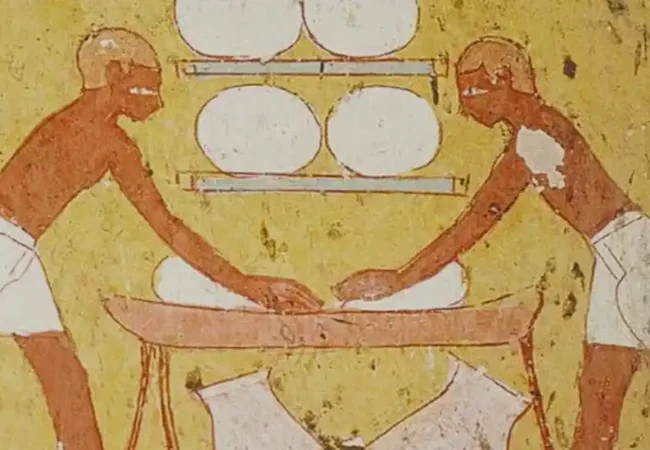
Fashion in ancient Egypt was primarily made from linen fabric extracted from the flax plant which was cultivated extensively along the banks of the Nile.
It was spun by hand and then woven on looms in a specific way to make the fabric light, soft and suitable which suited the hot climate in Egypt.
Both the rich and the poor used it, with the main difference only being in the quality and fineness of the weave, its softness and the jewelry and adornments used with it.
Wool was also used on rare occasions for heavy winter clothing or blankets.
Additionally, various leathers were used to make some types of belts and shoes, as well as some ceremonial clothing and military armor for soldiers.

What-were-men-clothes-like-in-ancient-Egypt-Fashion-in-ancient-Egypt
Men’s clothing in ancient Egypt was designed in a practical and simple style that varied slightly according to the person’s social status and the prevailing climate in the country.
For example, most men wore what is known as the kilt or shendyt which is a rectangular piece of cloth wrapped around the waist and then tied with a belt or secured with a front knot. It was usually made of white linen fabric.
In religious and official ceremonies or in the attire of kings and nobles, pharaohs and nobles sometimes wore longer kilts or more complex designs with different colored details and embroidery.
Sometimes, upper pieces like decorated chest coverings were added.
As for adornments and accessories, wealthy men wore valuable bracelets, rings and necklaces. Kings or high priests tended to wear various royal crowns or distinctive head coverings like the nemes.

What-did-women-wear-in-Pharaonic-times-Fashion-in-ancient-Egypt-EgyptaTours
Fashion in ancient Egypt also varied for women according to social class and occasion. Women of the upper and royal classes wore long, elegant robes made of very fine and luxurious linen.
They were often decorated with distinctive colored embroidery.
The robes often had a simple cut but could be transparent or tight-fitting to elegantly accentuate the body’s features, with extensive use of gold jewelry and colored precious stones for adornment.
Women from less affluent classes, working women, or servants wore simpler robes in design and material, costing little and often without much ornamentation.
They were made of relatively coarse linen and their colors were often pale or white.
In ancient Egypt during most periods, very young children remained completely naked until they reached the age of discernment or approximately six years old.
They did not wear sewn or complex clothing, perhaps just a small piece of linen placed over the private parts for covering.
On rare occasions, simple jewelry was placed on the child’s waist or neck for children of the upper class or royalty, or they might wear a design resembling a small vest, sometimes studded with stones and jewelry if they were from a very wealthy family, placed on the chest.
After reaching about six years of age, the child was allowed to wrap their body with a simple piece of linen cloth around their waist like adults.
The rest of the piece might sometimes be placed over the shoulder to protect them from the scorching sun and heat.

What-was-the-difference-between-the-clothes-of-different-social-classes-EgyptaTours
Clothing clearly played an important role in identifying and distinguishing social class in ancient Egypt.
It clearly symbolized to the observer the social status, economic level and sometimes the individual’s occupation.
Therefore, fashion varied significantly and noticeably from the poor and laborers to the kings and nobles or the middle class of officials and artisans in terms of the type of fabric used, color, ornamentation, quantity, quality and the design itself.
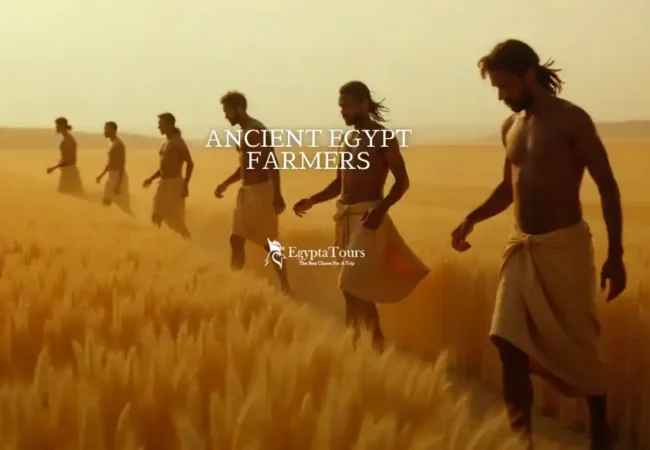
The poor, consisting of workers and peasants, wore extremely simple and practical clothes made from inexpensive coarse linen.
They were often designed as short, comfortable kilts for men for ease of movement and simple sleeveless or strap dresses for women, containing no embroidery or adornment worth mentioning. Children were often unclothed until a certain age.
The middle class which included officials, merchants, skilled artisans and scribes, had greater financial capacity to acquire higher quality clothing made from softer linen.
Their clothes were often more diverse in design and better coordinated. Middle-class women wore longer and more elegant robes than women of the poor class, adorned with simple, inexpensive jewelry like necklaces made of faience or copper, bracelets, or colored beads.
In complete contrast, the clothing of high-ranking priests, kings, royal family members, nobles and high officials was extremely luxurious and elaborately crafted.
It was made from the finest and most expensive types of pristine white linen, sometimes transparent which was spun and woven with great precision and care to be sheer, soft and light.
These clothes were often decorated and embroidered with gold or silver threads.
Valuable and large jewelry made of pure gold and rare precious stones like lapis lazuli, carnelian and turquoise were used with them.
Kings, in addition, wore distinctive crowns for each occasion and special royal head coverings like the nemes, along with luxurious royal belts, scarves and sandals.
Footwear in ancient Egypt varied in form and materials depending on social status, function and purpose.
The most common and widely used was the open sandal which consisted of a simple sole secured to the foot by leather or plant-fiber straps passing between the toes or around the heel.
These sandals were often made from palm leaves or the readily available papyrus plant for the common people and poor classes.
For nobles and the wealthy, treated natural leathers were used to make more durable and comfortable shoes and sandals.
Kings and queens had special, very luxurious sandals adorned with precious stones or intricate gold decorations. Sometimes they were embroidered with symbolic royal or pharaonic motifs.
Completely closed shoes suitable perhaps for long-distance travel or the rare cold climate were also found in some tombs, but they were not used as frequently as open sandals.
Both women and men in ancient Egypt wore wigs made from human hair or plant fibers in various styles and arrangements. Wigs were used extensively for parties, religious ceremonies and official events, but perhaps not worn as frequently in the street or at home for daily activities.
They were often decorated with diverse jewelry made of precious stones, gold and silver.
They were also sometimes adorned with colored headbands or small tiaras.
A clean, carefully styled wig was considered a symbol of personal hygiene, beauty, social status and wealth.
Natural and wig hairstyles varied in ancient times.
After styling and combing their hair, women or men would divide it into equal or varying locks. They used small or large rings made of wood, metals like gold, bone, or faience to control and secure the hair locks in the desired shape.
Additionally, both women and men in ancient Egypt were known for the hairstyle of long, thin, numerous braids, sometimes ending with a colored or golden bead for fixation.
Fashion in ancient Egypt witnessed noticeable evolution and continuous changes over long periods.
This evolution reflects the economic, social, religious and political changes that the ancient Egyptian civilization experienced.
In the early periods, predynastic times and the Old Kingdom, clothing was generally characterized by simple and practical design.
Men wore short linen kilts. Women wore simple, tight-fitting strap dresses covering the body entirely from chest to ankle, often sleeveless.
Over time, especially in the Middle Kingdom and more significantly in the New Kingdom, fashion began to feature more complex and luxurious decorative details for the wealthy.
Embroidered clothing adorned with colored beads and diverse embroidery using colored or golden threads appeared.
The evolution of fashion was also accompanied by development in the use of accessories and valuable jewelry, such as broad collars, numerous bracelets, rings and earrings which sometimes carried symbolic, religious, or protective connotations.
Colors also played an important role in expressing social status, religious standing, or social condition.
Priests sometimes wore special garments like leopard skins.
Nobles wore brightly colored and decorated clothes, while the common people mostly wore white or pale colors for practical and economic reasons.
With the development and availability of dyeing techniques, this changed slightly in later periods.
Clothing colors were somewhat varied, but most often the predominant color was the natural white of linen.
Natural dyes were used to obtain green, blue, yellow and red colors as well, for decorating clothes or for luxury garments.
The traditional and basic clothing in ancient Egypt was simple and practical, made primarily of linen.
Men wore short kilts, while women wore long tight or sometimes loose or even transparent dresses for the wealthy, mostly sleeveless.
Adornments, the amount of clothing and its quality varied according to social class and occasion.
The oldest known and common male costume in Egypt is the kilt or shendyt. Men wore it in predynastic times and the early Pharaonic period and its use continued for long periods.
It is a simple piece of linen cloth wrapped around the waist.
Wearing gold and gold jewelry primarily indicated high social status and wealth for ancient Egyptians. They also used it as amulets for protection against evil and evil spirits.
They believed that because of its incorruptibility, it protected the body of the deceased and ensured their immortality from evil in the afterlife.



Explore our top-rated Egypt travel packages and embark on an unforgettable journey. From the Pyramids of Cairo to the magical temples of Luxor, Aswan, and Abu Simbel, discover expertly curated tours designed for your perfect Egyptian adventure