Ancient Egypt Music: Discovering Magical Instruments
There are many stories and novels that scientists have announced about ancient...



nakes held a uniquely dual role in ancient Egyptian religion and culture, embodying both divine protection and cosmic chaos at the same time. On the protective side, the Uraeus — a rearing cobra worn on the Pharaoh’s crown — represented the goddess Wadjet and symbolized royal authority and divine safeguarding of the ruler and the land.
On the destructive side, the serpent Apep represented chaos and darkness, endlessly trying to destroy the sun god Ra’s boat during its nightly journey through the underworld, reflecting the broader Egyptian belief in an eternal struggle between order (Ma’at) and chaos (Isfet).
Beyond mythology, snakes carried symbolic weight in medicine and magic — their venom was believed to hold healing properties, and their ability to shed skin made them a natural symbol of renewal, transformation, and immortality.
This dual symbolism appeared throughout hieroglyphic writing, temple and tomb art, religious rituals, and even mummification practices, making the snake one of the most layered and recurring symbols in ancient Egyptian belief.
Key Takeaways
Snakes in ancient Egypt were an extremely powerful and complex religious and cultural symbol.
These creatures played an important and pivotal role in ancient Egyptian religious beliefs and myths.
They represented a contradictory mix of power, protection and royal legitimacy on one hand and chaos, destruction and imminent danger on the other. Snakes were an essential and integral part of the ancient Egyptians’ religious, funerary and magical rituals.
They were known for their close association with various gods and the ruling Pharaoh which made them an important and fundamental element in their understanding of the world and the surrounding universe.
The most famous positive symbol for them is the “Uraeus,” the rearing cobra serpent which was depicted on the front of the royal crown’s headdress as a symbol of the Pharaoh’s protection and an embodiment of the goddess “Wadjet,” the protector of Lower Egypt.
On the other hand, “Apep” or ‘Abeb’ represented the giant cosmic serpent which symbolizes the forces of evil, chaos and nothingness in the myth of “Ra’s nightly journey” through the underworld.
Snakes were also associated with magic and medicine, as the ancient Egyptians believed that some types of their venom contained effective healing or magical powers.
They were used as part of religious and healing rituals and symbolized renewal, transformation and immortality due to their ability to shed their skin.
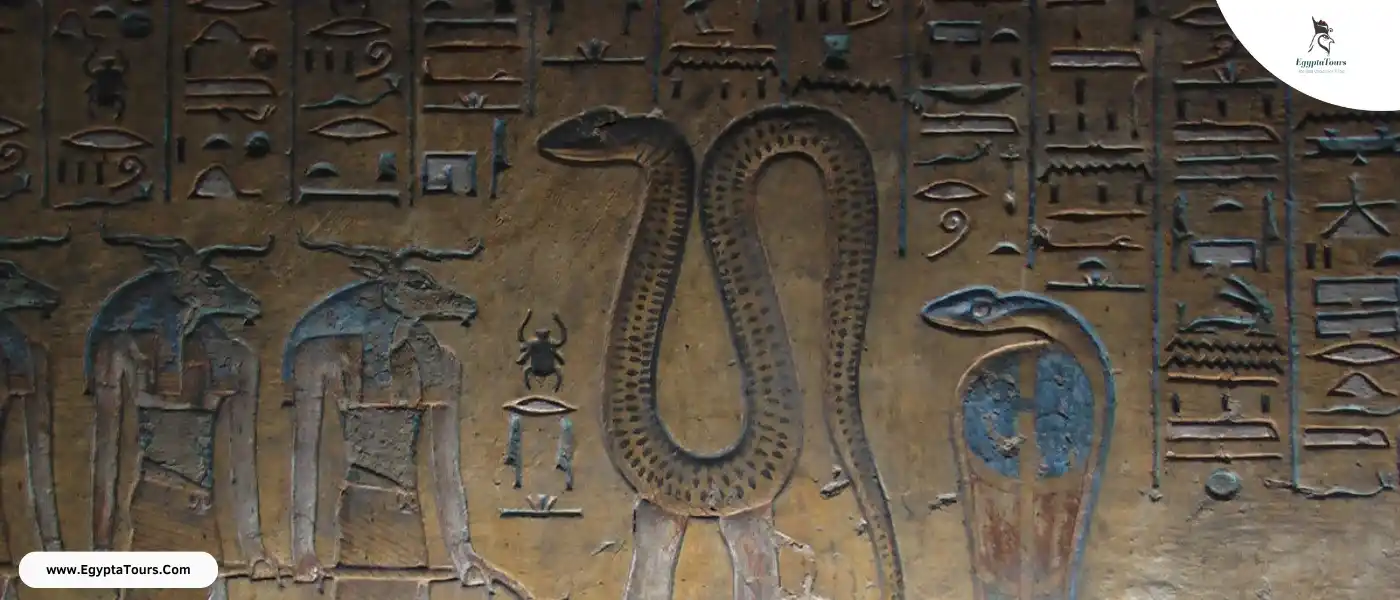
The Egyptians firmly believed that “Apophis” was a huge and immortal serpent which symbolized the forces of evil, chaos and utter darkness that tried every night to stop and destroy the sun boat and its journey through the underworld and the sky.
This reflects the eternal and continuous struggle between cosmic order (Ma’at) and chaos (Isfet).
Snakes were also considered powerful symbols of transformation, renewal and immortality.
They believed that the snake’s ability to shed its skin symbolized rebirth and renewal and that snake venom sometimes contained magical and healing powers. Their symbols or parts were used in various medical and religious rituals.
In Egyptian hieroglyphic writing, the symbol of snakes in ancient Egypt was a powerful symbol which has multiple meanings and uses.
The “Uraeus” symbol, the rearing cobra serpent, represents protection and royal and divine authority and is associated with the goddess “Wadjet” who protects the Pharaoh and Lower Egypt.
In contrast, the name of the god “Apophis” was sometimes written in the form of a cut or bound serpent, representing the serpent which symbolizes evil, chaos and danger. He was the arch-enemy of the god Ra in the myth of the sun’s journey.
Snakes in hieroglyphics could also represent concepts such as transformation, immortality and eternity, as they were believed to carry the symbolism of biological and spiritual renewal.
Among the most famous snakes and associated deities linked to gods and mythological tales, we find:
Snakes played an extremely important symbolic and religious role in ancient Egyptian culture.
On one hand, they represented power, protection and royal legitimacy, like “Wadjet,” the cobra goddess who protects the Pharaoh and Egypt.
On the other hand, they represented evil, chaos and imminent danger, as in the myth of “Apophis,” who obstructs the sun’s journey and threatens the cosmic order.
The Egyptians used snake symbols and amulets in religious and magical rituals to ward off evil and protect against enemies. They believed that some types of their venom had healing or magical properties.
Snakes were depicted in ancient Egyptian art which is widespread in temples, tombs and papyri, using various artistic styles.
They were often depicted simply and relatively realistically, either lying on the ground, intertwined in a spiral, or rearing up.
The “Uraeus” serpent (cobra) was depicted iconically and distinctively on the front of the royal crown’s headdress, as a symbol of authority and divine protection for the Pharaoh.
As for “Apophis,” who represents the forces of evil and chaos, he was depicted as a giant serpent being stabbed or bound by the gods or the Pharaoh, illustrating that he poses a constant threat to the sun’s journey and the cosmic order.
One interesting fact is that some types of snakes in ancient Egypt were possibly used in traditional medicine and magic to treat wounds or diseases, as it was believed that some components of their venom held healing or protective properties.
Also, snakes are capable of periodically renewing their skin which links them to the symbol of renewal, transformation and immortality in ancient Egyptian culture.
Additionally, snakes are among the most successful living creatures in adaptation, possessing amazing abilities to adapt remarkably to various different environments.
One of the amazing and strange abilities of some snake species is their capacity to “sense” and locate warm-blooded prey using a highly developed thermal sense in the facial region.
They can detect the slightest changes in the prey’s body heat from long distances, even in complete darkness.
Also, some snakes, like various “sea snakes” and “vipers,” are capable of injecting potent and complex venom that can kill or paralyze their prey within a few short minutes.
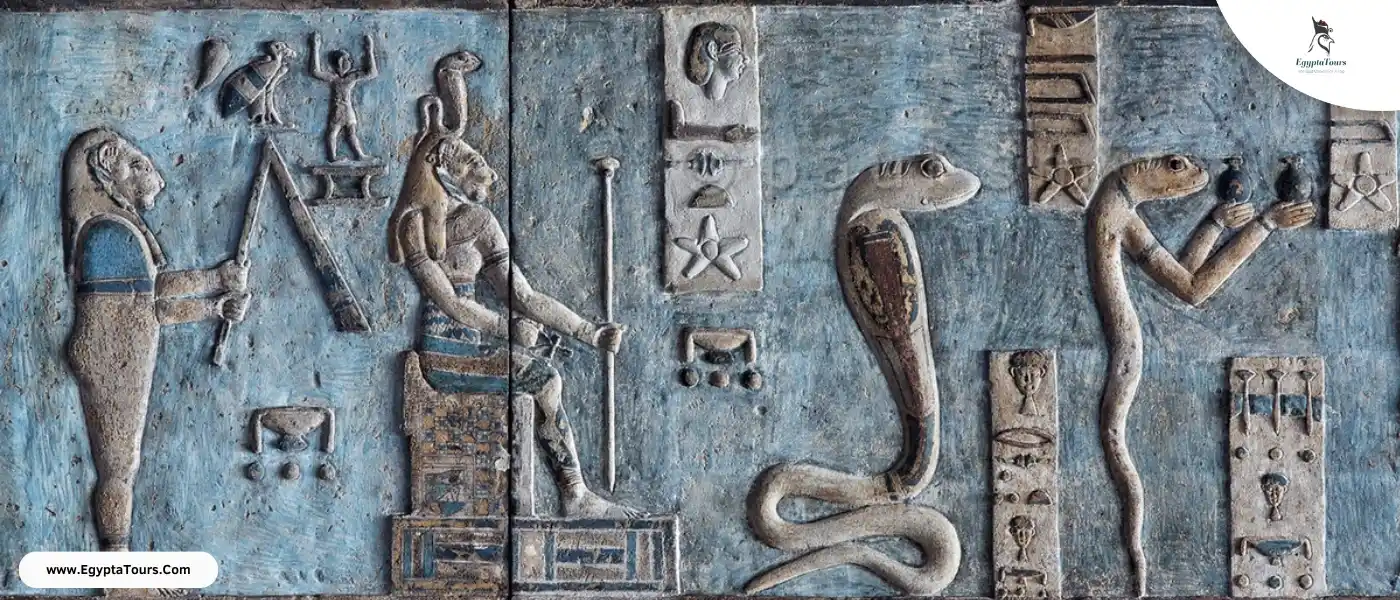
In the rich and complex Egyptian mythology, snakes were considered dual and sometimes contradictory symbols: on one hand, representing protection, authority and legitimacy like the “Uraeus,” which the Pharaoh wore as a symbol of protection and divine power derived from the gods.
On the other hand, “Apophis,” the serpent of chaos and darkness, represented the forces of evil and nothingness that try to stop and destroy the sun bark and its eternal journey across the sky and the underworld, reflecting the eternal and continuous struggle between the forces of order Ma’at and Isfet.
Yes, some types of snakes or deities taking their form were worshipped directly or indirectly in ancient Egypt, especially those representing protective goddesses like “Wadjet” and “Meretseger,” the lady of the Theban necropolis.
In these cases, the serpent represented a sacred divine power and played an important role in religious rituals as a symbol of protection, divine sovereignty and royalty.
Some local cults or Pharaonic religions worshipped snakes as direct manifestations of the protective goddess who guards the land, the Pharaohs and the inhabitants of a specific region.
Venomous snake bites were considered a real and great danger in ancient Egypt due to their prevalence in agricultural and desert environments.
It was generally believed that snakebites carried negative and deadly powers.
However, they were also considered in some spiritual contexts as a test of strength and endurance, as some people might have seen them as part of religious or magical rituals related to purification and spiritual transformation.
Conversely, there was a firm belief that some types of venoms or parts of snakes were used in making antidotes and treating certain diseases or in magical rituals for protection or harm.
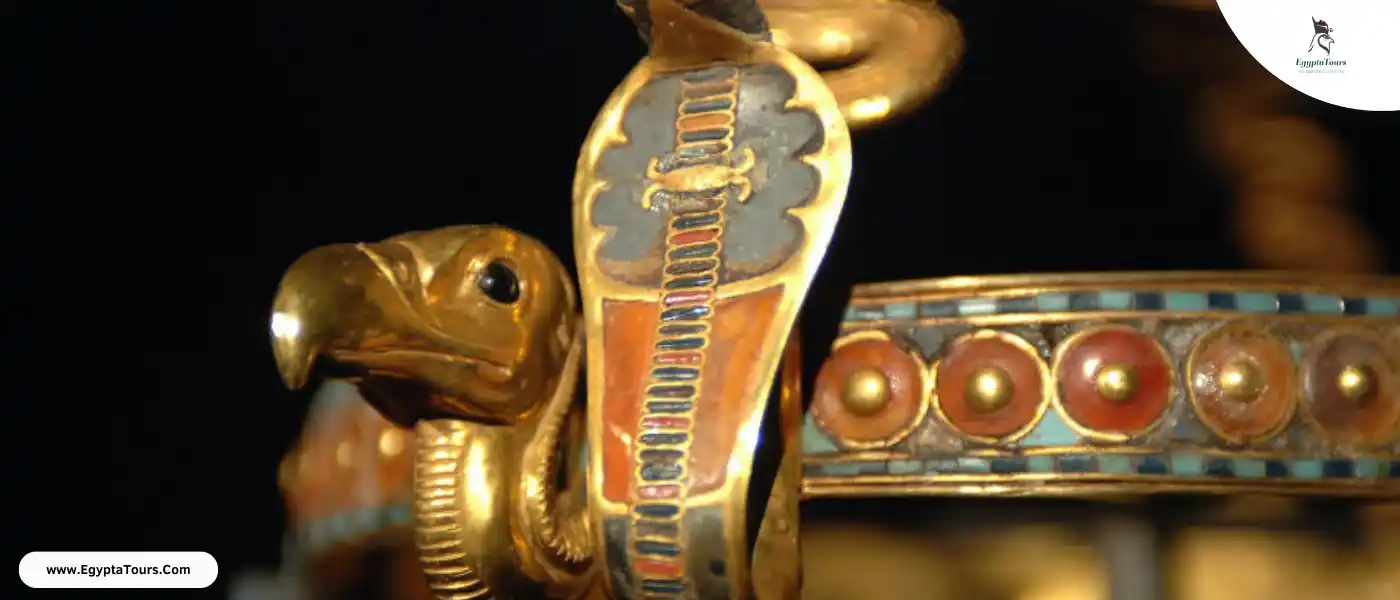
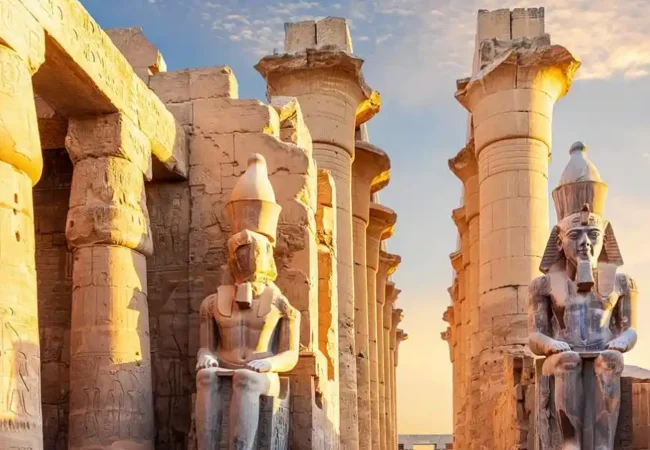
You can see statues, murals and drawings of Pharaonic snakes frequently in ancient Egyptian temples and tombs scattered throughout the country, such as the Karnak Temple in Luxor, the Temple of Edfu and the tombs in the Valley of the Kings and Queens.
They can also be seen in international and Egyptian museums like the Egyptian Museum in Cairo and the National Museum of Egyptian Civilization.
There are many murals and reliefs that show the “Uraeus” on the front of headdresses and the royal crown and “Apophis” appears in scenes of his violent conflict with the god Ra or other deities in some funerary and religious reliefs.
The ancient Egyptians sometimes believed that some types of snake venom possessed effective healing or magical properties.
They possibly used extracts from snake venom in some ancient medical recipes and treatments, where it was thought to have strong positive or negative effects on the body.
Also, the skin and some other parts of the snake were sometimes used in preparing certain types of natural medicines, remedies and protective amulets. It was also believed that snakes, due to their ability to shed their skin, represented spiritual healing, renewal and transformation.
Therefore, they had a strong and symbolic relationship with medicine, magic and eternal life in ancient Egypt.
Snakes in ancient Egypt are a deep and complex cultural and religious symbol which reflects the Egyptians’ understanding of the balance of powers between protection, order, destruction and chaos.
Through their close association with the gods and the Pharaoh, these symbols greatly influenced the religious beliefs and magical and funerary rituals that formed an important part of the daily and spiritual life of the ancient Egyptians.
Renenutet was a cobra goddess tied to the harvest and to nursing infants, and she’s a bit different from Wadjet in that her worship centered on food security rather than royal protection. Farmers left offerings to her at harvest time, hoping she’d guard the grain stores through the coming year, and she was sometimes shown suckling a child or coiled around a sheaf of wheat.
Her name is thought to come from an Egyptian word meaning something like “the nourishing snake,” which fits — she wasn’t a war goddess or a symbol of kingship, just a protector of the thing people actually depended on to survive the year.
The Fayum region had a particularly strong cult around her, and there’s a temple at Medinet Madi dedicated jointly to her and the crocodile god Sobek.
t’s easy to assume every serpent in Egyptian mythology was either Wadjet-style protective or Apep-style hostile, but Mehen breaks that pattern. Mehen was a protective serpent deity depicted coiling around the sun god Ra as his boat traveled through the underworld each night, essentially acting as a bodyguard rather than a threat.
Some tomb paintings and the “Book of the Amduat” show Mehen’s coils forming a kind of shield around Ra during the most dangerous parts of the journey, when Apep and other hostile forces were most likely to attack.
There was even a board game named after him, the “Mehen game,” played on a spiral board shaped like a coiled snake — so the imagery clearly carried enough cultural weight to show up outside strictly religious contexts too.
Snakes in ancient Egypt primarily symbolize contradictory concepts such as power and protection, like the “Uraeus” which symbolizes royal authority and the Pharaoh’s protection and also chaos, evil and danger, as in “Apophis,” who represents the threat to the sun’s journey and cosmic order.
Egyptians mummified some types of sacred snakes as part of religious or magical rituals.
They perhaps believed that preserving the snake’s body completely helped maintain its protective power and symbolism, or to offer it as a sacrifice to the goddess. Also possibly as part of healing and spiritual rituals.
The most famous and largest Egyptian serpent monster is “Apophis,” a giant cosmic serpent which symbolizes the forces of evil, chaos and darkness.
It was believed to try every night to stop or swallow the sun bark in the sky or the underworld and posed a continuous threat to divine power and cosmic order.
The most famous Egyptian snake queen associated with rule is “Wadjet,” the cobra goddess, protector of Lower Egypt and protection, who was considered the guardian of the Pharaoh and Egypt.
She was often depicted on the royal crown’s headdress as a symbol of authority, divine power and royal legitimacy.



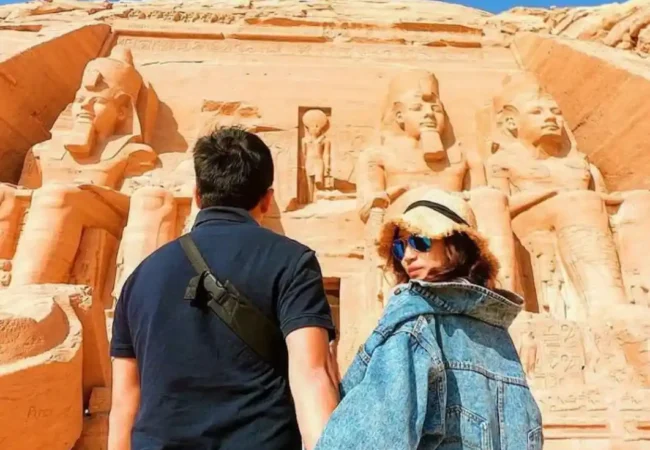
Explore our top-rated Egypt travel packages and embark on an unforgettable journey. From the Pyramids of Cairo to the magical temples of Luxor, Aswan, and Abu Simbel, discover expertly curated tours designed for your perfect Egyptian adventure