The Giza Workers Village (Heit el Ghurab) was discovered near the Giza Plateau and dates back to the 4th Dynasty during the reign of Khufu, Khafre, and Menkaure. It completely changed the understanding of pyramid construction by proving that the builders were organized, skilled workers not slaves and lived in a structured, state supported community.
The village was carefully planned like a small ancient city, with streets, barracks, houses, administrative buildings, storage areas, and bakeries. Large communal galleries housed thousands of rotating workers, while skilled artisans and supervisors lived in better homes, showing a clear social hierarchy and strong organization.
Workers lived tough but organized lives. They received food, clothing, and wages, and worked in teams including masons, carpenters, engineers, and transport workers. Their diet included bread, meat, fish, vegetables, and beer, showing they were well fed to sustain the massive construction effort
The village included medical care systems, with doctors and assistants treating injuries like fractures and work related accidents. Archaeological evidence shows that Egyptian medicine was advanced, using herbal treatments and physical care. Workers were respected and even buried in organized cemeteries near the site.
The pyramid construction was managed like a state project with engineers, supervisors, craftsmen, and labor divisions. Each group had defined roles and tasks, ensuring efficient production. The discovery of this village proves that ancient Egypt had a highly advanced administrative and engineering system that made the construction of the pyramids possible.
Giza Workers Village is the secret hideaway behind the construction method of the massive pyramids in ancient times. It was a place of residence and burial for the Egyptian workers who participated in building the pyramids.
Archaeological studies of the village’s remains and artifacts reveal their daily lifestyle and how they carried out the construction of the three pyramids. It was not just a collection of primitive dwellings but featured sophisticated architectural designs, including houses, bakeries, medical centers, and even tombs.
Therefore, this village is considered one of the most important secrets of ancient Egyptian civilization, as it clarifies the truth about the pyramid builders: were they merely workers or slaves?
History of Giza Workers Village and How It Was Built
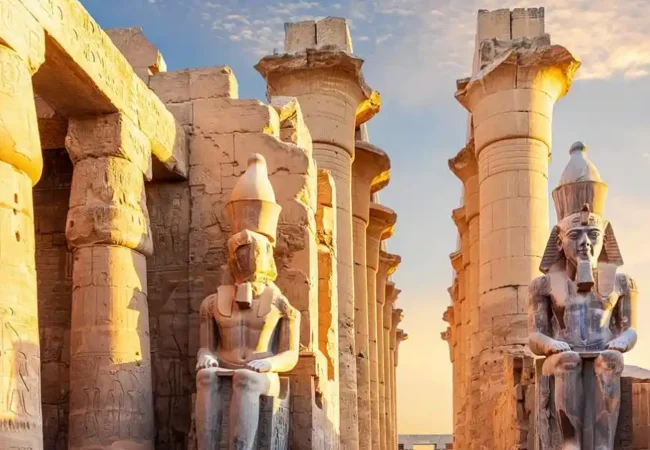
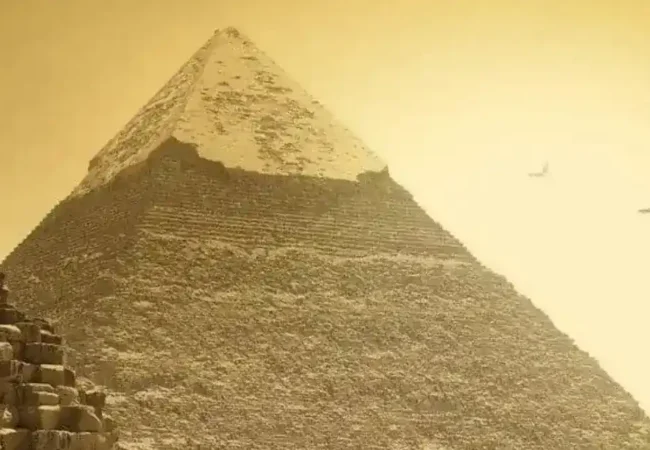
The history of Giza Workers Village dates back to the era of the Fourth Dynasty, during the reigns of the three kings: Khufu, Khafre, and Menkaure, around 2580 BC. The remains and artifacts of a large residential complex were discovered in the southeastern part of the Giza Plateau, near the pyramid complex.
The construction of the massive pyramids required a large city and infrastructure to accommodate thousands of workers and supervisors.
The village was built with meticulous organization, including three streets, houses, storerooms, and an administrative building for the city, in addition to four large galleries believed to be where the workers slept. This confirms the ancient Egyptians’ deep understanding of architecture and administrative organization.
To the west of the village, the city’s dedicated cemetery was discovered, where workers were buried according to their rank. High-ranking individuals were buried in large stone mastabas on the upper hills of the village, while those of lower rank were buried in mud-brick tombs at the bottom of the hills.
The Daily Life of the Pyramid Builders in Giza
The pyramid builders lived in the Workers Village in Giza, known as “Heit el-Ghurab” (The Wall of the Crow), near the pyramids, which covered an area of seventeen acres. Their homes were built of mud brick and roofed with thatch, and some of these houses contained bakeries for making bread.
The workers received regular wages in the form of clothing and food for their work, in addition to receiving rewards, such as being buried in private tombs next to the king.
Ancient Egyptian papyri have revealed how the workers built the great pyramids. The Egyptian workers used artificial channels branching from the Nile River to bring raw materials to the plateau, such as granite, wood, and copper cutting tools. After that, the process of moving the huge stones began via long ramps lubricated with oil to facilitate transport using ropes and levers.
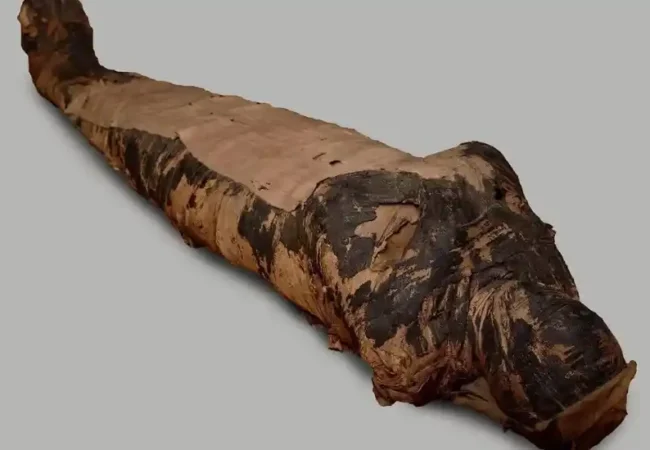
Their work life was very arduous, a fact that became apparent during the examination of the mummies of the Egyptian workers, where tests confirmed the presence of some bone fractures.
Archaeological Discoveries in the Workers Village Reveal the Lives of the Ancients
Many artifacts have been uncovered within Giza Workers Village, which shed light on the social, economic, and practical life of the pyramid builders.
Among these discoveries are the following:
Ancient excavations have revealed the remains and artifacts of one hundred and fifty-nine tombs, in which the mummies of supervisors were found.
The remains of a building used for storing grain and food were found, in addition to stone ovens that produced thousands of loaves of bread.
Vast remains of fish, bird, and sheep bones were discovered, which was the food provided by the state to the Egyptian workers to give them the necessary energy for maximum work efficiency.
Tools made of copper and stone were found, which were used to cut the large stone blocks. Special techniques were also used to drag them up the ramps to build the pyramids.
Excavations have revealed numerous plants that shed light on the life and diet of the Egyptian workers within Giza Workers Village.
The Egyptian administration provided them with plenty of food to help them perform their work at the highest quality.
This food included:
Meats: Research indicates that the Egyptian workers consumed large quantities of various types of meat, including beef, mutton, and goat.
Bread: Large bakeries and ovens were found where bread was made for the Egyptian workers, and it was their staple food.
Legumes: Such as lentils, to provide protein.
Other foods: Such as fruits, wheat, onions, and garlic, for disease prevention.
Doctors and Healthcare for the Pyramid Construction Workers
Giza Workers Village continues to reveal a host of secrets about the lives of the Egyptian workers through a collection of archaeological discoveries and papyri that have confirmed the difficulty and hardship of construction work in Egypt.
This resulted in diseases and fractures from cutting and breaking stones or falling from ramps, in addition to inhaling dust harmful to the respiratory system.
Therefore, the ancient Egyptian government worked to provide complete care for the Egyptian workers to ensure a healthy and psychologically sound life, free from diseases and risks. They did the following:
Provided doctors and their assistants at the builders’ workplaces for immediate treatment of workers when they were exposed to dangers such as fractures, toxins from the soil, or snake bites.
Divided the doctors into teams; one group provided healthcare to the workers in the city, while other doctors accompanied the workers at their workplaces and also supervised the provision of necessary tools.
Excavations and Egyptian papyri have shown the advancement of the ancient Egyptians in herbal medicine and the treatment of diseases.
They used medicinal plants and physical therapy to treat the pains and wounds resulting from the hard work of the pyramid builders.
Work Organization and Management Between Workers and Ancient Engineers
It showed the existence of a special administrative system for the Egyptian workers, which included dividing them into engineers, supervisors, construction workers, and specialized craftsmen to coordinate the different aspects of the engineering project, as well as to monitor other operations such as control and accounting mechanisms.
The principles of management were based on the following:
A central authority to issue tasks and monitor their execution.
Division of tasks among workers according to their positions.
Organization of daily tasks and methods of their execution.
Organization of monitoring and accounting processes.
There was also a division of workers on projects according to their abilities, as follows:
Architects: They created the plans for building the pyramids and how to execute them.
Supervisors: They were responsible for dividing the pyramid builders into teams and managing them well.
Craftsmen: Such as sculptors and tool makers.
Pyramid Builders: They were responsible for cutting the stones and transporting them up the ramps.
The Difference Between Skilled and Unskilled Workers
The nature of the work in building the pyramids was based on a hierarchical administrative system, according to the nature of the work and the skills possessed by the workers. This was represented as follows:
Unskilled Workers: Such as the Egyptian farmers who participated in the construction processes of cutting and pulling stones. This was part of their seasonal work alongside their agricultural activities, within an organized work system.
Skilled Workers: Including engineers, supervisors, and craftsmen. They possessed special skills for building the pyramids, such as drawing plans, determining locations, designing lifting systems, sculpting stones, and supervising the execution.
Difficulty of Transporting Huge Stones: The early builders faced great challenges in lifting and moving the stone blocks. This problem was solved by using internal and external ramps on the pyramids, which greatly helped in lifting and sculpting the stones.
Early Engineering Mistakes: Such as what happened with the Bent Pyramid of Sneferu, which posed a great challenge that led to the development of construction methods and the correction of engineering processes in the execution of the pyramids.
Work Hazards and Health Conditions: Many workers were exposed to physical and psychological injuries and diseases as a result of the hard work, such as fractures and emergencies, which required immediate treatment for them.
The remains of the workers’ housing, which extended over large areas to accommodate a large number of Egyptian workers during their seasonal work period.
Large bakeries and ovens for making bread, in addition to food preparation facilities such as fish processing plants.
The city wall that separated the residential area of the workers from their own cemetery.
Remains of wheat grains and animal bones, which indicate the nature of the diet the ancient Egyptians relied on.
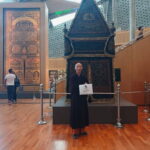
How Is the Village Displayed in Museums? Giza Workers Village is displayed in the National Museum of Egyptian Civilization through various exhibits, which are highlighted in the following points:
Models of the tools used by the Egyptian workers, which express their daily lifestyle.
Documentary photos of the activities of the Egyptian workers.
A display of archaeological documents and papers that clarify the work system, administrative organization, and the wages allocated to them.
Interactive screens showing images of the lives of the Egyptian workers.
Virtual tours through photos and video clips inside the Workers Village and their tombs.
The Importance of the Workers Village for Understanding Pyramid Construction
Giza Workers Village, also known as Heit el-Ghurab, has revealed the nature of the work of the pyramid builders through the following:
The village revealed the existence of a cemetery and tombs for the Egyptian workers next to the pyramids, which refutes the claims that the workers were slaves or worked under a forced labor system. Instead, they were paid wages.
Housing and food were provided for the workers, such as the bakeries that produced thousands of loaves of bread, in addition to beer to provide them with the necessary energy for work.
There was a clear administrative organization from ancient times for the nature of the work, where the workers were divided into teams, supervised by engineers and supervisors responsible for implementing the plans in the construction of the pyramids.
The existence of a healthcare system of doctors and medical assistants to provide immediate health care to the workers, who always accompanied them in their daily work.
Conclusion
Giza Workers Village is an important archaeological discovery, as it reveals to us the lives of the pyramid builders and their daily activities, and clarifies the nature of their work in building the three pyramids.
FAQs
What was the purpose of the Workers Villages?
The main purpose of the Workers Villages in Egypt was to provide housing and shelter for the Egyptian workers, in addition to other services such as food production facilities and healthcare for them, to ensure the execution of their work at the highest quality.
What is the secret chamber in Giza?
The secret chamber in Giza is the large void inside the Great Pyramid of Khufu, which was discovered using cosmic-ray imaging. It is believed to be located above the Grand Gallery and may have been used for storage or for religious purposes.
Were workers buried in the pyramids?
No, the workers were not buried inside the pyramids. Instead, they were buried in private tombs next to the Workers Village in Giza, which reflects the value of their work and its sanctification in ancient Egypt.
What is the lost city under the Giza pyramids?
There is no clear archaeological discovery that confirms the claims promoting the existence of a lost city under the Giza pyramids, and this has been confirmed by archaeological experts in Egypt.
Were workers’ villages successful?
Yes, the Workers Villages were successful in carrying out the projects entrusted to them, foremost among them the construction of the pyramids, thanks to the healthcare, and the administrative and engineering organization within the village.
Planning your dream trip or just curious about the past? Immerse yourself in our most popular articles covering Egypt's rich history, iconic monuments, and insider travel tips for a seamless vacation.
EgyptaTours is dedicated to transforming ordinary vacations into extraordinary, immersive journeys that unlock the rich history, vibrant culture, and timeless mysteries of ancient Egypt. Our premier team comprises certified private Egyptologists, seasoned local experts, and dedicated travel consultants who bring decades of combined on-the-ground expertise to every custom itinerary. Built on a foundation of trust, transparent pricing, and historical accuracy, we provide travelers with meticulously curated, up-to-date insights into Egypt’s most iconic monuments and hidden gems. Specializing in fully bespoke travel experiences—including luxury Egypt tours, customized Nile River cruises, private day excursions, and tailored multi-city adventures—EgyptaTours designs every detail entirely around your unique pacing and desires. Recognized for our handpicked heritage accommodations and unparalleled commitment to traveler satisfaction, we consistently deliver transformative, world-class experiences that set the gold standard for travel in Egypt.
Step beyond the crowds. Enjoy VIP access to the Pyramids at dawn and curated cultural encounters along the Nile, designed entirely around your personal travel style.
Explore our top-rated Egypt travel packages and embark on an unforgettable journey. From the Pyramids of Cairo to the magical temples of Luxor, Aswan, and Abu Simbel, discover expertly curated tours designed for your perfect Egyptian adventure
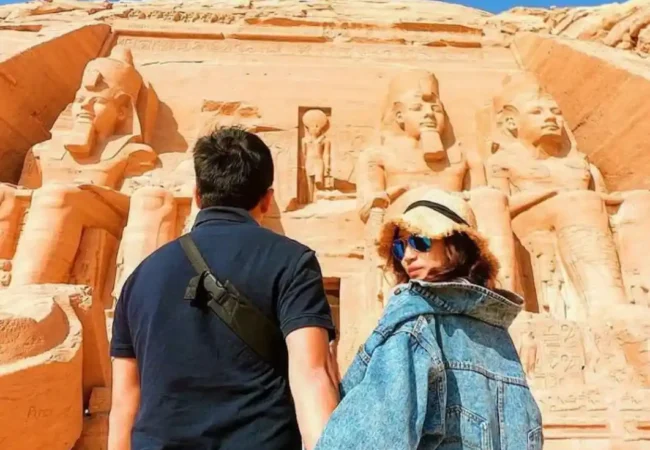
$1,420.00/per personCairo City / Bahariya Oasis / Aswan City / Luxor Egypt / Alexandria
Book Now
Book Now
WHY CHOOSE US
Why Travel With EgyptaTours
Unlock the true wonders of Egypt with confidence. We combine expert local knowledge, seamless logistics, and round-the-clock support to deliver flawless, responsible, and unforgettable travel experiences.
Safety & Security
Experience complete peace of mind on your travels with our rigorous safety standards, utilizing modern vehicles and constant support for a secure journey
Customizable Package
Craft your perfect holiday itinerary seamlessly with our dedicated travel experts, adapting every single detail and preference for a truly customized, flawless experience
24/7 Support
Travel with ultimate confidence alongside our round-the-clock support team, managing every detail and request instantly for a truly seamless and hassle-free vacation
Local Guided Tours
Uncover the authentic secrets of the pharaohs with our professional Egyptologists, providing profound insights and engaging narratives for a truly enriching journey
Premium Accommodations
Rest easy in carefully selected hotels and luxury Nile cruises that guarantee top-tier comfort and authentic hospitality.
Effortless Transfers
Travel seamlessly between Cairo, Luxor, Aswan, and the Red Sea in modern, air-conditioned vehicles with professional drivers.
The EgyptaTours Promise.
Plan Your Egyptian Adventure with Total Confidence
We handle the complex logistics so you can focus on the experience. From the moment you book until the day you return, enjoy flexible payments, secure reservations, and unwavering support every step of the way
We chose EgyptaTours for our Nile cruise and Alexandria, and the experience was simply perfect! The tour operator was exceptional in organizing and looked after us with care and professionalism from day one to day two.
We couldn't have asked for more. The cruise was fantastic and allowed us to discover wonderful places along the Nile. Special thanks go to our guide Mona, who, with his impeccable Italian and in-depth knowledge of ancient Egyptian history, managed to convey all the magic and beauty of those places, bringing us back to bygone eras. Thank you so much to everyone for making this experience unforgettable!
We spent 10 days in Egypt assisted by the agency. From the moment we requested the trip quote from Walaa, and specially throughout the entire trip, we had representatives and guides accompanying us.
Providing information about history and culture in an exclusive and easy way to understand! We were lucky to have people like Abdul and Mona and Ahmed (our driver in Cairo).. They did everything calmly and the agency is truly prepared to provide us with the best of Egypt! Highly recommend them. Very grateful.
I planned a trip for my husband and I to come to Egypt for 2 weeks and I wanted to see as much as possible while we were here. I found EgyptaTours and was very pleased with the itinerary options they offered.
My agent was super helpful in the planning process and the accommodations once we arrived to Egypt were OUTSTANDING. Our guides were fabulous, communicative, highly knowledgeable, and super friendly. They even allowed us to alter our itinerary in Egypt to allow us time to see some new things that we didn't know about while planning the trip! We had a wonderful experience and I recommend this company to anyone who wants to see Egypt and learn about the amazing history and culture.
Wonderful experience. We have made a trip through Egypt and the Egypta Tours company has been in charge of organizing all our activities, as well as transfers within the country.
Our contact with the agency was Abdelrahman Tayea. At all times he was watching us and it was a real pleasure to work with him. I highly recommend you come to them to organize your trip!

A wonderful experience! We recently traveled to Egypt, and Egypta Tours organized all our activities and transfers within the country.
Our contact at the agency was Mohamed alaa. He was always attentive to our needs, and it was a true pleasure working with him. I highly recommend contacting them to plan your trip!
EgyptaTours team was absolutely excellent! Our tour was personalised for our requirements, was extremely well organised and we got to enjoy a trip of a lifetime.
Guides Mona and Ahmed were very knowledgeable and accommodating when we wanted to change the itinerary. Thank you so much for a wonderful trip. I can't recommend this company highly enough.
Beautiful Egypt!!!! Our tour, organized by EgyptaTours, was a complete success. Ahmed Amged, my first contact and the one who organized our entire trip, was very kind and provided us with all the necessary information beforehand.
He also kept in touch with us once we arrived in Cairo. The guides have extensive knowledge of Egyptian civilizations and gave us very informative explanations at each of the sites we visited. It was an unforgettable experience!!!
Incredible experience with this agency. Their thoroughness, recommendations, punctuality, and personalized service were impeccable. But above all, the assistance of Rafat Ahmed was outstanding.
He helped us with admirable patience and commitment during the difficulties we encountered at the airport, from arrival to departure, as Iberia lost our luggage and it was difficult to recover it. He spoke with everyone he could, accompanied us 100% of the time it was truly incredible! Extremely grateful!
Had a great tour of Egypt with Egypta tours. From the starting till the end the plan was customized and tailored for my needs. Since I was traveling with my daughter who is infant I had few special needs which they fulfilled.
The tour guide Ms Mona and driver Mr Eid/Mr Ahmed were very co operative and professional. Want to thank Mr Abdallah for making our vacation a memorable one. I would recommend Egypta tours for Egypt vacation.
This travel agency made our week in Egypt! I contacted Egypta Tours via Whatsapp to organize a 8 day trip (Cairo, Luxor & Hurgharda). From the beginning, the communication was very smooth and clear.
From our first airport shuttle after arrival till our last day, everything went very well and services were reliable without surprises.. There was always a driver present and on time and the tour guides were true professionals. I can only recommend!
Exceptional Egypt Experience with EgyptaTour! We had an amazing trip to Egypt, all thanks to the outstanding management by EgyptaTour! From start to finish, everything was flawlessly organized.
Their guides were incredibly knowledgeable, making history come alive at every site we visited. The team was always punctual, professional, and eager to ensure we had the best experience. A special thanks to their staff for their warm hospitality and attention to detail, which made our journey truly memorable. If you’re planning a trip to Egypt, we highly recommend EgyptaTour for a hassle-free and unforgettable experience!
We had an absolutely incredible time in Egypt, thanks to EgyptaTours! They planned and organized our customized itinerary seamlessly, making the entire trip hassle-free and unforgettable.
Selim was a most gracious host, going above and beyond to make us feel at home. From the breathtaking White Desert safari to camping in the Black Desert, from an awe-inspiring hot air balloon ride in Luxor to perfectly arranged inter- and intra-city transfers, every detail was handled flawlessly. Selim also personally showed us around Cairo, making sure we experienced the best of the city. Everything was splendid, and the trip was not just memorable but also very affordable. If you’re planning a trip to Egypt, we highly recommend EgyptaTours for a smooth, well-organized, and