
Exploring Best Dialects: Egypt Language Demystified
The Rosetta Stone is one of the greatest archaeological discoveries that revolutionized...



Those who survived early risks could live much longer, sometimes into their 30s, 40s, or even beyond in rare cases. Wealthy individuals and elites generally lived longer due to better living conditions, food, and protection from harsh labor.
The life expectancy of ancient Egyptians was not similar to that of today Most people lived under difficult environmental and health conditions that directly affected their lifespans Despite the Egyptians’ advances in medicine hygiene, and prevention, epidemics parasites, complications of pregnancy and childbirth, and malnutrition led to shortened lifespans for most members of society.
Few people lived to see old age. Life was fraught with risks from childhood through advanced age Infant mortality was high, women suffered from the dangers of repeated pregnancies, and men were vulnerable to occupational injuries and chronic diseases resulting from the harsh nature of life.
Archaeological studies indicate that the average life expectancy of ancient Egyptians often did not exceed 40 years Tombs belonging to pyramid workers have shown that men typically died between the ages of 40 and 45, while women often died between the ages of 30 and 35 This is due to the high risks of pregnancy and childbirth in the absence of modern medical facilities.
Older tombs dating back to 3500 BC have revealed skeletons of people who died between the ages of 15 and 35, indicating high mortality rates among young people Cemeteries from these periods were filled with the remains of children and young mothers reflecting the severe health challenges faced by the ancient Egyptians.

Life-expectancy-differences-between-social-classes-EgyptaTours
The average life expectancy of ancient Egyptians varied according to social class The wealthy and noble lived relatively longer than the common people by a margin of five to ten years Better living conditions allowed them access to a varied diet and medical care supervised by priests and doctors who combined medicine with religious belief.
However very few Egyptians managed to reach the age of seventy or eighty These individuals were considered blessed by the gods, The ideal lifespan the ancient Egyptians dreamed of was 110 years, but this was unrealistic in light of the harsh medical and living realities of the time.
The low life expectancy of the ancient Egyptians is linked to several fundamental factors, the most important of which are malnutrition and an overreliance on grains as the primary food source This led to poor growth short stature, and high rates of anemia. Parasitic diseases such as schistosomiasis and guinea worm also spread due to the use of polluted Nile water for drinking and agriculture.
Furthermore there were high rates of occupational injuries especially among young men working in the construction of temples and major cities where remains have been found showing fractures of the spine and bones The lack of animal protein in the diet and the lack of advanced medical care also contributed to making people vulnerable to both infectious and chronic diseases.
Health-and-Medicine-in-Ancient-EgyptDespite the short life expectancy of the ancient Egyptians they paid great attention to personal hygiene and health prevention They practiced religious purification rituals that included frequent bathing and shaving They also imposed dietary restrictions such as abstaining from eating raw fish and unclean meat. Medicine was linked to magic and religion. The Egyptians used symbolic dream analysis and asked priests to intervene with magical rituals to treat illnesses along with the use of herbs and natural oils Modern mummy examinations reveal diseases such as atherosclerosis, osteoporosis, and dental diseases caused by sand in bread confirming that even the wealthy were not immune to health problems.
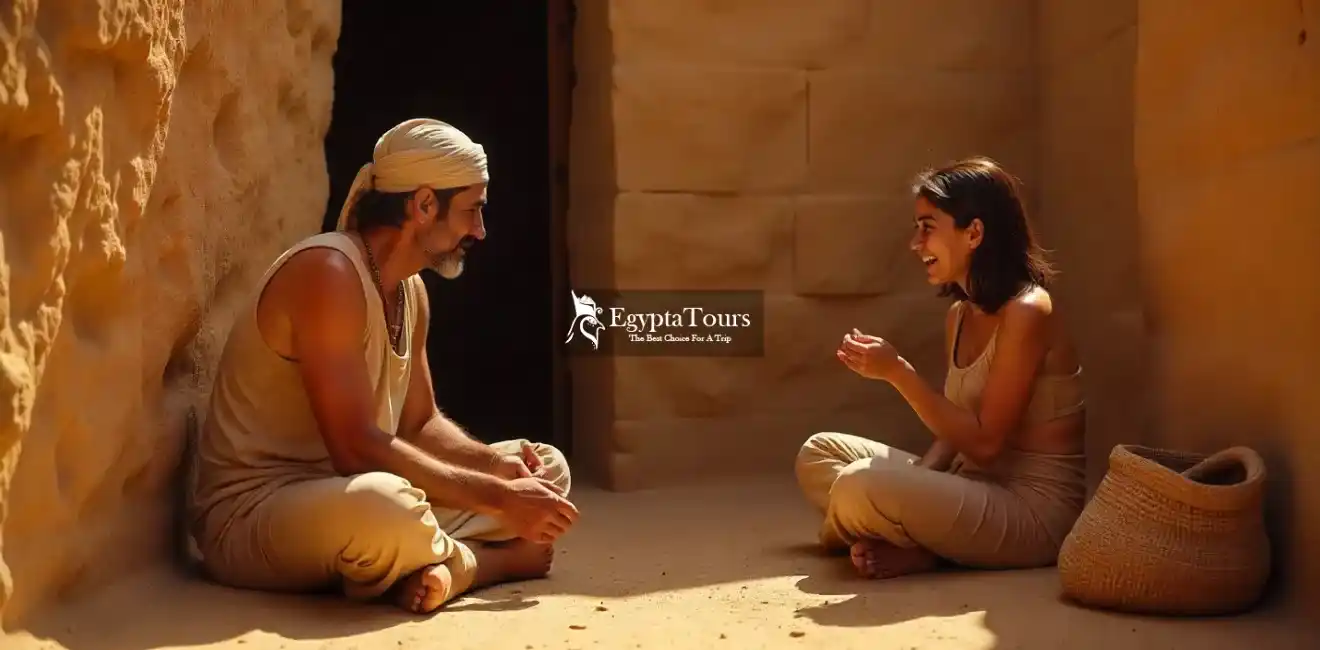
Female-and-Child-Mortality-life-Expectancy-of-Ancient-Egyptians-EgyptaTours
Pregnancy and childbirth posed a significant risk to women in ancient Egypt with frequent complications contributing to a reduced life expectancy for females Despite their use of primitive birth control methods such as honey castor oil, and crocodile dung, the Egyptians preferred to have large families to provide labor and care for their parents in old age.
Child mortality was extremely high due to weak immunity and the transmission of infections after weaning as available solid foods were often contaminated with parasites and germs Studies indicate that a third of Egyptian burials at some point contained the remains of children reflecting the severity of health risks in early childhood.
Research at the Tell el-Amarna cemeteries has shown that the population suffered from malnutrition and high rates of anemia reaching 74% among children and adolescents and 44% among adults. The average height of men was 159 cm and that of women 153 cm, evidence of stunted growth resulting from protein deficiency.
Examinations also revealed spinal fractures among adolescents due to strenuous construction work as well as tooth erosion and decay caused by sand ingestion, and oral abscesses that sometimes led to death These findings confirm that the average life expectancy of ancient Egyptians was very low, and that health and living conditions were harsh even during the most prosperous periods.
The Egyptian environment played a fundamental role in shaping the health and life expectancy of the population The warm humid climate of the Nile Valley facilitated the spread of insects and parasites increasing the incidence of chronic diseases such as schistosomiasis and malaria The annual Nile flood despite being a source of fertility and agriculture, carried contaminated sediments used for drinking and agriculture, contributing to the transmission of infections.
Even winds laden with fine sand affected the respiratory system and contaminated food, causing dental and digestive problems This interaction between nature and human health demonstrates that life expectancy in ancient Egypt was influenced not only by medicine and diet, but also by environmental and a geography that was uncontrollable at the time.
Scientists rely on biological indicators to estimate the age of human remains such as bone growth, fusion, and tooth wear, in addition to modern statistical methods such as Bayesian analysis This allows for more accurate determinations of the life expectancy of ancient Egyptians despite the challenges of environmental factors. However, these estimates are not always perfect due to the nature of diet, burial conditions, and the exposure of bones to deterioration over time.
Genetic testing is also used when samples are available to more accurately determine sex and age. However comparisons between skeletons and mummies remain necessary to gain a clearer picture of the age distribution and health status of ancient Egyptian society.
Studies show that the average life expectancy of the ancient Egyptians was extremely low, often ranging between 30 and 40 years Infectious diseases, malnutrition, complications of pregnancy and childbirth, and parasites played a major role in shortening people’s lives while few lived to the age of seventy or eighty.
Recent research also reveals intricate details of the lives of the ancient Egyptians where science and religion combined in their constant attempts to combat disease and prolong life However harsh living conditions and environmental conditions prevented them from achieving the long lifespans they dreamed of such as the age of 110, which was considered ideal and has never been reached.
If life expectancy at birth is taken into account most estimates range from the mid-thirties to the early forties. This figure is thought to be low due to the high infant mortality rates of that era Those who survived to adulthood saw significantly improved prospects with life expectancy extending into the early thirties for women and the mid-to-late thirties for men.
Common individuals (peasants workers) often died in their thirties or early forties due to harsh working conditions, poor diets, and exposure to parasitic diseases The upper classes (priests, nobles) lived relatively longer thanks to good food, relative medical care, and easier living conditions. Some lived into their fifties or sixties, and exceptionally, eighty or ninety.
High infant mortality rates as many children died before the age of five lowering the overall life expectancy of diseases and parasites Schistosomiasis malaria, and intestinal parasites were considered major health threats Malnutrition as many relied on grains as a staple food caused protein and iron deficiencies leading to widespread anemia.




Explore our top-rated Egypt travel packages and embark on an unforgettable journey. From the Pyramids of Cairo to the magical temples of Luxor, Aswan, and Abu Simbel, discover expertly curated tours designed for your perfect Egyptian adventure