Ancient Egyptian Architecture
Ancient Egyptian Architecture expresses the ancient civilization that flourished on the banks...

The Khufu Ship is a 4,500-year-old ancient Egyptian wooden vessel discovered in 1954 beside the Great Pyramid of Giza. Measuring approximately 42.32 meters long, it was built during the reign of Pharaoh Khufu. Its exact purpose remains debated, but researchers believe it may have been used for royal funeral ceremonies or the king's symbolic journey into the afterlife. The first Khufu boat was moved to the Grand Egyptian Museum in 2021.
The Khufu Ship is one of the most remarkable surviving examples of ancient Egyptian shipbuilding. Discovered in 1954 beside the Great Pyramid of Giza, this 4,500-year-old wooden vessel belonged to the funerary complex of King Khufu, the pharaoh who built the Great Pyramid.
Measuring approximately 42.32 meters long, the ship was found dismantled and carefully arranged inside a sealed underground pit. Its cedar planks, wooden joints, and other components reveal the advanced skills of ancient Egyptian craftsmen.
Although it is often called a solar boat, its exact purpose remains debated. It may have been used during the king’s funeral or intended to carry him on a symbolic journey in the afterlife with the sun god Ra.
In this article, discover how the Khufu Ship was found, how it was built, what it may have been used for, and where visitors can see it today.

The Khufu Ship was discovered in a sealed pit beside the Great Pyramid in 1954.
The Khufu Ship was discovered in May 1954 by Egyptian archaeologist Kamal el-Mallakh during excavation work on the southern side of the Great Pyramid of Giza. Archaeologists uncovered two sealed pits containing the dismantled wooden components of King Khufu’s boats. The first vessel was found beneath large limestone blocks and was later reconstructed for display.
This ship is one of the most important ships in the history of ancient Egypt because it expressed the ingenuity of the Egyptians in designing and building ships since the ancient Pharaonic era.
This ship consisted of 1224 parts and when this ship was found, no part was missing from it.
The second pit contained other parts of other boats that were discovered in 1987, but they were extracted from this pit in 2013. These boats were installed and displayed next to the Giza Pyramids. When these pits were discovered, they were dominated from above by wide stone pieces measuring about 4 x 5 m in length and 85 cm in width.
Many hieroglyphic writings were drawn on these stones including the works responsible for transporting these stones. The names of King Khufu and King Khafre were also written on them. It was believed that the Egyptians used these boats on the Nile, especially the king, and they were placed in this place because they were made there.
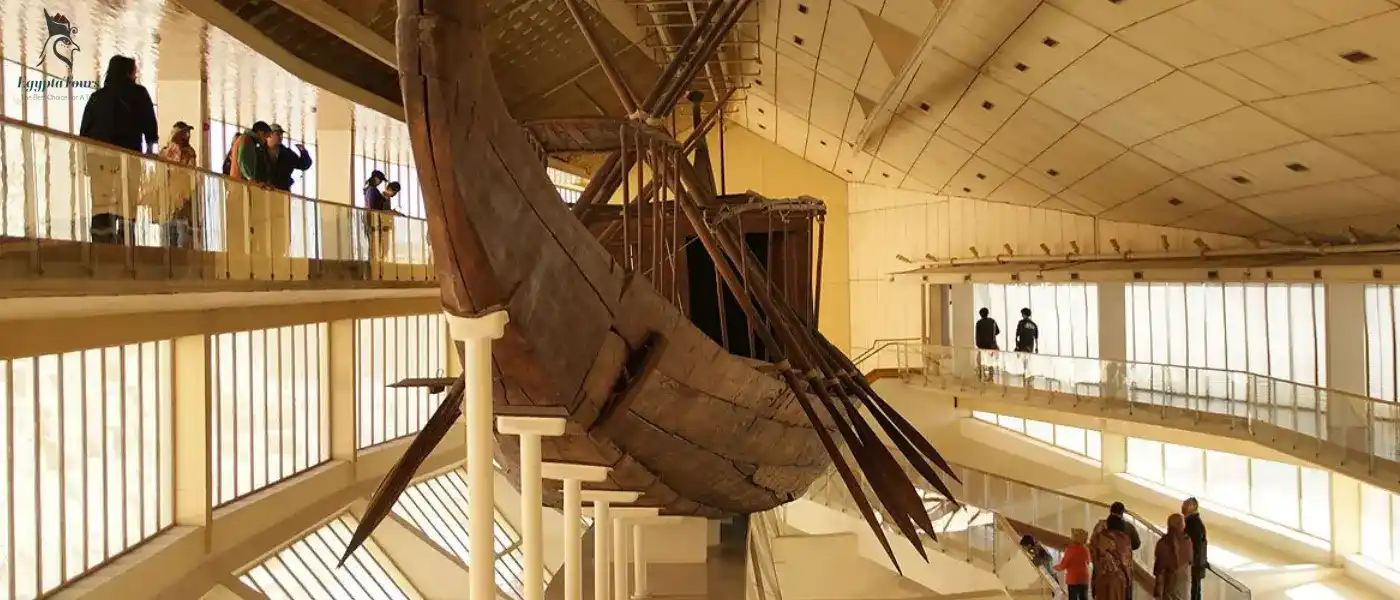
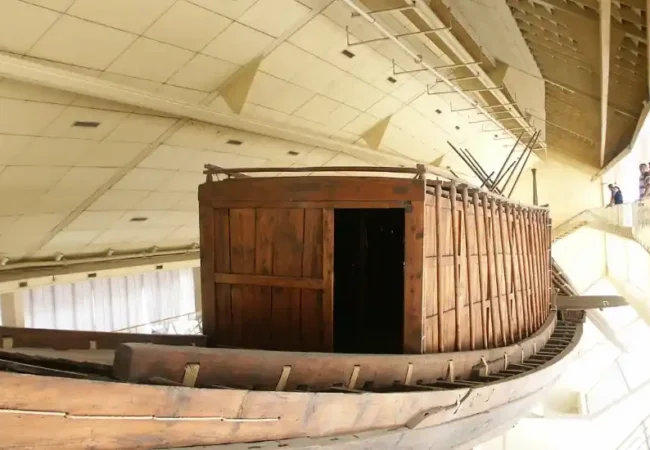
The reconstructed vessel reveals the impressive woodworking skills of ancient Egyptian craftsmen.
The Khufu Ship was made mainly from cedar wood imported from the eastern Mediterranean. Its design reflects the advanced woodworking and shipbuilding knowledge of ancient Egyptian craftsmen. Although it is often described as a funerary or solar boat, researchers have not reached a final conclusion about its original function.
For many years, the Khufu Ship was displayed in a dedicated museum beside the Great Pyramid of Giza. However, its wooden structure needed a more suitable environment for long-term preservation.
In August 2021, the ship was transported to the Grand Egyptian Museum. Rather than dismantling it, specialists moved the approximately 42-meter-long vessel in one piece using a specially designed remote-controlled vehicle and a protective metal structure.
The transfer was a major engineering and conservation project. Today, the Grand Egyptian Museum provides a modern setting for visitors to explore this remarkable example of ancient Egyptian craftsmanship.
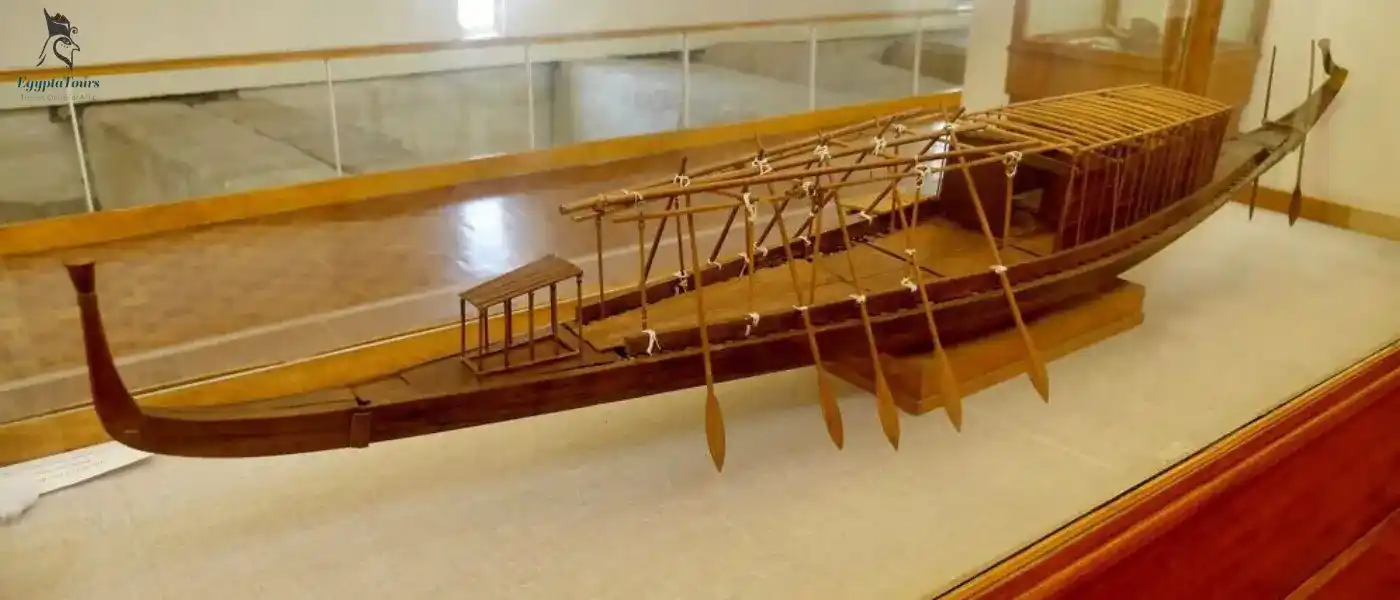
Several boat pits were found within the funerary complex of King Khufu.
The funerary complex of the Great Pyramid contained five boat pits. Three empty pits were identified outside the pyramid’s mortuary temple, while two sealed pits were discovered on the southern side of the pyramid in 1954. These two sealed pits contained the dismantled wooden remains of King Khufu’s boats.
The discovery provides valuable evidence of the importance of boats in ancient Egyptian royal funerary traditions. The first boat was reconstructed and later transferred to the Grand Egyptian Museum, while work on the second boat has involved a separate archaeological and conservation project.
Solar boats are considered one of the types of religious boats and were used to make many trips during the day only, and this type of boat was used to worship the god Ra, as the ancient Egyptians believed since ancient times that he was sailing and rowing until he reached the stars and he also used it to kill evil spirits and predatory animals, especially those in the underworld, so the entire people recognized his merit and his worship spread widely.
There are many other sacred boats that were found after the discovery of the Khufu ship, and the ancient Egyptians used to place these boats in the Holy of Holies inside the temples, and the priests used to place a statue representing him to visit the temples such as the visit of the god Amun to the Luxor Temple, and these ships were made specifically for this purpose and did not sail.
These boats were made specifically for use by the Egyptians during war and were drawn on many walls of temples for the ancient Egyptians and were used in many naval battles, especially in the era of King Ramses III, the last of the warrior kings in Egypt against the Sea Peoples who invaded Egypt.
These boats were used to transport goods on the Nile especially granite extracted from the quarries of Aswan or limestone from Tura.
These materials were transported by boats across the Nile to the places where the pyramids were built or to the Luxor Temple or the Karnak Temple, depending on the area in which they were located The ancient Egyptians worked on it and needed these materials at that time.
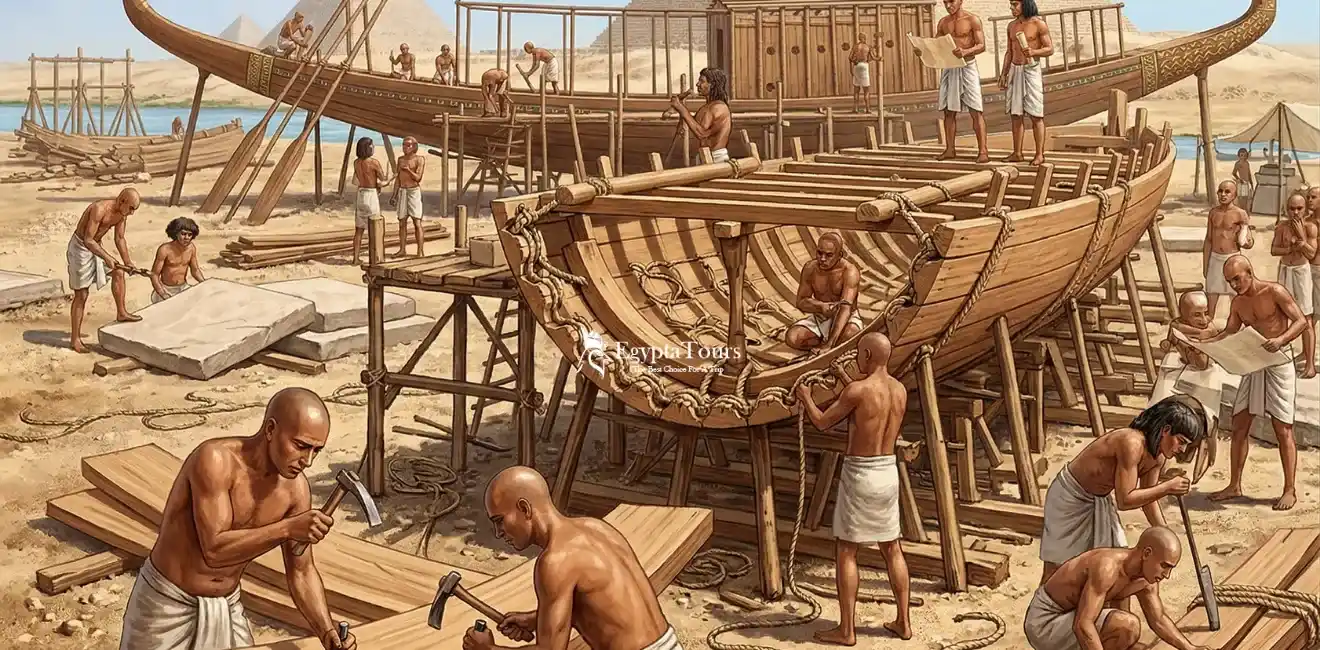
The Khufu Ship was assembled using carefully fitted wooden components and traditional boatbuilding techniques.
The Khufu Ship is an impressive example of ancient Egyptian woodworking. It was built mainly from cedar wood imported from Lebanon, although some smaller components were made from local Egyptian wood.
The builders assembled the vessel from numerous carefully shaped wooden pieces. Its components were arranged in 13 layers inside the burial pit, allowing archaeologists to document their original positions before reconstruction.
The ship’s wooden planks and carefully fitted joints demonstrate the advanced carpentry skills of ancient Egyptian craftsmen. Its reconstruction required detailed documentation and years of careful work by restoration specialists.
The Khufu Ship is closely associated with ancient Egyptian beliefs about kingship and the afterlife. Some researchers believe it was intended to transport King Khufu during his funeral, while others suggest it symbolized his journey through the heavens with the sun god Ra.
In ancient Egyptian religion, Ra traveled across the sky during the day and through the underworld at night. The ship’s burial beside the Great Pyramid has therefore encouraged the interpretation that it had a symbolic role in the king’s afterlife. However, its precise purpose remains uncertain.
Evidence from the burial pit suggests that the vessel had an important funerary role. However, researchers continue to debate whether it was intended for actual ceremonial use, transportation during the king’s funeral, or a symbolic journey into the afterlife. Its precise function has not been conclusively established.
After its discovery in 1954, the Khufu Ship’s wooden components were carefully removed from the burial pit. The excavation and removal process took approximately 20 months.
The pieces were documented and arranged in 13 layers to record their original positions. Restorer Ahmed Youssef and his team then undertook the challenging task of reconstructing the vessel, a process that took more than 10 years.
The reconstructed ship was originally displayed in a dedicated museum beside the Great Pyramid. In August 2021, it was transported intact to the Grand Egyptian Museum as part of a major conservation and engineering project.
These efforts have helped preserve one of the most remarkable surviving examples of ancient Egyptian wooden craftsmanship.
The Khufu Ship is an ancient Egyptian wooden vessel discovered in 1954 beside the Great Pyramid of Giza. It dates to the Fourth Dynasty and belonged to the funerary complex of Pharaoh Khufu.
It was discovered in May 1954 on the southern side of the Great Pyramid of Giza by Egyptian archaeologist Kamal el-Mallakh.
Its exact purpose is uncertain. Researchers believe it may have been used during Khufu’s funeral or intended for his symbolic journey through the afterlife.
The vessel is approximately 4,500 years old and dates to the reign of King Khufu during Egypt’s Fourth Dynasty.
The reconstructed vessel measures approximately 42.32 meters in length.
It was constructed mainly from cedar wood, with wooden joints, lashings, and other components used to connect its parts.
Its original function is still debated. Some researchers believe it may have sailed during a funeral procession, while others consider it primarily a symbolic or ritual vessel.
It is commonly called a solar boat because researchers have connected it with ancient Egyptian beliefs about the sun god Ra and the king’s journey through the afterlife. However, this interpretation is not certain.
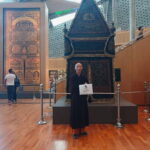
The first Khufu boat was moved to the Grand Egyptian Museum in August 2021, where it is part of the museum’s Khufu Boats display.
It provides valuable evidence of ancient Egyptian woodworking, boatbuilding techniques, royal funerary practices, and beliefs about the afterlife.


Explore our top-rated Egypt travel packages and embark on an unforgettable journey. From the Pyramids of Cairo to the magical temples of Luxor, Aswan, and Abu Simbel, discover expertly curated tours designed for your perfect Egyptian adventure