Ancient Egyptian Government: Structure, Power & Political System
Ancient Egyptian government depended heavily on two things: the pharaoh’s authority and...



In ancient Egyptian beliefs after death, a person would undergo a kind of trial standing before Ma’at the goddess of truth and justice, and reciting the ancient Egyptian Principles of Maat declaring their innocence of any moral wrongdoing in their life.
These statements represented rules governing individual behavior in their daily lives.
Honesty, justice, and integrity were the foundation of these principles and people were required to live according to them, The god Thoth was present to record everything leaving no room for lying or evasion.
Religious texts warned people against evil and harmful spirits urging them to persevere in goodness. They also portrayed oppressors in a repulsive light while presenting beautiful images of those who acted with truth and justice.

Ancient-Egyptian-principles-of-Maat-EgyptaTours
The ancient Egyptian Principles of Ma’at consisted of 42 principles, as follows:

Who-was-Ma’at-in-Ancient-Egypt-EgyptaTours
Ma’at in ancient Egyptian was a symbol of justice order, and truth. Therefore we will list the ancient Egyptian principles of Ma’at as a goddess representing cosmic balance and moral harmony.
She was not merely a religious figure but rather a fundamental idea governing the daily lives of Egyptians in terms of law religion, and behavior.
It was believed that the stability of the universe itself depended on respect for Ma’at’s principles, and that any imbalance or injustice threatened this balance and brought chaos.

Ma’at’s-Justice-and-Order-in-Ancient-Egypt-EgyptaTours
In ancient Egyptian civilization the word “Ma’at” expressed the fundamental idea upon which everything was based the balance of the universe the stability of government the discipline of society, and even individual behavior.
It was a practical rule governing all of life such as morality, justice, order, and the greater truths that stemmed from this concept and were considered an indispensable foundation for keeping everything in its proper place.
The ruler in ancient Egypt had to learn how to apply the ancient Egyptian principles of Maat just as anyone learns a trade. Any failure to respect this principle leads to chaos and destruction. The harsh lessons of past revolutions have shown that stability is not achieved by force, but rather by respecting the principle of Maat established by the Creator from the beginning.
The ancient Egyptian principles of Ma’at were an integral part of the fabric of daily life. This concept was not limited to individual behavior or legal rulings, but extended to encompass the entire universe from the movement of the stars to human actions.
Ma’at was the foundation upon which civilization was built the balance that ensured everything remained in its proper place.
Deep within the ancient Egyptian faith the very essence of life was the hidden force that stabilized the universe gave society its balance politics its meaning, and nature its order.
For the ancient Egyptians Ma’at was like water and air without it, life was impossible.
Everyone, from the king to the most humble of people knew that respecting the ancient Egypt principles of Ma’at was an unavoidable duty.
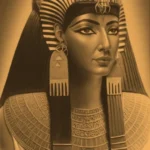
She was embodied in the image of a woman with a feather on her head—the same feather that was placed on the scales in the Court of the Dead to weigh a person’s heart and determine their fate.
Egyptians’ lives were not separate from Maat rather they revolved around it. Morality law, daily customs, even agriculture and ceremonies all revolved around this principle.
People were keen to maintain their lives in harmony with Maat because any deviation from it meant chaos and danger.
The king was directly responsible for protecting this balance both within and outside the country, and was known as the “Protector of Maat.”
Maat and the ancient Egyptian principles of Maat did not end with the end of the pharaonic era. Rather their influence extended throughout time and remained present in people’s ways of thinking about justice and right. Modern concepts of law and morality find their first roots in this profound idea.
The inscriptions and artifacts that survive today demonstrate how the ancient Egyptians always sought a just and balanced world.
Maat was not merely a symbol of the past, but a model that can inspire the present in how to manage our lives and societies in a way that respects truth and places justice in its proper place.
Society in ancient Egyptian was based on the concept of Ma’at, and social stratification was viewed as a natural part of the overall system that maintained stability. This concept was not limited to religion it was also clearly present in daily life.
Transactions between people whether in trade agriculture, or work were governed by the rules of Ma’at. This helped organize society in a coordinated manner even in the design of buildings. There was a commitment to a clear ratio that reflected this system.
Researchers continue to study this concept to this day, They study the influence of Maat on the style of government the arrangement of social classes, and the behavior of individuals in their daily lives.

Divine-Origins-in-Egyptian-Jurisprudence-EgyptaTours
Maat and the principles of Maat were the foundation of the legal system in ancient Egyptian, The state relied on them to regulate laws and determine what was acceptable and unacceptable. This concept helped establish a clear basis for distinguishing between right and wrong.
Judges at the time were known for acting in accordance with Maat and were called “priests of Maat.”
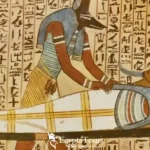
In the Court of the Dead the heart of the deceased was weighed against a feather, a symbol of Maat to determine their fate. This weighing reflects a clear idea that a person’s actions in life determine their future after death.
Inscriptions and symbols found on walls and in ancient texts also demonstrate the extent to which society attached to this concept both in daily life and in posthumous beliefs.
In ancient Egyptian society the concept of Maat and its principles were a fundamental element in the organization of government and law.
Maat signified order truth, and justice, and was viewed as an indispensable value for protecting the stability of the state.
The pharaoh was directly responsible for implementing Maat, and he considered his role not only political but also religious as he represented the link between the people and the gods.
The laws established under Maat were not merely human legislation they were treated as divine commands that must be respected.
It was believed that the security and stability of the country were linked to the extent to which everyone from the ruler to the people adhered to these principles.
The ancient Egyptian principles of Maat were an essential part of the system of life in ancient Egypt. People relied on them in their actions, and law religion, and government affairs were based on them.
The Egyptians believed that stability could only be achieved if everyone adhered to these principles.
The pharaoh was responsible for implementing them, and the people knew that their destiny in this world and the afterlife was linked to their adherence to them.
Ma’at also expressed a clear and organized understanding of life, and its influence still demonstrates how ancient Egyptians were committed to order and justice in every aspect of their lives.
The ostrich feather was placed atop her head.
Honesty, justice, respect for others, and order in word and deed.
There were approximately 42 laws.


Explore our top-rated Egypt travel packages and embark on an unforgettable journey. From the Pyramids of Cairo to the magical temples of Luxor, Aswan, and Abu Simbel, discover expertly curated tours designed for your perfect Egyptian adventure