King Neferefre: A Captivating Exploration
King Neferefre (or Reneferef “Ra his beauty”) was the first son of...



The Boy King: Tutankhamun became pharaoh at just 9 years old and ruled during Egypt’s 18th Dynasty. His birth name was actually Tutankhaten, but it was changed after he restored the worship of the god Amun.
A Tragic, Early Death: He died around 1323 BCE when he was only 18 or 19 years old, making him one of the youngest pharaohs to die so early.
A 3,000-Year Mystery: Even after 100 years of research, his death is still considered one of the biggest mysteries in Egyptian history.
Modern Medical Clues: CT scans of his mummy revealed a severe fracture in his leg which may have led to a deadly infection. Furthermore, DNA tests suggest he suffered from multiple bouts of malaria.
A Mix of Causes: Because of these findings, many experts believe his death wasn’t caused by a single event, but rather a fatal mix of physical injury, illness, and genetic conditions.
An Untouched Discovery: His tomb (KV62) was discovered in the Valley of the Kings in 1922 by archaeologist Howard Carter. Unlike most royal tombs, it was found almost completely intact.
Equipped for the Afterlife: The tomb contained more than 5,000 objects—including chariots, weapons, and his world-famous golden death mask, which remains one of the most recognizable archaeological artifacts in history.
A Short Legacy: Despite being the most famous pharaoh in modern times, Tutankhamun was not a deeply powerful ruler during his lifetime and had a very brief reign.
The nearly untouched tomb of Tutankhamun was discovered in 1922 in the Valley of the Kings. His burial took place more than 3,000 years earlier, during Egypt’s New Kingdom period. At that time, pharaohs were laid to rest in deep rock cut tombs in a desert valley near the ancient city of Thebes which was an important religious center.
Tutankhamun’s tomb is still considered one of the most complete royal burials ever found from ancient Egypt. It was uncovered by a team led by Howard Carter, with financial support from Lord Carnarvon.
Since its discovery, the tomb has helped historians learn more about Tutankhamun’s life, his death and how he was buried as well as how his legacy continued after 1922.
“…Since its discovery, the tomb has helped historians learn more about Tutankhamun’s life, his death and how he was buried as well as how his legacy continued after 1922. But behind the dazzling gold artifacts and the famous death mask lies a 3,000-year-old cold case: what really happened to Egypt’s boy king in his final days?“
King Tutankhamun died very young, most likely when he was around 18 or 19 years old. This is important because it matches the story of his short life and explains why people are still so interested in his death.
He became pharaoh as a child and ruled for only about nine years. By the time he died around 1323 BCE, he had just reached adulthood. Because his life was so short, there are many gaps in what we know about him and these missing details are what make his story so mysterious even today.
Experts who studied “Tutankhamun: Allies & Enemies” have suggested different ideas about how King Tut may have died. Nothing is completely certain but several theories have been discussed over time.
Tutankhamun likely died when he was about 18 or 19 years old, around 1324 BCE. One idea came from a small bone fragment found in his skull which made some researchers think he might have been killed by a blow to the head. However, this damage could also have happened later during the mummification process or even when the tomb was being uncovered.
Because of this, most experts today believe he was probably not murdered, although the exact cause of his death is still not fully known.
One important clue about King Tut’s death is a fracture found in his kneecap. Since there are no signs of healing, it likely happened very close to the time he died. Because chariots were also found in his tomb, some experts think he may have fallen from a chariot at high speed, although this idea is still not proven.
Another theory suggests that traces of malaria were found in his mummy. This means the disease could have played a role in his death or made his condition worse.
It is possible that his death was not caused by just one reason but by a mix of injuries and illness.
Tutankhamun became king while he was still a child, not an experienced ruler. During his reign, he was guided by powerful advisors, while Egypt was still dealing with political changes and the legacy left by Akhenaten.
He ruled for only about nine years which is a very short time for an Egyptian pharaoh. This short reign is important because it limits the period in which his death could have happened, making it easier for historians to study his final years, even though many details are still unclear.
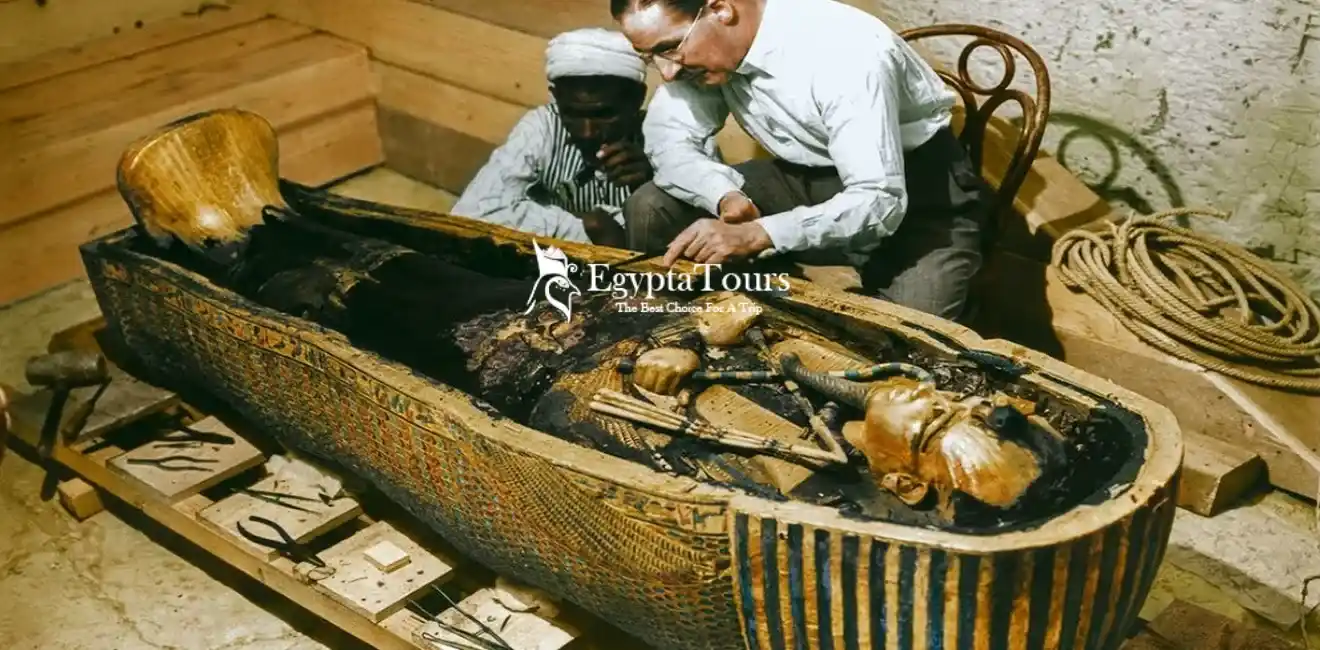
Archaeologist Howard Carter carefully examining the sarcophagus of King Tutankhamun shortly after its historic discovery.
King Tut’s tomb was discovered in the Valley of the Kings by British archaeologist Howard Carter and his team on November 4, 1922.
Carter had spent years searching for the tomb after World War I, when many other royal tombs had already been found but King Tut’s burial place was still unknown.
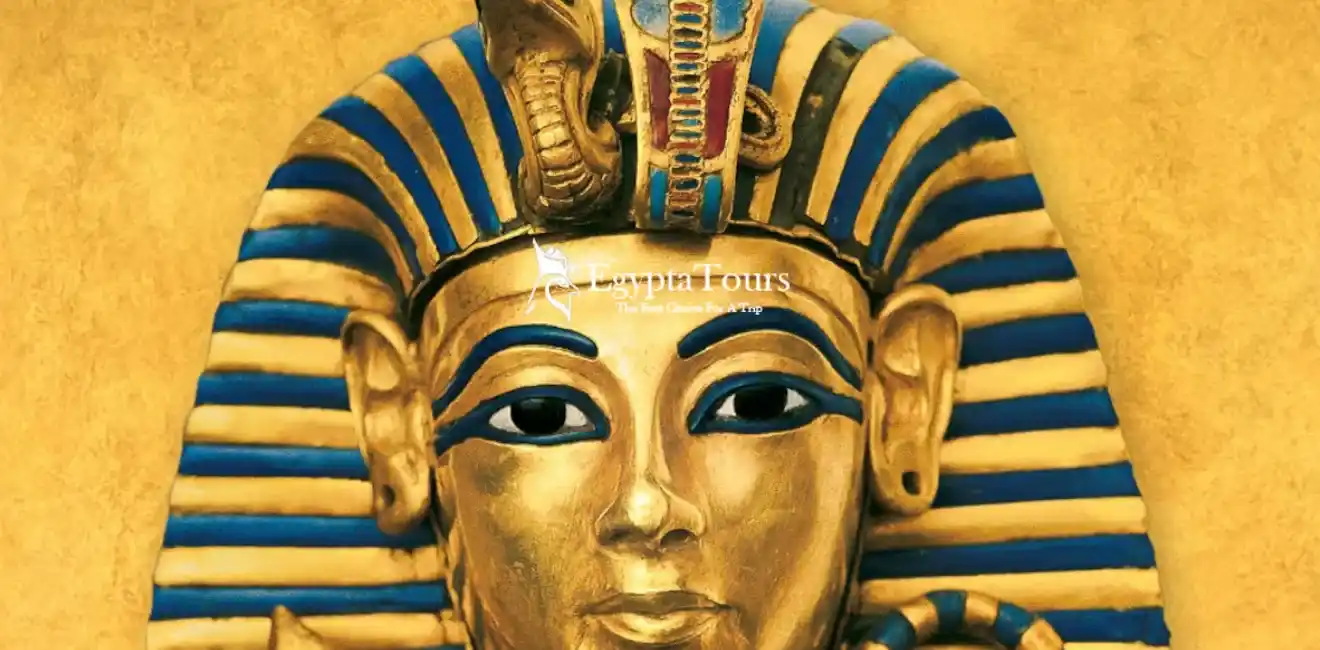
The iconic golden death mask of the young pharaoh, King Tutankhamun.
Compared to other royal tombs, King Tut’s tomb was quite small. Even so, it was filled with many valuable items, including his mummy, gold jewelry, chariots, statues, weapons and clothing. These objects were placed there to support him in the afterlife.
What made the discovery so important was that the tomb was almost untouched. Because of this, experts were able to understand what other royal tombs may have originally contained before they were looted or damaged over time.
| Category | Details |
| Full Name | Tutankhamun |
| Born | c. 1341 BCE |
| Died | c. 1323 BCE |
| Age at Death | 18–19 years |
| Dynasty | 18th Dynasty |
| Burial Site | Valley of the Kings |
| Famous For | Untouched tomb discovery |
Scientists have studied Tutankhamun’s mummy, bones and other clues to estimate his age at death. They examine things like bone development, signs of injury and the condition of his remains, then compare this information with historical and archaeological records.
Even with modern technology, some details are still not fully clear. It can be difficult to determine exact information from a teenage body, and ancient remains rarely give complete answers. This is why his exact age is still discussed today and why people continue to question the details of his death.
His young age makes the story even more powerful, since a short life often leaves many unanswered questions behind.
In the end, Tutankhamun’s age is one reason his story is still studied so closely. He ruled briefly, died young and remains an important figure in a timeline that continues to interest researchers.
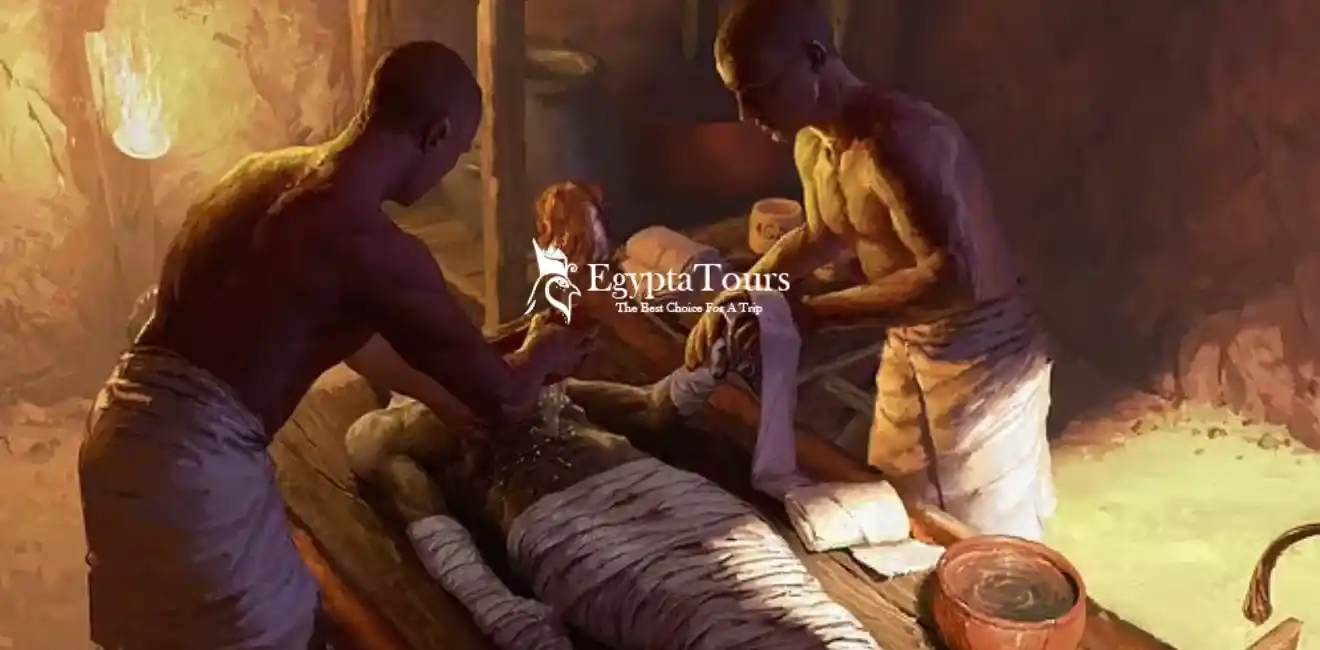
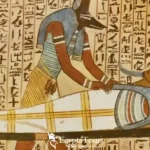
An artistic depiction of the traditional ancient Egyptian mummification process used to prepare the pharaohs for the afterlife.
Tutankhamun was laid to rest in the Valley of the Kings, a royal burial site on the west bank of the Nile near Luxor.
His tomb, known as KV62, was much smaller than most other pharaohs’ tombs. This has led experts to believe that his death may have been unexpected and that the burial was completed quickly or possibly adapted from another plan.
King Tut’s body was preserved using the traditional royal mummification process which was meant to prepare him for life after death.
First, the internal organs such as the lungs, liver, stomach and intestines were removed and placed in special canopic jars. The heart was usually left inside the body because it was believed to hold a person’s thoughts and feelings.
Next, the body was covered with natron salt for about 40 days to dry it out and remove all moisture. After that, it was cleaned and treated with oils and resins to help preserve it.
The body was then wrapped carefully in many layers of linen bandages. Small protective amulets were placed between the wrappings to guard and guide him in the afterlife.
Because of this careful process, Tutankhamun’s mummy is still one of the best preserved royal mummies ever found.
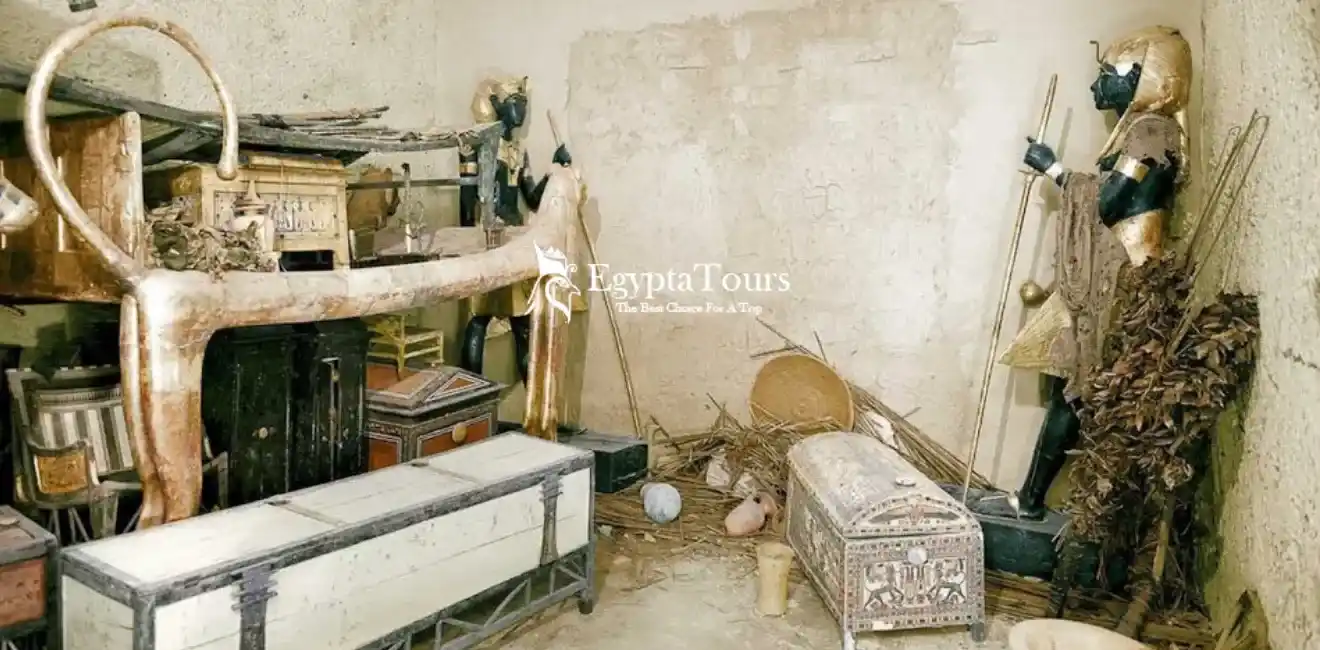
A glimpse inside KV62, revealing the golden treasures, chariots, and artifacts meant to aid King Tut in the afterlife.
Tutankhamun’s death also helps us understand everyday life in ancient Egypt. His remains suggest he had health problems showing that even a king faced real medical limits. Doctors at that time could treat injuries and use natural remedies, but they did not have modern tools like surgery, antibiotics or strong ways to fight infection.
His story also reveals something about power and family life. Since he became pharaoh as a child, many decisions were likely made by advisors around him. This shows how royal families kept power within their bloodlines and depended on others when a ruler was too young to govern alone.
His death is also useful for historians because it gives a clearer picture of life and death among Egypt’s elite. If a young pharaoh could die from illness or injury, it makes ancient history feel more real and human.
That is why Tutankhamun is still important today. His death offers clues, his tomb provides evidence and together they continue to raise new questions about ancient Egypt.
Tutankhamun died around 1323 BCE, during Egypt’s New Kingdom period, at a very young age.
He was buried in the Valley of the Kings, inside tomb KV62, which is one of the most famous archaeological discoveries in the world.
His tomb was discovered in 1922 by British archaeologist Howard Carter with financial support from Lord Carnarvon.
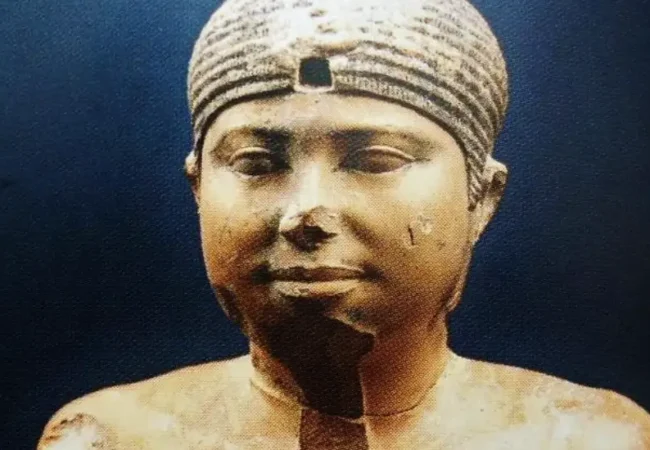


Explore our top-rated Egypt travel packages and embark on an unforgettable journey. From the Pyramids of Cairo to the magical temples of Luxor, Aswan, and Abu Simbel, discover expertly curated tours designed for your perfect Egyptian adventure