






Slavery in Ancient Egypt
Slavery in ancient Egypt is a controversial topic reflecting the nature of the social and political system and the methods the ancient Egyptians used to control their opponents and achieve their ambitions for immortality.
Slavery was not merely a peripheral phenomenon it was an integral part of the state structure and constituted an important pillar of the economy through the exploitation of forced labor and various forms of indentured servitude including what is known as “lifelong servitude.”
Interesting-Facts-About-Slavery-in-Ancient-Egypt-EgyptaTours
Slavery appeared in ancient Egypt during the Old Kingdom (c. 2700-2200 BC) but it was not easy to define due to the variety of terms used to describe the various forms of enslavement. Terms such as “bek” were used to refer to a worker “ham” to a servant, and “sekr-ankh” to refer to people bound to lifelong service.
The degrees of slavery varied between full slavery forced labor, and debt slavery, making precise classification complex.
History of Slavery in Ancient Egypt

History-of-Slavery-in-Ancient-Egypt-EgyptaTours
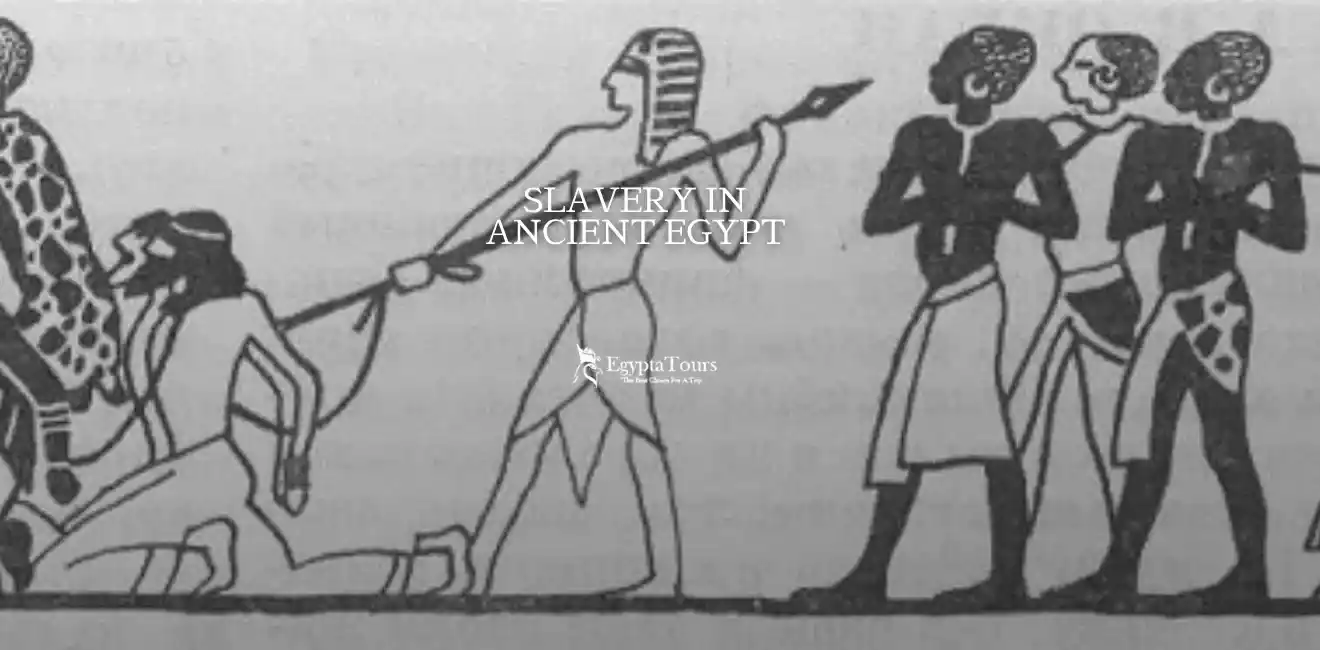
In the Old Kingdom the term “sekr-ankh” was used to describe prisoners of war who were forced into lifelong service. These prisoners mostly from Nubia, Libya, and Asia, were forced to work or were incorporated into the army, Some artifacts depict them in shackles.
Sometimes Egyptians themselves fell into slavery as a result of poverty or debt, Even officials who abused their power were punished by being enslaved as the ultimate form of humiliation.
By the beginning of the Middle Kingdom (c. 2040–1782 BC) slaves began to be viewed as personal property. When an individual was unable to pay their debts their wife or children could be sold into slavery.
Records indicate that slaves were found among the categories of deserters conscripts, and state workers and were used on major state projects. Military campaigns continued to capture Asians and enslave them even though they bore Egyptian names.
Slaves served a variety of jobs including farming, domestic service shoemaking, and hairdressing. Some even formed romantic relationships with the families they served as in the Cairo Bowl.
Slavery in the New Kingdom

Slavery-in-Ancient-Egypt-the-New-Kingdom-EgyptaTours
During the New Kingdom the king social elites, and public officials gained the right to own slaves reducing the king’s absolute power. Military campaigns also increased the need for forced labor leading to the import of slaves from Mediterranean markets.
Egyptian slaves were treated better than foreign slaves who were used for hard labor. Some slaves gained their freedom through marriage or service in temples. This era also witnessed the capture of the Sea Peoples and their enslavement, and Ramesses III boasted of capturing large numbers of them.
The term “vassals” emerged during this time to refer to prisoners of war who were used as slaves. Some officials received these “vassals” as rewards such as Mnemoses during the reign of Thutmose III.
The History of Slavery in Islamic and Modern Egypt
Slavery continued in Egypt until the early 20th century transforming from Pharaonic systems to forms governed by Islamic law. Under the Islamic Caliphate slaves were divided into men used as soldiers and administrators, and women used as concubines or servants, and eunuchs in palaces.
Agricultural slavery later emerged with slaves coming from Europe the Caucasus and sub-Saharan Africa.
During the Abbasid dynasty the slave trade flourished through treaties and raids. This continued under the Fatimid dynasty where slaves were subjected to racial classifications. Unlike slavery in ancient Egypt during the Mamluk era, who were themselves slaves of Turkish origin fears of their political influence increased.
During the Ottoman era white women were favored as wives for Mamluks. Under Muhammad Ali the number of slaves in Egypt was estimated to be in the thousands used as servants and farmers.
Types of Slavery in Ancient Egypt

Types-of-Slavery-in-Ancient-Egypt-EgyptaTours
The types of slavery in ancient Egypt varied as follows:
- Full slavery (chattel slavery) included prisoners of war and those born to slaves. They were used in service as gifts from the pharaoh, or in temples.
- Debt slavery: Some Egyptians sold themselves or their children due to poverty hoping to be freed after paying off a debt.
- Forced labor was imposed by the state on the common people in projects such as mining and construction.
- Symbolic slavery (shawabti) were small statues buried with the deceased to serve them in the afterlife. Some historians believe their owners accepted this fate in exchange for a promise of immortality.
The Image of Slavery in Ancient Egypt: Between Social Necessity and State Authority

The-Image-of-Slavery-in-Ancient -Egypt-EgyptaTours
Slavery in ancient Egypt was not merely a case of human exploitation it was an intertwined social and economic system that reflected the balance of power and the needs of the state at the time.
Slavery was used as a tool to tighten control consolidate the ruler’s position, and meet the demands of major projects making it an integral part of the state’s structure and manifestation of its power.
Slavery was not only practiced against foreigners or prisoners of war but sometimes included citizens themselves who fell under the yoke of debt or sanctions. While it was associated with some symbolic aspects of religious beliefs it remained an expression of the absence of freedom even if it was sometimes characterized by a degree of organization and care.
The Life of Slaves in Ancient Egypt
The living conditions of slaves in ancient Egypt varied according to their role. Some worked as servants in the fields, or as craftsmen. Some owned private property married, and sought to improve their social status while others lived in harsh conditions.
Slaves usually did not receive wages but they received food and shelter and hoped for a better life or future freedom. Some documents indicate the possibility of filing complaints against their masters in the event of injustice.
The Status of Masters in Ancient Egypt
Nobles and kings owned slaves and were required to provide for their basic needs. Slaves were also used for domestic tasks such as cooking And cleaning, and in manual and agricultural professions. Masters had the right to teach them crafts to increase their value but children were not allowed to be used for hard labor.
Economy and Slavery in Ancient Egypt
The Egyptian economy was based on agriculture and slaves later played an increasing economic role especially during the Greco-Roman period, Slave trade was conducted through intermediaries and there were no open markets. The pharaoh had the authority to grant slaves as gifts making slavery a tool of political influence.
Did Slaves Build the Pyramids?
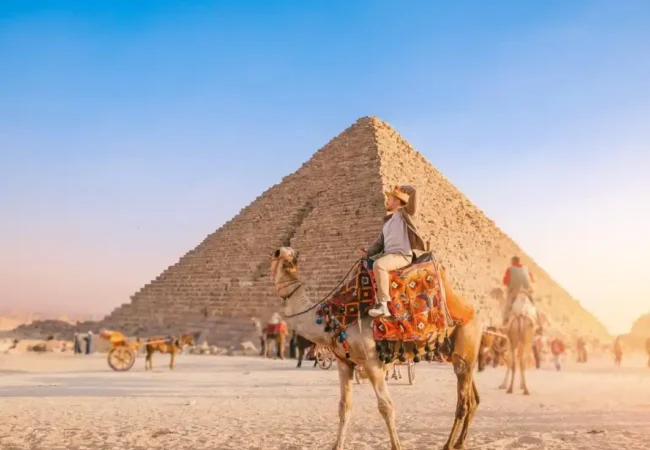
Archaeological evidence suggests that the pyramids were not built by slaves but by skilled Egyptian workers and peasants during flood periods.
These slave workers in ancient Egypt received wages food, and relatively good conditions. The claim that Israelite slaves participated in construction is unsupported by archaeological evidence and is considered a myth.
Abolition of Slavery in Modern Egypt
Slavery was not fully outlawed until the late 19th century, An agreement was signed between Egypt and Britain in 1877 to prohibit the slave trade followed by a ban on the import of white women in 1884. Slaves gained certain rights including the right to submit applications for emancipation.
Some forms of slavery persisted until World War I, but gradually faded with political and social changes.
Conclusion
Slavery in ancient Egypt appears as a mirror reflecting the complexities of social political, and economic life in that ancient civilization. Its forms varied from war slavery debt bondage, and symbolic service, but all were based on the loss of freedom.
Despite the regulation that characterized some forms of slavery it remained an expression of inequality. Over time slavery gradually declined, and the values of freedom and justice emerged. Understanding this aspect of history gives us a deeper understanding of humanity’s journey toward dignity and freedom.
FAQS
Were the pharaohs black?
The origins of the pharaohs varied and their ethnic backgrounds mixed over the ages depending on Egypt’s geographical location and long history.
Some pharaohs particularly those of Nubian origin in the south such as the kings of the Twenty-Fifth Dynasty were dark-skinned Africans during their time of slavery in ancient Egypt while others were of northern or mixed origins. Therefore it cannot be said that all pharaohs were black rather they were of multiple ethnicities representing the diversity of ancient Egypt.
Are there still slaves?
Although traditional slavery in ancient Egypt in its legal sense has been abolished in most countries around the world there are modern forms similar to slavery known as “modern slavery,” such as human trafficking forced labor, and child marriage.
Although these practices are prohibited by law they still exist in some regions around the world and constitute clear violations of human rights facing ongoing international efforts to combat them.
Were there slaves in ancient Egypt?
Yes, slavery existed in ancient Egypt but it wasn’t necessarily practiced in the same contemporary sense. It included various forms such as prisoners of war forced service, and debt bondage. It even had symbolic forms such as shawabti statues buried with the deceased to serve them in the afterlife.
Slavery was part of the state’s economic and social structure used in agriculture construction, and domestic service and practiced according to an organized system subject to the authority of the state and religion.