when we speak about Al Hakim Mosque we enter to such a magnificent era in the history of Egypt , mosques in Egypt have a great place in our hearts and not just in Egypt all over the world no one can deny that let me have in a little tour in a great mosque for a great ruler.
Al Hakim Mosque’s Location
Have you ever heard of Cairo Al-Muizz?!
Now I am going to tell you the story of the most beautiful and largest mosque in historical Egypt.
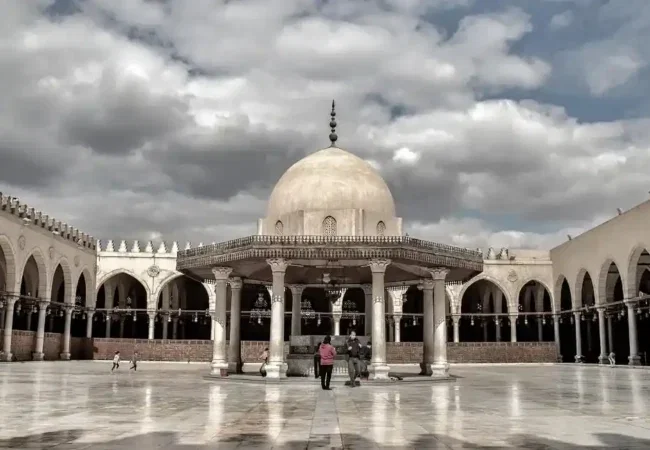
Al Hakim Mosque is a jewel in the sky of Al-Muizz, It is located in the largest and most important historical areas in Cairo in Al Muizz street
Al Moez Street still impresses us with it’s conquests Giant architectural evidence to reflect the great Islamic civilization and Fatimid specifically, and Al Hakim is one of them
Al Hakim Mosque History
Al-Hakim-Mosque-History-EgyptaTours
History of Al Hakim Mosque
The construction of the Al-Hakim Mosque started in 990 CE under the Fatimid vizier Gawhar al-Siqilli. At first, it was a smaller place for prayer. But when Caliph Al-Hakim bi-Amr Allah became ruler, he completely changed the project. He made the mosque bigger and added many important features. The construction continued until 1013 CE. Al-Hakim, known for his long and unusual rule with many strict orders, is closely connected to this grand mosque.
Over the years, the mosque went through times of neglect and repair. An earthquake in 1303 CE caused serious damage. Later, the Mamluk Sultan Baybars al-Jashankir rebuilt and restored it. In the late 18th century, Napoleon Bonaparte’s French army used the mosque as a stable and workshop. Today, careful restoration has returned the mosque to its former beauty.
The Mosque Among the Past & Present and Future .
Muslims build mosques so they can pray and do Islamic rituals into.
So pray is the main function for the mosque in Islam.
But at this mosque and most of ancient mosques, things were different a little bit ; it did not become after that just a place to pray, but became a place of knowledge to teach Islam into ,that the ruler allowed the scholars of Al-Azhar to teach into the mosque.
So we can say that the Al Hakim mosque became something like a university as it’s known today .
The mosque became the fourth place to learn (fiqh and sunna) after the Mosque of Amr Ibn Al-Aas, the Mosque of Ibn Tulun and the Mosque of Al-Azhar Al-Sharif.
Description of the Mosque
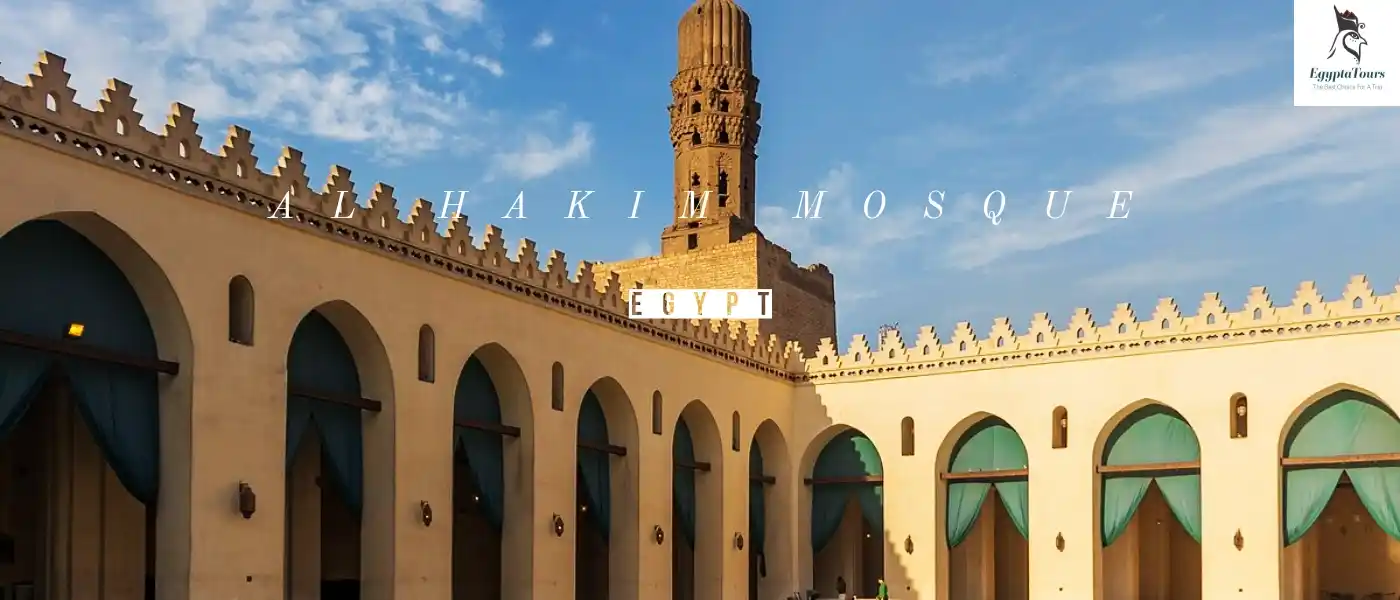
The building is about 12,005 meters long and 113 meters wide, so its area is smaller than the Amr Ibn Al-Aas Mosque. It has two minarets at the front and each one stands on large pyramid-shaped bases at the edges of the façade. Each base is made of two cubes, with one cube placed slightly higher than the other.
In the center of the front side, there is an eight-sided (octagonal) minaret. The entrance to the old mosque is high and located between the two minarets. From the top cubes of the bases, there are also octagonal minarets.
Some parts, like the arch and the wall, are newly built. On the left side, there is an entrance that still has beautiful carved decorations. It is about 1.60 meters high and leads to the mosque’s courtyard which is surrounded by arcades.
The Design of the Mosque
Al-Hakim-Mosque-Design-EgyptaTours
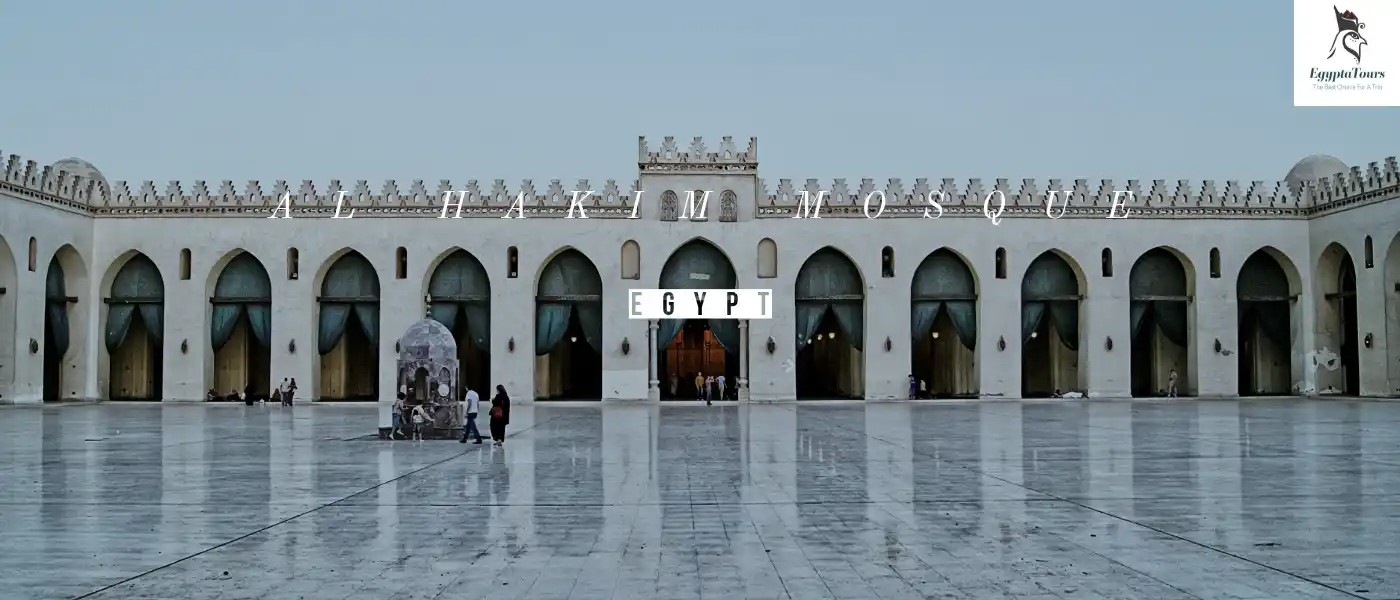
The corridors and the open courtyard, are in a unique Islamic style There is a small corner in all corners of the mosque for ablution and ablution is washing the body with water for purity to prepare for prayer in Islam.
It includes four arcades, the largest of which is the northern gallery, which contains the old and the new mihrabs (niche indicating the qibla or direction of prayer).
The number of entrances is 9 entrances, they are all closed now, only one of them is still open for the people to enter, this one is the one overlooking Al Moez Street.
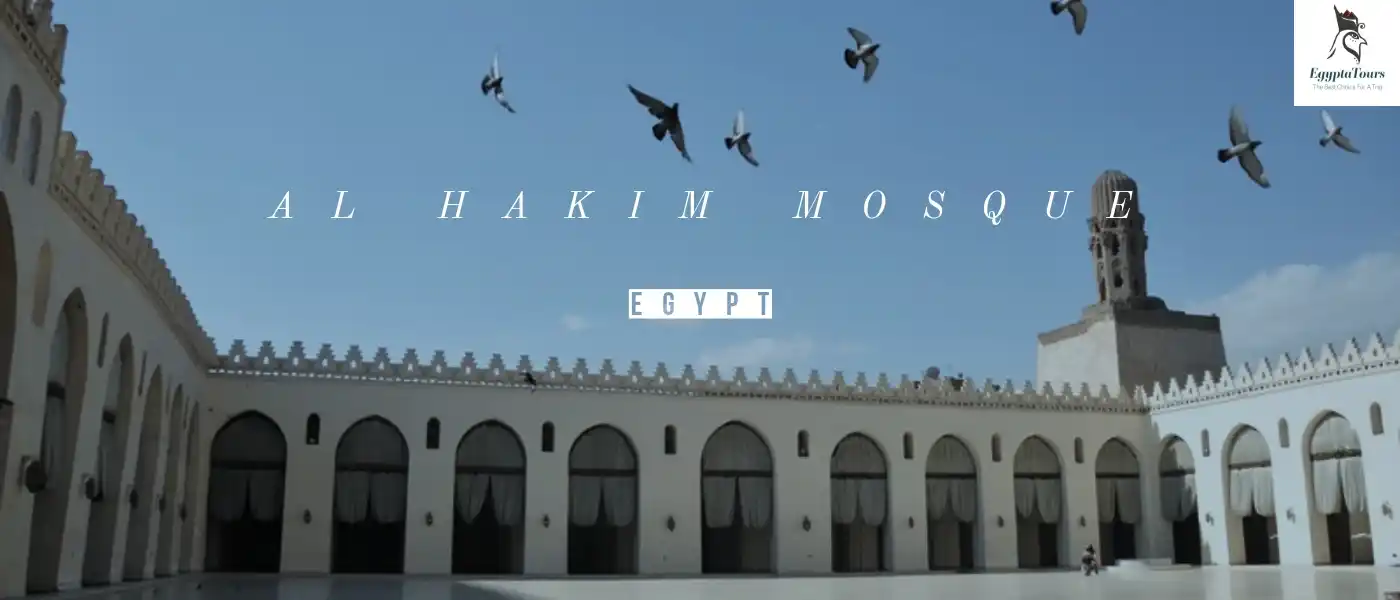
Al Hakim mosque has two medium-length minarets built of stone located at the ends of the mosque, minarets are located at the highest peak of something looks like a pyramid resting on two rectangular bases.
It is characterized by Kufic writing( it’s a kind of Islamic writing) on the top of the walls of the mosque, which is surrounded by drawings and geometric shapes that allow the sunlight to enter inside the mosque, so it’s not only about how beautiful these shapes are, but also to help the sunlight to get inside the mosque all the day.
Its entrance is similar to ancient castles and fortresses which is a magnificent thing. As if it is a fortress for the people inside Al Hakim mosque like castles were for the worriers in ancient times!
As if it was a method of protection for all people go inside and pray for Allah, How great the Islamic civilization Is!.
Infringing on the Mosque
Infringing-on-AL-Hakim-mosque
Al Hakim mosque was built outside the borders of Cairo until Badr Al Din Al Jamali, who was a minister during the reign of Caliph Al Mustansir Bi Allah, so he made the structure became inside the borders of the city.
This mosque was subjected throughout ancient times to vandalism and infringement and corruption in the era of the French rule over Egypt, they were taking it as a fortress for them from attacks they used to face in Egypt so the existence of them in the mosque was for the purpose of protection, which caused many serious damages for the mosque that did not disappear and still remains till today.
Vandalism and corruption did not stop at this point, but there were many other times that the mosque was used in ancient history as a store for many glass and textile traders, and these works caused damage to the mosque.
Al Hakim Mosque Restoration
Al-Hakim-Mosque-Restoration-EgyptaTours
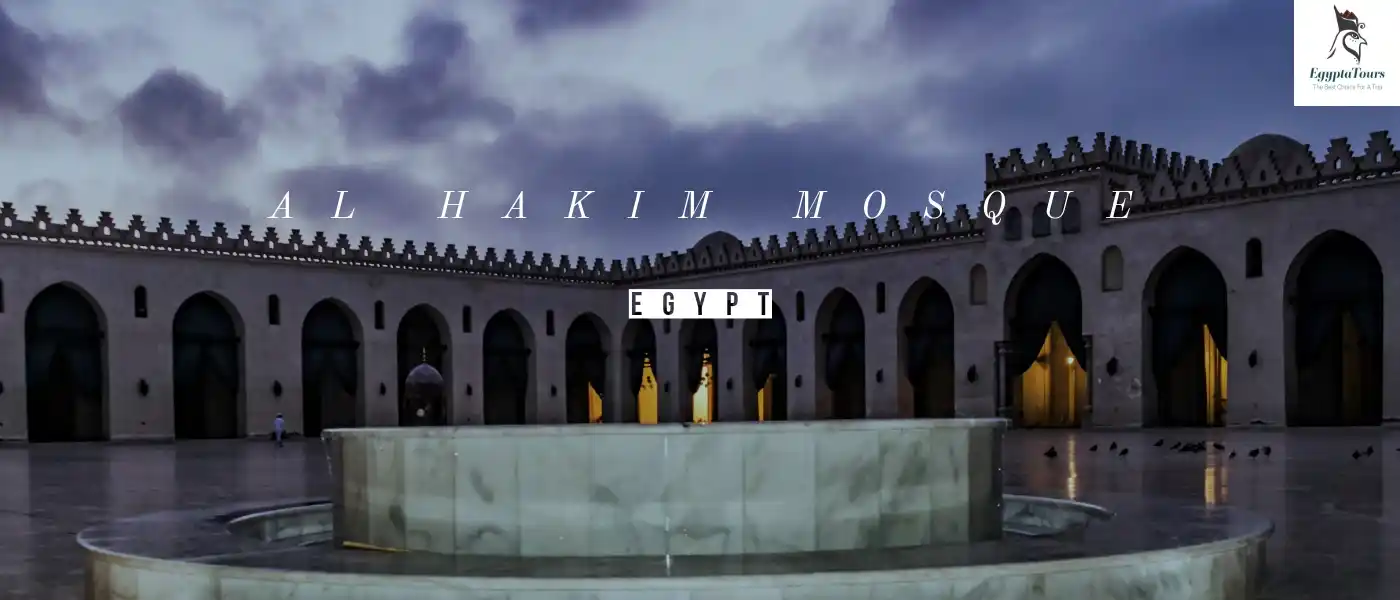
In the era of the late President Anwar Sadat, a sect of Shiite called(Bohra) asked the Egyptian government to restore the mosque by their own efforts and without interference from the country, that’s because Al Hakim Bi Amr Allah had a great place in their believes.
but this mosque do not held in which Shiite rituals at all, only pray on the Sunni way, Egypt is Sunni and not Shiite, but the role of the (Bohra) stood only at the restoration and did not exceed that.
What is clear is that the works of construction and electricity has polluted the mosque and caused a severe damages, but it is worth noting that the restoration work did not touch the two minarets, but remained the same since the construction of the mosque.
Till today, the Ministry of Antiquities and Tourism is following up on the condition of the mosque and seeks to restore continuously, and it is not allowed to enter the mosque except for worship and visitation, which maintains its condition from any bad or violation, so it remains in good condition for thousands of years.
Construction and Early fatimid vision
Twenty-three years of careful planning and building went into making this amazing structure. The idea first came from Caliph al-Aziz Billah who wanted a big mosque that showed the strength and sophistication of Fatimid rule in Egypt. Construction started in 990 CE using new building methods that combined regular brickwork with detailed stone decorations.
The building process shows how ambitious the Fatimid architects were. Workers built the foundation with carefully chosen materials brought from quarries all over Egypt. Skilled craftsmen from different parts of the Islamic world helped make decorations that would inspire mosque designs for many years.
Al Aziz and Al Hakim’s Roles in the mosque’s creation
The building of Al-Hakim Mosque started in 990 CE during the rule of Caliph Al-Aziz Billah. The prayer hall was finished early, so people could pray there while the rest of the mosque was still being built. But Al-Aziz died in 996 CE before the work was completed.
His son, Al-Hakim bi-Amr Allah, took over and continued the construction. Between 1002 and 1003 CE, he managed important stages of the building and made some key changes. He made the inside supports taller and later surrounded the minarets with large square towers.
The mosque was officially opened in Ramadan in 1013 CE, after a big ceremonial procession from Al-Azhar Mosque.
Periods of Neglect and Damage
Over the centuries, several natural disasters tested the mosque’s strength. The earthquake in 1302 caused serious damage to the minarets and parts of the roof. Sultan Qalawun began major repairs at that time, although he used different materials and methods from the original Fatimid construction.
Long periods without proper maintenance caused the decorations and parts of the structure to weaken. By the middle of the 20th century, some of the roof had collapsed and many of the detailed stone carvings were badly worn by weather. The building’s condition became very serious and threatened its survival.
Cultural Heritage and Global Significance
In recent decades, people have come to recognize the Al-Hakim Mosque as very important worldwide. The mosque is important for many reasons including its connection to major historical events and its display of great art and design from the Fatimid period.
Researchers are still learning new things about the mosque’s history and architecture. Recent studies have looked at how the mosque influenced Islamic building styles and how it affected later construction in Egypt and other parts of the Islamic world.
Best Time to Visit Al Hakim Mosque
The best time to visit Al-Hakim Mosque in Cairo is during the cooler months, from October to April. Early morning or late afternoon is the best time, with soft light for photos and cooler weather for walking.
Try to avoid the busiest times during Friday prayers if you want a quiet visit. But check the schedule if you want to join or watch the local prayers.
Tips
there are rules and rituals to enter the mosque, so it is not allowed to enter the mosque, with shoes and for women only in Islamic dress( hijab and loose clothes).
Also don’t get food and drinks with you inside the mosque so we can keep the mosque clean and tidy.
Frequently Asked Questions About Al-Hakim Mosque
Where is Al-Hakim Mosque located?
It’s in Islamic Cairo, near Bab al-Futuh, one of the city’s historic gates.
Who built Al-Hakim Mosque?
The mosque was commissioned by the Fatimid caliph Al-Hakim bi-Amr Allah and constructed between 990 and 1012.
What makes Al-Hakim Mosque architecturally unique?
Its standout features include two distinct minarets and an irregular rectangular courtyard. The entrance is adorned with a monumental stone porch.
Is Al-Hakim Mosque open to visitors?
Yes, it’s open daily from 9:00 AM to 5:00 PM. Modest attire is required, covering shoulders, arms, and legs.
Does it cost anything to visit the mosque?
No, entry is free, though some mosques in Cairo may charge entry fees for non-worship purposes.
What is the historical significance of the mosque?
It’s the fourth oldest mosque in Egypt and incorporates Fatimid architectural elements. Over the years, it has served as a stable, school, and fortress.
Has the mosque been restored?
Yes, significant restoration work was carried out in the 1980s, incorporating white marble and gold trim.
Can tourists visit during prayer times?
Visitors are generally discouraged from entering during prayer hours to respect worshippers.
What should I wear when visiting?
Dress modestly. For women, it’s best to cover shoulders, arms, and legs. Men should also avoid shorts.
What’s the best way to reach the mosque?
It’s accessible via taxis or rideshare apps in Cairo. Some tour operators include it upon request.
Is Al-Hakim Mosque part of standard Cairo tours?
It’s not always included, but tour operators often accommodate requests for its inclusion.
What other landmarks are near the mosque?
It’s close to Bab al-Futuh and located in the heart of Islamic Cairo, which has many historic sites.
Why is it called Al-Hakim Mosque?
It’s named after Al-Hakim bi-Amr Allah, the 6th Fatimid caliph who commissioned its construction.
Has the mosque been damaged over the years?
Yes, it suffered damage from a major earthquake in 1303 but was repaired later.