Dogs in ancient Egypt were simply symbols of loyalty and companions in every aspect of life.
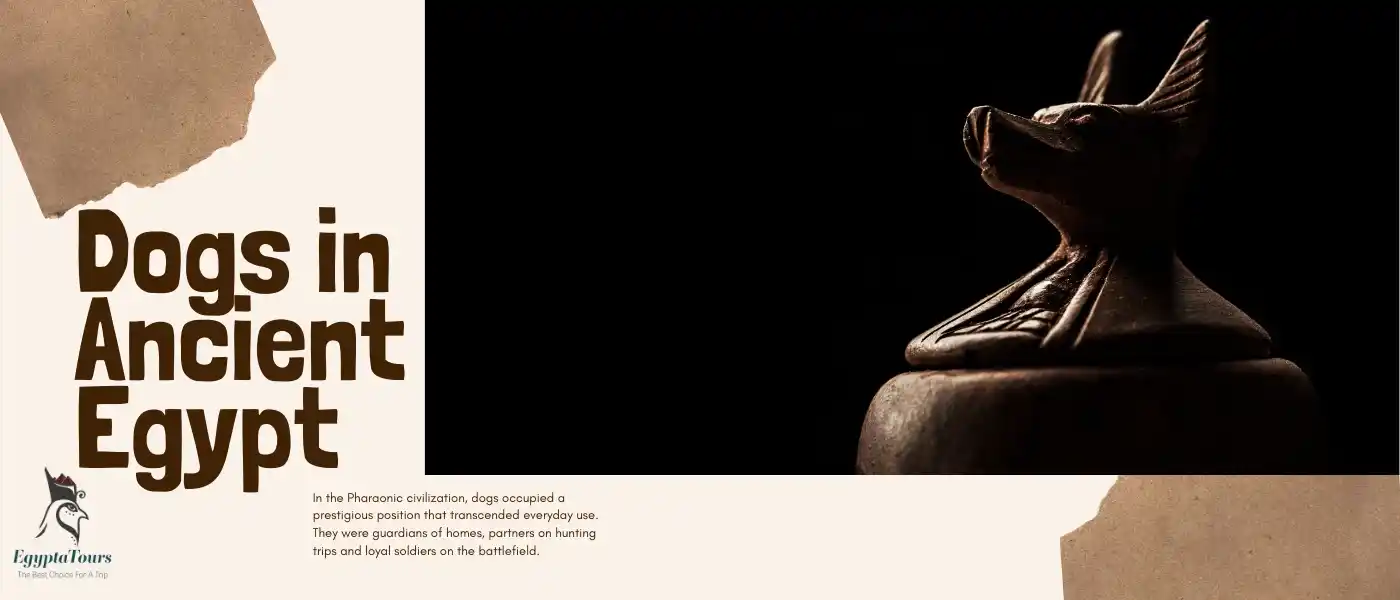
In the Pharaonic civilization, dogs occupied a prestigious position that transcended everyday use.
They were guardians of homes, partners on hunting trips and loyal soldiers on the battlefield.
The pharaohs’ love for dogs did not stop at life itself; it extended to the afterlife.
Cemeteries dedicated to them were found adjacent to the graves of their owners as if they wanted these loyal spirits to remain with them in eternity, just as they were in life.
Dogs in Ancient Egypt
Dogs-in-Ancient-Egypt-Magical-Facts-EgyptaTours
Ancient Egyptian civilization was marked by the emergence of a relationship between humans and dogs, a relationship that blended loyalty with wisdom the fragrance of myth with the spirit of everyday life.
The ancient Egyptians called dogs “Eww,” a brilliant imitation of the sound they make as if language itself derived its vocabulary from nature.
Since prehistoric times specifically during the Neolithic period dogs in ancient Egypt were not merely companions.
They were indispensable companions on hunting trips traversing the jungle in pursuit of prey guarding caravans and sleeping close to their owners, or even beside them on the same bed.
They were equally protective and companions.
Over time their role evolved, becoming a guardian of herds then a fighter on the battlefield, marching side by side with soldiers with a loyal and fearless spirit.
The stela of King Intef, one of the kings of the Eleventh Dynasty depicting him with his four dogs, is one of the most powerful archaeological testimonies documenting the place dogs held in the hearts of pharaohs.
These dogs were not ordinary, but belonged to unique breeds, the most famous of which was the Saluki with its graceful build, curled tail, erect ears, and intelligent gaze.
These dogs were favored by the elite and nobility, and were known for their amazing running speed.
It is said that their original homeland dates back to the ancient land of Punt yet their echoes still reside in the alleys of contemporary Egypt.
The names given to these creatures were full of significance and emotion. Some were known by names such as “Neb,” meaning “lord,” while others were described with noble attributes such as “faithful companion” and “bold attacker.”
Even the royal dogs were not left unsung. King Antef’s four dogs bore names representing cultural symbols including “Behty,” meaning “gazelle,” “Bahtys,” meaning “lions,” “Apicor,” which may refer to “wild boar,” and “Takeru.”
These names bear foreign origins reflecting ancient Egypt’s openness to the world around it.
The Statues of Dogs in Ancient Egypt
The-Statues-of-Dogs-in-Ancient-Egypt-EgyptaTours
Dogs in ancient Egypt were a sacred symbol, a loyal companion and an unknown soldier in the lives of the pharaohs.
The dog, the creature that inhabited the walls of temples, accompanied kings in life and death, and left a clear impact on rituals, meanings, and myths. Dogs were not merely creatures to be used, they were spirits that were revered and sometimes treated as human beings or more.
The following is an in-depth look at the manifestations of this status from several cultural and civilizational perspectives:
The Spiritual and Religious Perspective
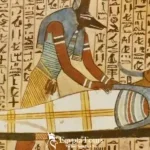
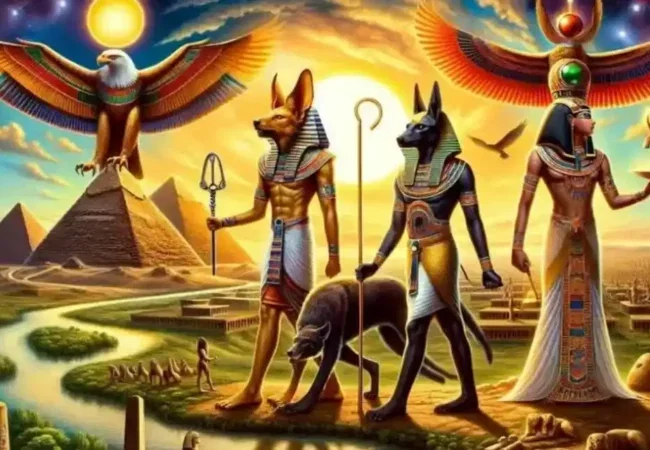
In a world filled with symbols and gods dogs in ancient Egypt were associated with Anubis the god of mummification and the dead.
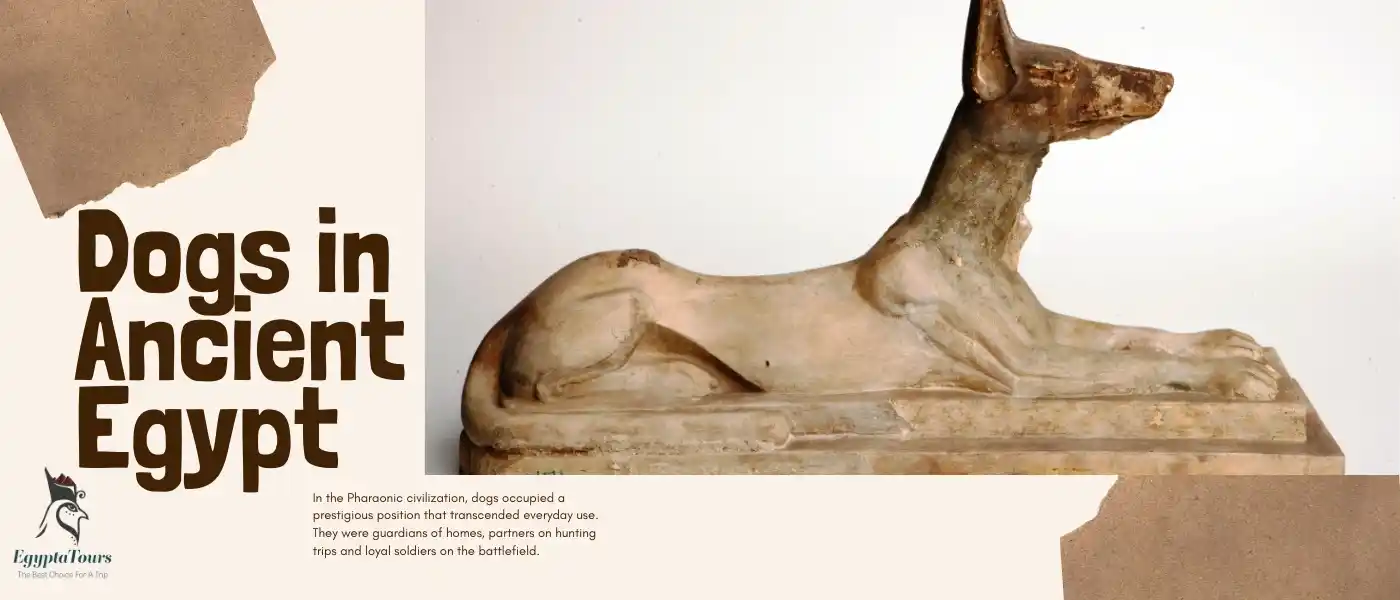
The Egyptians embodied him with the head of a dog or jackal symbolizing the faithful guardian who watched over souls on their journey to the afterlife.
This spiritual relationship elevated the dog, making it a creature with a special status in funerary rituals and a bridge between life and death.
Social and Functional Role
It was an effective partner in daily life hunting alongside its owner and protecting homes, farms, and flocks.
Its presence was not a luxury, but a necessity.
It was relied upon for a variety of tasks from guarding to assisting on hunting trips becoming an indispensable element in ancient Egyptian society.
Symbolic and Emotional Meaning
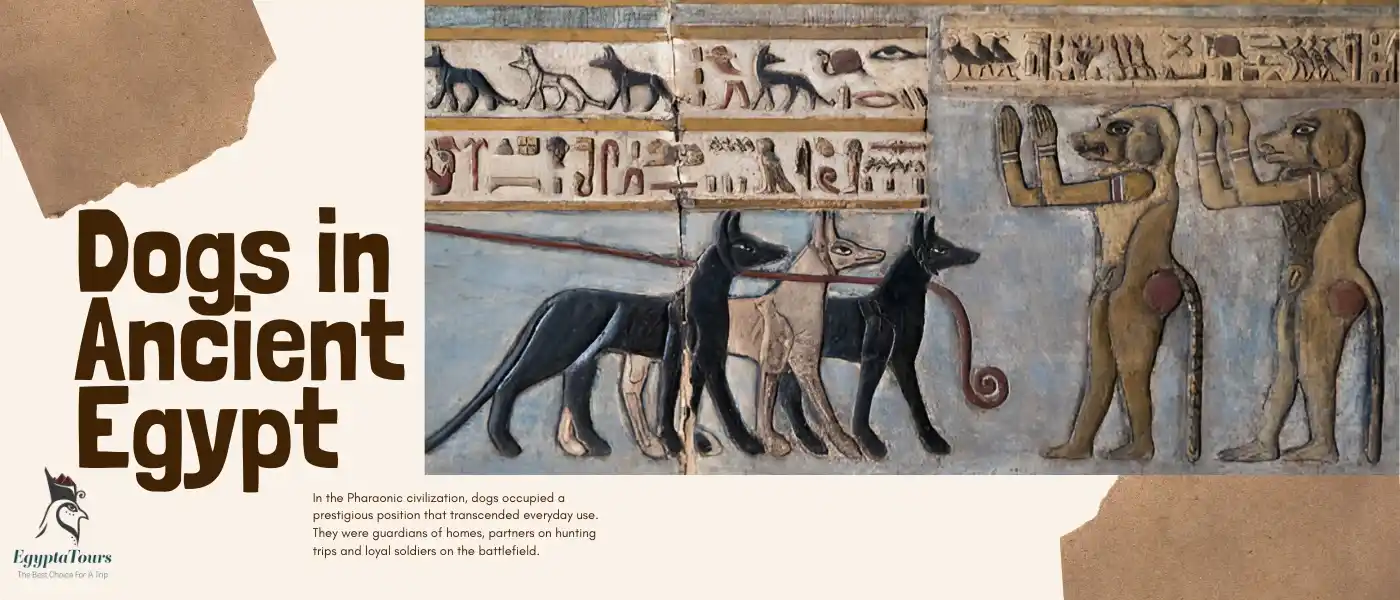
In engravings and statues the dog always appears in images exuding loyalty and courage as if the ancient Egyptians wanted to immortalize in stone the deep feelings that bound them to their canine companions.
Its presence was not merely in paintings, but rather a symbolic presence reflecting protection, loyalty, and trust.
Funeral Rituals and Graves
The esteem reached such a high level that dogs were buried with their owners as if the journey to the afterlife was incomplete without this loyal companion.
Indeed graves have been found containing the remains of dogs buried with a respect similar to that of humans a compelling testament to their place in the hearts of the ancient Egyptians.
Artistic and Pictorial Presence
Ancient artists did not neglect to depict the details of dogs in ancient Egypt with amazing precision in engravings and murals.
The ears, eyes, and even their posture were carefully carved in a faithful reflection of the importance and symbolism these creatures held in Pharaonic society not only as animals but also as symbols of strength, love, and loyalty.
Distinguishing Characteristics of the TSM Dog
In the corners of temples on the walls of royal tombs and among the inscriptions that immortalized the greatest kings of the earth there was a silent speechless yet ever-present companion.
This pet in ancient Egypt was not merely a pampered creature or a subordinate it was a partner in life and death, a symbol of courage and loyalty, and a force to be reckoned with on the battlefield.
Imagine a dog with a small head, a long mouth, and a straight face as if sculpted by time.
Its ears are erect as if guarding the silence of eternity. Its long neck indicates constant vigilance.
Its body slopes with the grace of a fighter, and its tail curls as if it were a signature of speed and pouncing.
This is not a passing description, it is the features of the ancient Egyptian dog, which hunted professionally.
Pharaonic artists were creative in depicting dogs in ancient Egypt on tomb walls not as decoration, but as recognition of their status. In the tomb of Ptah hotep you see them walking beside their master’s throne as a loyal servant.
In the tomb of Qar they appear seated as if they were the guardian of the tomb.
In the tomb of Ezen they are relaxed, as if resting after a long day of loyalty and guarding.
Each image conveys a clear message this animal is not merely a follower, but a member of the family.
Their role did not stop at hunting or guarding; they entered the battlefield alongside archers as documented by the walls of the tomb The walls of the tomb of Ankhti in Ma’alla.
The dog received military training and stood by its master in the midst of battle, never fleeing, never betraying, and never retreating, It was a silent soldier.
Dogs in Religious Life in Ancient Egypt
Dogs-in-Religious-Life-in-Ancient-Egypt-EgyptaTours
In ancient Egyptian beliefs the dog was not just a domesticated creature, but a spiritual entity linked to the world of the gods, especially the god Anubis the lord of the dead and protector of graves.
The Egyptians saw no difference between the dog and the jackal; rather, they merged them in their symbolic consciousness, and the dog became the faithful companion of the souls of the dead on their journey to the Hall of Truth where the soul stands face to face with Osiris for eternal judgment.
This spiritual connection was not merely a symbolic idea; it was actually practiced with a ceremony befitting the status of this animal.
In ancient Egypt domesticated dogs were buried in solemn rituals inside the Temple of Anubis in Saqqara as if the pure spirits granted them permission to safely pass into the afterlife.
For the Egyptians death was not the end, but the beginning of eternal life.
The dog was a companion even after death, deserving of living there as it had lived here pampered, loved, and honored.
FAQs
What dogs were present in ancient Egypt?
Several breeds of dogs were found in ancient Egypt the most important of which were the Pharaonic dog, the Saluki, the Ibizan, the Basenji, the Whippet, and the Molossian.
Did the ancient Egyptians raise dogs?
Yes, the ancient Egyptians raised dogs as pets and for practical purposes such as hunting and guarding. They valued them greatly to the point of mummifying them and burying them with their owners.
What animal was associated with Pharaonic Egypt?
Among the most prominent animals associated with Pharaonic Egypt were cats which were revered and associated with the goddess Bastet crocodiles associated with the god Sobek and dogs associated with the god Anubis.
Finally, dogs in ancient Egypt were not only animals that accompanied humans on their hunts or guarded their property, they were also noble spirits who walked alongside humans on the journey of life and death.
Their images were inscribed on the walls of tombs, their names were mentioned in funerary texts, and they occupied the front rows in burial rituals.
They were not only a part of daily life, but also partners in destiny and immortality.
Dogs in Egypt embodied the meaning of absolute loyalty and eternal protection, and thus deserved to be immortalized not only as a symbol but also as living beings to whom the ancient Egyptians accorded a status no less important than that of humans or even gods.