Ramses and The Plagues
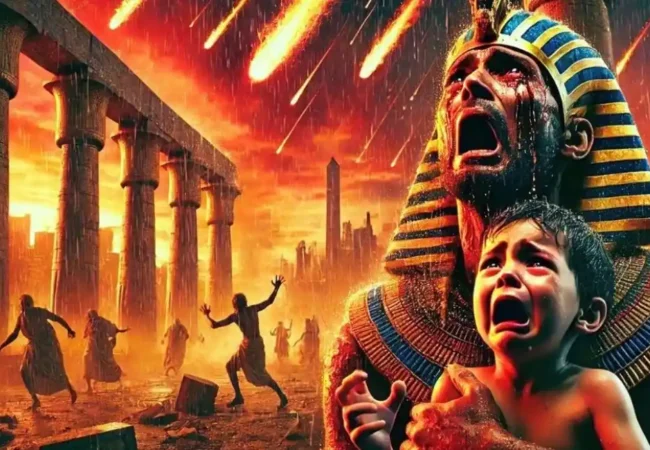
The story of Ramses and the plagues describes the plagues sent upon...



In ancient Egyptian civilization, there were many symbols that carried different and important meanings for the ancients, including the Eye of Horus, which was a very common and important symbol in Egyptian symbols and one of the symbols that carried a lot of power.

The- Ascendancy- Of -The- Sun -God.
God of the Sun
Heliopolis since the Fifth Dynasty and in Thebes during the New Kingdom
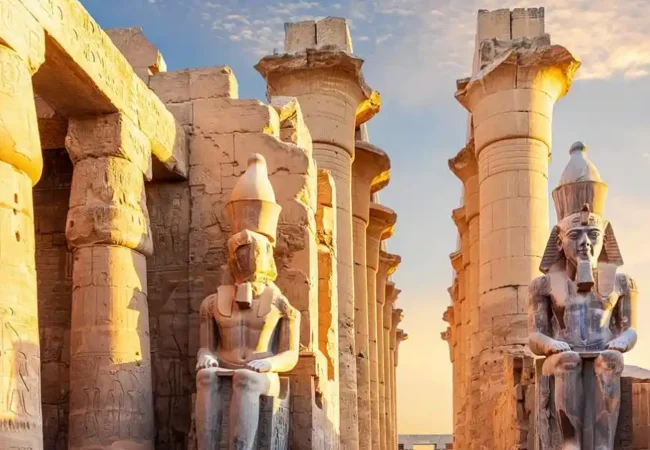
Obelisks in Heliopolis, Karnak, and the Temple of Abu Simbel.
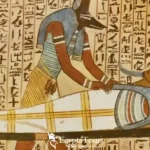
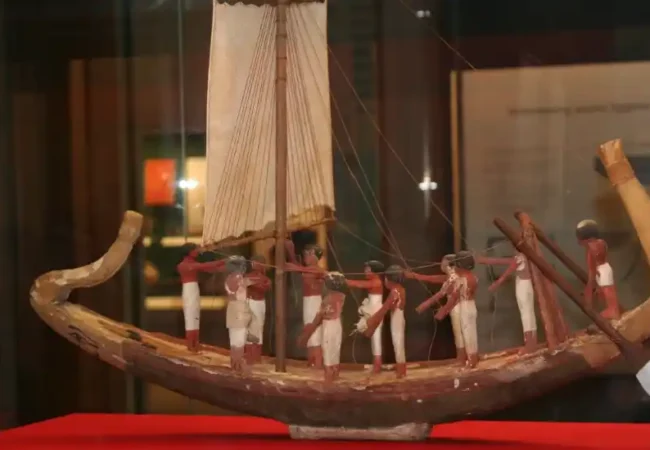
The myth of the daily cycle describes Ra’s nightly struggle against the forces of evil, represented by a large snake called Apophis, so that the sun can finally appear the next morning. In the evening, the sun god Ra rides the sacred boat and crosses the Nile underground. The god Set helps him by standing at the bow of the boat and threatening the snake to keep it away.
The worship of the sun spread since the Old Kingdom era, perhaps because the kings of the Fifth Dynasty, who ruled from 2560 BC to 2420 BC, belonged to the priests of this god (Ra), making this deity the most revered among them.
Throughout the second millennium BC, it is noticeable how the name Ra became added to the name of almost every god (Khnum-Ra, Sobek-Ra, Montu-Ra… etc.), attempting to add new power to the capabilities of these gods in the form of the ram, crocodile, and bull.

The- Origin- Of -The- Eye -Of -Ra
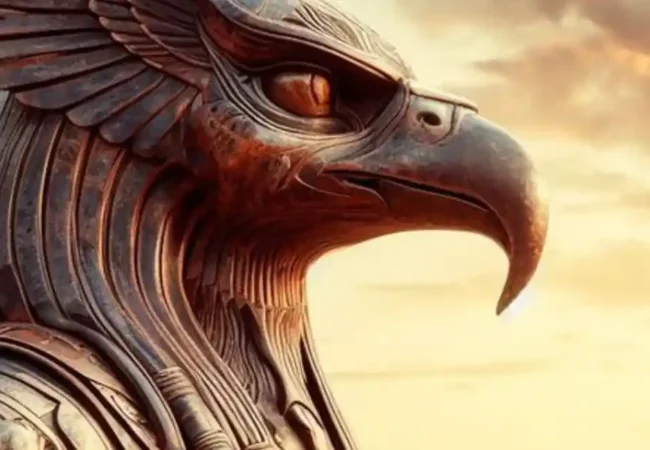
The ancient Egyptians considered the sun and the moon to be the eyes of a particular god. The right eye is the Eye of Ra-Horakhty, and the moon is the left eye. Sometimes they say that the moon is the Eye of Horus and Ra is the sun, and they consider him the main solar god in ancient Egyptian religion. The two eyes are symbolized by the Wedjat, which is a well-drawn and decorated human eye with the facial markings of a falcon,
indicating Horus. It is said that the eyes of Horus were distinguished as the lunar Eye of Horus and the solar Eye of Ra, but there is controversy over this, and the functions of the two eyes often overlap. One of the controversies on this point is about the loss of both Horus and Ra of their eyes.
The form of the Eye of Ra is represented by the yellow and red sun disk in ancient Egyptian art, as the ancient Egyptians revered the sun for its great importance to them. This is one of the most common symbols, and the Egyptians depicted it as taking the shape of a sphere. The sun’s rays appear above the heads of the gods associated with the sun, as well as Ra. Sometimes the sun god appears in different forms inside the disk shape, as if it surrounds him from all sides. The disk is called Ra’s daughter in Egyptian texts,
and the eye is the destructive and evil aspect of Ra’s power, symbolized by the heat of the sun. They symbolize this heat with the arrows that the god shoots to destroy the forces of evil. The Uraeus is a symbol of this dangerous power, and the sun disk appears with one or two Uraei coiled around it, representing the eye as a great and dangerous force that surrounds the god and protects him from enemies, spitting flames.
It is said that sometimes four Uraei surround Ra’s boat, and they are collectively called Hathor of the Four Faces, representing the vigilant eye in all directions.
Ra’s enemies are the forces of chaos that threaten Ma’at, the cosmic order. These forces include humans who spread chaos, as well as gods and cosmic powers like Apep, who embodies chaos. It is said that Ra and the gods with him in the boat fight them every night.
The malevolent gaze of Apep’s eye is a very powerful weapon against Ra, and Ra’s eye is one of the few powers that can counter it. The Coffin Texts allude to a famous story that Apep was trying to steal or harm Ra’s eye during the battle, and in other accounts, Apep is destroyed by Ra’s eye’s fiery breath. This task is similar to the Eye of Horus, which is tasked with warding off evil.

Ra -And -The -Myth -Of -The -Solar -Cycle
If you think that the Eye of Ra only repels the evil of humans and forces, you will know that it also extended its aggression to gods who are not considered evil. Some texts have indicated that Ra swallows many gods, who are referred to the stars, at nightfall, and they disappear at sunrise, then absorbs their power, renewing his life, and releases them again at night. The eye helps in this process, slaughtering the gods for Ra to eat, and the red light of dawn represents the blood resulting from this slaughter.
And in the Book of the Heavenly Cow, there is a legend called the Destruction of Humanity, which says that Ra uses his eye as a weapon against humans who rebel against his wealth, sending Hathor in her evil manifestation as the lioness goddess Sekhmet to slaughter them. After she does so, he decides to prevent her from killing any other human being, and then pours red beer on the ground. The eye goddess drinks it, thinking it is blood, and when she gets drunk, she returns to Ra without noticing her victims, and returns to a harmless form.
And with the absence of the sun, Ra loses a large part of his power, making him more vulnerable to his enemies. Sometimes, a solar eclipse occurs with the absence of the eye and the weakening of Ra’s power, as the eye wanders in a distant land, taking the form of a wild and difficult-to-control animal, like the force of chaos. To restore order, one of the gods goes to retrieve it. The god Anhur searches for the eye,
which takes the form of the goddess Menhit, who used his skills as a hunter. In other sayings, Shu is the one who went to search for the eye, and Thoth acted as a messenger and mediator in the Egyptian pantheon,
searching for the lost goddess. This role paralleled his role in the Osiris myth, as he was the one who restored Horus’ lost eye. In the Papyrus of the Cycle of Bremen-Rhind, Thoth persuaded the Eye of Ra to return by lecturing it, enticing it, and telling entertaining stories. However, sometimes his attempts fail, and the eye transforms into a fire-breathing lioness, causing Thoth to jump.
When it calmed down, the god accompanied it back to Egypt, and its return marks the beginning of the flood and the new year. The Egyptians linked the change in the colors of the sky to the pacification of the eye.
The return of the eye brought fertility and paved the way for her subsequent marriage to Montu and the birth of their mythical child, a form of Horus. The temple festival celebrated the new year with her homecoming, drinking, and dancing, representing the goddess’s intoxicated state after being pacified.
when the eye of Ra returned to its role in the solar cycle, partnering with the god who had brought it back. Mehit became the consort of Anhur, Tefnut paired with Shu, and Thoth’s wife was Nehemtawy.
The eye goddess gave birth to a child who became the new solar god, and the goddess transformed into a peaceful form, renewing the solar god. The eye goddess appeared with a dual nature, as the Egyptians saw intense emotions of love and anger, making her like a cat or a lioness at the same time.
Other goddesses like Sothis, the divine form of the star of the same name, and Ma’at, the embodiment of the cosmic order, were associated with the eye because they were said to be the daughters of Ra.
Even Isis, who is usually the companion of Osiris rather than Ra, or Ishtar, the goddess of fertility and war who was imported from Canaan rather than being native to Egypt, can be equated with the solar eye.
Sekhmet appeared as a woman with the head of a lioness, wearing the sun disk and the Uraeus. Her form was equated with many goddesses, whether famous like Hathor or obscure like Mistet, a lioness goddess who appears in a single known inscription.
The ancient Egyptians also associated the sun with goddesses who took the form of a leopard, and many lioness goddesses like Sekhmet, Menhit, and Tefnut, who were likened to the eye.
Bastet was depicted as a domestic cat and a lioness, representing both the peaceful and violent aspects of the eye.
There was also Mut, the wife of the god Amun, who was first given the title of Eye of Ra in the late New Kingdom, and her aspects related to the eye increased over time. Mut can also appear in the form of a lioness and a cat.
Two goddesses associated with the eye often appear together, representing different aspects of the eye. The dual goddesses often represent the creative and aggressive aspects of the eye’s personality, as Hathor and Sekhmet sometimes do.
Wadjet and Nekhbet could represent Lower Egypt and Upper Egypt, respectively, wearing the red and the white crowns that represented the two lands.
Similarly, Mut, whose main center of worship was in Thebes, can serve as an Upper Egyptian counterpart to Sekhmet, who was worshipped in Memphis in Lower Egypt.
These goddesses and their iconography often blend together. Many combinations like Hathor-Tefnut, Mut-Sekhmet, and Bastet-Sothis appear in Egyptian texts. Wadjet can sometimes be depicted with the head of a lioness instead of a cobra, Nekhbet can take the form of a cobra as a counterpart to Wadjet, and many of these goddesses wear the sun disk on their heads, sometimes with the addition of the Uraeus or the cow horns from Hathor’s typical headdress.
Goddesses of the cobra often represent the Eye of Ra, such as Wadjet, who is a protective goddess of Lower Egypt and is closely associated with the royal crowns and the protection of the king. There are also other cobra goddesses associated with the eye, including the fertility goddess Renenutet, the magic goddess Weret-Hekau, and Meretseger, the divine protector of the tombs near the city of Thebes.
The goddesses associated with the eye were not limited to feline and snake forms. Hathor, who represents the goddess of the sun and fertility, often appears in the form of a cow, as does the similar eye goddess Mehit-Weret. Nekhbet, the vulture goddess, was closely associated with Wadjet, the eye, and the crown of Egypt.
Many eye goddesses appear primarily in human form, such as Neith, a war goddess who is sometimes said to be the mother of the sun god, and Satet and Anuket, who were associated with the cataracts of the Nile and the flood.
It helped push negative energy away while restoring balance to life… Many pharaohs used it as a way to protect themselves while also destabilizing the government.
The eye represented the destructive power of the sun, it represents power and protection, and also represents Ra’s destructive and evil power, which protects him from enemies and helps him in his nightly journey to the underworld. It was also responsible for protecting ordinary people and kings, and was also associated with the flood and fertility, as when it returned, it brought them and was celebrated.
It protected the temples, as it is the guardian of the temple, and was considered the mother, wife, and daughter of the god Ra, and was associated with the royal crowns and the symbol of light and darkness.
The Eye of Ra is known for its great power. At least most myths say so. And for the majority, we can see that this is true. The Eye of Ra is known for the fact that it restores balance while eliminating all negative energy.
The pharaohs used it to stay safe and protect themselves while keeping enemies away for as long as possible. You have to be careful if you choose to summon this energy. It can sometimes become violent and out of control.
Many temple rituals invoked eye goddesses to defend the temple or its resident god. Texts of these rituals often specifically mention a group of four defensive Uraei, sometimes identified with various groups of goddesses associated with the eye, but also considered manifestations of “Hathor of the Four Faces”, whose protection extends to the solar bark and specific locations on earth.
The Eye of Ra was also invoked to protect ordinary people. Some protective amulets in the form of the Eye of Horus bear the form of a goddess on one side, likely referencing the relationship between the Eye of Horus and the Eye of Ra, invoking their power for personal protection.
The Eye of Ra held great religious significance in ancient Egypt, representing the power of the sun god Ra. The eye was considered a part of Ra’s power and was invoked to protect the pharaoh, sacred places, and also ordinary people.
The Eye of Ra was associated with the harsh heat of the sun, which was seen as a powerful weapon against the wicked, whether gods or humans. It was also considered a symbol of protection and power, and was invoked to protect Ra himself from his enemies.
The Eye of Ra played a significant role in the reproductive role of the sun god, representing the emergence of the sun from the horizon every morning with the birth of Ra. The eye was considered the womb and mother of the child form of Ra, and was also considered the consort of the adult Ra.
The Eye of Ra was invoked in many religious rituals and was considered a symbol of power and protection. It was also considered an independent goddess and was worshipped in many temples in ancient Egypt.
The Eye of Ra also was considered a feminine counterpart to Ra’s masculine creative power, and was part of a broader Egyptian tendency to express creation and renewal.
The importance of the eye extends to the afterlife as well. Egyptian funerary texts show the connection of the deceased souls with Ra in his nightly journey through the Duat, the world of the dead, and with his rebirth at dawn. In these texts, the eye and its various manifestations often appear, protecting and generating the dead as they do for Ra.
A spell in the Coffin Texts says that Bastet, as the eye, lights the Duat like a torch, allowing the deceased to pass safely through its depths.

The- Worship -Of -The -Eye- Of -Ra
The worship of the Eye of Ra was an important aspect of ancient Egyptian religion; they had various rituals and ceremonies performed to honor this powerful symbol. The return of the eye to Egypt was celebrated during the Ptolemaic and Roman periods, marking the beginning of the new year and the flooding of the Nile.
The Egyptians built many temples along the river, featuring images of animals and dwarfs rejoicing at the arrival of the goddess. The return of Mut to her temple in Thebes was one such celebration, while in the temple of Montu, the wife of Montu, “Rait-Tawi”, was equated with Hathor and the Eye of Ra.
In other cities, two goddesses were worshipped as aggressive and peaceful forms of the eye, such as Aiyet and Nehemtawy in Herakleopolis or Satet and Anuket in Aswan.
In another temple ritual, the pharaoh played a ceremonial game honoring the eye goddesses Hathor, Sekhmet, or Tefnut, striking a ball representing the eye of Apophis with a stick made from a type of wood said to have sprouted from the Eye of Ra.
The ritual represents the battle of the Eye of Ra with its greatest enemies.
The violent form of the eye was also invoked in protective rituals and symbolism. The Uraeus on royal and divine crowns indicates the role of eye goddesses as protectors of gods and kings. For similar reasons, Uraei appear in rows above temples and other structures, surrounding and symbolizing protection from hostile forces.
Additionally, some magical spells from the New Kingdom involve placing clay models of Uraei around a house or room, invoking the protection of the solar Uraeus as in temple rituals. These Uraei are meant to ward off evil spirits and bad dreams, with the spell stating that the models have “fire in their mouths”.
Models like those in the spells have been found in the remains of ancient Egyptian cities, including vessels in front of their mouths where fuel could be burned, although known examples show no signs of burning. Whether literal or metaphorical, the fire in the mouths of the cobras, like the flame spat by the Eye of Ra, was meant to dispel the darkness of night and burn dangerous creatures that move within it.
A depiction of Uraei brought sun disks is found on the upper part of a wall in the mortuary temple of Hatshepsut. The eye was considered the mother, wife, and daughter of the god Ra was invoked in royal ideology. Pharaohs took on the role of Ra, and their wives were associated with the eye and its equivalent goddesses.
The solar disks and Uraei incorporated into the crowns of queens during the New Kingdom reflect this mythical relationship. Priestesses who served as ceremonial “wives” of specific gods during the Third Intermediate Period (c. 1059-653 BCE), such as the wife of the god Amun, had a similar relationship with the gods they served.

The -Difference -Between- The -Eye -Of -Ra & -The -Eye -of- Horus- & -The- Eye- Of -Atum
The eye of ra acts independently of its owner, “Ra”, as it can separate from him and go on a journey to the dimensions of the universe to carry out the task of eliminating “Ra’s enemies”, which are the forces of chaos and darkness in the universe. The “Eye of Ra” was placed on the foreheads of Egyptian kings in the form of the cobra (Wadjet).
The Eye of Horus was the eye that Horus lost during his struggle with “Set”, and then recovered it, and Thoth treated it after it was injured. This eye, which some researchers have interpreted as the moon.
As for the Eye of Atum, it is considered similar to the “Eye of Ra”, which is the eye that Atum sent to search for his children, “Shu” and “Tefnut”, when he lost them and could not find them.
However, a look at the myths of the creation of the universe in ancient Egypt reveals that the eye here is not the sun or the moon, because the intended eye was present before the creation of the sky and the earth, and therefore cannot be the sun or the moon.
In the Coffin Texts, a text was found in which the eye speaks about itself, saying: “I am the eye… the envoy of the one lord… there is nothing like me… I came into existence before the heavens and the earth were created”.
This text describes Hathor, who was sent by Atum to search for “Shu” and “Tefnut” after they suddenly disappeared from existence, at the beginning of the stages of creation of the universe. In this text, there is evidence that the “eye” was present before the creation of the sky and the earth, and therefore cannot be the sun or the moon.
It helped push negative energy away while restoring balance to life… Many pharaohs used it as a way to protect themselves while also destabilizing the government.
The eye represented the destructive power of the sun, it represents power and protection, and also represents Ra’s destructive and evil power, which protects him from enemies and helps him in his nightly journey to the underworld.
It was also responsible for protecting ordinary people and kings, and was also associated with the flood and fertility, as when it returned, it brought them and was celebrated. It protected the temples, as it is the guardian of the temple, and was considered the mother, wife, and daughter of the god Ra, and was associated with the royal crowns and the symbol of light and darkness.
The Eye of Ra holds great religious significance in ancient Egypt, representing the power of the sun god Ra. The eye was considered a part of Ra’s power and was invoked to protect the pharaoh, sacred places, and ordinary people.
The Eye of Ra was associated with the harsh heat of the sun, which was seen as a powerful weapon against the wicked, whether gods or humans. It was also considered a symbol of protection and power, and was invoked to protect Ra himself from his enemies.
The Eye of Ra played a significant role in the reproductive role of the sun god, representing the emergence of the sun from the horizon every morning with the birth of Ra. The eye was considered the womb and mother of the child form of Ra, and was also considered the consort of the adult Ra.
The importance of the eye extends to the afterlife as well. Egyptian funerary texts connect the deceased souls with Ra in his nightly journey through the Duat, the world of the dead, and with his rebirth at dawn. In these texts, the eye and its various manifestations often appear, protecting and generating the dead as they do for Ra.
A spell in the Coffin Texts says that Bastet, as the eye, lights the Duat like a torch, allowing the deceased to pass safely through its depths.
The worship of the Eye of Ra was an important aspect of ancient Egyptian religion, with various rituals and ceremonies performed to honor this powerful symbol. The return of the eye to Egypt was celebrated during the Ptolemaic and Roman periods, marking the beginning of the new year and the flooding of the Nile.
The Egyptians built temples along the river, featuring images of animals and dwarfs rejoicing at the arrival of the goddess. The return of Mut to her temple in Thebes was one such celebration, while in the temple of Montu, the wife of Montu, “Rait-Tawi”, was equated with Hathor and the Eye of Ra.
Ra’s enemies are the forces of chaos that threaten Ma’at, the cosmic order. These forces include humans who spread chaos, as well as gods and cosmic powers like Apep, who embodies chaos. It is said that Ra and the gods with him in the boat fight them every night. The malevolent gaze of Apep’s eye is a very powerful weapon against Ra, and Ra’s eye is one of the few powers that can counter it.
The Coffin Texts allude to a famous story that Apep was trying to steal or harm Ra’s eye during the battle, and in other accounts, Apep is destroyed by Ra’s eye’s fiery breath. This task is similar to the Eye of Horus, which is tasked with warding off evil.
Goddesses of the cobra often represent the Eye of Ra, such as Wadjet, who is a protective goddess of Lower Egypt and is closely associated with the royal crowns and the protection of the king. There are also other cobra goddesses associated with the eye, including the fertility goddess Renenutet, the magic goddess Weret-Hekau, and Meretseger, the divine protector of the tombs near the city of Thebes.
The eye of ra acts independently of its owner, “Ra”, as it can separate from him and go on a journey to the dimensions of the universe to carry out the task of eliminating “Ra’s enemies”, which are the forces of chaos and darkness in the universe. The “Eye of Ra” was placed on the foreheads of Egyptian kings in the form of the cobra (Wadjet).
The Eye of Horus was the eye that Horus lost during his struggle with “Set”, and then recovered it, and Thoth treated it after it was injured. This eye, which some researchers have interpreted as the moon, is a mistaken interpretation.
As for the Eye of Atum, it is considered similar to the “Eye of Ra”, which is the eye that Atum sent to search for his children, “Shu” and “Tefnut”, when he lost them and could not find them.
However, a look at the myths of the creation of the universe in ancient Egypt reveals that the eye here is not the sun or the moon, because the intended eye was present before the creation of the sky and the earth, and therefore cannot be the sun or the moon.

Explore our top-rated Egypt travel packages and embark on an unforgettable journey. From the Pyramids of Cairo to the magical temples of Luxor, Aswan, and Abu Simbel, discover expertly curated tours designed for your perfect Egyptian adventure