






Ancient Egyptian Masks
Ancient Egyptian masks are one of the most important symbols of Pharaonic civilization. They were not merely pieces of art used for decoration or luxury; they were a profound embodiment of highly refined religious and spiritual beliefs.
The ancient Egyptians believed that the soul needed a means to recognize the body in the afterlife and so they made masks a means of protection and manifestation at the same time.
These masks were meticulously crafted from a variety of materials, such as gold wood, plaster, and linen, and bore delicate features that mimicked the face of the deceased adorned with sacred symbols and elements.

Ancient-Egyptian-Masks-EgyptaTours
Ancient Egyptian masks were among the most important symbolic elements as they were placed on the face of the deceased as a means of ensuring that the soul (ka’a) would regain its body in the afterlife.
The ancient Egyptians believed that the face remained the center of identity and so masks were designed to resemble the deceased’s features helping to distinguish them in the afterlife and protect them from demons during their journey to the eternal fields.
Masks were usually made of fabric covered with plaster or cement and decorated with sacred motifs. High-status nobles and kings sometimes wore gold or silver veils reflecting their desire to transform into divine beings who would enjoy immortality and protection.
Masks were made from a variety of materials throughout the Pharaonic era ranging from wood and painted plaster to cartonnage made from layers of linen or papyrus covered with plaster and paint, and even blown gold and silver decorated with semi-precious stones.
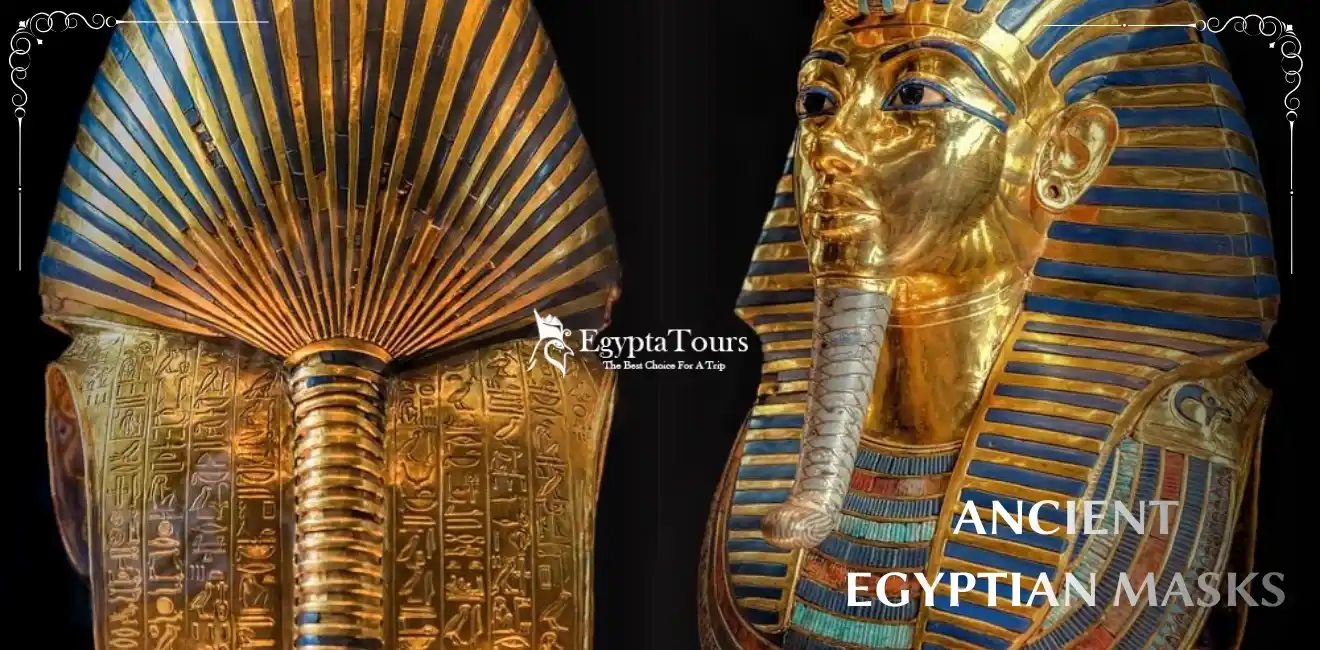
This selection was linked to the deceased’s social and economic status. Cartonnage was widely used among the middle classes while royal masks were made of pure gold such as the “Mask of Tutankhamun,” which weighed over 10 kg and was inlaid with gems lapis lazuli, and carnelian. It included inscriptions from the Book of the Dead intended to protect him from the evils of the afterlife.
The Golden Mask of Tutankhamun
The-Golden-Mask-of-Tutankhamun-EgyptaTours
The mask of Tutankhamun is a precious masterpiece from the New Kingdom. It was made of two main layers of gold sheets each 1.5 to 3 millimeters thick making it both solid and lustrous.
It weighed approximately 10.23 kg (22.5 pounds) a finding confirmed by X-ray analysis which revealed it to be made of 23-karat gold plated with two layers of pure gold of different carats.
Its features and small facial lines were refined including eyes of quartz and obsidian eyebrows of lapis lazuli, and hair covered with glass representing the nemes bands. Its decorations included a hand and amulets in the form of a cobra and the nekor (eagle) symbolizing the unity of the kings of Upper and Lower Egypt.
The mask was not merely a physical covering it was a spiritual link between the king and the afterlife. Chapter 151 of the Book of the Dead is engraved on the back (and on the shoulders) containing formulas for a protection pact and guiding the soul to the eternal heavens.
It depicts the king’s face as identified with the god of resurrection Osiris, a place of divinity and immortality.
The Egyptians believed that the preserved features of the deceased’s soul (the ba and the ka’) could reside there, find their body, and be resurrected to the afterlife. Gold considered the “skin of the gods,” and semi-precious stones were used making the mask an eternal royal talisman that perfectly sealed the pharaoh’s career.
The Evolution of Egyptian Mask-Making Techniques
The-Evolution-of-Ancient-Egyptian-Masks-EgyptaTours
Ancient Egyptian masks began to be used from the end of the Old Kingdom. They were made from layers of cloth covered with a thin layer of stucco used to fix facial features to the mummy. With the advent of the Middle Ages (c. 2000–1700 BC) a significant development in the technique emerged.
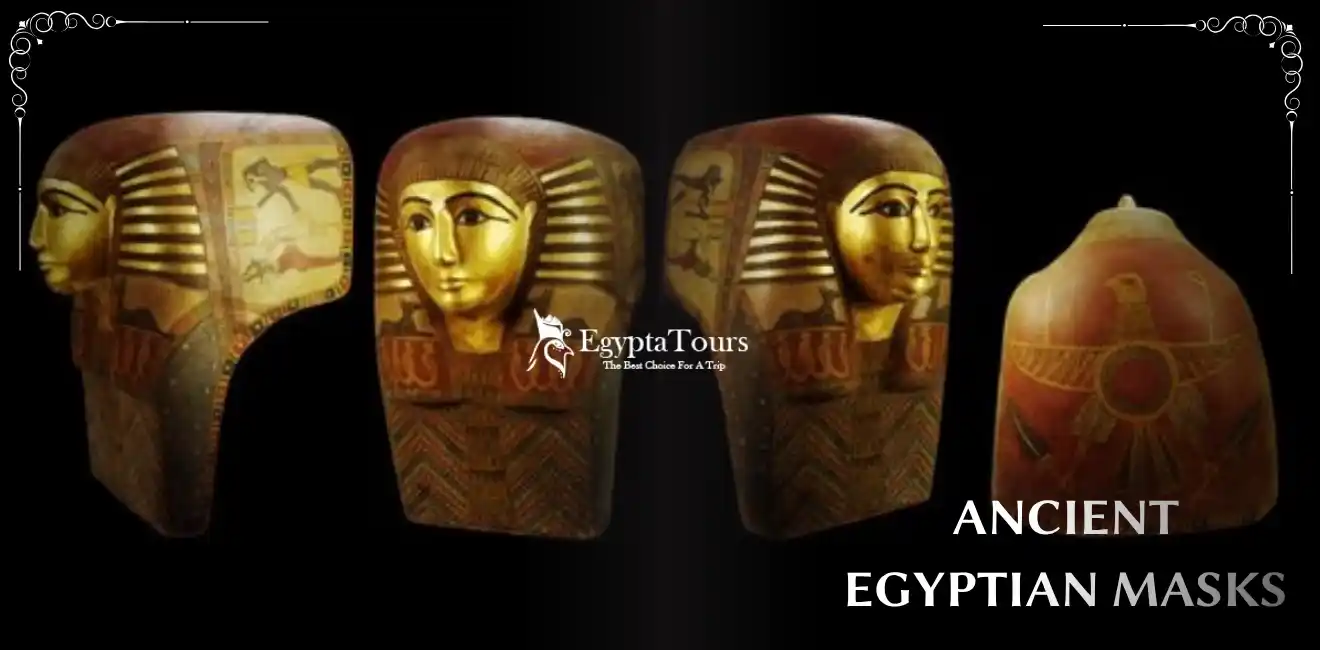
Masks were made using a technique known as “cartonnage,” where layers of linen or papyrus were glued together then covered with a layer of stucco before being shaped and painted.
This technique was widespread until the Roman era and was characterized by its ease of shaping the thickness of the material, and its flexibility which allowed for the production of masks that covered the head chest, and legs in a complete style.
With the advent of the New Kingdom and the Late Period the Egyptians began to use precious metals to make masks especially for kings and nobles.
Masks of gold and silver appeared working using precise beating and cold-working techniques often incorporating semiprecious stones such as lapis lazuli carnelian, and colored glass.
As in the mask with the perfect face in the center representing the king’s influence and connection to the sun god Ra cartonnage continued to be used during the Ptolemaic and Roman periods, but it was embellished and covered with fine gold leaf on the faces adding a luxurious touch as illustrated in Roman-era masks with gilded faces and shiny glass.
Mural Masks and Religious Rituals

Mural-Masks-and-Religious-Rituals-EgyptaTours
In Pharaonic tombs scenes were painted on the walls depicting priests wearing ancient Egyptian masks representing deities such as Anubis or Hathor during funerary rituals.
In some reliefs such as the “Opening of the Mouth” ceremony priests wear wolf-headed or dog-faced masks representing Anubis to protect the sacred body and enable the deceased to regain his five senses in the afterlife.
This symbolic reincarnation strengthened the bond between the human and the divine and confirmed the deceased’s acceptance before the divine assembly.
Ancient Egyptian masks were an effective means of embodying the divine on earth during rituals. When a priest wore the Anubis mask the priest’s body became a symbol of the divine. A manifestation of the god overseeing the mummification of the dead and the offering of sacrifices and spells to ensure the soul’s safe passage to the afterlife.
This practice is believed to have persisted throughout the ages appearing repeatedly in the New Kingdom and beyond demonstrating the persistence of the spiritual purpose behind the use of mural and ritual masks.
Mummy Masks in Ancient Egypt
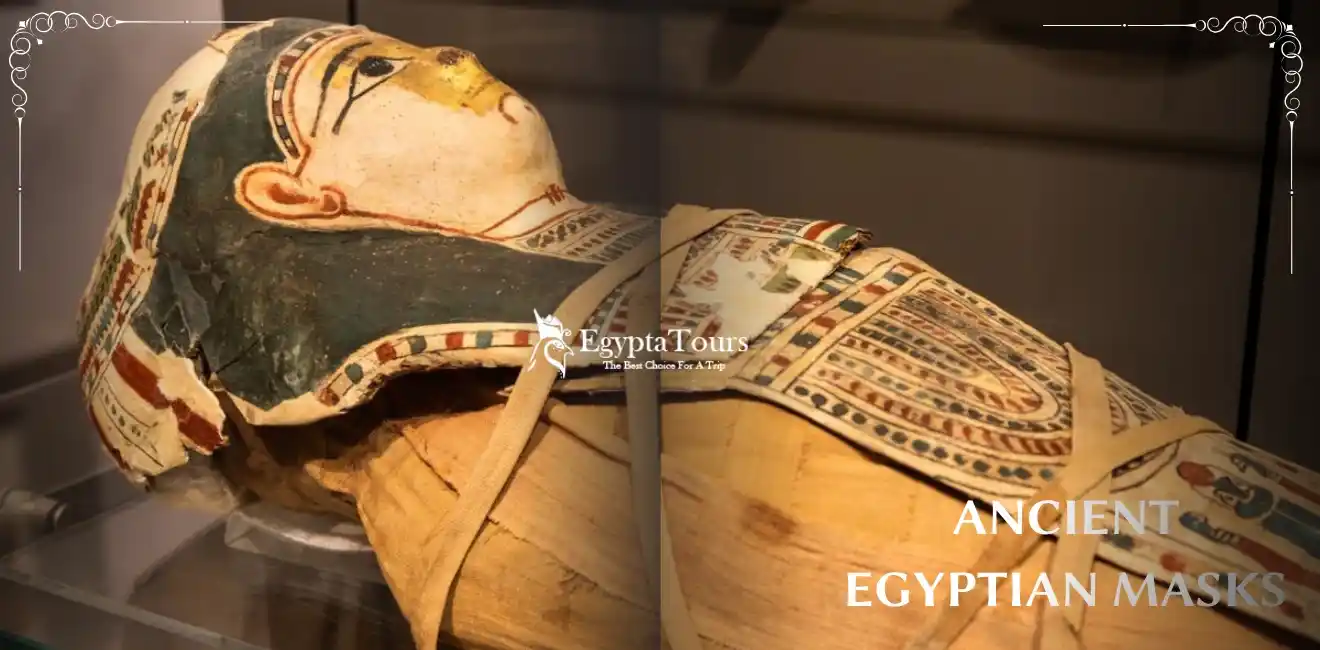
Ancient-Egyptian-Masks-For-Mummies-EgyptaTours
Mummy masks were designed to cover the head and sometimes the chest with the aim of protecting the body both physically and magically during its journey to the afterlife.
They were known since the late Old Kingdom and were used extensively from the Transitional Period onward The first often made of linen covered with plaster (cartonnage) was then painted or gilded to perfectly represent the face enabling the soul (ba and ka’) to recognize the body in the afterlife.
Spells such as the Justification 151 of the Book of the Dead were also inscribed on them which direct visual perception and ward off evil spirits.
Ancient Egyptian masks were composed of several layers of linen or papyrus bonded to plaster using techniques similar to papier-mâché. Cartonnage is a lightweight moldable material, covered with a layer of coloring or gold leaf.
During the Ptolemaic and Roman periods gilding increased, and gold skins glass, and semiprecious stones were added to represent the divine body. Gold symbolized the skin of the gods, and blue represented divine hair (lapis lazuli). Symbols such as the sun disc the winged scarab, and the aureus serpent also appeared as protection and a declaration of the deceased’s affiliation with the gods.
Masks in the Roman Era
During the Ptolemaic and Roman periods the cartonnage technique (layers of linen or papyrus covered with plaster) continued its traditional role in the manufacture of funerary masks with developments in manufacturing and decoration methods.
These masks were formed using internal molds covering the head and torso then covered with plaster to strengthen the structure.
They were later decorated with paint or gilding in patterns combining traditional Egyptian symbols with Hellenistic styles. This combination resulted in an abundance of design diversity.
Some ancient Egyptian masks feature Greek herb and flower motifs or Roman hair styles alongside symbols such as the Eye of Horus and the winged scarab.
In conclusion, ancient Egyptian masks were an important element in funerary and religious rituals representing a bridge between life and death earthly life and spiritual immortality.
These masks were designed with varying materials and techniques over the ages from plaster and linen to cartonnage from metallic gold to semi-precious materials to protect the body and ensure the soul’s recognition of its features.
These masks were based on spells from the Book of the Dead to ensure safety and security in the afterlife.
Witness the Magnificent Masks of Ancient Egypt on Your Unforgettable EgyptaTours Journey
Step into the timeless world of the pharaohs and uncover the mystical beauty of Ancient Egyptian masks, powerful symbols of divinity, identity, and the afterlife. These sacred artifacts were more than funerary objects. They served as spiritual gateways, guiding the soul through the underworld toward eternal life.
From the iconic golden mask of Tutankhamun to the intricately decorated cartonnage masks of nobles and priests, each piece reveals the deep spiritual beliefs of a civilization devoted to immortality, cosmic balance, and transformation.
Join EgyptaTours on a once-in-a-lifetime Egypt tour and Nile cruise where you will explore ancient tombs, grand museums, and witness these breathtaking masterpieces up close.
These masks reflect Egypt’s unmatched artistry and deep connection to the divine.
Book your magical journey today and experience the timeless legacy of Ancient Egypt in all its glory.
FAQS
What was the purpose of placing a mask on a mummy’s face?
Masks were used to ensure the soul (ba and ka’) recognized the deceased’s body and enabled it to use its senses in the afterlife. They were also a means of protecting the soul from evil during its journey.
What were the common materials used to make these masks?
Masks were made of linen or papyrus covered with plaster (cartonnage) in the middle classes while gold, silver, and semi-precious stones such as lapis lazuli and carnelian were used for masks of nobles and royalty.
Was there a mask specifically designated for a specific king?
Yes, the most important of them is the mask of Tutankhamun (1323 BC) made of gold sheets decorated with stones and a nemes shawl painted with the symbols of the snake and the eagle on which he placed spells from the Book of the Dead to ensure his safe arrival to the afterlife.
About EgyptaTours

EgyptaTours is a name synonymous with trust, excellence, and unforgettable travel experiences, proudly standing as one of the leading travel agencies in Egypt. Renowned for its deep expertise, personalized service, and carefully crafted itineraries, EgyptaTours serves as the ultimate gateway to discovering Egypt in its most authentic and inspiring form.