





5 Powerful Secrets of Ancient Egyptian Offering Table
In ancient Egyptian civilization funeral rituals were of great importance such as the ancient Egyptian offering table.
The ancient Egyptians believed that life continued after death, and that the soul needed food and offerings to survive in the afterlife.
Hence the offering table became an essential element of religious rituals offering food and drinks to ensure the comfort of the deceased on their eternal journey.
The offering table was not merely a means of offering food; it was an expression of faith respect, and appreciation for spirits, and a sign of spiritual communication between the living and the dead.

Ancient-Egyptian-Offering-Table-EgyptaTours
The ancient Egyptian offering table played an important role in funerary rituals as the ancient Egyptians believed that offering food and drink to the deceased would help them continue in the afterlife.
The table was also placed in front of or inside tombs bearing sacred symbols expressing blessing and generosity.
Daily offerings were made by priests or family members to ensure the soul’s satisfaction and uninterrupted food supplies.
These rituals were not merely religious practices; they demonstrated loyalty and respect for the deceased and emphasized the continuation of family relationships even after death.
Offerings in funerary rituals included a variety of foods and drinks with bread and wine being the most important along with meat, fruits, and honey. Incense and perfume were also offered as symbols of purification and sanctification.
These offerings were not merely physical foods they carried profound spiritual meanings as it was believed that the soul derived its energy from these offerings ensuring comfort in the afterlife.
The Importance of the Offering Table in Ancient Egyptian Funeral Rituals

The-Importance-of-the-Offering-Table-in-Ancient-Egyptian-Mythology-EgyptaTours
The ancient Egyptian offering table was one of the most important aspects of ancient civilization.
It was extremely important in funeral ceremonies and was linked to many beliefs the most important of which were:
A means of spiritual communication between the living and the dead
The offering table served as a link between the living and the spirits of the deceased.
Family members would visit the tombs and make offerings periodically as an expression of their loyalty and respect.
Through these rituals it was believed that the deceased could interact with the physical world and benefit from the gifts offered to them thus strengthening the spiritual connection between different generations.
Ensuring Continuity in the Afterlife
The ancient Egyptians believed that life does not end with death, but rather continues in the afterlife where the soul requires food and drink to live in peace.
The offering table was used as a means of ensuring the deceased was provided with the necessary nourishment for their eternal journey demonstrating a strong belief in immortality and continuity after death.
An essential part of religious rituals
Offerings were performed according to elaborate religious rituals overseen by priests who recited sacred incantations while offering food and drink.
These rituals were intended to give the offerings spiritual power making them available to the deceased in the afterlife.
This demonstrates the role of priests in balancing life and death and ensuring the continuity of religious belief.
A symbol of blessing and giving in life and death
The offering table was not merely a funeral ritual; it was an expression of the concept of giving and blessing.
The Egyptians believed that offering food to the deceased brought blessings to the living as well.
Offerings were viewed as a means of ensuring divine protection for the family making their offering an integral part of religious and social traditions.
The Evolution of the Forms and Designs of Offering Tables Through the Ages
The ancient Egyptian offering table underwent remarkable development in form and design.
It began as simple stones placed in front of tombs then evolved into carefully carved platforms featuring inscriptions and decorations that highlighted the significance of funerary rituals.
During the Old Kingdom the tables were rectangular or circular in shape often flat, with a small basin for pouring sacred liquids.
As the Middle Kingdom progressed, the tables began to develop, becoming more ornate featuring religious symbols and hieroglyphic inscriptions depicting the offerings.
During the New Kingdom the tables reached an advanced artistic level adorned with elaborate drawings depicting the deceased receiving offerings from the priests.
Materials Used in the Construction of Offering Tables
The ancient Egyptians relied on a variety of materials to construct their offering tables depending on the status of the deceased and the available resources.
In ordinary tombs tables were made of limestone a readily available and easy-to-carve material.
Granite was used in royal tombs for its hardness and luxury.
Alabaster was also used to add an aesthetic touch especially in later periods.
In some cases tables were made of painted wood especially in tombs with limited budgets. However these were less durable than stone.
In addition some tables were covered with a layer of plaster and decorated with colorful engravings depicting offerings and religious symbols giving them a distinctive appearance.
Symbols and Engravings on Offering Tables

Symbols-and-Engravings-on-Offering-Tables-EgyptaTours
The symbols and engravings engraved on ancient Egyptian offering tables played an indispensable role in ancient Egyptian funerary rituals. They were not merely decorative; they carried profound religious and spiritual meanings.
These engravings also included images of food and drink such as bread, fruit, and meat.
They were offered to the deceased to ensure their continued nourishment in the afterlife.
The tables also contained sacred symbols such as the Eye of Horus symbolizing protection, and the Ankh, symbolizing eternal life.
In addition temples were inscribed with religious incantations from the Book of the Dead praying for the deceased’s livelihood and immortality.
The Most Famous Discovered Sacrificial Tables and Where They Were Found
More than one ancient Egyptian sacrificial table has been found at various archaeological sites in Egypt some belonging to ordinary individuals others to kings and priests.
The most important of these Tables:
The-most-important-Ancient-Egyptian-Offering-Table-EgyptaTours
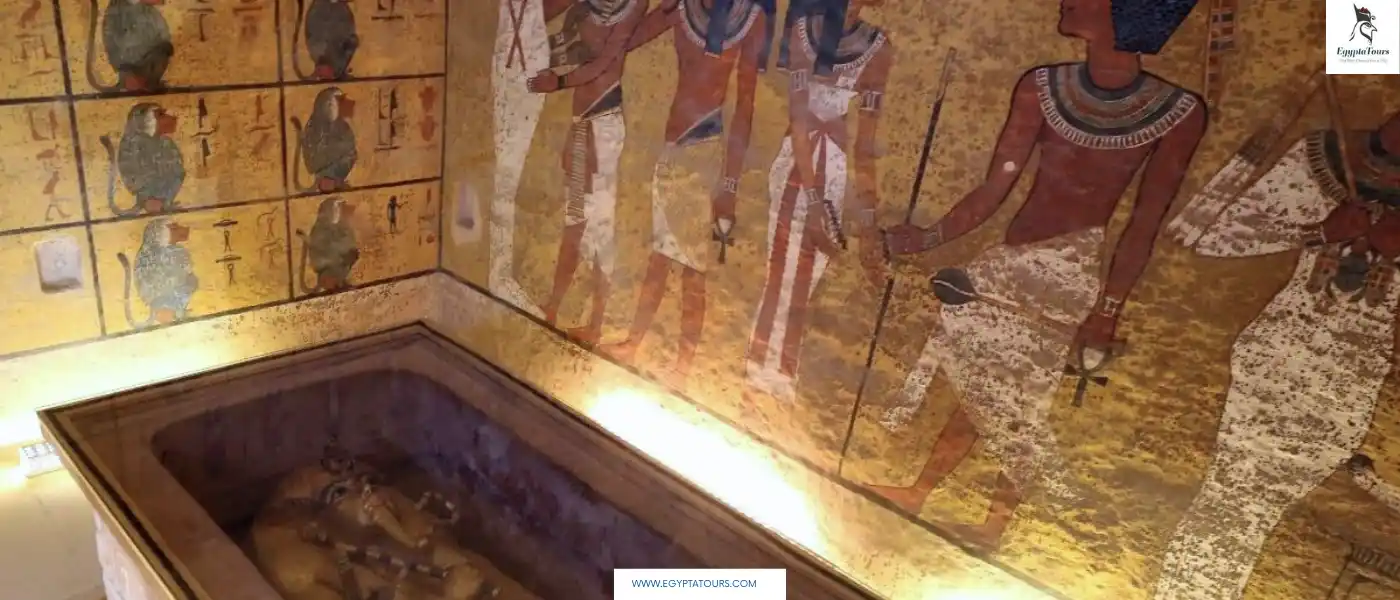
- The offering table of King Tutankhamun found inside his tomb in the Valley of the Kings was made of alabaster and decorated with carvings depicting offerings and sacred inscriptions.
- The offering table of Rahotep and his wife Nofret discovered in the Meidum area is one of the most beautiful tables dating back to the Fourth Dynasty containing fine carvings depicting daily life and the presentation of offerings.
- The offering table of Hatshepsut Temple at Deir el-Bahari is one of the largest royal tables and was used for offerings and sacrifices during the queen’s religious rituals.
- The offering table of Amenhotep III in Luxor Temple is distinguished by its large size and carvings illustrating the rituals performed by priests during the offerings.
- These tables represent important archaeological evidence demonstrating the ancient Egyptians’ interest in offering food and drink to the deceased whether king or ordinary person.
A Comparison of Sacrificial Tables in the Ptolemaic and Roman Periods

The-Origins-of-Ancient-Egyptian-Offering-Table-EgyptaTours
The ancient Egyptian sacrificial table underwent significant changes during the Ptolemaic and Roman periods reflecting the cultural and religious influences of each period.
During the Ptolemaic period, the tables retained many traditional Egyptian features being made of limestone or granite and the inscriptions displayed Greek influences alongside Egyptian symbols such as the Eye of Horus.
During the Roman period sacrificial tables evolved to include more diverse decorative elements.
Inscriptions became more complex Latin script was introduced alongside hieroglyphs, and tables began to take on more luxurious forms, often made of marble rather than limestone.
FAQs
What were the most important achievements of Egyptian civilization?
These included the construction of the pyramids the development of hieroglyphic writing, advances in medicine and engineering, and the establishment of advanced irrigation systems.
What was the significance of the ancient Egyptian civilization?
It was one of the first civilizations to establish the foundations of science art, and administration, and it greatly influenced subsequent cultures.
What were the sacrificial tables in ancient Egypt?
These were stone or wooden platforms used in funerary rituals to offer food and drinks to the deceased ensuring the continuity of life after death.
In conclusion, today we have learned about the ancient Egyptian offering table which represented an important aspect of ancient Egyptian funerary rituals.
It was not merely a place for offering food, but rather a symbol of eternal life and continuity.
These rituals also reflected the ancient Egyptians’ belief in life after death and their commitment to providing comfort to the souls of their loved ones. We hope you enjoy this article.
More Posts about Ancient Egyptian Mythology
[custom-layout id=’35466′]
Tours to Discover Everything About Ancient Egypt
[custom-layout id=’37316′]
About EgyptaTours

EgyptaTours is a name synonymous with trust, excellence, and unforgettable travel experiences, proudly standing as one of the leading travel agencies in Egypt. Renowned for its deep expertise, personalized service, and carefully crafted itineraries, EgyptaTours serves as the ultimate gateway to discovering Egypt in its most authentic and inspiring form.