Ancient Egyptian Language
When you hear the phrase “ancient Egyptian Language,” what comes to mind?...



King Tutankhamun is considered one of the most famous pharaohs in ancient Egyptian history as his tomb discovered in the Valley of the Kings amazed the world because of its golden treasures and unique condition, and where is King Tutankhamun now?
This question still arouses the curiosity of many especially with the transfer of some of his belongings to international museums, and we will learn together the most important information about King Tutankhamun, so follow us.
Where-is-King-Tutankhamun-now-EgyptaTours
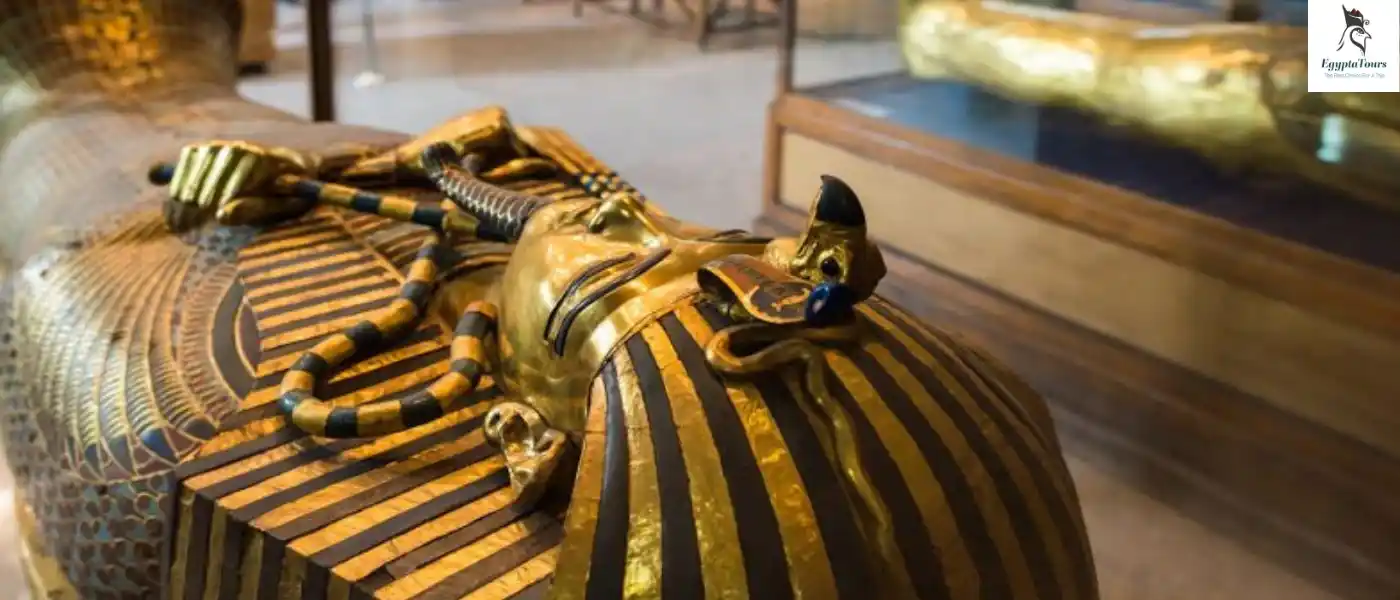
The answer to the question of where King Tutankhamun is now is that the Valley of the Kings in Luxor still contains the legendary tomb of the young pharaoh Tutankhamun whose discovery amazed the world in 1922 by British explorer Howard Carter.
While the treasures of the precious tomb were moved to the Grand Egyptian Museum in Giza, the royal mummy remained inside its golden coffin in its original resting place amidst a state of mystery and historical magic that continues to attract researchers and lovers of ancient Egyptian civilization from all over the world.
The-reason-for-King-Tutankhamun’s-fame-Where-is-King-Tutankhamun-now-EgyptaTours
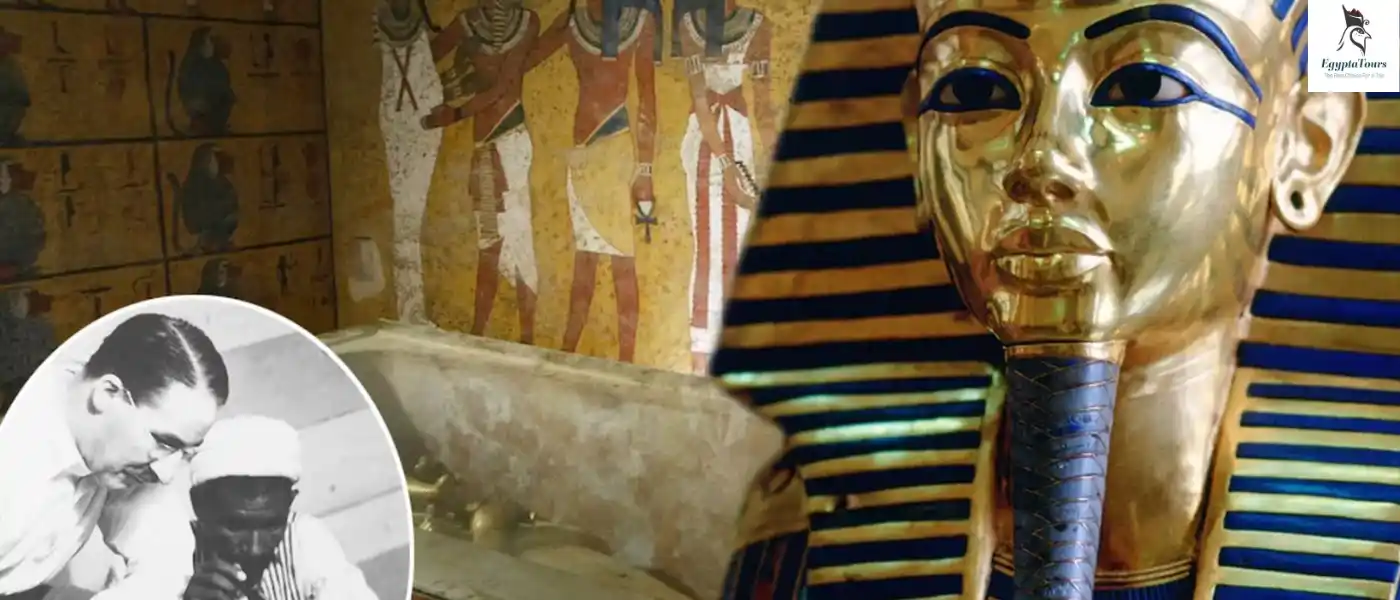
After answering the question of where is King Tutankhamun now some may believe that Tutankhamun’s fame is due to his military victories or political achievements as is the case with many great pharaohs, but the real secret behind the brilliance of his name in the annals of history lies in something else entirely.
His tomb was an archaeological treasure that was not touched by thieves as it was found with all its valuable contents revealing to the world the richness of ancient Egyptian civilization in its finest details as it included approximately 5398 amazing artifacts each of which holds a secret from the golden age of the pharaohs.
The death of King Tutankhamun remains one of the greatest mysteries in the history of the pharaohs, and the question about the manner of his death is more than the question of where King Tutankhamun is now, especially since he left the world in the prime of his youth amid mysterious circumstances that have not been fully revealed to this day.
With fractures in his skull and femur there has been endless speculation about the possibility of a fatal accident or even a planned assassination.
With the rise of legends about the curse of the pharaohs associated with his tomb, this young pharaoh has become the most mysterious and famous king of Egypt.
His unknown story has inspired filmmakers and video game developers, and his death remains one of the most perplexing mysteries that archaeologists have yet to find a definitive answer to.
His body was laid to rest in his tomb known as No. 62 in the Valley of the Kings.
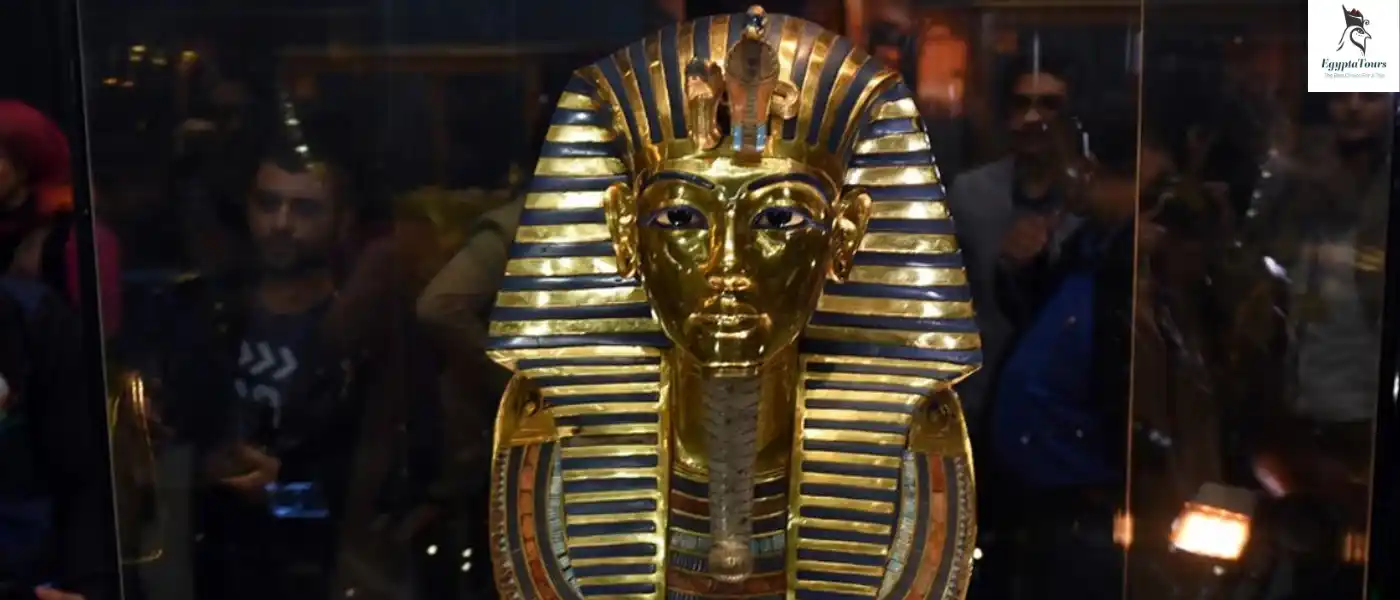
The phrase is that power grants its wings to those who deserve it while death casts its shadow over all who have betrayed it with boldness. As for the golden mask it is a masterpiece crafted from the purest types of rare gold, and decorated with precious stones some of which are extremely rare, and some of which have completely disappeared from existence to remain an immortal witness to the greatness of his era and its eternal magic.
Where-is-King-Tutankhamun-Now-Tutankhamun-Mask-Specifications-EgyptaTours
After answering the question of where is King Tutankhamun now he appeared crowned with the royal headdress “Nemes” designed with harmonious lines of white and blue in a shape that symbolizes power and prestige, and his forehead is decorated with two sacred symbols in the ancient Egyptian faith, the protective cobra and the royal eagle, as evidence of his strength.
A false golden beard hangs from his chin showing his divine status, and was meticulously made using gold and fine glass paste.
As for his eyes they were skillfully reshaped using quartz and obsidian.
Where-is-King-Tutankhamun-Now-Information-about-the-life-of-King-Tutankhamun
Where is King Tutankhamun now? The answer is that he is in Luxor in his tomb where Pharaoh Tutankhamun known as “Tut” was named the throne of ancient Egypt at the age of nine, and he continued to rule it from about 1333 to 1323 BC during one of the most turbulent periods in the country’s history.
His father Akhenaten, had caused a huge religious earthquake by trying to replace established beliefs with the worship of only one god the sun which he called “Aten”, ignoring the gods that the Egyptians had revered for thousands of years.
This radical change did not please the priests and elites and perhaps even the common people, but they were forced to show apparent loyalty to the orders of the pharaoh.
However archaeological excavations have revealed small statues of traditional gods inside homes indicating that belief in the old faith remained in the hearts of the Egyptians despite attempts at change.
After mentioning the answer to an important question which is where is King Tutankhamun now we mention that after the departure of Akhenaten, Tutankhamun ascended the throne while he was still a child of nine years old to bear the responsibility of restoring balance to a kingdom torn apart by radical religious changes.
The young king also rushed to restore the neglected temples, and ordered the manufacture of new statues of the ancient gods thus restoring spiritual traditions to their former glory.
He did not stop there but took a very important symbolic step as he abandoned his original name “Tutankhaten”, which honored the sun god, and replaced it with “Tutankhamun” in a clear reference to the restoration of the worship of Amun the chief of the gods.
Despite his young age he was not a figurehead king, but participated in religious celebrations and major festivals set out on hunting trips, learned horse riding and mastered the art of driving war chariots, and trained in military skills to be a ruler capable of defending the legacy of his ancestors.
Tutankhamun passed away in his youth as he died at the age of nineteen leaving behind a mystery that has baffled scientists for centuries.
Experts were unable to determine the definitive cause of his death, and hypotheses varied between an injury resulting from a fall from a chariot accident a fatal disease transmitted by mosquitoes or a rare bone disorder.
Perhaps it was a combination of these factors combined, and whatever the real reason his early death changed the course of history as he left no heir to the throne, so the reins of power were transferred to his closest advisors which opened the door to major political transformations in ancient Egypt.
Question Where is King Tutankhamun is now one of the most important questions that has attracted the interest of many as well as the meaning of his name as the name we know today “Tutankhamun” was not his name at birth, but was given to him by the priests of Amun in honor of him after he restored them to their position and restored the worship of the great god Amun to the forefront of the religious scene as it means “the living embodiment of the god Amun” so that his name itself becomes a witness to his strong return to the traditional faith.
After the question of where King Tutankhamun now caused great excitement and was answered Akhenaten caused a religious revolution by unifying worship around the sun god “Aten” Egypt quickly regained its spiritual balance, so that the traditional gods returned to the heart of religious life immediately after his death.
In the midst of this transformation his son Tutankhamun took the throne when he was only eleven years old ruling the country for nearly nine years before passing away in the prime of his youth, leaving behind one of the greatest mysteries in the history of the pharaohs.

What-did-king-Tutankhamun-look-like-EgyptaTours
Recent studies of King Tut’s mummy show that how he really looked was more complicated than people thought before. His famous golden mask shows a perfect image of a young king, but his real face looked a bit different.
King Tut had some health problems, like a twisted foot, a crooked spine, and unusual feet. These problems would have made it hard for him to walk and changed how he looked.
His face didn’t look exactly like the mask shows. He had a slightly long head, a noticeable overbite and a delicate face.
King Tut was not very healthy and had several illnesses, including malaria. These health problems affected how he looked.
Even with these challenges, King Tut was still a young man with determination. His short time as king still made an important mark on ancient Egyptian history.
Even though Tutankhamun ruled for a short time and was not a very important king, people still remember him today. The treasures found in his tomb amazed people all over the world. They help us understand the culture and art of ancient Egypt. The discovery of his tomb also showed how ancient Egyptians prepared their kings for life after death.
Besides the treasures, King Tut is also known for changes in religion. During his rule, he changed some religious ideas. He moved away from worshiping the god Amun and supported the worship of Aten, the sun god. But this change did not continue for a long time, because the kings after him returned to worshiping Amun.
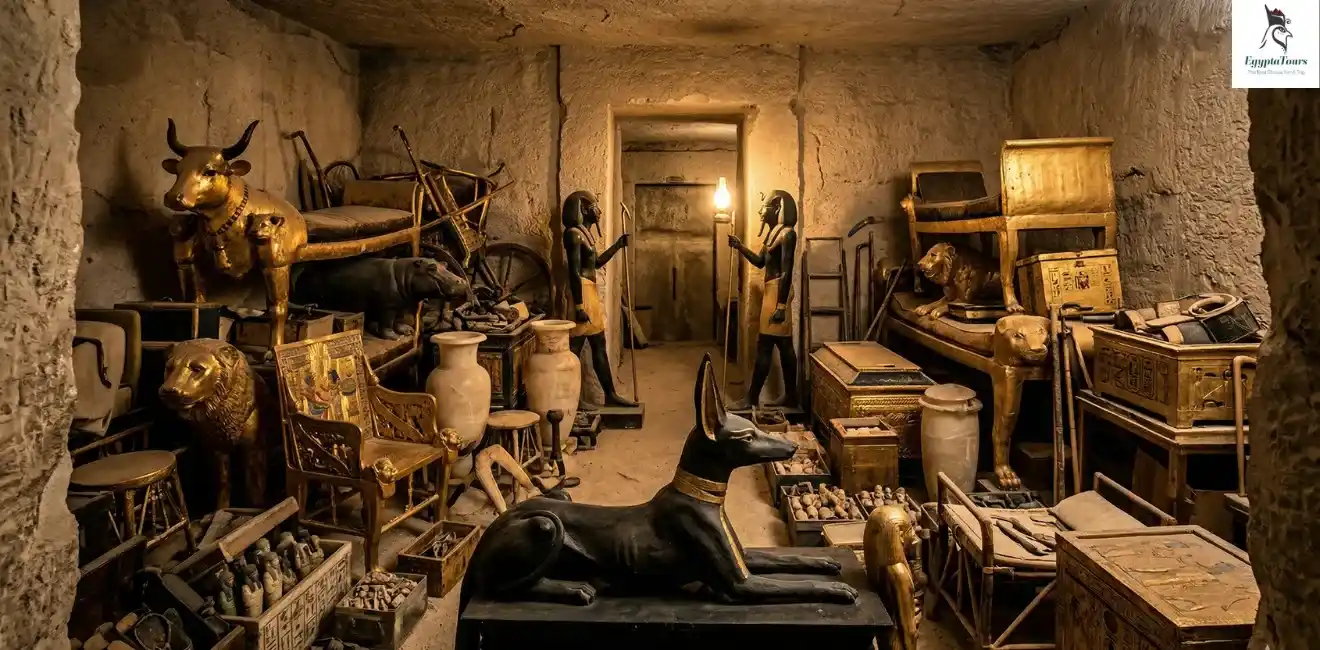
The-Treasures-of-King-Tut’s-Tomb-EgyptaTours
The golden mask of Tutankhamun is one of the most famous objects from ancient Egypt. It is made of pure gold and weighs about 22 pounds. It was made to protect the king’s face and help him live forever in the afterlife.
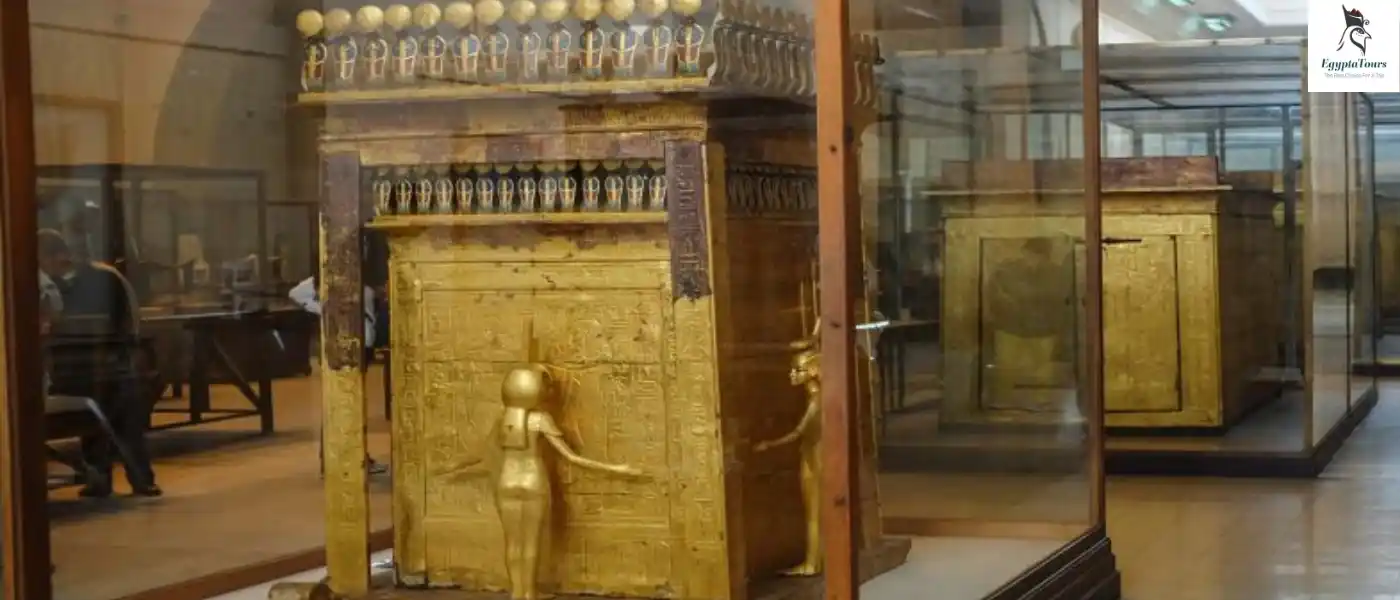
The tomb also had furniture like a chair (throne) and a bed, as well as chariots that were used in his funeral. There were also canopic jars which were used to keep the organs of the body after mummification. Each jar had the face of a different god on it.
The tomb also included many other things, such as jewelry, weapons and clothes.
The curse of Tutankhamun’s tomb was a story made popular by the media. People believed that anyone who entered the tomb would have bad luck or might even die. Some people who helped discover and explore the tomb did have problems or bad events, but there is no proof that the curse was real.
Some scientists have discovered that the mummified remains of ancient Egyptians bring bad luck and cause death.
Howard Carter with his assistant Lord Carnarvon.
His tomb was located behind another tomb in the Valley of the Kings and was not visible, so it was not stolen.
In the end we have provided you with the complete answer to the question of where is King Tutankhamun now, as the tomb is a complete archaeological masterpiece and it included thousands of unique pieces of jewelry furniture weapons, and royal chariots, in addition to the interlocking coffins that contained the royal mummy.
His mummy is now housed in the National Museum of Egyptian Civilization in Cairo, after a 2021 relocation. The tomb itself remains in the Valley of the Kings.
Many of the artifacts from his tomb are distributed between the Egyptian Museum in Cairo and the National Museum of Egyptian Civilization, with some on loan or exhibited elsewhere.
Yes. In 2021, Tutankhamun’s mummy was moved to the National Museum of Egyptian Civilization for better conservation and public display.
He is estimated to have died around age 18 or 19.
The famous gold mask from his coffin is housed in the Egyptian Museum in Cairo.
Yes, KV62 is in the Valley of the Kings near Luxor and can be visited as part of a guided tour, though access is limited.
Yes, at the National Museum of Egyptian Civilization in Cairo, where his mummy is on display.
The exact cause is not certain, but theories include illness, injury, or complications from bone disease. CT scans have provided clues but not a definitive answer.
His nearly intact tomb, discovered in 1922, sparked renewed global interest in ancient Egypt and greatly advanced archaeological methods and public museums.
No directly known living descendants; Tutankhamun died young and there are no confirmed lineal heirs.
The tomb is small and its original contents were moved to museums; the current public displays focus on replicas and the surviving artifacts.
Through careful conservation, climate control, and protective crates and display cases to slow deterioration.
Yes, scholars may study the tomb and its artifacts under strict permissions and UNESCO/obel guidelines.
Start with the National Museum of Egyptian Civilization in Cairo for the mummy, and visit the Egyptian Museum to see key Tutankhamun artifacts.


Explore our top-rated Egypt travel packages and embark on an unforgettable journey. From the Pyramids of Cairo to the magical temples of Luxor, Aswan, and Abu Simbel, discover expertly curated tours designed for your perfect Egyptian adventure