



Christmas Customs and Traditions in Egypt: Amazing Sight To Behold
“Christmas customs and traditions in Egypt are the essence of Egyptian society and supply a unique experience for every traveler. The aim of this article is to supply every traveler with all the information and skills needed to fully understand the culture and traditions of Egypt.
Fortune isn’t all around her monuments and treasures but around her culture and people. Across a history of more than 4500 years, Egypt was able to improve as an advanced intelligent civilization that learned how to fabricate and fuse the culture and traditions of other nations, both allies, and conquerors, into one being in order to build the perfect liberal society composed of diverse ancient cultures and moral tradition that we’re able to survive till our current new day. Today, Egypt is like an immortal time cachet that immerses its visitors in a dimension filled with different customs, traditions, history of ancient civilization, and ageless wonders.”
Christianity is the second major religion in Egypt. The vast plurality of Egyptian Christians are Copts. As of 2019, Copts in Egypt make up approximately 10 percent of the nation’s population, with an estimated population of 9.5 million or 10 million. In 2018, approximately 90% of Egyptian Christians were Coptic Orthodox.
The history of Egyptian Christianity back to the Roman period as Alexandria was an early center of Christianity.
Egyptian Christmas customs and traditions
Egyptian-Christmas-customs-and-traditions-EgyptaTours
Christmas customs and traditions in Egypt have been rooted in ancient Egyptian customs for ages, where palm trees were utilized to symbolize the year’s end at the winter solstice, similar to our Christmas tree tradition. The day also concur with the birthdays of Egyptian sun idols. Despite being a predominantly Muslim country, Egypt espouse the Christmas spirit, providing a range of activities for tourists. Cruises along the Nile River, visits to famous places, shopping in Egypt, and enjoying regional cuisine contribute to a memorable holiday experience. Whether enjoying the ceremonial atmosphere or exploring historical wonders, spending Christmas Customs and Traditions in Egypt offers a perfect mixture of traditions and experiences.”
“Coptic Christmas on January 7th was also celebrated during the sacred month of Kiahk, which included special liturgies every Saturday and a 43-day vegan fast before Christmas. Traditional celebrations inclusive church decorations, a midnight service on Christmas Eve, and a particular meal called Fata with a sweet traditional treat called Kahk.
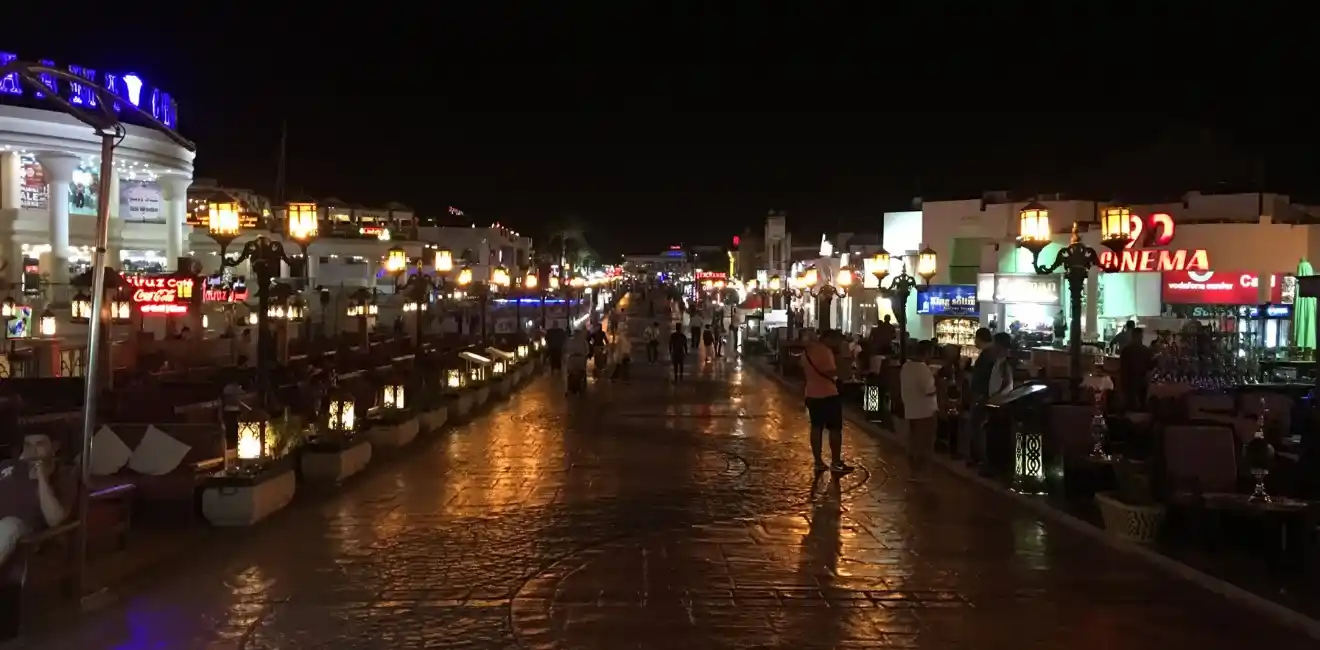
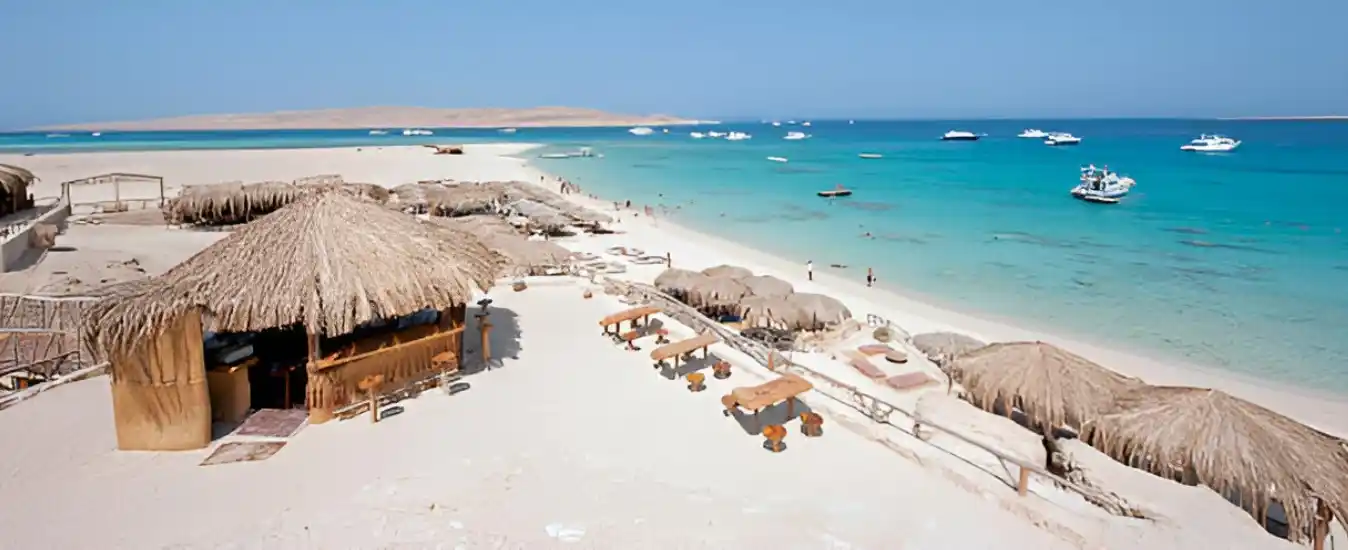
Tourists often celebrate Christmas and New Year in Egypt at the Red Sea resorts of Marsa Alam, Hurghada, and Sharm El Sheikh. Hotels host festive events with dinners, decorations, and entertainment. The country’s landmarks, like the pyramids and temples in Luxor, become central points for celebrations. December in Egypt offers temperate temperatures, making it a favorable time to explore the historical and cultural cities of Cairo, Luxor, and Hurghada. Excursions to historical places, desert trips, and diving experiences are famous during this holy time.”
Coptic Orthodox Christmas
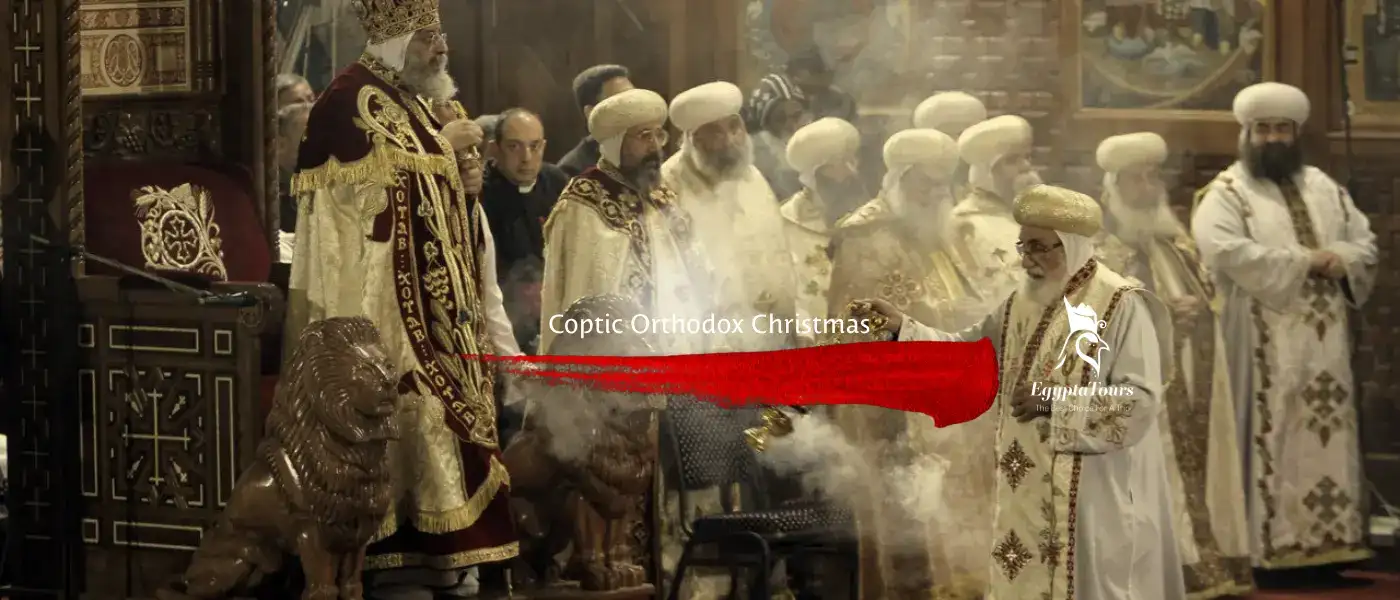
Coptic-Orthodox-Christmas-EgyptaTours
The Coptic calendar, also terms the Alexandrian calendar, is a liturgical calendar utilized by the Coptic Orthodox Church and also used by the farming populace in Egypt. It was used for financial purposes in Egypt until the adoption of the Gregorian calendar on 11 September 1875 (1st Thout 1592 AM).
This correction is based on the ancient Egyptian calendar. To avert the calendar crawl of the latter (which included only 365 days each year, year after year, so that the seasons moved about one day every four years), a reform of the ancient Egyptian calendar was introduced at the time of Ptolemy III (Decree of Canopus, in 238 BC) which depended of adding an extra day every fourth year.
However, this reform was unfavorable by the Egyptian priests, and the reform was not adopted until 25 BC, when the Roman Emperor Augustus imposed the Decree upon Egypt as its official calendar (although initially, namely between 25 BC and AD 5, it was concurred with the original implementation of the Julian calendar which was erroneously intercalating leap days every third year due to a misinterpretation of the leap year rule so as to apply inclusive counting).
To distinguish it from the Ancient Egyptian calendar, which remained in utilize by some astronomers until middle ages times, this reformed calendar is familiar as the Coptic or Alexandrian calendar. Its years and months coincide with those of the Ethiopian calendar but have various numbers and names.
Unlike the Gregorian calendar, the Coptic calendar does not exceed leap years three times every 400 years, and therefore it stays concurred with the Julian calendar over a four-year leap year cycle.
Christmas in the Middle East
More than 2 billion people round the world celebrate Christmas every year, and depending where you are in the world, the ceremonial traditions that come with the holiday season look rather various.
While the heart of the holiday remains the same, every culture, country, and community has their own special Christmas Customs and traditions in Egypt that capture the spirit of Christmas.
In the West, Christmas Customs and Traditions in Egypt is mostly celebrated with a beautifully ornamented Christmas tree, Santa Claus, cookies eggnog, and lavish Christmas turkey feast with family and friends.
Christmas customs and traditions in Egypt and the Middle East, home to around 10 to 13 million Christians, are as different as the countries they are celebrated in and are passed on from generation to generation.
With Christmas right round the corner, we take a look at some heartwarming traditions from round the Middle East:
In Egypt
Christmas Customs and Traditions in Egypt, the Coptic Church in Egypt celebrates Christmas on January 7. During Advent, a time of waiting and planning for the birth of Christ, Egyptian Copts fast from poultry, meat, and dairy products for 40 days.
Christmas Day is generally celebrated by visiting relatives, neighbors and friends and generally give their hosts kahk, a traditional shortbread that is generally eaten with a soup called shorba.
In Syria
Christmas customs and traditions In Syria, Santa Claus doesn’t generally distribute presents to children for Christmas. Children are said to their presents are brought to them by the youngest camel that carried the three wise men to visit Jesus Christ.
Instead of leaving cookies and milk, children eagerly place water and straw outside their homes on New Year’s Eve for the camel that connects on New Year’s Day with their presents.
In Iraq
Although Christmas is a ceremonial holiday in Iraq, celebrations are generally simple, quiet and solemn.
On Christmas Eve, the children of the family take turns reading the story of the Nativity from Arabic Bibles while the break of the family lights candles and listen.
After the story is read, the family creates a ignition of dried thorns to predict their future for the forthcoming year. If the thorns completely turn to dust, it is a icon of good fortune. Each person then jumps over the dust three times and makes a wish.
Another Iraqi tradition comes during the Christmas Customs and Traditions in Egypt where the Bishop blesses the convention by placing his hand on a member of the convention, who then touches the person next to him. This process continues until every person in the church has received the ‘touch of peace.’
Festive Foods and Delicates that Define the Egyptian Yuletide
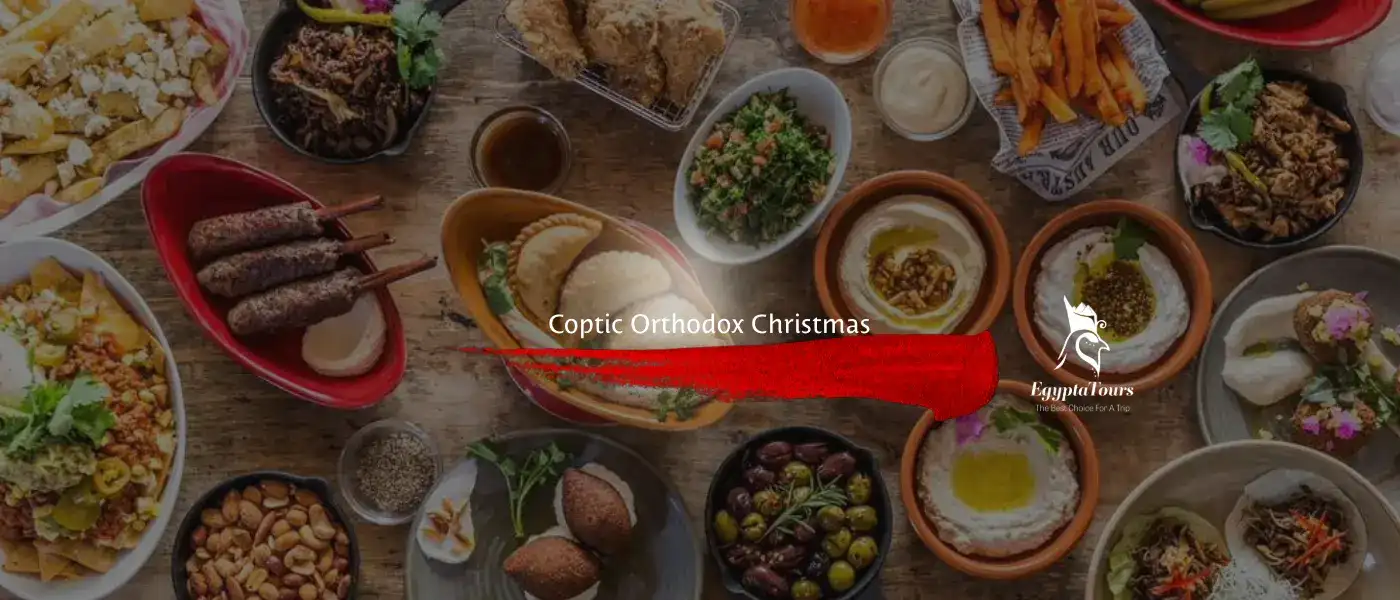
Festive-Foods-and-Delicates-that-Define-the-Egyptian-Yuletide
Food in Egypt is major to Orthodox Christmas Customs and traditions in Egypt. Specially the tradition of breaking fast, where a midnight feast follows Christmas Customs and Traditions in Egypt mass on January 6.
The traditional feast has many dishes, commonly consisting of lamb shanks and fattah, a rice and bread dish steeped with lamb supplies, intensely tart and garlicky. For many Egyptians abroad, religious or not, making this dish sign the day—and every household has its own recipe. For dessert, there’s an Egyptian sesame cookie called kahk that so many people bake and share, it’s customary to receive a tin box of them from at least one man. And while some folks might not make like a big meal, or have a massive celebration, for both religious and nonreligious people, the food is premanently a way to acknowledge the day.
During the fast, it’s customary to refrain from meat and other animal products typically eaten daily, like butter, ghee, eggs, and cheese. This is meant to beat the “passions” of the body, and to reach a deeper spirituality. When the fast finish, the feast tends to depend on a lot of these foods. Cheese, a staple Egyptian food, is happily reintegrated into the meal, particularly as a side to fattah, adding some saltiness to the dish, or utilize as a filling for various pastries. The traditional cheese is usually a matured white cheese, while folks in other parts of the world might utilize feta instead.
After Christians finish their prayers, they go home and prepare a big meal that include all kinds of Egyptian food that they didn’t eat for around 43 days.
This meal contained a popular dish in Egypt which is the “Fata” a lamp soup with some rice and bread topped with garlic plus the lamp meat, and red sauce on the same table there are also many other meals like chicken, pasta, and much more.
On the second-day people began to visit their families and friends with some sweats that made specially for Christmas feast like “Kahk and biscuits” and many other items made in a widely special way that makes it very tasty.
Not only the Christians made these types of sweats, but all the Egyptians also made these dessert as a tradition to celebrate their feasts.
Christmas food or Christmas Customs and Traditions in Egypt can’t be described, you have to attempt it yourself. Make sure to pay your next Christmas in Egypt and make this year distinct from past years. Book your next trip to Egypt and don’t lost this experience
Decorating with an Egyptian Flair: Christmas Customs and Traditions in Egypt and More
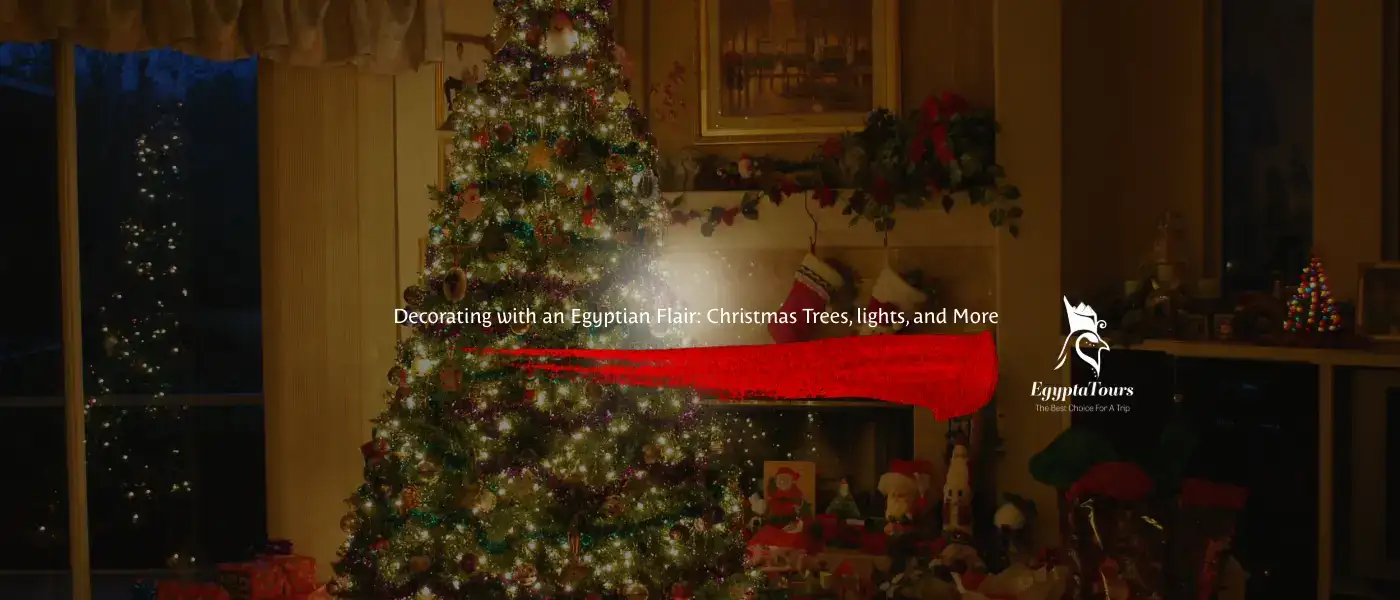
Decorating-with-an-Egyptian-Flair-Christmas-Trees-lights-and-More-
The Christmas Customs and traditions in Egypt, including the Christmas tree, is said to have origins in Egypt. The Egyptians would have used twelve-limbed palm trees as a icon of a closed year at the winter solstice – and our Christmas tree is said to return to this custom. Incidentally, the birthdays of their sun idols were celebrated on this day.
The sacred month in which Coptic Christmas takes place is known as Kiahk, and if you are in Egypt during this era, we advise you not to miss this amazing anniversary. Every Saturday, the honest participate in a special liturgy in which they pray with beautiful songs that animate the mass.
During the 43 days previous Christmas Customs and Traditions in Egypt , from November 25 to January 6, the faithful observe a particular fast, a natural vegan diet in which they concede meat and all its derivatives. This diet is named the “holy feast of the Nativity,” which, however, can be averted if you are too weak or for other health reasons.
According to the most popular statistics, it is claimed that most foreigners celebrate Christmas and New Year in Egypt at the Red Sea in Marsa Alam and Sharm El Sheikh, wondering the serene water of the Sea and watching the colorful coral reef under the Sea.
Santa Claus ( Baba Noel )
The Image of Santa Claus ( Baba Noel ) is one of Christmas Customs and traditions in Egypt, which designate the spirit of bestowal and generosity, is standard, and the symbol of Baba Noel influences even Muslim children. The Baba Noel also carries a bag with gifts and enters the window (since there are no funnel in Egypt).
On the 6th and 7th of January, children receive symbolic gifts or small amounts of money to buy chocolates and sweets . We also see Christmas Customs and Traditions in Egypt in lights and trees in shopping malls and some public ornamented with Christmas motifs on city streets.