






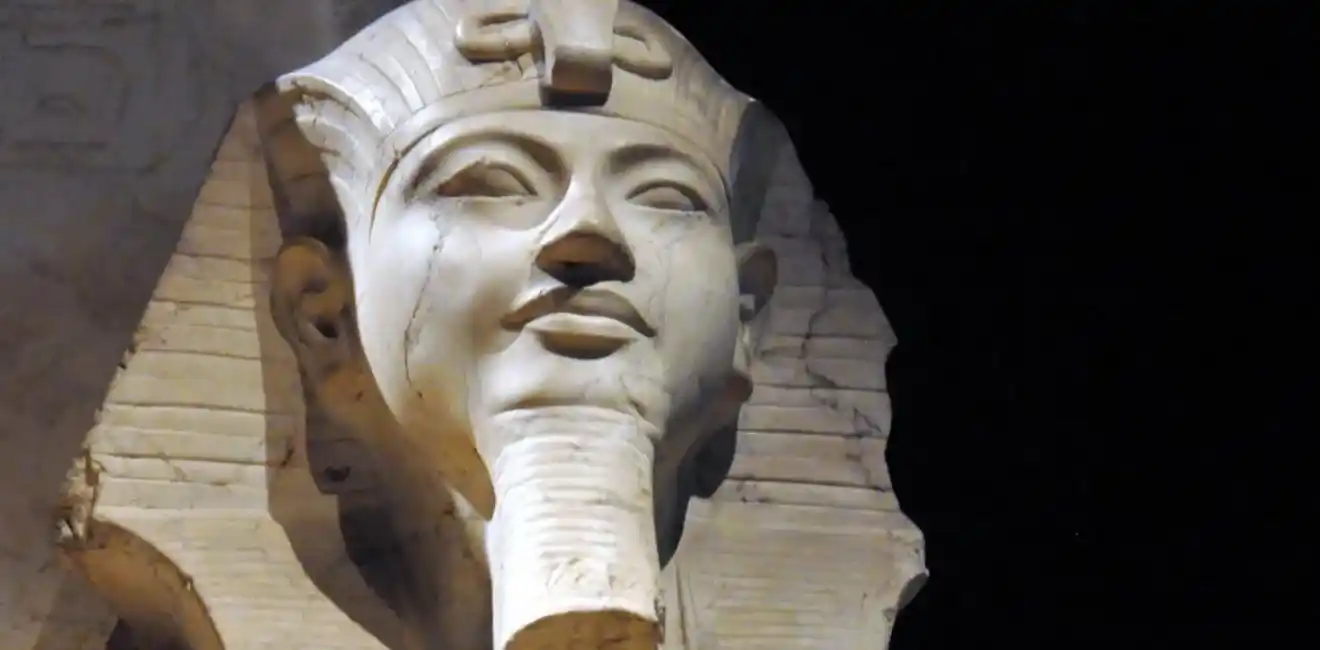
King Horemheb
King Horemheb was not just a pharaoh that ruled Egypt in the past but he was a symbol of strength and determination that shaped history. In a time full of challenges, he rose to the throne to restore order and power to Egypt after a period of chaos. He was known for his military skills and his care in protecting his land and also for his determination to bring Egypt back to its great glory. His story is not just about the rule and power but a saga of human will and the ability to face challenges and leave a lasting mark.
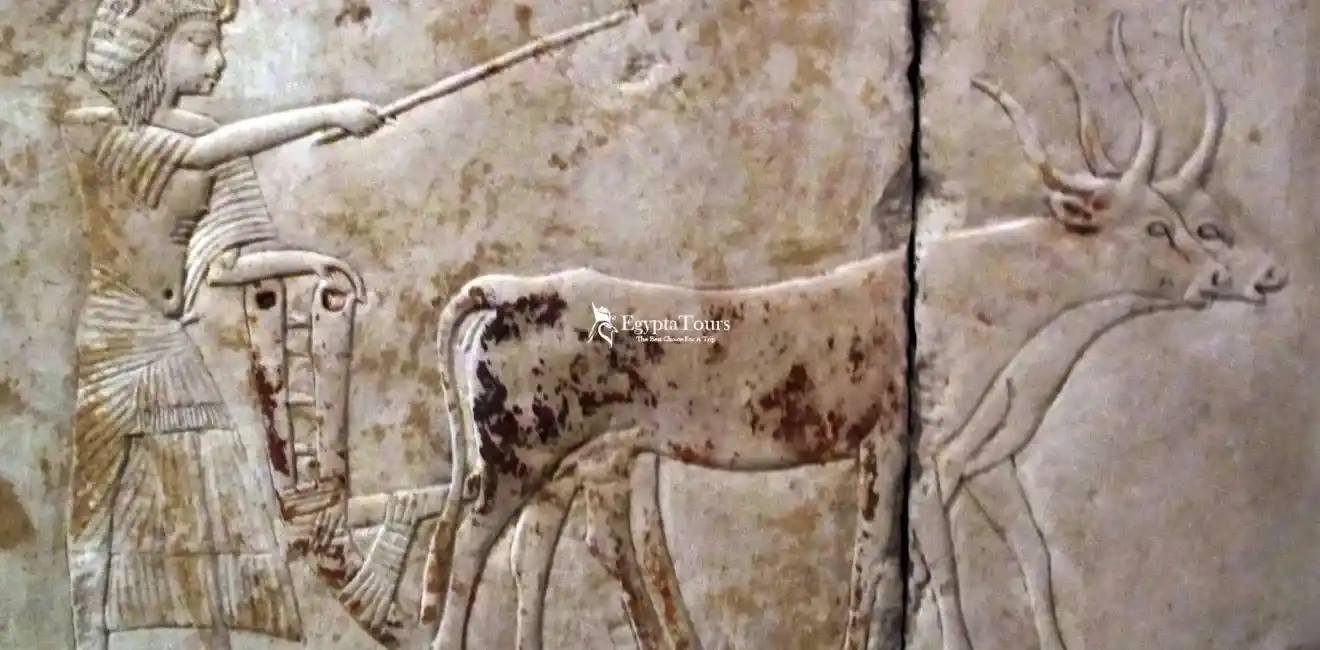
King -Horemheb -The -Last- Pharaoh -of- the -Eighteenth- Dynasty
Horemheb was also known as Horemhab, Haremheb or Haremhab (Ancient Egyptian: ḥr-m-ḥb which means “Horus in Jubilation”), was the last pharaoh of the Eighteenth Dynasty of Egypt. He ruled Egypt for at least 14 years between 1319 BC and 1292 BC. King Horemheb had no direct connection to the previous royal family except through his marriage to Mutnedjmet who was believed (though disputed) to have been the daughter of his predecessor, Ay. Horemheb is believed to have been of common birth.
Before becoming a king, Horemheb was a commander-in-chief of the Egyptian army under Tutankhamun and Ay. After his accession to the throne, he carried out significant reforms in Egypt and during his reign, official action began against the Amarna period rulers which is why Horemheb is considered the leader who restored stability to Egypt after the troubled Amarna period.
Horemheb demolished monuments of Akhenaten, reusing the rubble for his own building projects and usurped monuments of Tutankhamun and Ay. Horemheb presumably had no surviving children which led him to appoint his vizier Paramessu as his successor who later became Ramesses I. As pharaoh, Horemheb authored the Edict of Horemheb, a legislative document aimed at reducing corruption in the Egyptian state.
Early Life and Career of King Horemheb
Horemheb is believed to have originated from Hnes, on the west bank of the Nile near the entrance to the Faiyum. His coronation text credits the god Horus of Hnes for placing him on the throne. His parentage is unknown, but he is thought to have been a commoner. According to French Egyptologist Nicolas Grimal, Horemheb is not the same person as Paatenemheb (“Aten Is Present in Jubilation”) who was commander-in-chief under Akhenaten. Horemheb’s political career began during the reign of Tutankhamun where he is depicted beside the king in his private tomb chapel in Memphis.
Horemheb also served in the military during Akhenaten’s reign. Early in his life, he acted as the royal spokesman for Egypt’s foreign affairs and personally led a diplomatic mission to visit Nubian governors. This mission resulted in a reciprocal visit by the Prince of Miam (Aniba) to Tutankhamun’s court, an event recorded in the tomb of the Viceroy Huy. Horemheb quickly rose to prominence under Tutankhamun, becoming the commander-in-chief of the Egyptian army and advisor to the pharaoh.
Horemheb’s official titles, recorded in his Saqqara tomb built while he was still an official, include: “Hereditary Prince, Fan-bearer on the Right Side of the King and Chief Commander of the Army, Attendant of the King in his footsteps in the foreign lands of the south and north, King’s Messenger in front of his army to the foreign lands of the south and north and Sole Companion who stands by the feet of his lord on the battlefield on the day of killing the Asiatics.”
The Reign Period of King Horemheb
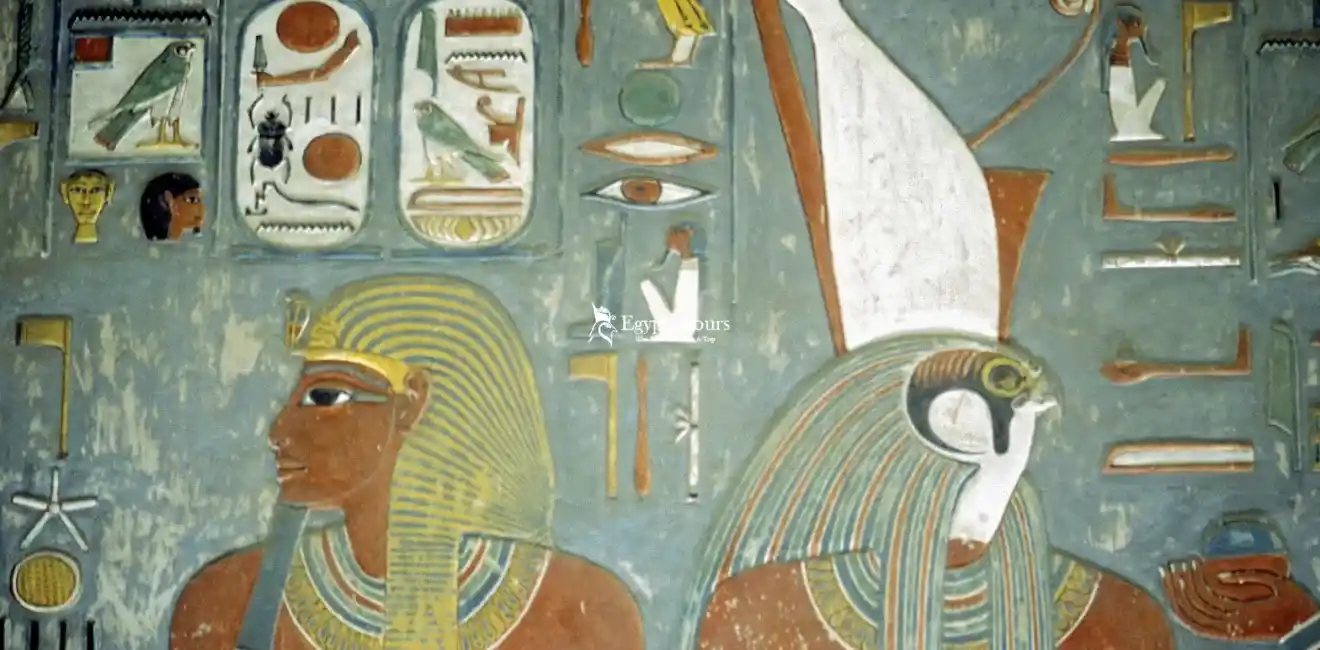
The -Reign -Period- of -King- Horemheb
When Tutankhamun died as a teenager, Pharaoh Horemheb had already been officially appointed as rpat or iry-pat, meaning the Hereditary Prince or Crown Prince and idnw, meaning Deputy of the King in the entire land, by the young king himself. These titles are inscribed in Horemheb’s Saqqara tomb from the reign of Tutankhamun in Ancient Egypt, where the royal cartouches of the young king were found on a block next to the “Gold of Honour” scene. This scene depicts King Tutankhamun and his wife Ankhesenamun, making it highly unlikely that the titles claimed by Pharaoh Horemheb in his tomb inscriptions were fabricated.
The title iry-pat was frequently used in the Saqqara tomb without being combined with other words. Egyptologist Alan Gardiner showed that the iry-pat title reflects ancient lineage and legal inheritance, making it equivalent to the designation of “Crown Prince.” This means that Pharaoh Horemheb was the officially recognized heir to Tutankhamun’s throne, not Ay who assumed the throne immediately after Tutankhamun’s death.
Dutch Egyptologist Jacobus Van Dijk notes that there is no indication that Pharaoh Horemheb always intended to succeed Tutankhamun and it is clear that he could not have predicted the king’s death without an heir. It was understood that his appointment as Crown Prince would end once the king produced an heir and he would inherit the throne only in the case of the king’s early or childless death.
Therefore, Ay’s ascension to the throne instead of Pharaoh Horemheb requires explanation because although Pharaoh Horemheb had been the official heir for nearly ten years, Ay still managed to take the throne after Tutankhamun’s death.
At the same time, Nozomu Kawai rejects Van Dijk’s interpretation that Tutankhamun had appointed Pharaoh Horemheb as his successor and explains that the title “Eldest Son of Horus” used by Pharaoh Horemheb was an honorific promoting his legitimacy as king, not necessarily proof that he was the actual heir. Kawai suggests that the phrase may have meant “Eldest Son of Horus of Hwt-nisu,” Horemheb’s birthplace, used as a propaganda title.
While no objects belonging to Pharaoh Horemheb were found in Tutankhamun’s tomb, some items among the tomb goods donated by other high-ranking officials, such as Maya and General Nakhtmin, were identified as theirs.
Kawai confirms that Pharaoh Horemheb actively participated in Tutankhamun’s funeral as the wall scene in the tomb shows the coffin being carried by a group of officials with the lone figure behind the two viziers being Pharaoh Horemheb. This places him closest to Tutankhamun’s mummy and indicates that he led the funerary procession.
Kawai also points out that both Ay and Pharaoh Horemheb held important high administrative roles during Tutankhamun’s reign in Ancient Egypt, with Ay participating in royal religious activities while Pharaoh Horemheb acted as a military leader and royal legislator. After Ay became pharaoh, his relationship with Pharaoh Horemheb changed.
During his short four-year reign, Ay nominated Nakhtmin as his successor, calling him the “King’s Son” which clearly designated the king’s heir and marginalized Pharaoh Horemheb’s claim to the throne. Additionally, Queen Ankhesenamun, Tutankhamun’s wife, refused to marry Pharaoh Horemheb, who was a commoner, further solidifying Ay’s rule.
The Kingship Of King Horemheb
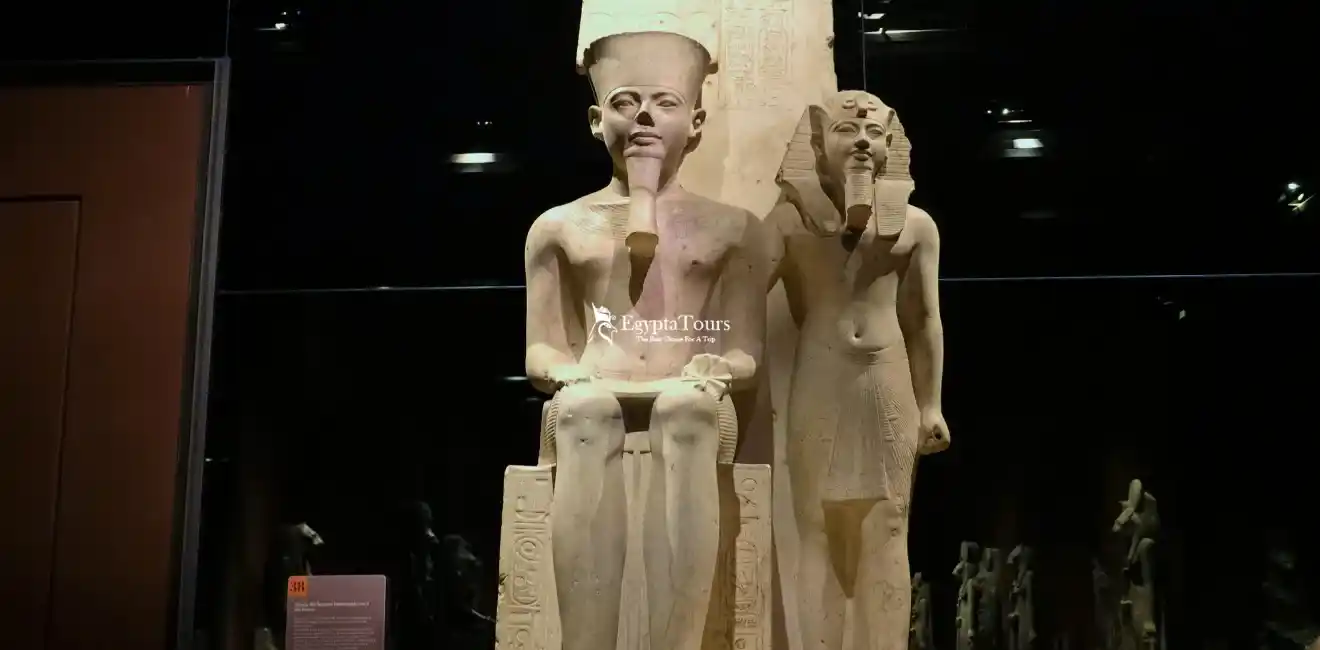
The -Kingship -Of- King -Horemheb
Kawai notes that Horemheb himself likely “did not plot revenge on Ay, probably because Ay was old and would likely die soon” and he merely retained military power. After Ay’s reign, which lasted just over four years, Horemheb managed to seize control of power, presumably thanks to his position as commander of the army and to assume what he considered his reward for serving Egypt effectively under Tutankhamun and Ay.
Horemheb resented Ay’s attempt to sideline him from royal succession and he quickly removed Nakhtmin’s rival claim to the throne, arranging to desecrate Ay’s tomb WV 23 by smashing the sarcophagus, systematically chiseling Ay’s name and image from the tomb walls and probably destroying Ay’s mummy.
He also usurped and expanded Ay’s mortuary temple at Medinet Habu for his own use, and claimed a colossal 17-foot statue by erasing Ay’s inscriptions which had been carved over Tutankhamun’s name and replaced them with his own royal titles.
Horemheb’s actions against Ay served as damnatio memoriae, aiming to erase his rival from historical records. However, he spared Tutankhamun’s tomb from vandalism, presumably out of respect, since Tutankhamun had overseen Horemheb’s rise to prominence and there was no animosity between them.
Upon ascending the throne, Horemheb initiated comprehensive internal reforms in the Egyptian state power structures, which had shifted from the priests of Amun to the officials of Akhenaten’s government. He “appointed judges and regional tribunes… restored local religious authorities” and divided legal power “between Upper Egypt and Lower Egypt” between “the Viziers of Thebes and Memphis respectively.”
These actions were recorded on a stela erected by the king at the base of the Tenth Pylon in Karnak, sometimes called the Great Edict of king Horemheb, which is a copy of the king’s decree to restore order to the Two Lands and curb abuses of authority. The creation and prominent placement of the stela emphasize the importance Horemheb placed on domestic reform and political stability in ancient Egypt.
King Horemheb also reformed the army and reorganized the Deir el-Medina workforce in his seventh year, while his official Maya restored the tomb of Thutmose IV, which had been looted, in his eighth year. While restoring the priesthood of Amun, Horemheb prevented the Amun priests from monopolizing power by reappointing priests, most of whom came from the Egyptian army, ensuring their personal loyalty.
Horemheb was a prolific builder, constructing numerous temples and buildings across Egypt during his reign. He built the Second, Ninth and Tenth Pylons of the Great Hypostyle Hall in Karnak, using recycled talatat blocks from Akhenaten’s monuments for the first two Pylons.
King Horemheb continued Tutankhamun’s restoration of the old order from before the Amarna period, reintroducing ancient religious practices, particularly the cult of Amun, proving himself a legitimate pharaoh of Egypt who established Maat (world order).
Due to his sudden rise to the throne, king Horemheb built two tombs: the first as a noble in Saqqara near Memphis and the second as king in the Valley of the Kings, tomb KV57 in Thebes. His chief wife was Queen Mutnedjmet, who may have been the younger sister of Nefertiti. They had no surviving children, although examinations of Mutnedjmet’s mummy show she had given birth multiple times and was buried with an infant, suggesting she and her last child died in childbirth.
It has been suggested that Horemheb and Mutnedjmet had at least one daughter who was not mentioned in any monuments. Horemheb had no known children with his first wife, Amenia who died before he became pharaoh.
The Disputed reign length
Scholars have long debated whether Horemheb reigned 14–15 years or 27 years. Manetho’s epitome assigns a reign of 4 years and 1 month to a king called Harmais which was previously attributed to Ay. However, evidence from excavations in Horemheb’s tomb KV57 indicates this should be raised by a decade to 14 years and 1 month and attributed to Horemheb.
Excavations led by G.T. Martin and Jacobus Van Dijk in 2006 and 2007 uncovered 168 inscribed wine jars with year dates under debris in Well Room E. Of the 46 jars with year dates, 14 had only the year formula, 5 had year 10+X, 3 had year 11+X, 2 had year 12+X, 1 had year 13+X, 22 mentioned year 13 and 8 mentioned year 14 with no higher years.
The texts read:
“Year 13. Wine from the estate of Horemheb-meren-Amun, L.P.H., in the domain of Amun. Western River. Chief vintner Ty.”
Year 14 jars were individual and mentioned specific wines, such as “very good quality wine” or “sweet wine” with vineyard locations identified. A general example:
“Year 14, good quality wine of the estate of Horemheb-meren-Amun, L.P.H., in the domain of Amun, from the vineyard of Atfih, Chief vintner Haty.”
The quality and consistency of the KV57 wine jars suggest Horemheb was buried in year 14, or at least before the wine harvest of year 15. This aligns with wine dockets from Deir el-Medina mentioning years 2, 3, 4, 6, 13 and 14 with no higher years. The absence of later dated inscriptions also explains why KV57 was unfinished.
In 1995, before the discovery of wine dockets, Van Dijk argued Horemheb’s reign was shorter, between 15 and 17 years. The argument for 27 years relied on two texts: an anonymous hieratic graffito on a broken statue in Karnak mentioning year 27 and the Inscription of Mes from Ramesses II’s reign mentioning year 59, which some argued included the reigns of all kings between Amenhotep III and Horemheb.
Recent interpretations favor Van Dijk, suggesting Horemheb died in year 14 or began year 15 but died before the final wine harvest with later Ramesside pharaohs counting all reigns between Amenhotep III and Horemheb to give a total of 47 years.
The Cartouches and Symbols of King Horemheb
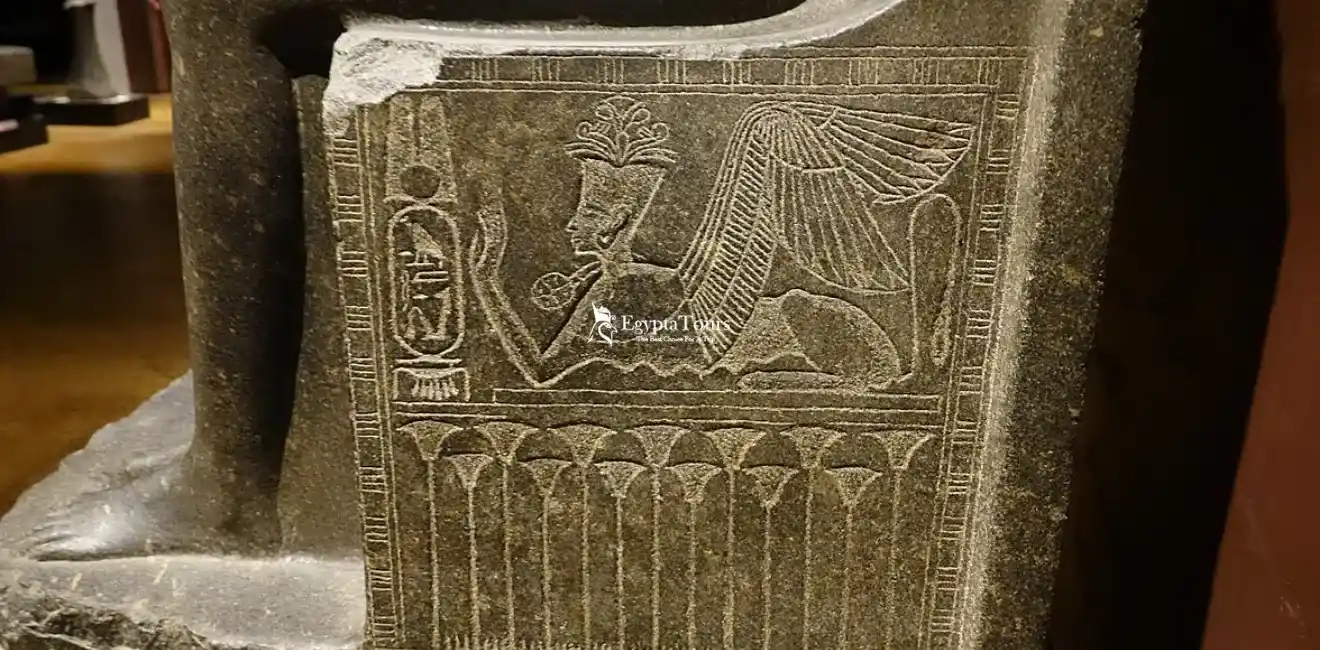
The -Cartouches -and- Symbols- of -King -Horemheb
Horemheb turned to several gods because of his names: his throne name Djeserkheperure means “Sacred are the manifestations of Ra” and his birth name Meryamun means “Beloved of Amun.”
It is not yet confirmed whether he fully eradicated the Amarna period; major iconoclasm began after his death. To build for himself, he demolished the Per-Aten temple at Karnak and constructed a pylon for the Amun temple using stone blocks, leaving Aten reliefs relatively preserved.
Horemheb is depicted in reliefs wearing the typical pleated linen robe of a high-ranking official, seated before an offering table as a pharaoh holding the pole and sekhem scepter with the uraeus added after his coronation, alongside the benu bird regarded as the protector of the dead as the soul of Ra and a man worshipping the benu bird.
The coronation inscription on the back of a double statue shows Horemheb with his wife, confirming he is under the protection of Horus and appointed by Amun. It states he restored damaged statues of the old gods and rebuilt ruined temples, providing Amun’s cult with servants and lector priests from the military elite. A decree on a Karnak stela officially confirms the restoration of the old order.
The Succession of King Horemheb
Under Horemheb, Egypt regained its power and confidence after the internal chaos of the Amarna period, paving the way for the rise of the 19th Dynasty under ambitious pharaohs like Seti I and Ramesses II. Horemheb’s second wife, Mutnedjmet, was buried along with an unborn or newborn child in a shaft in his Saqqara tomb with alabaster funerary items confirming the burial belonged to her.
Eugen Strouhal studied the skull and bones and concluded they belonged to the queen who died between 35 and 45, possibly in childbirth.
Since Horemheb had no surviving son, he appointed his vizier Paramessu as his successor who became Ramesses I and founded the 19th Dynasty. Seti I, his second successor, married a possible daughter of Horemheb, Tanodjmy. Although KV57 remained unfinished at Horemheb’s death, this was not unusual as Amenhotep II’s tomb was also incomplete despite his long reign.
Seti I left Horemheb’s name on the veil of the Amun bark at Luxor Temple untouched, likely out of respect, similar to how Horemheb left Tutankhamun’s name untouched on the veil of Amun bark at Karnak.
The Tomb and Excavation of King Horemheb
Upon ascending the throne, Horemheb built a tomb in the Valley of the Kings, abandoning his earlier tomb near Memphis. For the first time, scenes from the Book of Gates were used in a royal burial chamber.
The tomb was excavated in the early 20th century by Theodore M. Davis, who found it in poor condition due to tomb robbers and earth movements over the centuries. The sarcophagus lid had been removed and smashed by robbers.
FAQs
Who was King Horemheb in ancient Egypt?
King Horemheb was not just a pharaoh that ruled Egypt in the past but he was a symbol of strength and determination that shaped history. In a time full of challenges, he rose to the throne to restore order and power to Egypt after a period of chaos. He was known for his military skills and his care in protecting his land and also for his determination to bring Egypt back to its great glory. His story is not just about the rule and power but a saga of human will and the ability to face challenges and leave a lasting mark.
When did Horemheb rule Egypt?
He ruled Egypt for at least 14 years between 1319 BC and 1292 BC.
What dynasty did King Horemheb belong to?
Horemheb was the last pharaoh of the Eighteenth Dynasty of Egypt.
Did Horemheb have any children?
Horemheb presumably had no surviving children which led him to appoint his vizier Paramessu as his successor who later became Ramesses I.
What reforms did Horemheb implement in Egypt?
Upon ascending the throne, Horemheb initiated comprehensive internal reforms in the Egyptian state power structures, which had shifted from the priests of Amun to the officials of Akhenaten’s government. He “appointed judges and regional tribunes… restored local religious authorities” and divided legal power “between Upper Egypt and Lower Egypt” between “the Viziers of Thebes and Memphis respectively.”
What is the Edict of Horemheb?
As pharaoh, Horemheb authored the Edict of Horemheb, a legislative document aimed at reducing corruption in the Egyptian state.
Where was Horemheb from?
Horemheb is believed to have originated from Hnes, on the west bank of the Nile near the entrance to the Faiyum.
What was Horemheb’s role before becoming pharaoh?
Before becoming a king, Horemheb was a commander-in-chief of the Egyptian army under Tutankhamun and Ay.
Who was Horemheb’s wife?
His chief wife was Queen Mutnedjmet, who may have been the younger sister of Nefertiti. They had no surviving children, although examinations of Mutnedjmet’s mummy show she had given birth multiple times and was buried with an infant.
What was Horemheb’s involvement in Tutankhamun’s funeral?
Pharaoh Horemheb actively participated in Tutankhamun’s funeral as the wall scene in the tomb shows the coffin being carried by a group of officials with the lone figure behind the two viziers being Pharaoh Horemheb. This places him closest to Tutankhamun’s mummy and indicates that he led the funerary procession.
How did Horemheb deal with his predecessor Ay?
Horemheb removed Nakhtmin’s rival claim to the throne, arranging to desecrate Ay’s tomb WV 23 by smashing the sarcophagus, systematically chiseling Ay’s name and image from the tomb walls and probably destroying Ay’s mummy. He also usurped and expanded Ay’s mortuary temple at Medinet Habu for his own use, and claimed a colossal 17-foot statue by erasing Ay’s inscriptions which had been carved over Tutankhamun’s name and replaced them with his own royal titles.
What military titles did Horemheb hold?
Horemheb’s official titles include: “Hereditary Prince, Fan-bearer on the Right Side of the King and Chief Commander of the Army, Attendant of the King in his footsteps in the foreign lands of the south and north, King’s Messenger in front of his army to the foreign lands of the south and north and Sole Companion who stands by the feet of his lord on the battlefield on the day of killing the Asiatics.”
What tombs did Horemheb build?
Due to his sudden rise to the throne, king Horemheb built two tombs: the first as a noble in Saqqara near Memphis and the second as king in the Valley of the Kings, tomb KV57 in Thebes.
About EgyptaTours

EgyptaTours is a name synonymous with trust, excellence, and unforgettable travel experiences, proudly standing as one of the leading travel agencies in Egypt. Renowned for its deep expertise, personalized service, and carefully crafted itineraries, EgyptaTours serves as the ultimate gateway to discovering Egypt in its most authentic and inspiring form.