Valley of the Nobles: Hidden Tombs of Ancient Egyptian Elites
Luxor is an ancient city located in Egypt’s Nile Valley, and is...



Deir El-Medina, located on the West Bank of the Nile in Luxor, is a remarkably preserved ancient village that offers an intimate, human-centric glimpse into the daily lives of the skilled artisans, painters, and scribes who built and decorated the royal tombs in the Valley of the Kings and Queens.
Inhabited primarily during the New Kingdom period (18th to 20th Dynasties), this planned community contrasts with grand state monuments by revealing the personal stories, routines, and records of ordinary working families through surviving ostraca. Today, travelers can explore its residential ruins, the Temple of Hathor, and vibrant artisan tombs, making it an essential and manageable stop on any Luxor West Bank itinerary.
Key Takeaways
Village of the Artisans: Deir El-Medina served as the secure, organized home for the elite craftsmen, sculptors, draftsmen, and scribes responsible for crafting the elaborate decorations inside royal tombs.
Intimate View of Daily Life: Unlike monumental temples dedicated to pharaohs, this site provides a rare window into the social structures, daily routines, and domestic lives of ancient Egyptian working families.
Abundant Written Records: The discovery of numerous ostraca—broken pottery and limestone flakes used as ancient “sticky notes”—allows historians to track workers’ letters, grocery lists, and labor disputes with exceptional clarity.
Key Site Attractions: Visitors can explore the well-planned village ruins, the local Temple of Hathor, and beautifully decorated subterranean tombs featuring vibrant, colorful murals.
Practical Visiting Advice: Morning visits are strongly recommended to avoid intense desert heat and crowds, with essential gear including comfortable walking shoes, plenty of water, sunscreen, and a hat.
Ideal Itinerary Pairing: The compact site pairs perfectly in a half-day West Bank route alongside nearby highlights like the Valley of the Queens or the monumental temple of Medinet Habu.
You’ve finally arrived in Luxor, Deir El-Medina and you’re excited to explore all the ancient wonders this city has to offer. You’ve heard about Deir El-Medina and the Valley of the Kings, but you’re not quite sure how to get there or what to expect. Not to worry—we’re here to help!
In this guide, we’ll give you all the information you need to make the most of your visit to Deir El-Medina and the Valley of the Kings. We’ll tell you how to get there, what to see, and where to eat. Plus, we’ll give you a few tips on how to make the most of your visit. So read on, and get ready to explore one of ancient Egypt’s most fascinating sites!
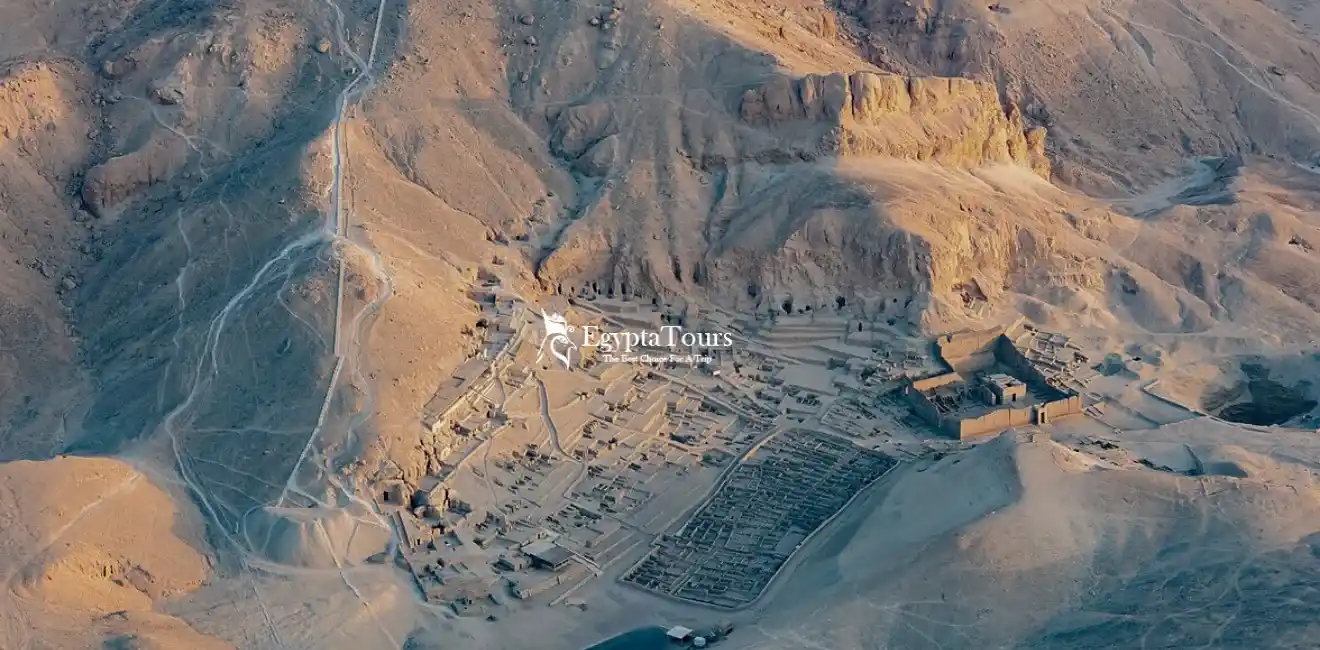
What-Is-Deir-El-Medina-EgyptaTours
Deir El-Medina is an ancient village that’s located in Luxor, Egypt. It’s best known for being the home of the artists who worked on the tombs in the Valley of the Kings and the Valley of the Queens.
You’ll find a number of interesting things to see and do here, including the Temple of Hatshepsut, the Temple of Amun, and the Tomb of Tutankhamun. You can also explore the village itself, which is full of fascinating historical sites.
Deir El-Medina is located in Luxor, which is a town in Upper Egypt. It’s situated on the west bank of the Nile River, and it’s home to some of the most well-preserved ancient Egyptian temples and tombs in the world.
You can explore Deir El-Medina on your own, or you can join a guided tour. Either way, you’re sure to see some amazing sights and learn a lot about ancient Egyptian culture.
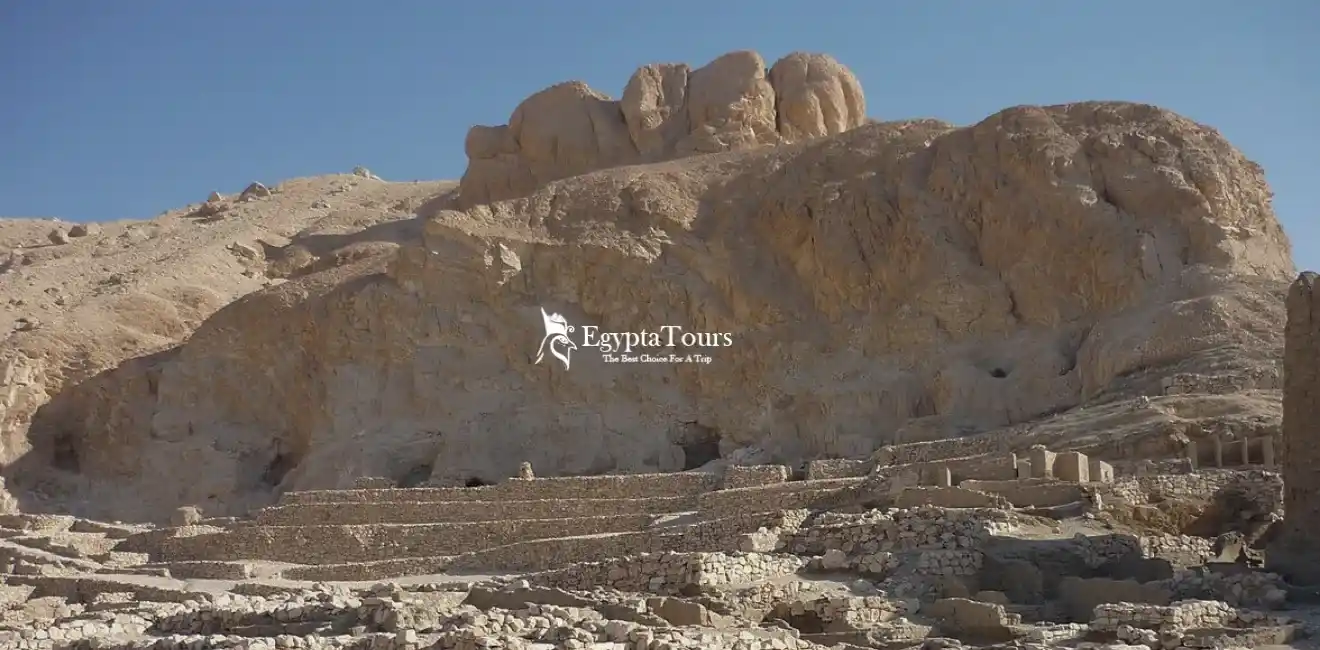
History-and-Significance-of-Deir-El-Medina-EgyptaTours
Deir El-Medina is an ancient Egyptian village located on the west bank of the Nile, opposite to Luxor. It was home to the artisans who worked on the tombs in the Valley of the Kings and Queens during the New Kingdom period. The village was founded in the 18th dynasty by Amenhotep I and was inhabited until the reign of Ramesses XI, approximately three hundred years later.
The artisans who lived in Deir el-Medina were considered to be some of the most skilled craftsmen in ancient Egypt. They were responsible for crafting all of the decor and hieroglyphs that were used in the tombs of pharaohs and nobles. The village was extremely well-protected and no outsider was allowed to enter without special permission from the authorities.
Today, Deir el-Medina is a popular tourist destination and is open to visitors from all over the world. The village is home to a number of fascinating archeological sites, including the tomb of Nefertari, which is considered to be one of the most beautiful tombs in Egypt.
Deir El-Medina doesn’t try to impress you with size. It wins you over with intimacy. Instead of walking through a grand state temple built for public display, you’re stepping into a planned village built for a single purpose: housing the artisans who created royal tombs.
That focus changes what you learn here. You get a clearer view of daily life in ancient Egypt, not just royal ceremony. These were working families with schedules, supervisors, pay, arguments, and private hopes about the afterlife. At bigger sites, you might admire a pharaoh’s story carved in stone. Here, you catch the human side, like reading a diary instead of a billboard.
Another reason Deir El-Medina stands out is the paper trail. The workers wrote things down, a lot. Because of that, historians can piece together their routines and disputes with unusual clarity. If you like sites that make you feel like you’re meeting people, not just studying monuments, this place hits the mark.
Deir El-Medina dates mainly to Egypt’s New Kingdom (roughly the 18th to 20th Dynasties), when royal tomb building reached its peak. The state needed trusted, trained hands to work on the hidden tombs of the Valley of the Kings, so it formed a dedicated community and kept it under close watch.
This wasn’t a random neighborhood that grew over time. It was organized and controlled, with officials who managed supplies and security. The workforce included stone cutters, plasterers, draftsmen, painters, and scribes. Each role mattered. One person shaped a wall, another smoothed it, another drew the grid, and another added color and text.
Many records survived because the workers used ostraca, broken pottery and limestone flakes, as their notepads. Think of them as ancient sticky notes. They wrote letters, lists, and complaints, the kind of
| Category Name |
|---|
| Alexandria Tour Packages |
| Cairo Short Breaks |
| Giza Pyramids Day Tours |
| Egypt Honeymoon Packages |
| Egypt Travel Packages |
| Luxor Short Breaks |
| Nile Cruises |
| Egypt Sahara Tour Packages |
If you’re looking for an adventure with a more cultural bend, Deir El-Medina, Luxor offers plenty of fascinating attractions and tours. Take a guided tour of the village and learn about its significant history, starting with its first occupants in the New Kingdom, who were primarily highly skilled craftsmen referred to as the “Village of Artisans”.
Learn about the culture and lifestyle at the time, along with their engineering skills and art style which can be seen in some of the most famous monuments around Egypt today.
The village also boasts a wide range of temples including The Temple of Hathor and The Temple of Deir El-Medina, both of which offer breathtaking insight into ancient life. You can also explore tombs scattered around the site, or take part in special activities such as learning how to make traditional Egyptian bread like the locals did years ago. Whatever you choose to do, you certainly won’t be short on things to experience!
Planning a trip to Deir El-Medina in Luxor does not have to be overwhelming. Ensure you have an extra passport photo for the entrance ticket, and wear comfortable shoes for walking around the ruins. You can get a good sense of Deir El-Medina in less than two hours, but a leisurely tour taking up to three hours allows you to better appreciate the artistry of the tombs and their intricate paintings.
Be sure to bring sunscreen, a hat, and plenty of water if you plan on exploring the site during peak season (spring through fall). Pack a lunch or snacks. There are limited cafes near the site that can be expensive so come prepared with your own food if possible. Lastly, be respectful of all parts of the sites and no smoking onsite as per Egyptian law. When in doubt, ask an onsite guard if photographing is allowed in certain areas as some areas may be off limits or restricted.
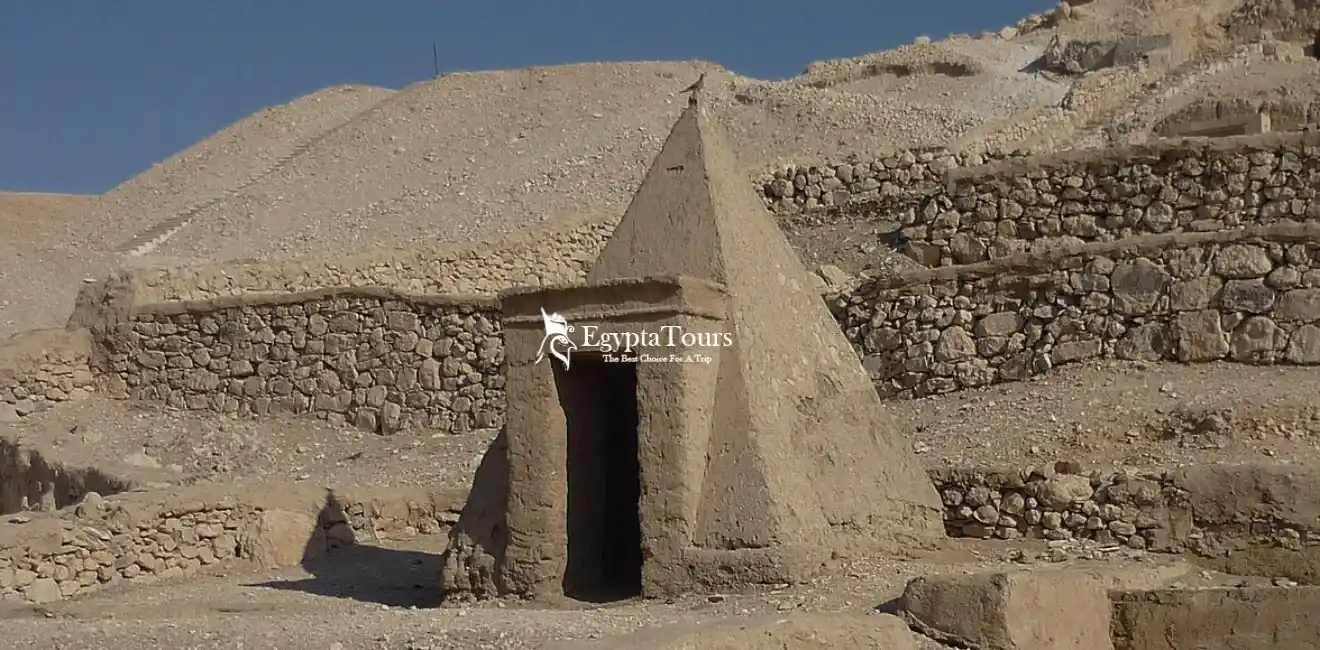
The-Tombs-in-Deir El-Medina-EgyptaTours
Have you ever wanted to explore ancient tombs in a faraway land? Well, you’re in luck because Deir El-Medina is home to some of the oldest and most beautiful tombs in Luxor!
The tombs are well-preserved and feature brightly colored paintings and hieroglyphics, telling stories from thousands of years ago. You can explore the tombs on your own or join one of the guided tours offered by the local guides.
Be sure to bring a camera to take pictures of all the amazing artifacts and murals that tell stories about pharaohs, gods, goddesses and ancient customs. You’ll also want to wear comfortable shoes as some tombs have stairs that require a lot of walking. Finally, try to stay in the shade as much as possible; it can get hot during midday!
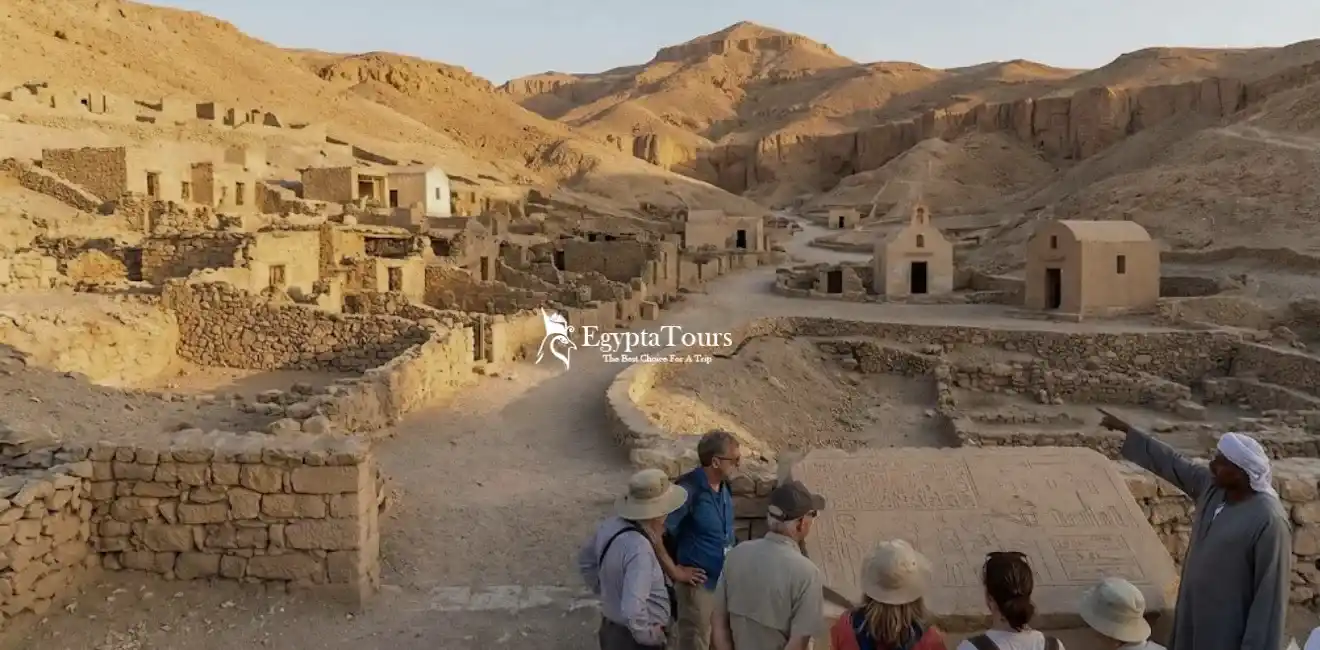
How-to-visit-Deir-El-Medina-from-Luxor-without-stress-EgyptaTours
Deir El-Medina sits on Luxor’s West Bank, close to the Valley of the Queens area. Because distances between sites can be short but the heat can feel intense, planning matters more than people expect.
Most travelers do best with a morning visit. Light is softer for photos, temperatures are kinder, and you’ll often beat the larger tour groups. If you’re building a half-day plan, Deir El-Medina fits nicely because it’s small enough to feel manageable, but rich enough to feel complete.
Bring the basics and you’ll be comfortable: water, a hat, sunscreen, and closed-toe shoes for uneven ground. Cash is useful for small expenses, and a small flashlight can help you see details in darker corners (if allowed, and never aimed too close at painted walls).
To get from Luxor to Deir El-Medina, you have a few simple options:
Ticket rules can change, and tomb access can rotate. The safest move is to check at the official West Bank ticket office the same day, then plan around what’s open. Also ask about photo rules before you enter. A “no camera” sign is easy to miss when you’re excited.
Aim to arrive early, both for cooler air and for a calmer feel inside the tombs. Small spaces fill up fast.
For first-timers, a half-day route keeps things enjoyable:
Start with Deir El-Medina (about 60 to 90 minutes, depending on tomb access and your pace). Then choose one nearby major stop:
Option A: Valley of the Queens Great if you want more tomb art and a strong sense of place. Plan 90 minutes, plus walking time.
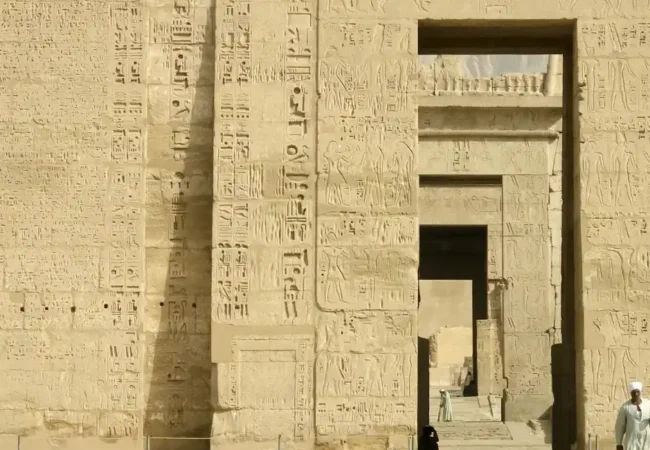
Option B: Medinet Habu Best if you want big walls, towering gates, and dramatic reliefs. Plan 90 to 120 minutes.
Add a short break between sites. Even 15 minutes in shade, with water, can reset your energy. Deir El-Medina is a good choice when you want depth without committing to a full day of nonstop monuments.
Conclusion
So, there you have it! Our guide to exploring Deir El-Medina in Luxor. We hope you enjoy your time there as much as we did. If you have any questions or need any advice, don’t hesitate to contact us. We’ll be happy to help.
Are you looking for answers to some of the most frequently asked questions before exploring Deir El-Medina in Luxor, Egypt? Here are the FAQs that will help answer all your queries:
On the west bank of the Nile in Thebes, opposite modern Luxor, near the Theban Necropolis.
It was the village of the artisans who built and decorated the royal tombs in the Valley of the Kings and nearby tombs.
Primarily during the New Kingdom (roughly 16th–11th centuries BCE).
Skilled craftsmen, sculptors, masons, painters, and their families, who worked on royal tombs and monuments.
It offers a rare, well-preserved snapshot of daily life, social structure, and labor organization of ancient Egyptian artisans.
Yes—the village contains workers’ cemeteries and residential courtyards, and nearby tombs in the Theban necropolis illustrate the artisans’ work and status.
Yes, it is part of the Theban Necropolis, which is inscribed as a UNESCO World Heritage Site.
Access is typically via guided tours from Luxor; some areas may be restricted, and conditions vary by site and season.
Yes; the artisans who built the tombs in the Valley of the Kings lived here and worked on those tombs.
It can take anywhere from a few hours to a full day depending on how deep you want to explore.
The best time to visit this archeological site would be during the winter season from November through March. The weather during these months is relatively cooler and more pleasant for sightseeing.
Yes, there are certain rules and regulations that you need to follow such as no smoking, no taking pictures without permission, and staying on marked trails at all times.
Yes, there is an entry fee which is around $15 USD per person.
Some of the attractions nearby include the Valley of Kings, Karnak Temple Complex, Luxor Temple and Hatshepsut Temple among others.



Explore our top-rated Egypt travel packages and embark on an unforgettable journey. From the Pyramids of Cairo to the magical temples of Luxor, Aswan, and Abu Simbel, discover expertly curated tours designed for your perfect Egyptian adventure