Heliopolis
Heliopolis, known in ancient times as the “City of the Sun,” is...



Ancient Egyptian nobles held great influence, shaping politics, religion, and daily life. Their wealth and power left behind a legacy that still fascinates the world today.
The ancient Egyptian nobility played a fundamental role in shaping Egypt’s cultural identity throughout its various eras. They served as the backbone upon which the pharaoh relied in managing the country’s affairs.
Their presence was not merely honorary or symbolic; rather, they were the actual force driving the state whether administratively, economically, religiously, or militarily.
They formed a link between the top of the political pyramid represented by the pharaoh, and the common people.
They were responsible for translating royal decrees into concrete reality on the ground and participated in implementing state policies to ensure Egypt’s continued stability and prosperity.
When we look at the achievements of ancient Egyptian civilization from towering pyramids and massive temples to advanced agricultural systems and intricate engravings we find that behind it all stood the prominent role of the Egyptian nobility who harnessed their power, wealth, and expertise to ensure the supremacy of their kingdom.
The Ancient Egyptian Nobles consisted of high-ranking government officials, military leaders, the king’s advisors, high priests, and ministers. They represented the upper class after the pharaoh and had special privileges, enjoyed great authority, and possessed private wealth. They led military operations, oversaw lands, organized religious affairs, and collected taxes. They lived in luxury under the pharaoh’s rule. These positions were only available to the ruling family, and they were appointed by the pharaoh, and later the position became hereditary.
The Ancient Egyptian Nobles managed lands and various regions, collected taxes, and ensured the implementation of law and order.
This role was undertaken by advisors and ministers, who supported the king in making decisions.
This group was responsible for national security, defending Egypt, and protecting the state.
The role of high priests was extremely important as they led religious rituals, held high priestly positions, and were responsible for mummification, funeral rites, and burial.

Privileges-Of-Ancient-Egyptian-Nobles-EgyptaTours
The Ancient Egyptian Nobles possessed great wealth and owned vast lands with abundant resources. And they were often the relatives of the pharaoh.
The Ancient Egyptian Nobles’ lives were full of wealth, luxury, and abundance of riches. They had spacious palaces, luxurious clothing, and exquisite, finely crafted sandals.
The Ancient Egyptian Nobles were exempt from paying taxes, which were not imposed upon them.
The Ancient Egyptian Nobles had access to high-level education, enabling them to be doctors, scribes, engineers, and other scientific jobs.
The Ancient Egyptian Nobles were helping the king in managing his affairs and had to be a source of trust for the king. They were considered the link between the king and the people, helped implement state policies, and ensured the country’s stability. Therefore, it was necessary to ensure their loyalty to the king and their maintenance of the country’s stability and security.
The Ancient Egyptian Nobles contributed to major projects such as building temples and tombs, and undertook various cultural and religious projects.
The Ancient Egyptian Nobles also helped the king in making appropriate decisions. Their education also qualified them to become doctors, capable of treating people.

The-Role-and-Status-of-the-Ancient-Egyptian-Nobles-EgyptaTours
The ancient Egyptian nobility was the primary pillar upon which the stability of the ancient Egyptian political and administrative system was built.
They represented the pharaoh’s executive branch, and their duties varied from collecting taxes, supervising agricultural lands which were the primary source of wealth, organizing irrigation and canal networks, and protecting the borders from invasions. They also managed the workers who participated in the construction of monumental projects such as the pyramids and temples.
The extent of the tasks entrusted to these nobility reveals the extent of the trust the pharaoh placed in them as he could not have ruled Egypt alone without relying on them.
In times of war, they were the military commanders who led armies into battle directed war plans, and oversaw the securing of strategic trade routes. They also participated in the judiciary with some serving as local judges who adjudicated disputes based on the laws of the state and the principles of “Maat,” which represented justice and right.
The continuity of Egyptian civilization for centuries would not have been possible without the contributions of the ancient Egyptian nobility who ensured the cohesion of the state despite internal and external challenges.
The ancient Egyptian nobility was characterized by a strict class structure that clearly defined the responsibilities of each position within the ruling elite.
At the top of this pyramid stood the vizier, or “grand vizier,” who acted as the prime minister and oversaw all state affairs from agriculture, taxes, and irrigation to the judiciary and the army.
The vizier was described as the “guardian of maat,” meaning the protector of order and justice. This position required great wisdom and comprehensive knowledge of state affairs.
Next in line were the provincial governors, or nomarchs who administered 42 provinces in Egypt. They regulated taxation oversaw agriculture, and collected crops for the royal treasury. Over time, especially during periods of weak central authority some nomarches became semi-independent leading to internal conflicts and divisions.
The high priests also occupied a prominent position in this hierarchy as their role was not limited to religious rituals but extended to controlling vast economic resources through the temples.
The military leaders from the nobility were the protectors of the borders and leaders of expansionist campaigns that secured new resources of gold and timber for Egypt.

Ancient-Egyptian-Noble-Women-and-Their-Influence-EgyptaTours
Although ancient Egyptian society was predominantly male-dominated ancient Egyptian noble women were able to establish a strong presence in various fields. They often managed vast estates, supervised hundreds of workers and servants, and ensured the continuity of agricultural and industrial production on family estates.
Their roles also became prominent in religious life with some holding prestigious religious titles such as “Wife of the God Amun,” a position that granted its holders enormous political and economic influence in addition to their control over temple resources.
One of the most prominent examples is Queen Hatshepsut who transitioned from being a noble wife to one of Egypt’s greatest rulers undertaking monumental architectural projects and promoting trade with the land of Punt.
Queen Nefertiti was a symbol of beauty and wisdom and partnered with her husband, Akhenaten, in imposing the worship of the god Aten.
A study of the role of Egyptian noblewomen reveals that influence was not limited to men women also held a significant share of power and authority whether through wealth management or religious and political influence.

The Ancient Egyptian Nobles Tombs
The main vizier of Pepi I, is a notable example. Her daughter married the pharaoh’s son, and she ruled Egypt as regent for her son. As is often the case, positions were hereditary, and the pharaoh would choose specific families for these roles.
one of the Great Ancient Egyptian Nobles of the state during the reign of Ramses II, who had his own tomb.
who served as the overseer of the gardens of the Temple of Amun during the reign of Amenhotep II and worked as the director of the king’s wealth during the reign of Thutmose III, was also a noble. He was a royal seal-bearer and is said to have been married six times.

The-Wealth-of-the-Ancient-Egyptian-Nobles-EgyptaTours
Wealth was the cornerstone of the power of the ancient Egyptian nobility as they received vast tracts of agricultural land as a reward from the pharaoh for their services. These lands were the source of grain, wine, oil, and livestock production providing them with self-sufficiency along with a huge surplus directed to the royal treasury or for trade.
They also owned specialized workshops for the manufacture of textiles, jewelry, and boats which further diversified their sources of income.
Wealth was also a means of securing social and political influence enabling them to finance massive construction projects such as temples, statues, and lavish tombs. They inherited these properties from their children preserving the power of noble families across generations.
The power of the ancient Egyptian nobility was directly linked to their ability to control agricultural and commercial wealth making them an indispensable class regardless of changing political circumstances.

Religion-and-Spirituality-the-Ancient-Egyptian-Nobles-EgyptaTours
Religion was a fundamental pillar in the lives of the ancient Egyptian nobility as it was not merely a spiritual ritual but an integral part of their political and social influence. They played the role of official patrons of temples and participated in financing major religious rituals and celebrations.
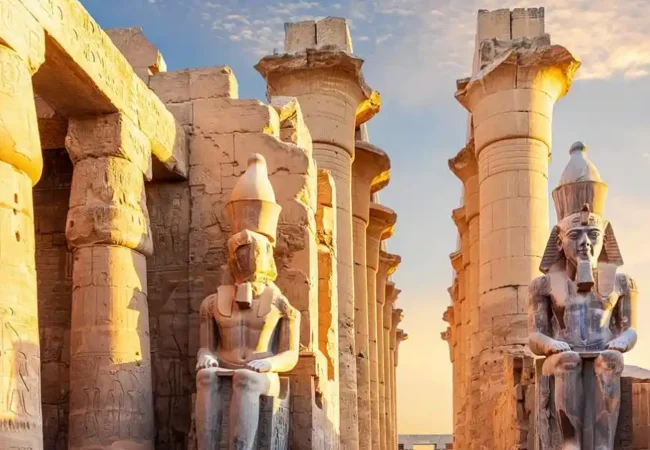
Their contributions to the construction of monumental temples such as Karnak and Luxor are a major reason why their names remain etched in historical memory.
Many of them also held high priestly positions especially in The worship of Amun where priests possessed vast wealth that enabled them to sometimes compete with royal authority, and were also keen to furnish their tombs with funerary inscriptions that reflected their belief in resurrection and immortality.
They depicted themselves in poses that reflected their luxurious life on earth and their hope for its continuation in the afterlife.
Religion was an important means of enhancing the status of the ancient Egyptian nobility and ensuring their continued influence even after death as they considered themselves intermediaries between the people and the gods.
The Ancient Egyptian Nobles’ Tombs are carved into rock tombs belonging to high-ranking officials, including priests, scribes, and military officers. Carved into sandstone, they span from the Old Kingdom to the Roman era, showcasing the lives of influential individuals.
The Ancient Egyptian Nobles’ Tombs are considered the best tombs after the tombs Valley of the Kings, with thousands of tombs discovered, dating back to the 18th dynasty. They’re filled with diverse inscriptions, colorful paintings, and depictions of gods, making a visit truly unique.
The tomb scenes are divided into two main themes: funerary scenes, that explain the deceased’s journey to the afterlife, and worldly scenes, depicting their earthly activities.
The Ancient Egyptian Nobles‘ Tombs are located in West Thebes, near Luxor, and are considered one of the most important archaeological sites that illustrate the life of this class.
Ancient Egyptian Nobles’ Tombs area is divided into 6 main divisions from north to south:
This tomb is Located in the north, its entrance is an extension of the Valley of the Kings tombs, named after the village in the area. (Quraet El-Tarafa).
This amazing tomb is located at the west of Hatshepsut Temple.
These tombs were divided into Upper Khokha and Lower Khokha.
They include several tombs accessible to visitors, including the Upper and Lower Huzat.
The Ancient Egyptian Nobles’ tombs contain many magnificent wall paintings that explain Ancient Egyptian Nobles daily life, scenes of joy, dance, singing, and feasts.
These artistic images are not just for decoration, but they clarify the importance of these activities in ancient Egyptian civilization and other life traditions.
Music was an important part of Ancient Egyptian Nobles’ lives, they used it in the religious and secular celebrations, social events and also to honor deities, victory celebrations, and achievements.
The reliefs show many live music scenes, with musicians playing instruments like the harp, lyre, drums, and flute, in addition to dancers in various poses.
Dance scenes in the Ancient Egyptian Nobles’ tombs are amazing, showcasing elegant female dancers moving with the music. The dancers, adorned in ornate attire, express joy and delight through harmonious movements, weaving through the crowd. This scene embodies the essence of beauty and luxury.
The Feast Scenes show tables laden with food, including a lot kinds of food such as bread, fruits, meats, and wine. Servants, dancers, and musicians are shown serving, highlighting the social bonds and high status of the tomb owners. Some reliefs feature the deceased or Ancient Egyptian Nobles’ family enjoying food amidst celebrations, music, and dance.
The scenes of Ancient Egyptian Nobles’ demonstrate the Egyptians’ connection to beauty and life, providing a luxurious afterlife for the deceased, as they believed. They demonstrate the Egyptians’ faith in life continuing beyond death and highlight the Ancient Egyptian Nobles’ lifestyle, served by attendants, dancers, and musicians, showcasing social disparities.
And through these scenes, we gain insight into their daily lives, values, and religious beliefs, understanding how the Ancient Egyptian Nobles’ lived and what they believed in.
This tomb provides insight into the architectural style of the tombs and explains the titles and roles held by the Governors of the South. They also underscore the crucial role of Southern Princes in protecting the country.
His tomb is one of the largest tombs in the mountain, but it was never used and remained unfinished, because Ramose left Thebes for Amarna, where Amenhotep IV resided.
It is marked by the new art style that emerged during Akhenaten’s reign, known as the Amarna art. Ramose was the governor of Thebes and held the position of vizier under Amenhotep III and IV.
The art of this period is marked by flourishing sculpture and engraving.
The tomb merges two periods of different kings with distinct styles and beliefs, resulting in diverse art on its walls, showcasing elegance, colors, and intricate carvings.
It presents early texts related to the Aten faith. The tomb’s shrine illustrates the process of excavation, painting, engraving, and coloring, starting with the exterior courtyard, facade preparation, main hall carving, and wall polishing, followed by the remaining steps to complete the tomb.
showcasing lively dancers and musicians, and the tomb of Rekhmire, featuring a grand feast with food, drink, and entertainment. These scenes convey luxury, joy, and the importance of social gatherings.
A tomb belonging to Menna, the royal fields’ scribe during the reign of Thutmose IV. Some believe that this tomb belonged to the Minister of Agriculture, as most scenes focus on agriculture, including plowing, planting, harvesting, and some sea and land scenes,
all under Menna’s supervision, during the New Kingdom period. It appears from the tomb’s scene that there was an enemy who harbored hatred towards Menna, as they disfigured his face after death and damaged his eyes, so he wouldn’t enjoy the afterlife or see anything, and wouldn’t see the agricultural works assigned to him.
This tomb belongs to Senfer, the supervisor of the gardens of the Temple of Amun during the reign of Amenhotep II. He became the director of the king’s wealth and seal bearer during the reign of Thutmose III. He had a daughter named Renena.
In his tomb, grape clusters form the ceiling, and the walls and columns feature depictions of Senfer with his sister. Various statues and a prayer niche remain at Gebel el-Silsila. His tomb is notable for the part carved into the rock, decorated with colorful paintings of cultural significance. It’s the only tomb, apart from the Deir el-Medina tombs, where the burial chamber is decorated with colorful scenes.
Sennedjem was considered the chief worker in the 19th dynasty during the reign of Seti I and Ramses II. He was called “servant in theTruth Place”. His tomb in Deir el-Medina consists of a single room, and its paintings are considered a masterpiece of beauty,
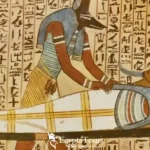
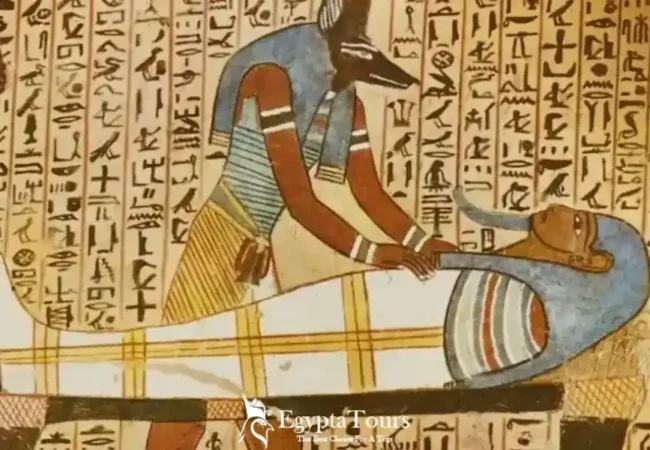
including the scene of a cat killing a snake at the top of the burial chamber. There is also a scene of Sennedjem and his wife, I-Neferti, worshiping the gods. There are other scenes, such as Anubis embalming his body, and the Fields of Aaru in the afterlife, where he and his wife are sowing, plowing, and harvesting.
This tomb is Located in El-Assasif, Thebes, during the reign of Amenhotep III. His royal wife was Tiye, and her tomb is in El-Assasif, part of the Theban Tomb.

Tomb-Of-Amenemhat-EgyptaTours
Amenemhat was the chief steward and overseer of Amun’s cattle during Amenhotep III’s reign, mid-18th dynasty. Son of It, also an overseer of Amun’s cattle, his wife was Lady Mut-tuy.
A double tomb for two dignitaries of the 5th dynasty; Ptahhotep and his father Akht-hotep. Ptahhotep was a judge and Chief Advisor, supervisor of the pyramids of Menkaure and Isesi, and supervisor of the priests of Niuserre’s pyramid.
Located west of the Step Pyramid, featuring daily life, funerary scenes, and religious texts. Notably, singers entertained Ptahhotep with music, considered one of the greatest philosophers of the Pharaonic era.
Belonging to Chief Advisor Mehu, 6th dynasty. He held the title “Supervisor of King Pepi I’s Pyramid”. Discovered in 1940 by the Egyptian Antiquities Service. Notable for its perfectly preserved colored reliefs, especially the offering chapel’s untouched colors, exemplifying the beauty of high-ranking officials’ tombs.
Belonging to the chief royal butcher, 5th dynasty. Known as the “Butcher’s Tomb” in Saqqara. The upper part is a single, elongated piece carved into the bedrock. Famous for its numerous rock-cut statues, unusual for the time; eight on the left wall and four on the right.
The eight statues depict the tomb owner at different life stages, sometimes as a young man with a mustache, sometimes as an old man with wrinkles. One statue depicts a woman, possibly his wife or a female relative.
The available Ancient Egyptian Nobles’ for visitation are 19 out of thousands of discovered tombs in the Nobles’ Tombs, divided into five main sections based on the time period, differing in the quality of drawings, colors, and architectural style:
The drawings are considered inferior to those of the New Kingdom tombs, with dull colors and mostly thick black lines, but some tombs feature high-quality drawings and detailed depictions of animals, jewelry, and religious details.
Tend to be small and lack many inscriptions.
From the reign of Amenhotep II, characterized by prominent reliefs carved with great precision, unmatched in the Nobles’ Tombs or other tombs.
Feature simple inscriptions but many beautiful colors, like the tomb of (Inherkhau), the only tomb in the Nobles’ Tombs where the artists’ names are known.
From the reign of Amenhotep III, among the best and most colorful Nobles’ Tombs, featuring stunning colors, inscriptions, and drawings, making them an important tourist landmark.
The ancient Egyptian nobility was more than just a class it was the driving force that helped Egypt remain one of the greatest civilizations in history. Through their administrative, political, military, and religious roles they were able to ensure stability for the pharaoh and security and prosperity for the people.
They also established social and economic traditions whose influence has continued throughout the ages. Despite the decline of their influence with foreign invasions their monuments, temples, and inscriptions remain a testament to the greatness of their role and status in ancient Egyptian civilization.
The nobility was an upper social class comprising senior officials, ministers, priests, military leaders, and their families. They were distinguished by their ownership of vast agricultural lands and their holding of important administrative and military positions which made them more influential than the common people.
They derived their wealth primarily from lands granted to them by the pharaoh as well as from domestic and foreign trade, in addition to industrial workshops such as textiles wine, and oils. They inherited these properties from their children, ensuring their continued influence.
Women of the nobility were not limited to family life; they also participated in managing property. Some held major religious roles such as “Wife of Amun,” while others, such as Queen Hatshepsut attained power demonstrating the power of women’s influence within the nobility.
The relationship between them was based on mutual loyalty. The pharaoh granted the nobles land, positions, and gifts while the nobles were obligated to serve the state in administration, the military, and religion. However during periods of weakness in the central authority some nobles exploited their economic and military power to become quasi-independent rulers within their regions.
Their influence declined as a result of several factors most notably foreign invasions such as the Hyksos, Assyrians, and Persians, along with the rise of the priests in certain periods, and internal conflicts between the ruling families. These factors combined to diminish their power although their cultural and architectural influence remains to this day.
The nobility class consisted of high-ranking government officials, military leaders, the king’s advisors, high priests, and ministers. They represented the upper class after the pharaoh and had special privileges, enjoyed great authority, and possessed private wealth.
They led military operations, oversaw lands, organized religious affairs, and collected taxes. They lived in luxury under the pharaoh’s rule.These positions were only available to the ruling family, and they were appointed by the pharaoh, and later the position became hereditary.
The Ancient Egyptian Nobles were helping the king in managing his affairs and had to be a source of trust for the king. They were considered the link between the king and the people, helped implement state policies, and ensured the country’s stability.
Therefore, it was necessary to ensure their loyalty to the king and their maintenance of the country’s stability and security.
They contributed to major projects such as building temples and tombs, and undertook various cultural and religious projects.
They also were helping the king in making appropriate decisions for the country. Their education also enabled them to be doctors, treating people.
The main vizier of Pepi I, is a notable example. Her daughter married the pharaoh’s son, and she ruled Egypt as regent for her son. As is often the case, positions were hereditary, and the pharaoh would choose specific families for these roles.
one of the great nobles of the state during the reign of Ramses II, who had his own tomb.
who served as the overseer of the gardens of the Temple of Amun during the reign of Amenhotep II and worked as the director of the king’s wealth during the reign of Thutmose III, was also a noble. He was a royal seal-bearer and is said to have been married six times.
The Nobles’ Tombs are located in West Thebes, near Luxor, and are considered one of the most important archaeological sites that illustrate the life of this class.
The Ancient Egyptian Nobles’ tombs contain many magnificent wall paintings showing their daily life, scenes of joy, dance, singing, and feasts.
These artistic images are not just decorations, but they clarify the importance of these activities in ancient Egyptian civilization and other life traditions.
Music was an important part of their lives, used in religious and secular celebrations, social events, honoring deities, victory celebrations, and achievements.
The reliefs explain many live music scenes, with musicians playing instruments like the harp, lyre, drums, and flute, and dancers in various poses.
Dance scenes in the nobles’ tombs are amazing, showcasing elegant female dancers moving with the music. The dancers, adorned in ornate attire, express joy and delight through harmonious movements, weaving through the crowd. This scene embodies the essence of beauty and luxury.
The Feast Scenes shows tables laden with food, including bread, fruits, meats, and wine. Servants, dancers, and musicians are shown serving, highlighting the social bonds and high status of the tomb owners. Some reliefs feature the deceased or their family enjoying food amidst celebrations, music, and dance.
Menna, the royal fields’ scribe during the reign of Thutmose IV.
The available Ancient Egyptian Nobles’ for visitation are 19 out of thousands of discovered tombs in the Nobles’ Tombs, divided into five main sections based on the time period, differing in the quality of drawings, colors, and architectural style:
The drawings are considered inferior to those of the New Kingdom tombs, with dull colors and mostly thick black lines, but some tombs feature high-quality drawings and detailed depictions of animals, jewelry, and religious details.
Tend to be small and lack many inscriptions.
From the reign of Amenhotep II, characterized by prominent reliefs carved with great precision, unmatched in the Nobles’ Tombs or other tombs.
Feature simple inscriptions but many beautiful colors, like the tomb of (Inherkhau), the only tomb in the Nobles’ Tombs where the artists’ names are known.
From the reign of Amenhotep III, among the best and most colorful Nobles’ Tombs, featuring stunning colors, inscriptions, and drawings, making them an important tourist landmark.



Explore our top-rated Egypt travel packages and embark on an unforgettable journey. From the Pyramids of Cairo to the magical temples of Luxor, Aswan, and Abu Simbel, discover expertly curated tours designed for your perfect Egyptian adventure