





Mastaba
The mastaba is considered one of Rthe first types of tombs that the ancient Egyptians built to bury the dead, believing that the deceased has another life after death, and that the mastaba is the place from which the deceased will begin his journey to the other world. This confirms the extent of the ancient Egyptians’ interest in the details of death. In this article, we will learn about what the mastaba is in ancient Egypt and how the mastaba developed from mud to stone.
What -Is -The -Mastaba- In -Ancient -Egypt
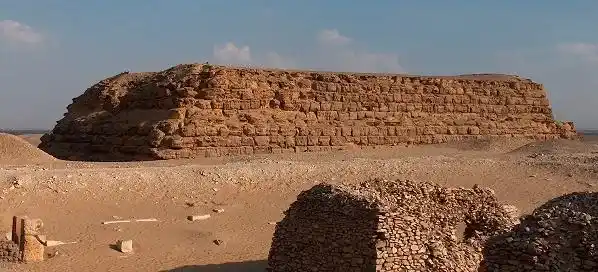
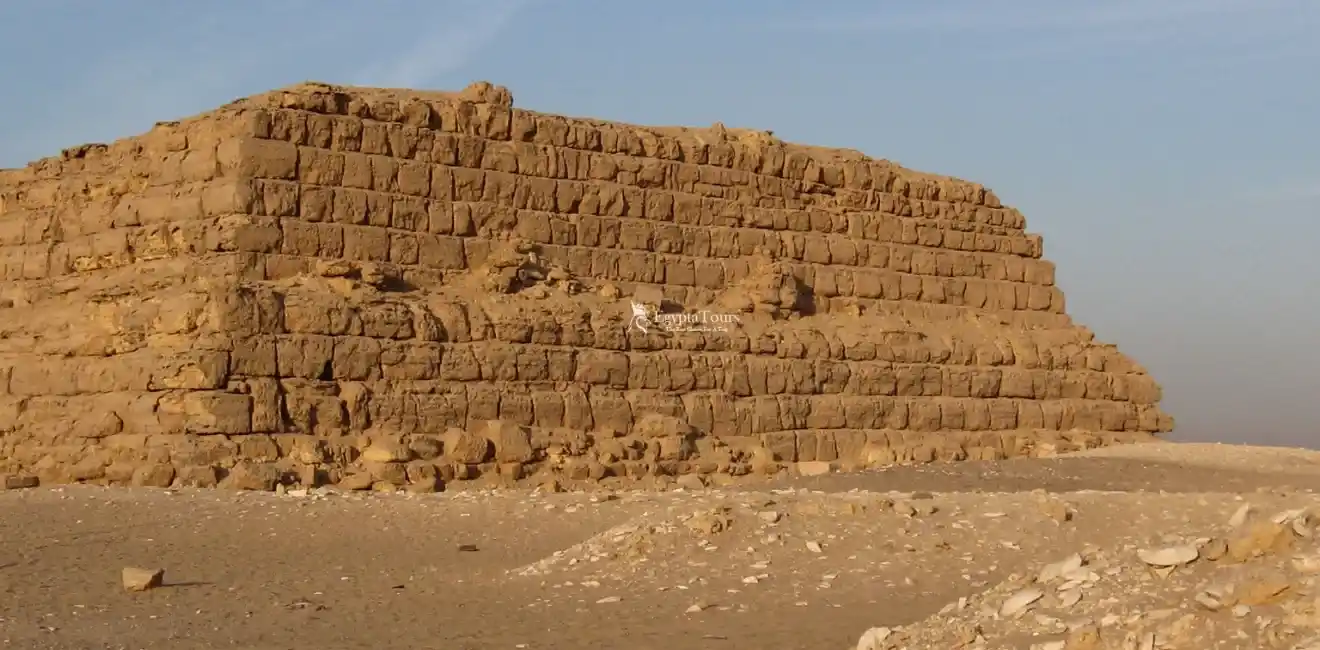
The mastaba in ancient Egypt is a tomb that was built elevated above the ground, with a flat top and sloping sides. It was used to bury the pharaohs, due to their strong belief that there is life after death, and that the dead will continue their lives in another world. Over time, the mastaba was developed and became decorated with many inscriptions related to the life of the deceased person.
The origin and formation of the mastaba before the appearance of pyramids
The mastaba was built before the appearance of pyramids in a rectangular shape and was anciently called the “eternal house.” It was built using mud bricks and stone and has sloping sides and a flat roof. Before the appearance of the mastaba, the Egyptians relied on burying the dead by digging a large pit and placing the deceased in it with his personal belongings, thinking that they would benefit the deceased in the other life.
After that, the mastaba was made, which is one of the first tombs built by the Egyptians to protect the bodies of the dead from thieves and animals. Then, the mummification method was developed, and officials and prominent people were the ones who could bury the body inside the mastaba and mummify it. Over time, the mastaba became available to the common people and not just for kings.
How did the mastaba develop from mud to stone?
Initially, the ancient Egyptians relied on building mastabas using mud bricks, due to their easy availability. But over time, the mud bricks began to erode due to weather factors, which made them resort to using stone because it is stronger and more durable and lasts for many years. The stone also made the mastaba look more distinct. The ancient Egyptians then added many inscriptions on the mastaba to commemorate the deceased, and that was the beginning of the development of mastabas in ancient Egypt.
The difference between the mastaba and the pyramid in ancient Egypt

The-Difference-Between-The-Mastaba-And-The-Pyramid-In-Ancient-Egypt
The difference between the mastaba and the pyramid in ancient Egypt is that the mastaba was the beginning of building simple tombs in the era of the ancient Egyptians, while the pyramid is the developed stage of building tombs in Egypt. Mastabas are also characterized by their flat and rectangular shape and were built of stone and brick, and kings and the middle class of the people were buried in them.
But the pyramids were built in the form of multiple layers on top of each other in the shape of a step pyramid, and the purpose of their construction was when kings began to look for a way befitting their burial upon death, and they were intended for the burial of kings and rulers only.
The importance of the location of the Saqqara mastaba and its tombs
The site of the Saqqara mastaba is one of the famous places for burying the dead in ancient Egypt, and it includes many mastabas that date back to different eras. It also includes the pyramid of Djoser, which was built by Imhotep, which is one of the most famous historical landmarks in Egypt. All these mastabas show the extent of the ancient Egyptians’ interest in tombs and the extent of the development of tombs in Egypt from simple tombs to pyramids.
The art and inscriptions inside the mastaba and their role in the afterlife
Inscriptions had an important role for the ancient Egyptians. They relied on drawing inscriptions on the tombs to show a part of the deceased’s life and what is related to him, thinking that the deceased would continue his life in another world. They also drew many symbols and prayers to protect the deceased from evil spirits, and this confirms the belief of the ancient Egyptians in the idea of resurrection and immortality after death.
How did mastabas help in the development of pyramid architecture?
The mastabas in ancient Egypt were the beginning of building tombs in Egypt, and they were characterized by their simple rectangular shape. After that, the Egyptians thought about developing the shape of the mastaba until the idea of building tombs in the form of stones on top of each other came, and they appeared in the form of a step pyramid. This was the beginning of building with stone in Egypt, and the pyramids were built in the shape we see now. Therefore, the mastabas are considered the beginning of building the pyramids.
How did the mastaba turn into an underground burial?
Initially, the mastabas in Egypt were used above the ground, and the bodies were placed inside them. But the ancient Egyptians noticed that the bodies might be subject to theft or be affected by the heat, so they decided to make the mastabas underground through deep digging and burying these mastabas to protect the dead and preserve them. This stage was one of the important stages in the development of mastabas in ancient Egypt.
Why did the idea of the mastaba almost disappear after the Old Kingdom?
At the end of the Old Kingdom era in Egypt, the idea of mastabas began to disappear gradually as the forms of tombs developed significantly. Kings began to bury the bodies in remote places that were difficult to reach to protect their belongings from theft. Therefore, they built the tombs inside the mountains, and this idea was less expensive and safer for them than the mastabas.
Famous architectural examples of mastabas
Famous-Architectural-Examples-Of-Mastabas
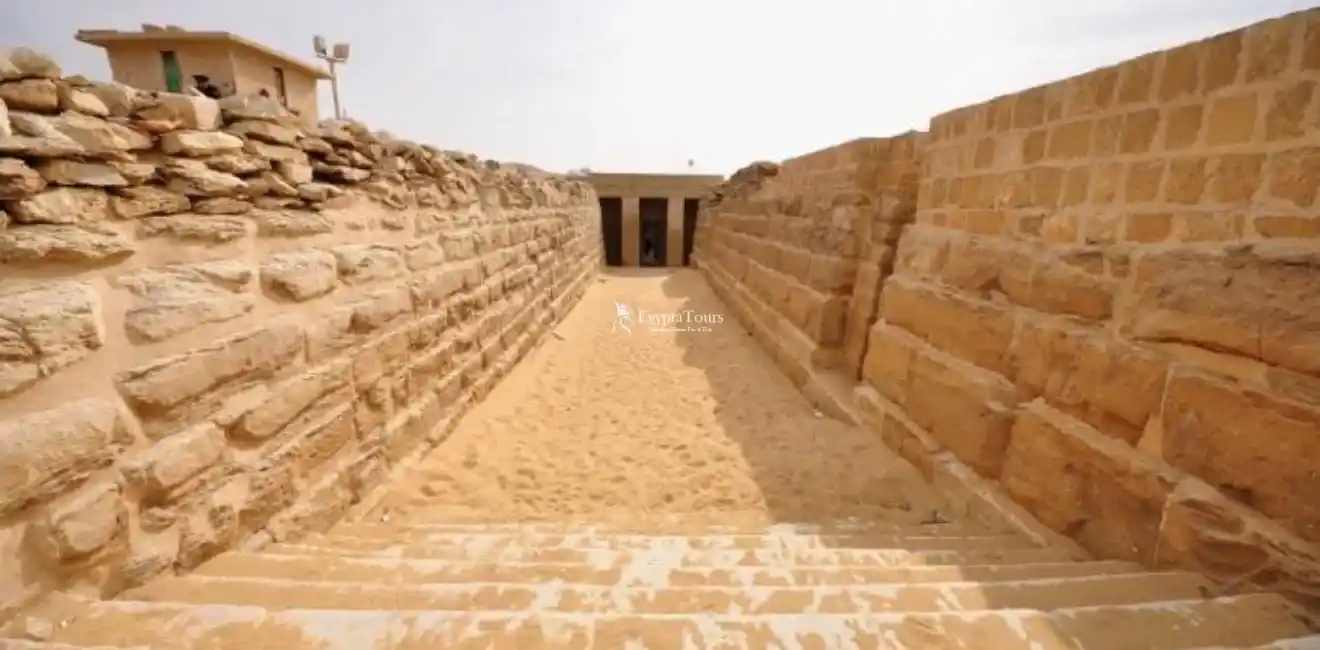
Among the most prominent famous architectural examples of mastabas are:
The Mastaba of Ti
It is one of the most famous archaeological mastabas and is located in the Saqqara area. It belongs to its owner, Ti, who worked as a supervisor of the pyramids and sun temples at the end of the Fifth Dynasty of Egypt. This mastaba is distinguished by many inscriptions and drawings that show the details of Ti’s life, and it is considered one of the most prominent artistic treasures in the ancient Egyptian era.
The Mastaba of Hesy-Ra
It is one of the oldest mastabas built in ancient Egypt and was built of brick. It was named after Hesy-Ra, who was one of the important figures in the state. He was one of the most important physicians in ancient Egypt and worked in the era of King Djoser. His mastaba is distinguished by being full of carved panels with his image while he is practicing his work, in addition to the drawings that show the interest of the ancient Egyptians in art and their respect for doctors and scientists.
What is the role of the mastaba in understanding the funerary beliefs of the ancient Egyptians?
The mastaba has a great role in understanding the beliefs of the ancient Egyptians, and its role is as follows:
- Through the drawings and inscriptions on the mastabas, scientists were able to know that the ancient Egyptians believed in the existence of another life after death.
- It showed how the deceased’s belongings were prepared with him in the tomb, such as food, drink, and personal items, believing that the deceased would continue his life in another world.
- The symbols and inscriptions engraved in the mastabas showed that the tombs of the rich were larger than the tombs of the common people, which shows the economic importance of the mastaba.
Conclusion
The ancient Egyptians relied on burying the dead inside the mastaba, due to their strong belief in the idea of life after death and thinking that in this way they were honoring the dead and preserving their bodies, so that they could return to life again. These mastabas are one of the most important pieces of evidence that prove the greatness of the ancient Egyptian civilization.
FAQs
What is the difference between a mastaba and a pyramid?
The difference is that the mastaba is one of the oldest models of Egyptian tombs that were used in the ancient era. It is characterized by its rectangular shape, its flat top with sloping sides, and it is built of brick and stone. As for the pyramid, it came in a stage of development of the mastabas in Egypt and is characterized by its pyramidal shape with sloping sides and was built using stone blocks.
Who were buried inside the mastabas?
The pharaohs, the rich officials in the state, the nobles, and the relatives of the royal family were buried inside the mastabas. They were decorated for them with many inscriptions and drawings that represent their lives. The purpose of this was to preserve the body and ensure its return to life again.
Where are the most famous mastabas in ancient Egypt?
Most of the mastabas that were built in ancient Egypt are located in the Saqqara area, and it includes a large number of tombs for the pharaohs, statesmen, and important figures.
How was the mastaba built and what materials were used in its construction?
The ancient Egyptians built the mastabas using brick. After that, the construction method was developed, and they relied on stone to build the mastabas, in addition to some materials used to decorate the walls of the tombs.
What is the religious purpose of building the mastaba?
The main purpose of the ancient Egyptians in building these mastabas was to preserve the bodies and protect them from theft or from damage due to weather factors, believing that the spirit would return to the body again to continue life.
What was found inside the mastabas of treasures or inscriptions?
Inside the mastabas, a large number of statues of the owners of the tombs were found, as well as some pottery vessels and personal tools for each tomb. The walls of the tombs were also decorated with many beautiful inscriptions and drawings that show the life of the ancient Egyptians.
About EgyptaTours

EgyptaTours is a name synonymous with trust, excellence, and unforgettable travel experiences, proudly standing as one of the leading travel agencies in Egypt. Renowned for its deep expertise, personalized service, and carefully crafted itineraries, EgyptaTours serves as the ultimate gateway to discovering Egypt in its most authentic and inspiring form.