Osiris
In ancient Egyptian mythology there were many gods and they were not...



The myths and gods were diverse in ancient Egypt, and each god had its religious importance in the life of the Egyptians throughout the ages, and they had special ways of worship for each deity, as well as different offerings, different priests, and different temples. Among these deities is the goddess Nephthys.
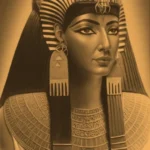
Nephthys is considered one of the most elusive and mysterious deities in ancient Egyptian mythology, and she was of exceptional beauty, as if she were from another world, and is depicted with great wings indicating her association with the falcon.

Nephthys
Nephthys is the daughter of Goddess Nut “the goddess of the sky and heavens” and Geb “the god of earth”.
She is the sister of the god Set, Isis, and Osiris, and myths say that she married her brother Osiris and that she is the mother of Anubis, the god of mummification in ancient Egypt.

The- Definition -Of- Nephthys.
She is a goddess of childbirth and of the dead according to the beliefs of the ancient Egyptians. And according to the myth of Isis and Osiris, she was a sister to Isis and Osiris, and the three of them were the children of the earth god Geb and the sky goddess Nut. And she often used to appear on the inscriptions with Isis as two mourners next to the deceased.

Life- Of -Nephthys.
Nephthys was a complex goddess, and there are many accounts of her marriage to her brother Set. However, she had positive aspects alongside her negative ones, such as her ability to heal the sick. Most often, she was associated with her sister Isis, who is more famous. Nephthys represented the negative side of Isis, while Set was the dark side of Osiris. She was invoked as the lady of life, heaven, and earth, and her stories were linked to the fertility god Min. She was part of the genealogy of the sun god Ra.
Nephthys did not have children with her husband Set, so she left him and seduced her other brother, Osiris, who was married to Isis. She gave birth to Anubis, who had the head of a jackal, with Osiris. Nephthys’ friendship with Isis resumed after Set killed Osiris, and she shared her grief and helped gather his remains. Together, they were known as the two mourning sisters.
Myths about Nephthys are numerous and varied, including that she helped her sister Isis gather the parts of the god Osiris who was killed by his brother Set, and it was also said that she protected the deceased on their journey to the afterlife and is a protector of kings and pharaohs, and the inscriptions in the temple have proven this myth.
It is also said that she was associated with childbirth and magic, and among the myths is that she was a sorceress who had a great healing ability and had great power in magic, as she knew many spells that enabled her to revive the dead and protect them from harm.
Nephthys was depicted as a woman wearing a head covering in the shape of a disk and horns, with her name above it. She was also shown with outstretched arms, as if they were wings. In funerary texts, she was depicted as a goddess helping and protecting the deceased on their journey to the afterlife. She was also depicted as a Benno bird.
Nephthys was known as the Lady of the House and was called Nebthwt or the Lady of the Temple. She was also referred to as the Goddess of the Fourth Generation and represented a member of the famous Heliopolitan Ennead.
One of her most important roles was protecting one of Horus’ sons, Hapi, who was responsible for preserving the lungs of the deceased.
Nephthys was not an independent goddess, but she was worshipped with Set in the New Kingdom era and with the god Antaeus and Anuket in the Late Period. Her role was also associated with rain, the Nile River, and protecting women in childbirth.
She was associated with night, mourning, childbirth, magic, health, mummification, and service, and she helped her sister Isis gather the parts of Osiris after he was killed by the god Set. She protected kings and pharaohs, and there are many inscriptions that indicate this role of Nephthys.
Nephthys played a significant role in the funerary rituals, as the ancient Egyptians believed she was one of the gods of death, darkness, and the unknown.
She protected the bodies of the dead and assisted them in their journey to the afterlife. Nephthys was the goddess of death and mourning, and she and her sister were depicted as guardians of the head and feet, standing on either side of the funerary bed to mourn the deceased or as two kites.
She was also depicted on the canopic jars in the form of a woman or a bird and appeared with her sister in the scene of weighing the heart in the Book of the Dead.

The -Status -Of -Nephthys -Among -The -Gods -Of -Ancient -Egypt.
The number of deities in ancient Egypt became many until it reached more than a thousand deities. And every god represents a side of the different aspects of life, like growth, the sun, fertility, arts, life, death and many others.
And Nephthys was one of the ancient Egyptian goddesses and was a mother to Anubis the god of mummification from her brother Osiris, as she represents death, secrecy, and darkness just as Isis was.
The symbolism was very important in depicting Nephthys, as the ancient Egyptians always depicted her accompanied by a falcon or a Benno bird, indicating her association with protection and power. She was also depicted with a basket or a house, which is why she was called the Lady of the House and its protector and guardian.

The- Worshiping -Of- Nephthys.
Nephthys was worshipped in Egyptian temples and was often depicted with her sister Isis and Osiris. The inscriptions on the temples clarified her role, and she had specific priests for her worship and offered special sacrifices to her.
In the 19th dynasty, a temple dedicated to Nephthys called the “House of Nephthys” was built on the outskirts of Fayoum, where the Ramesside pharaohs were devoted to the god Set. The temple of Nephthys was a specific foundation by Ramesses II and was located within the precinct of Set. There were fifty individual temples, including the temple of Nephthys, and the lands and properties belonging to the temple were under the authority of Penmer and Merybarse, who were her sons.
The temple of Nephthys in Sepermeru was under independent administration from the temples of Set. The papyri record the existence of several temples of Nephthys, not just one. In the Louvre Museum, there is a life-sized statue of Nephthys with an inscription that has been strangely altered.
Her cult images can be found as part of the divine entourage in many temples, and in some cases, Nephthys was represented as part of a triad alongside Osiris and Isis, or as part of a quartet of deities including Horus, Isis, and Min.
While many early cultures were still nomadic, Egypt had already developed complex religious systems and deities such as Nephthys.

The- End -Of -Nephthys.
Egyptian mythology does not end until the end of the ancient era and the descent of the heavenly religions within the scope of the spread of the myth. Therefore, the myth of Nephthys did not end until the heavenly religions entered Egypt. Even now, Nephthys is still considered just a myth, and it is regarded today as mythology rather than a belief system.
Nephthys is one of the ancient Egyptian goddesses and her name means Lady of the House. She was a goddess of the dead and of birth, but no specific role was known for her in the world of the Egyptian gods. She married the god Set and was unfaithful to him with the god Osiris and gave birth to Anubis. And this goddess had many temples, especially in the south of Egypt. And she and Isis were symbolized in the Book of the Dead and the Pharaonic inscriptions by two birds or in a normal human form.
Nephthys was considered one of the most elusive and mysterious deities in ancient Egyptian mythology, and she was of exceptional beauty, as if she were from another world, and is depicted with great wings indicating her association with the falcon.
She was the daughter of goddess nut “the goddess of the sky and heavens” and Geb “the god of earth.
Nephthys was depicted as a woman wearing a head covering in the shape of a disk and horns, with her name above it. She was also shown with outstretched arms, as if they were wings.
Nephthys was known as the Lady of the House and was called Nebthwt or the Lady of the Temple.
She was invoked as the lady of life, heaven, and earth.
She was depicted on the canopic jars in the form of a woman or a bird and appeared with her sister in the scene of weighing the heart in the Book of the Dead.
One of her most important roles was protecting one of Horus’ sons, Hapi, who was responsible for preserving the lungs of the deceased.
Nephthys played a significant role in the funerary rituals, as the ancient Egyptians believed she was one of the gods of death, darkness, and the unknown. She protected the bodies of the dead and assisted them in their journey to the afterlife. Nephthys was the goddess of death and mourning, and she and her sister were depicted as guardians of the head and feet, standing on either side of the funerary bed to mourn the deceased or as two kites.
Nephthys was worshipped in Egyptian temples and was often depicted with her sister Isis and Osiris. The inscriptions on the temples clarified her role, and she had specific priests for her worship and offered special sacrifices to her.
In the 19th dynasty, a temple dedicated to Nephthys called the “House of Nephthys” was built on the outskirts of Fayoum, where the Ramesside pharaohs were devoted to the god Set. The temple of Nephthys was a specific foundation by Ramesses II and was located within the precinct of Set.
Egyptian mythology does not end until the end of the ancient era and the descent of the heavenly religions within the scope of the spread of the myth. Therefore, the myth of Nephthys did not end until the heavenly religions entered Egypt. Even now, Nephthys is still considered just a myth, and it is not necessary to believe it.
The inscriptions say that she and Isis shared in marrying Osiris, or that, as the texts indicate, she deceived Osiris to have a relationship with her which resulted in the deity Anubis.
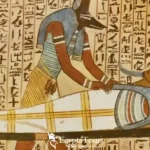
The darkest Egyptian god who is often depicted in the color black is Anubis, the god of mummification and the dead.
The myths say that she did not betray Set because of emotional betrayal but because the matter is more symbolic. She was inclined towards good, while Set was a god of chaos and destruction, so she wore the clothes of Isis and got close to Osiris and gave birth to Anubis from him.
The goddess Isis is considered one of the most powerful Egyptian goddesses in their beliefs, because of her magical powers, and her role in protecting her family and inspiring the dead.

Explore our top-rated Egypt travel packages and embark on an unforgettable journey. From the Pyramids of Cairo to the magical temples of Luxor, Aswan, and Abu Simbel, discover expertly curated tours designed for your perfect Egyptian adventure