Dogs in Ancient Egypt
Dogs in ancient Egypt were simply symbols of loyalty and companions in...



Isis remains one of the most complex, revered, and culturally significant goddesses in ancient Egyptian mythology. Originally emerging in the Old Kingdom as a patron of the pharaoh and the divine mother of Horus, her role rapidly expanded into a universal symbol of magical power, healing, and unstoppable devotion. Famous for using her profound wisdom and magic to resurrect her murdered husband, Osiris, she embodied the human ability to overcome loss and restore cosmic order.
Her popularity eventually transcended Egypt’s borders, capturing the hearts of the Greco-Roman world and establishing a religious legacy that influenced ancient mystery cults, classical art, and modern esoteric traditions.
Key Takeaways
The Ultimate Devotion: She is best known for the central myth of resurrecting her husband/brother Osiris after his murder by Set, a story that formed the entire foundation of ancient Egyptian funerary rites and concepts of the afterlife.
Unmatched Magical Power: Revered as the goddess of hidden knowledge and silent power, ancient texts claim she was “wiser than a million gods,” utilizing spells to conquer chaos, heal the sick, and even outsmart the supreme sun god, Ra.
A Universal Mother Figure: As the fierce protector and mother of Horus, she became the ultimate symbol of maternal generosity and fertility, eventually being invoked by everyday citizens to protect pregnant women and cure illnesses.
Expansion into the Roman Empire: Following the conquests of Alexander the Great, her worship spread rapidly across the Mediterranean. The Greeks and Romans embraced her as a Hellenistic cosmic deity, establishing grand temples and secret mystery cults in her honor.
A Lasting Global Legacy: Long after the decline of ancient Egyptian religion, her image as a veiled symbol of natural truth, resurrection, and feminine divinity continued to inspire Renaissance thinkers, 19th-century secret societies, and modern Egyptian nationalist movements.
The gods in ancient Egypt were the result of the first human attempt to understand life and control the mysterious things that happen in it. The ancient Egyptians believed that the gods were not separate entities from the world but were living manifestations of the laws of nature and the cycles of time.
The gods controlled creation, growth, destruction and resurrection. The ancient Egyptians had a complex religious system, in which myth, philosophy, symbol and reality were all intertwined. Worship was a means of understanding life and approaching the sacred.
Isis was an important goddess in the Egyptian religious system. She was the goddess of hidden knowledge and silent power. She represented the consciousness that brings together opposites,
life and death, weakness and strength, pain and hope. Isis relied on patience, wisdom and magic as a sacred science. Her role in reviving Osiris and protecting Horus made her a symbol of resurrection and continuity and a guarantee of the transfer of power and order through generations.
Isis was more than a goddess, she was a philosophical idea that represented the human ability to recreate from the heart of loss and to transform knowledge into power and love into a means of salvation. Therefore, her presence remained rooted in Egyptian memory not just as a goddess but as an eternal idea about the quiet triumph of life.

Isis -The- Major -Goddess
sis was a major goddess in ancient Egyptian religion, and her worship eventually spread throughout the entire Greco-Roman world. First mentioned in the Old Kingdom (circa 2686–2181 BCE), she is a central character in the myth of Osiris. In this famous story, she revives her murdered brother and husband (Osiris) and raises his heir (Horus).
How Her Worship Evolved Over Time:
The Old Kingdom: Depicted as the divine mother of the pharaoh, who was likened to her son, Horus.
The New Kingdom (1550–1070 BCE): She took on traits from Hathor (an earlier leading goddess) and began wearing Hathor’s crown—a sun disk resting between the horns of a cow.
The First Millennium BCE: Isis and Osiris became the most widely worshipped Egyptian gods. Isis was believed to have greater magical power than all other gods, ruling the natural world and wielding power over fate itself.
The Hellenistic Period (323–30 BCE): Worshipped by Greeks and Egyptians alike, her followers attributed new characteristics to her, such as the invention of marriage and the protection of ships at sea.
By the time Hellenistic culture was absorbed into Rome, her worship had become a prominent part of Roman religion. Although her cult officially ended with the rise of Christianity, she remains a powerful figure representing nature and the feminine aspect of divinity in modern esoteric cultures.

Isis -In -Egypt -and -Nubia
Isis was revered by Egyptians, Nubians, and Ethiopians as “Queen Isis.” Nubia—also known as the Gold Land or the Kingdom of Kush—was heavily influenced by Isis worship.
The Nubians continued to worship her even after the famous Temple of Philae was officially closed. Known in Nubia as the “Great Lady of Nubia,” she frequently appeared in healing rituals as a goddess of fertility and magic. Cities like Meroe and Wad ben Naqa became major centers of Isis worship, and the Temple of Philae served as a massive pilgrimage site for Nubians.

The -Name- And -Origins -Of -Isis
While some Egyptian gods appeared in the late Predynastic Period (before circa 3100 BCE), Isis and her husband Osiris were not mentioned by name until the Fifth Dynasty (circa 2494-2345 BCE).
An inscription that may refer to Isis dates to the reign of Nyuserre Ini during that period and she appears prominently in the Pyramid Texts which began to be written at the end of the dynasty and grew in content over time. Several passages in the Pyramid Texts link Isis with the region of the Nile Delta near Behbeit el Hagar and Sebennytos and her cult may have originated there.
Many scholars have focused on Isis’s name in an attempt to determine her origins. Her Egyptian name was written 𓊨𓏏𓆇𓁐 (ꜣst) which changed pronunciation over time: Rosat then Rosa then Usa then Isis which became ⲎⲤⲈ (Isē) in the Coptic form of Egyptian, Wusa in the Meroitic language of Nubia and Ἶσις on which her modern name is based, in Greek.
The hieroglyphic writing of her name incorporates the sign for a throne which Isis also wears on her head as a symbol of her identity. The sign serves as a phonetic spelling of the letters in her name but it may also represent a link with actual thrones. The Egyptian term for throne st. is likely to share an origin with Isis’s name.
Therefore, Egyptologist Kurt Sethe suggested she was originally a personification of thrones. Henri Frankfort agreed, believing that the throne was considered the king’s mother and thus a goddess because of its power to make a man king. Other scholars such as Jürgen Osing and Klaus P. Kuhlmann, have disputed this explanation, due to differences between Isis’s name and the word for throne or a lack of evidence that the throne was ever considered a goddess.

The- Roles- of -isis- in -the -Egyptian -Mythology
The mythic cycle surrounding Osiris’s death and resurrection was first recorded in the Pyramid Texts and grew to be the most elaborate and influential of all Egyptian myths. Isis plays a more active role in this myth than the other major characters so as it developed in literature from the New Kingdom (circa 1550-1070 BCE) to the Ptolemaic Period (305-30 BCE), she became the most complex literary character among the Egyptian gods. At the same time, she absorbed characteristics from many other goddesses, broadening her significance.
Isis is part of the Ennead of Heliopolis, a family of nine gods descended from the creator god, Atum or Ra. She and her siblings Osiris, Set and Nephthys were the last generation of Ennead, born to Geb who was the god of the earth and Nut, the goddess of the sky.
The creator god, the world’s original ruler, passes his authority through the male generations of the Ennead so that Osiris becomes king. Isis, who is Osiris’s wife and sister, is his queen. Set kills Osiris and in several versions of the myth,
he dismembers his brother’s corpse. Isis and Nephthys, along with other gods like Anubis, search for the pieces of their brother’s body and put them back together.
Their efforts are the prototype for Egyptian funerary rituals which were believed to preserve the dead. According to some texts, they must also protect Osiris’s body from further desecration by Set or his servants.
Isis is the quintessential mourning widow. Her love and grief for her brother help restore him to life as does her recitation of magical spells.
Funerary texts contain speeches by Isis in which she expresses her sorrow for Osiris’s death, her sexual desire for him and even anger at him for abandoning her.
All these emotions play a part in his revival, as they are meant to spur him to action.
Finally, Isis restores breath and life to Osiris’s body and unmate with him conceiving their son, Horus. After this point, Osiris only lives in the Duat or underworld. But by producing a son and heir to avenge Osiris’s death and performing the proper funerary rites for him, Isis ensures that her husband will remain alive in the afterlife.
Isis’s role in afterlife beliefs was based on her role in the myth. She helped restore the souls of the dead to wholeness as she had done for Osiris. Like other goddesses such as Hathor, she also acted as a mother to the dead providing them with protection and nourishment.
Like other goddesses such as Hathor, Isis played the role of mother to the dead providing them with protection and nourishment. She sometimes took the form of Imentet, the goddess of the west who welcomed the deceased soul into the afterlife as her son. But for most of Egyptian history,
people believed that male gods like Osiris were the ones who provided the powers that renewed life, such as sexual potency which was crucial for rebirth. They believed that Isis played a supporting role in this process.
The divine feminine powers became very important in the beliefs of the afterlife in the late New Kingdom. The Ptolemaic funerary texts say that Isis played a significant role in reviving Horus and helped her sexually inactive husband.
In some tomb decorations from the Roman period in Egypt, Isis played an important role in the afterlife and people believed that women could join the entourage of Isis and Nephthys in the afterlife.
People considered Isis to be the mother of Horus, even in the earliest Egyptian texts. But there are indications that Hathor was originally considered the mother of Horus and other accounts say that the older Horus was the son of Nut and the brother of Isis and Osiris. Perhaps Isis became the mother of Horus as the Osiris myth developed in the Old Kingdom but because of her relationship with Horus, she became a model of maternal generosity.
In the myth, Isis gives birth to Horus after a long pregnancy and difficult labor, in the papyrus swamps of the Nile Delta. As Horus grows up, Isis protects him from Set and other dangers such as snakes, scorpions and diseases. In some texts, Isis travels among people and asks for their help.
In one story, seven young gods go with her and protect her. They take revenge on a rich woman who refused to help Isis by making her son sick and Isis heals the child. Isis’s reputation as a compassionate goddess who helps people made her very popular.
Isis helps her son Horus when he tries to reclaim the throne from Set but sometimes she is in conflict with him such as when Horus cuts off her head and replaces it with a cow’s head.
Horus represented every living pharaoh and Osiris represented the deceased predecessor. Thus, Isis was the mythical mother and wife of the kings. In ancient Egyptian texts, her main importance to the king was as one of the gods who protected and helped him in the afterlife. In the New Kingdom, her importance in royal ideology increased.
The temple reliefs from that time depict the king nursing from Isis and her milk symbolizes his divine right to rule. The royal ideology focused on the importance of queens as relatives of the gods and Isis was one of them. She wore the same titles and royal symbols as human queens.
Isis’s actions in protecting Osiris against Set made her a goddess of war. The New Kingdom funerary texts depict Isis in Ra’s boat fighting Apophis, Ra’s enemy. Kings invoked her magical power to protect them from enemies.
In her temple in Philae which was near the border with Nubia, Isis protected the entire country and was stronger than “millions of soldiers” and supported the Ptolemaic kings and Roman emperors in their wars.
Isis was famous for her magical power which enabled her to revive Osiris and protect Horus and she was very intelligent. The texts say that she is “wiser than a million gods”. In the story “The Conflicts of Horus and Set”, Isis uses her magical power to overcome Set.
Once, Isis transformed into a young woman and told Set that she was involved in a dispute over inheritance similar to what happened to Osiris. When Set said that was unfair, Isis mocked him saying that he had judged himself wrongly. In other texts, Isis uses her power to transform and fight Set and his followers.
In many stories, Isis appears as a goddess who uses magic to protect people and was considered a model of compassion and wisdom.
Isis creates a snake that bites Ra, making him sick with its venom. She offers to cure him if he tells her his secret true name which holds great power.
After much insistence, Ra tells her his name which she passes on to Horus increasing his royal authority. This story may explain why Isis’s magical power surpasses that of other gods but because she uses magic to subdue Ra, it appears she has these abilities before she knows his name.
Isis plays a significant role in the sky. Ancient texts link her to Sothis, the goddess representing the star Sirius whose relationship with her husband Sah and son Sopdu is similar to Isis’s relationships with Osiris and Horus. The heliacal rising of Sirius before the Nile flood linked her to the flood and plant growth. In the Ptolemaic period, she was associated with rain, the sun as protector of Ra’s boat and the moon due to her connection with Bastet.
In the Ptolemaic period, Isis encompassed the entire universe. As a goddess protecting Egypt and supporting its king, she had power over all nations and as a protector of rain, she revived the natural world. The texts say her power over nature nourishes people, the blessed dead and the gods.

The -Symbols -of -isis
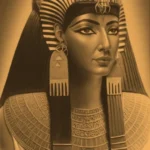
Isis is shown as a human woman wearing a crown of horns and a sun disk like Hathor or the throne symbol used in her name or a crown containing both elements. She sometimes wears a vulture crown. In ancient Egyptian art, she’s a woman with typical goddess attributes, a tight fitting dress, a papyrus staff and an ankh sign. Her original crown was the throne symbol.
She’s often shown with Nephthys, mourning Osiris’s death, supporting Osiris or protecting the dead. In these scenes, she’s depicted with arms raised to her face in mourning or extended around Osiris or the deceased indicating her protective role. She’s sometimes a bird or a woman with bird wings.
Isis appears in other animal forms like a sow, representing her maternal aspect, a cow, especially when linked to Apis or a scorpion. She’s depicted as a tree or a woman emerging from a tree offering food and water to the dead. This form illustrates the maternal nourishment she provided.
In the New Kingdom, Isis wore Hathor’s attributes like the sistrum and a crown of cow horns around a sun disk due to their close association. In the Ptolemaic and Roman periods, Isis statues and statuettes were depicted in a Greek style with features from Egyptian and Greek traditions.
The tyet symbol, a looped shape like an ankh, was considered Isis’s emblem at least from the New Kingdom. Made of red jasper, it resembled Isis’s blood. As a funerary amulet, it granted her protection to the wearer.
there was an increased emphasis on the family triad of Osiris, Isis and Horus and an explosive growth in Isis’s popularity. In the fourth century BCE, Nectanebo I of the Thirtieth Dynasty claimed Isis as his patron deity tying her still more closely to political power.
The Kingdom of Kush which ruled Nubia from the eighth century BCE to the fourth century CE, absorbed and adapted the Egyptian ideology surrounding kingship. It equated Isis with the kandake, the queen or queen mother of the Kushite king.
The Ptolemaic Greek kings who ruled Egypt as pharaohs from 305 to 30 BCE, developed an ideology that linked them with both Egyptian and Greek deities, to strengthen their claim to the throne in the eyes of their Greek and Egyptian subjects.
For centuries before, Greek colonists and visitors to Egypt had drawn parallels between Egyptian deities and their own, in a process known as interpretatio graeca. Herodotus, a Greek who wrote about Egypt in the fifth century BCE, likened Isis to Demeter whose mythical search for her daughter Persephone resembled Isis’s search for Osiris.
Demeter was one of the few Greek deities to be widely adopted by Egyptians in Ptolemaic times so the similarity between her and Isis provided a link between the two cultures. In other cases, Isis was linked with Aphrodite through the sexual aspects of her character.
Building on these traditions, the first two Ptolemies promoted the cult of the new god Serapis who combined aspects of Osiris and Apis with those of Greek gods such as Zeus and Dionysus.
Isis, portrayed in a Hellenized form, was regarded as the consort of Serapis as well as of Osiris. Ptolemy II and his sister and wife Arsinoe II developed a ruler cult around themselves so that they were worshipped in the same temples as Serapis and Isis and Arsinoe was likened to both Isis and Aphrodite.
Some later Ptolemaic queens identified themselves still more closely with Isis. Cleopatra III, in the second century BCE, used Isis’s name in place of her own in inscriptions and Cleopatra VII, the last ruler of Egypt before it was annexed by Rome, used the epithet “the new Isis”.

The- Temples -and -festivals -of- isis
The worship of Isis until the end of the New Kingdom was closely tied to the cults of male gods like Osiris, Min and Amun. She was usually worshipped alongside them as a mother or wife, especially as a mother to various local manifestations of the god Horus. However, she had an independent priesthood in some locations and there was a temple dedicated to her in the cult center of Osiris in Abydos during the late New Kingdom.
The oldest known major temples dedicated to Isis are the Iseum in Behbeit el Hagar in northern Egypt and Philae in the far south. Construction of both temples began in the Thirtieth Dynasty and they were either completed or expanded by the Ptolemaic kings. The temple of Philae attracted pilgrims from all over the Mediterranean due to Isis’s widespread fame.
In the Ptolemaic period, many temples were built for Isis, stretching from Alexandria and Canopus on the Mediterranean coast to the borders of Egypt with Nubia. There was a chain of Isis temples in this region,
from Philae southwards to Maharraqa serving as places of worship for Egyptians and various Nubian peoples. The Nubians in the Kingdom of Kush built temples to Isis in locations as far south as Wad Ban Naqa including a temple in their capital, Meroe.
The daily ritual in the temples typically involved offering sacrifices with priests dressing the statue of the god and presenting food to it. In the Roman period, temples of Isis in Egypt were built either in the Egyptian style where the sacred statue was in a holy of holies inaccessible to anyone but the priests, or in the Greco Roman style where people were allowed to see the statue.
The temples celebrated numerous festivals throughout the year, some of national scope and others local. One of the most prominent was the elaborate ritual associated with Osiris during the month of Khoiak in which Isis and Nephthys were essential elements since at least the New Kingdom. In the Ptolemaic period, two women would enact the roles of Isis and Nephthys during this festival singing or chanting elegies for the dead brother.
Later, festivals specific to Isis developed. In the Roman period, Egyptians celebrated her birthday known as the “Amesysia” by carrying her local statue through the fields, likely celebrating her power to grant fertility. Every ten days, the priests of Philae would hold a festival in which Isis’s statue would be taken to the nearby island of Bigeh, said to be the burial place of Osiris where funerary rites were performed for him.
With the spread of Christianity as the dominant religion in the Roman Empire during the fourth and fifth centuries CE, the Egyptian temple cults gradually declined. However, the temple of Isis at Philae, supported by her Nubian followers, retained an organized priesthood and regular celebrations until at least the mid-fifth century CE making it the last fully functioning Egyptian temple.
The funerary aspects of many spells in the Pyramid Texts indicate that Isis and Nephthys were helping the deceased king reach the afterlife. In the Coffin Texts from the Middle Kingdom, Isis appears more frequently but Osiris is credited with reviving the dead more than she is. New Kingdom sources like the Book of the Dead describe Isis protecting the spirits of the dead as they face dangers in the Duat.
She is also described as a member of the divine councils that judge the moral worthiness of spirits before allowing them to enter the afterlife and is depicted standing beside Osiris as he presides over this judgment.
Isis and Nephthys participated in funeral ceremonies where two women would mourn the deceased as happened in the Abydos festival lamenting their dead brother as the goddesses mourned Osiris.
Isis was often depicted or referred to in funerary equipment: on coffins and Canopic chests as one of the four goddesses who protected the four sons of Horus, in tomb art offering her milk to the deceased and in titi amulets that were often placed on mummies to ensure Isis’s power protected them from harm.
Later funerary texts focused on Isis’s grief for Osiris and one such text that is known as the Books of Breathing, says it was written by her for Osiris’s benefit. In the Nubian funerary religion, Isis was considered more important than her husband because she was the active partner while he passively received offerings to support his afterlife.
Unlike many other Egyptian deities, Isis was not frequently addressed in prayers or invoked in personal names prior to the end of the New Kingdom period. However, from the Late Period onwards, she became one of the most commonly mentioned deities in these sources which often highlight her benevolent nature and her willingness to respond to those who call upon her.
During the first millennium BCE, hundreds of thousands of amulets and small statues depicting Isis nursing Horus were produced and in Roman Egypt, she was among the deities most frequently represented in household religious art including statues and paintings.
Isis was prominent in magical texts from the Middle Kingdom onward. The perils of Horus’s childhood were a frequent theme in healing spells where Isis’s efforts to heal him were extended to any sick person.
In many spells, Isis forces Ra to help Horus by declaring she will stop the sun in its course across the sky unless her son is healed. Many spells equated pregnant women with Isis to ensure a successful delivery of their children.

Isis -In- the- Greco -Roman
In the Greco Roman world, there were stunning architectural remains scattered on the hillside where broken columns lay strewn while another group, still intact, supported a triangular pediment that remained standing. Such remnants exist in the Temple of Isis in Delos and in her temple in Pompeii. Also, a bronze coin from Kosora bears an image of Isis and a Phoenician inscription.
In ancient times, religious cults were associated with a specific city or state and this was the norm until the mid or late first millennium BC. Over time as contact between different peoples increased, some cults began to spread more widely.
The Greeks knew the Egyptian gods including Isis, at least since the Archaic period (c. 700-480 BC) and the first known temple to her in Greece was built in the 4th century BC or earlier by Egyptian residents in Athens.
Following Alexander the Great’s conquests in the late 4th century BC, Hellenistic kingdoms formed around the Mediterranean and the Near East including Ptolemaic Egypt, and there was greater interaction between Greek and non Greek religions. This cultural exchange helped spread many religious traditions throughout the Hellenistic world during the last three centuries BC.
The new cults were flexible and adaptable, attracting followers from different cultures and the cults of Isis and Serapis were among the most widespread. Thanks to merchants and travelers across the Mediterranean, the cults of Isis and Serapis spread to Greek coastal cities by the end of the 4th century BC and expanded into Greece and Asia Minor during the 3rd and 2nd centuries BC.
The island of Delos was an early center for the worship of the two goddesses and its commercial location made it a launching point for the spread of Egyptian cults to Italy. The worship of Isis and Serapis was also found in scattered locations in the Seleucid Empire and even Iran but it disappeared there after the Seleucids lost their eastern territories to the Parthian Empire.
The Greeks saw Egyptian religion as strange and sometimes bizarre but full of ancient wisdom. Like other Eastern cults, Isis’s worship attracted Greeks and Romans due to its mystery and exotic origins but the form of worship changed significantly after it arrived in Greece and became more Hellenistic.
Isis’s cult reached Italy and the Roman sphere in the 2nd century BC and was one of several cults that entered Rome as the Roman Republic expanded. Roman authorities tried to determine which cults were acceptable and which were not to preserve Roman cultural identity amidst significant changes.
Regarding Isis, private individuals established shrines and altars to her on the Capitoline Hill in the heart of Rome in the early 1st century BC. However, her cult’s independence from state authority made Roman authorities uneasy. In the 50s and 40s BC during the crisis of the Roman Republic, the Senate destroyed these shrines fearing they would affect people’s relationship with the gods but Isis’s worship was not entirely banned in the city.
During the final war of the Roman Republic (32–30 BC), when Rome, led by Octavian, fought Egypt under Cleopatra VII, Egyptian cults faced greater hostility. After Octavian’s victory, he banned the establishment of shrines to Isis and Serapis within the sacred boundary of the city but they were allowed outside these limits making the Egyptian gods acceptable in Rome.
Despite temporary expulsions during Tiberius’s reign (14-37 AD), Egyptian cults gradually became an accepted part of Rome’s religious landscape. The Flavian emperors in the late 1st century AD considered Serapis and Isis as patrons of their rule just like traditional Roman gods like Jupiter and Minerva.
As Isis’s worship was integrated into Roman culture, new characteristics emerged that emphasized her Egyptian origin. The cults also expanded to Rome’s western provinces especially along the Mediterranean coast in the early Imperial period. At its peak in the late 2nd and early 3rd centuries AD, she was worshipped in most cities of the western empire with less presence in rural areas.
Her temples existed from Petra and Damascus to Spain and Britain. By this time, she was roughly on par with local Roman gods.
A Roman statue of Isis, 1st or 2nd century AD holding a sistrum and a water jug with additions made in the 17th century during restoration.
Like other cults in the Greco Roman world, there was no fixed doctrine for Isis’s worship. Her beliefs and practices likely remained loosely connected as they spread and evolved over time.
Greek aretalogies that praise Isis provide much information about her beliefs. Some of these texts closely resemble late Egyptian hymns like those found in Philae while also containing purely Greek elements.
The aretalogies describe Isis’s role as a wife and mother in Osiris’s myth and consider her the inventor of marriage and parenthood. She was invoked to protect women during childbirth and in Greek novels, she protected maidens.
Some texts called her a patron of women in general. Her cult may have helped promote women’s independence to a limited extent with Isis as a model of power but in myth, she was always committed to her husband and son.
The aretalogies present conflicting views on women’s independence, one says she made women equal to men and another says she made women subject to their husbands.
Isis was often classified as a lunar goddess, paralleling Serapis’s solar characteristics and was considered a cosmic deity. Some texts say she governs the sun, moon and stars and watches over time and seasons to ensure the earth’s fertility.
She was also credited with inventing agriculture, establishing laws and organizing human society deriving this belief from Greek traditions about the role of gods and culture heroes like Demeter.
She also oversaw seas and ports and sailors left inscriptions invoking her protection for their sea journeys and she was known as Isis Pelagia, “Isis of the Sea” or Isis Pharia referring to a sail or the island of Pharos.
In Rome, where food supplies depended on grain shipments from Egypt, Isis was considered a guarantor of the harvest and protector of ships, thus ensuring the empire’s well being.
Sometimes she was called Isis Invicta, “Unconquered Isis” and was given the epithets Myrionymus, “the one with countless names” and Panthea, “the all god.”

Relationships -of -isis -with -other -gods
In the Hellenistic and Roman periods, more than a dozen Egyptian gods were worshipped outside Egypt within interconnected cults, though many were secondary. Among the most important, Serapis was closely associated with Isis and often depicted with her in art while Osiris remained central to the myth and rituals.
Sometimes Isis and Serapis temples were adjacent but rarely was a single temple dedicated to both. Osiris, as a dead god unlike the immortal Greek gods, was alien to the Greeks and played a minor role in Hellenistic cults and in the Roman period, he became a symbol of the joyful afterlife with the cult focusing more on him.
Horus, often as Harpocrates, appeared in Isis temples as her son by Osiris or Serapis and borrowed some traits from Greek gods like Apollo being a god of the sun and crops. Anubis was also part of the group, associated with Hermes in his Hellenistic form, Hermanubis.
Isis was sometimes considered a pupil of Thoth, the god of writing and knowledge or his daughter, known as Hermes Trismegistus in the Greco Roman world. She had extensive relationships with Greek and Roman gods and sometimes with gods of other cultures.
She was not fully integrated into the Greek pantheon but was equated with mythical Greek figures like Demeter, Aphrodite or Io. Her relationship with women was influenced by her equation with Artemis, a virgin goddess and fertility patron.
Due to her control over fate, she was associated with personifications of luck, Tyche and Fortuna. She gradually replaced Hathor in Byblos, merged with Astarte and with Norea in Central Europe and possibly with Al ‘Uzza in Petra.
Even the Germanic Suebi believed she was worshipped among them though Tacitus may have mistaken her for a local goddess symbolized by a ship.
Many aretalogies portray Isis as a single, all encompassing deity, mentioning all goddesses as forms of her while Greek and Roman aretalogies remain gender specific so some texts describe Isis and Serapis as “unique” gods.
Images of Isis outside Egypt were in the Hellenistic style, like her depictions in Hellenistic and Roman Egypt. She sometimes wore a Hathoric cow’s horn crown but Greeks and Romans reduced its size and considered it a lunar crescent.
She wore wreaths of leaves, flowers and grain ears and a cloak with a large knot on her chest and held objects like an ankh, sistrum or a small vessel used in rituals.
As Isis Fortuna or Tyche, she held a ship’s rudder and a cornucopia and as Isis Pharia, she wore a cloak that billowed like a sail and as Isis Lactans, she nursed Harpocrates.
Sometimes she placed a foot on a celestial globe indicating her control over the cosmos.
In the Greco Roman era, funerary statues of Alexandra, a priestess of Isis, were found in the NAMA museum in Athens giving us an idea of how Isis was worshipped at that time.
Followers of Isis were not required to worship the goddess exclusively and their level of commitment varied greatly. Some served as priests in multiple cults undergoing various secret rituals dedicated to different gods.
However, some devotees focused on their intense devotion to Isis considering her the central axis of their lives. They were among the few religious groups in the Greco Roman world with a distinct name for themselves indicating they identified themselves through their religious affiliation.
These followers called themselves “Isiac” but this term was rarely used. Isis’s followers were a small percentage of the Roman Empire’s population, yet they came from all social classes, from slaves and freedmen to high ranking officials and imperial family members.
Ancient accounts suggest Isis was popular among the lower classes, which may explain the suspicion Roman authorities had towards her cult, given the social tensions.
Women were more represented in Isis’s cult compared to most Greco Roman cults and in imperial times, they could serve as priestesses in many of the same roles as their male counterparts.
Although women make up less than half of known Isis followers through inscriptions and were rarely in high priestly ranks, their participation might be underrepresented due to the limited representation of women in Roman inscriptions.
Several Roman writers accused Isis’s cult of promoting moral decay among women indicating the cult was controversial at the time.
Isis’s priests were known for their shaved heads and white linen clothing, traits derived from Egyptian priesthood and ritual purity requirements.
Isis’s temples had multiple ranks of priests along with various religious associations and specialized responsibilities for ordinary followers. There’s no evidence of a hierarchy overseeing multiple temples and each temple likely operated independently.
The Egyptian temples outside of Egypt such as the Red Basilica in Pergamon and the Temple of Isis in Pompeii, were characterized by their distinctive Greco Roman design. These temples were surrounded by large courtyards and decorated with Egyptian inspired artworks, sometimes containing ancient Egyptian artifacts imported from Egypt itself.
The design of these temples was more complex than traditional Roman temples, featuring rooms for priests and ritual spaces with the statue of the goddess located in a special, internally concealed area. The statues of Isis in the Hellenistic and Roman periods were larger than life size differing from traditional Egyptian statues which were usually smaller.
The daily ritual in these temples involved adorning the statue with beautiful clothes and offering liquid sacrifices to it every morning. Followers were allowed to see the statue, pray directly in front of it and sing hymns during the morning ritual.
Water held a special place in these temples, considered a symbol of the Nile waters. Hellenistic era Isis temples contained underground cisterns to store sacred water with the water level being raised and lowered to simulate the Nile’s flood.
In Roman temples, a water vessel was worshipped as a statue or representation of Osiris.
Romans built small temples in their homes, called “lararia” containing small statues of protective gods chosen according to family preferences. Isis and other Egyptian gods were found in these temples in Italy from the late 1st century BC to the early 4th century AD.
The cult required followers to maintain ritual and moral purity, sometimes necessitating ritual bathing or periods of sexual abstinence lasting days. Isis’s followers demonstrated their piety on irregular occasions by singing in the streets or as a form of atonement publicly declaring their sins.
Some Greek temples dedicated to gods, including Serapis, practiced “incubation” or “dream incubation” where devotees slept in the temple hoping the god would appear in a dream and offer advice or healing.
Some scholars believe this ritual was practiced in Isis’s temples but there’s no conclusive evidence. However, Isis was believed to communicate with followers through dreams on other occasions including calling followers to initiate secret rituals.
Some temples of Isis held secret rites to initiate new members into the cult claiming Egyptian origins and possibly drawing inspiration from Egyptian mystery rites. However, they were largely derived from Greek mystery cults, particularly the Eleusinian Mysteries dedicated to Demeter with Egyptian elements added.
Although the mysteries are among the best-known elements of Isis’s cult in the Greco-Roman world, they are known only in Italy, Greece and Asia Minor. Through these rites, the devotee gained a dramatic and mystical experience of the goddess adding emotional intensity to their joining the cult.
Apuleius’s novel “The Golden Ass” describes in detail how the main character joins Isis’s cult providing the most detailed source on the mysteries. Despite debates about the novel’s accuracy, its information generally aligns with other evidence and scholars rely on it to study the rites.
The ancient mysteries used intense experiences like intermittent darkness and bright light and loud music to overwhelm the senses and give a sense of direct contact with the divine. In the novel, Lucius undergoes a series of rites saying: “I approached the boundary of death, I trod the threshold of Proserpina and I traveled through all the elements and returned. In the middle of the night, I saw the sun shining brightly, I faced the gods below and the gods above and I paid homage to them closely.”
This suggests that the initiate’s symbolic journey to the underworld was similar to Osiris’s resurrection and Ra’s journey through the underworld, possibly indicating that Isis restored the initiate to life as she did her husband.
Roman calendars recorded two major festivals for Isis from the 1st century AD. The first was Navigium Isidis in March celebrating Isis’s influence on the sea and praying for sailors’ safety, ultimately for the Roman people’s and leaders’ safety. It involved a large procession with Isis’s priests and devotees in various costumes carrying a ship model from Isis’s temple to the sea or a nearby river.
The other festival was Isia in late October and early November involving a ritual reenactment of Isis’s search for Osiris, followed by a celebration upon finding his body. There were other smaller festivals for Isis like Pelusia in late March, possibly celebrating Harpocrates’s birth and Lychnapsia or the Festival of Lights celebrating Isis’s birth on August 12.
These festivals continued until the 4th century AD, despite Christianity’s spread and persecution of pagans in the late century. Isia was celebrated until 417 AD and Navigium Isidis until the 6th century.
Over time, the religious meanings of these festivals were forgotten or ignored but they continued as cultural practices, sometimes incorporated into classical and early Christian culture in the Middle Ages.
An image of a seated woman with a child in her lap offering him one of her breasts, depicts Isis the Nursing Mother holding Harpocrates in an Egyptian wall painting from the village of Karanis dating back to the 4th century AD.
The question of whether the worship of Isis influenced Christianity is a contentious issue. Some Isiac rituals may have been among the pagan religious practices incorporated into Christian traditions as the Roman Empire converted to Christianity.
For instance, Andreas Alföldi argued in the 1930s that the medieval Carnival festival in which a boat model was carried, evolved from the Navigium Isidis, a celebration associated with Isis. Much attention has focused on whether Christian features were borrowed from pagan mystery rites including the worship of Isis.
The most devoted members of Isis’s cult made a personal commitment to a god they considered supreme just as Christians do. Both Christianity and the worship of Isis had an initiation rite, the mysteries of Isis and baptism in Christianity.
One common theme among mystery rites is the presence of a god whose death and resurrection may be linked to the individual worshiper’s well being in the afterlife, similar to the central theme in Christianity. The idea that Christianity’s core beliefs were taken from mystery rites has sparked intense debate for over 200 years.
In response to this debate, Hugh Bowden and Jaime Alvar, scholars studying ancient mystery rites, suggest that the similarities between Christianity and mystery rites did not arise from direct borrowing of ideas but from their shared background, the Greco Roman culture in which all these rites and beliefs developed.
Similarities between Isis and Mary, the mother of Jesus, have also been studied. This has sparked controversy among Protestant Christians and the Catholic Church with many Protestants arguing that Catholic veneration of Mary is a remnant of paganism.
Classicist R. E. Witt saw Isis as the “great forerunner” of Mary. He proposed that Christians who converted from Isis worship would view Mary in the same way they viewed their traditional goddess. He noted that both have several shared areas of influence such as agriculture and protection of sailors.
He compared Mary’s title “Mother of God” with Isis’s title “Mother of the God” and Mary’s title “Queen of Heaven” with Isis’s title “Queen of Heaven”. Stephen Benko, a historian of early Christianity, argues that devotion to Mary was deeply influenced by the worship of several goddesses, not just Isis.
In contrast, John McGuckin, a church historian, says Mary absorbed superficial traits from these goddesses such as symbolic images but the foundations of Mary’s worship were entirely Christian.
It is often suggested that images of Isis holding Horus in her lap influenced icons of Mary especially images showing Mary nursing the infant Jesus since images of nursing women were rare in the ancient Mediterranean world outside Egypt.
Vincent Tran Tam Tinh notes that the latest images of Isis nursing Horus date to the 4th century AD, while the earliest images of Mary nursing Jesus date to the 7th century AD. Sabrina Higgins, based on her study, asserts that if there is a connection between Isis and Mary icons, it is limited to Egyptian images only.
In contrast, Thomas F. Mathews and Norman Muller believe that Isis’s posture in late antique paintings influenced several types of Mary icons, both within and outside Egypt. Elizabeth Bolman says these early Egyptian images of Mary nursing Jesus were intended to emphasize his divinity just as images of nursing goddesses did in ancient Egyptian iconography.
Higgins argues that these similarities prove that images of Isis influenced images of Mary but they do not prove that Christians deliberately adopted Isis’s icons or other elements of her worship.
The memory of Isis endured after the extinction of her worship became a symbol of the profound and mysterious wisdom attributed to ancient Egypt. Many Europeans considered Egypt to be the homeland of deep wisdom and this wisdom was often closely associated with Isis.
In 1374, Giovanni Boccaccio wrote a biography of Isis in his work De mulieribus claris, based on classical sources and considered her a historical queen who taught humans the skills of civilization. This work contributed to reinforcing Isis’s position as a symbol of wisdom and education.
Some Renaissance thinkers greatly expanded this perspective on Isis. In the 1490s, Annius of Viterbo claimed that Isis and Osiris had visited Italy before Greece, thus directly linking his homeland to Egypt. This idea is also reflected in the paintings of the Borgia Apartments, commissioned by Annius’s patron, Pope Alexander VI which include a depiction of the Osiris myth.
The Isis cult was a recurring reference in Western esotericism. Two Roman era esoteric texts used a mythological framework in which Isis transmits secret knowledge to Horus. In Kore Kosmou, she teaches him the wisdom inherited from Hermes Trismegistus and in the early alchemical text Isis the Prophetess to Her Son Horus, she gives him alchemical formulas.
Early modern esoteric literature which considered Hermes Trismegistus an Egyptian sage and used texts attributed to him, also referred to Isis. On the other hand, Apuleius’s description of Isis’s initiation rites greatly influenced the practices of various secret societies.
Jean Terrasson’s 1731 novel Sethos used Apuleius’s work as a source to create a fictional Egyptian rite of Isis’s initiation. This was imitated in actual rituals in Masonic and Masonic inspired societies during the 18th century as well as in other literary works, most notably Wolfgang Amadeus Mozart’s 1791 opera The Magic Flute.
From the Renaissance onward, Isis’s veiled statues, mentioned by Plutarch and Proclus, were interpreted as personifications of nature based on a passage in Macrobius’s 5th century AD work that equated Isis with nature. In the 17th and 18th centuries, authors attributed multiple meanings to this image.
Isis represented nature as the mother of all things as a collection of truths waiting to be revealed by science as a symbol of the mysterious, unknown divinity manifesting in nature, or as a majestic force that could be experienced through esoteric rituals.
During the de Christianization of France in the French Revolution, Isis served as an alternative to traditional Christianity, a symbol that could represent nature, modern scientific wisdom and a connection to the pre Christian past. For these reasons, Isis’s image appeared in artworks sponsored by the revolutionary government such as the Fontaine de la Régénération and also in works of the First French Empire.
The metaphor of Isis’s veil continued to be used in the 19th century. Helena Blavatsky, the founder of the Theosophical esoteric tradition, titled her 1877 book on Theosophy Isis Unveiled suggesting that she would reveal spiritual truths about nature that science could not discover.
In modern Egypt, Isis was used as a national symbol during the Pharaonism movement in the 1920s and 1930s, when Egypt gained independence from British rule. In works like Mahmoud Mukhtar’s sculpture in the Egyptian Parliament, titled The Awakening of Egypt and Tawfiq al Hakim’s play The Return of the Spirit, Isis symbolizes the nation’s awakening.
The sculptor Mahmoud Mukhtar, in his work also titled The Awakening of Egypt, used the idea of Isis removing her veil. Isis appears repeatedly in literary and fictional works such as the superhero series and her name and image are found in various places like advertisements and personal names.
The name Isidoros meaning “gift of Isis” in Greek, survived in Christianity despite its pagan origins, giving rise to the English name Isidore and its variants. In the late 20th and early 21st centuries, “Isis” itself became a popular name for females.
Isis continues to appear in modern esoteric and pagan belief systems. The concept of a single goddess embodying all feminine divine powers, inspired in part by Apuleius, became a popular theme in 19th and early 20th century literature.
Influential groups and individuals in esotericism such as the Hermetic Order of the Golden Dawn in the late 19th century and Dion Fortune in the 1930s, adopted this comprehensive goddess in their beliefs and called her Isis.
This conception influenced the Great Goddess found in many forms of modern pagan witchcraft. Today, reconstructions of ancient Egyptian religion such as Kemetic Orthodoxy or the Church of the Eternal Source, include Isis among the gods they worship.
There is also an eclectic religious organization focusing on feminine divinity called the Fellowship of Isis, where one of its priestesses, M. Isidora Forrest, says Isis can be “all the goddesses to all people”.

The- myth- of -Isis -and -Osiris
Egyptian mythology is a collection of stories that explain the actions of the gods and the understanding of the ancient Egyptians about the world. These myths were an essential part of Egyptian religion and appeared in religious texts, inscriptions, short stories and funerary materials.
One of the most prominent myths is the story of Isis and Osiris, a pivotal myth that reflects the struggle between order and chaos, life and death. The story begins with the marriage of Isis to Osiris, the eldest son of the goddess Nut who ascended to the throne of Egypt and was loved by the people for his prosperity and justice.
This success aroused the jealousy of his brother Seth, the god of the desert and storms who represented the forces of chaos and destruction. Seth plotted to kill Osiris during a grand feast where he presented a coffin made specifically to fit Osiris’ body. As soon as Osiris entered the coffin, Seth closed it tightly and threw it into the Nile River symbolizing the fall of order and Egypt’s descent into chaos.
Seth did not stop there but later dismembered Osiris’ body and scattered his remains throughout the land. Isis, in the myth, embodied the model of the faithful wife and magical goddess, embarking on a difficult journey across Egypt in search of her husband’s body. With her magical powers, she succeeded in gathering the scattered parts and reviving Osiris.
However, his resurrection was not a complete return to the world of the living but rather a transformation into the ruler of the underworld and god of the dead affirming the idea of continuity after death. From the union of Isis and Osiris, Horus was born who became a symbol of legitimate kingship and divine justice.
Horus grew up to take on the task of avenging his father entering into a long conflict with Seth. The accounts differ about the end of this conflict with some mentioning Seth’s exile to the desert and others indicating his death but the result was always Horus’ victory and the restoration of balance.
This myth embodied fundamental concepts in Egyptian doctrine, especially the cycle of death and resurrection, royal legitimacy and cosmic justice. Osiris became the model that kings emulated in life and death while Isis symbolized motherhood, protection and magic.
Therefore, the myth spread in funerary rituals and its scenes were engraved in tombs to secure the deceased’s journey in the afterlife. The influence of the myth of Isis and Osiris extended beyond Egypt and the worship of Isis spread in the Greek and Roman world becoming one of the most important deities in the Roman era.
Plutarch recorded this story contributing to its survival after the decline of ancient Egyptian civilization. The myth remains present in modern culture as one of the most influential mythological stories in human history.
The myth of Isis and Osiris had a significant impact on ancient Egyptian culture where it was used in literature, art and politics. The myth is considered a symbol of the struggle between good and evil, love and betrayal and resurrection and life.
The myth is also considered a symbol of balance and stability where balance is restored in Egypt after Horus’ victory. The myth of Isis and Osiris remains a source of inspiration today, used in literature, art and cinema.
While some deities appeared earlier, she and Osiris were not explicitly mentioned by name until the Fifth Dynasty (circa 2494-2345 BCE). Her worship likely originated in the Nile Delta, and she became a prominent figure in the ancient Pyramid Texts.
The story of her reviving Osiris is a timeless symbol of the struggle between good and evil, love and betrayal, and death and resurrection. It fundamentally shaped ancient Egyptian funerary rites and concepts of cosmic justice.
During the Pharaonism movement in the 1920s and 1930s, she was utilized as a powerful national symbol of Egypt’s awakening and independence from British rule, heavily inspiring literature and public sculptures like Mahmoud Mukhtar’s The Awakening of Egypt.
Her cult was incredibly popular across the Roman Empire. Followers often built small personal shrines (“lararia”) in their homes, maintained strict moral and ritual purity, and participated in massive public festivals and secret initiation rites inspired by Greek mystery cults.
Yes! Her legendary story of resurrection and devotion remains a prominent source of inspiration in modern literature, esoteric traditions, neo-pagan beliefs, and cinema, serving as an eternal symbol of balance and stability.


Explore our top-rated Egypt travel packages and embark on an unforgettable journey. From the Pyramids of Cairo to the magical temples of Luxor, Aswan, and Abu Simbel, discover expertly curated tours designed for your perfect Egyptian adventure