Queen Hatshepsut family Tree
Queen Hatshepsut is one of the most powerful women to ever rule...



The 18th Dynasty ruled Egypt for roughly 250 years, transforming the country from a reunified kingdom into the ancient world’s dominant empire through military conquest, religious upheaval, and some of the most famous names in Egyptian history.
👑 A New Beginning
🏛️ The Golden Rulers
☀️ The Amarna Disruption
⚱️ The Final Chapter
The tree of the kings of the 18th Dynasty of ancient Egypt is considered one of the most important historical periods that witnessed unprecedented prosperity in Pharaonic civilization.
A group of the greatest pharaohs ruled during this period leaving lasting marks in the fields of politics, religion, art, and architecture.
This dynasty, considered the origin and center of the modern state, represented a pivotal stage that brought Egypt to the height of its imperial power.
By tracing the family tree of the kings of this dynasty we can explore the familial and religious ties that formed the basis of the ruling system.

The tree of the kings of the 18th Dynasty of ancient Egypt marks the beginning of a new era in the history of ancient Egypt.
It was the first dynasty of the New Kingdom during which the country reached the height of its military, political, and religious glory.
The rule of this dynasty extended from approximately 1550 to 1292 BC during which Egypt witnessed a comprehensive renaissance unlike any before.
It is also called the “Thutmose Dynasty” after its kings who bore the name Thutmose, and who played a significant role in expanding the state’s borders and consolidating its influence.
The tree of the kings of the 18th Dynasty of ancient Egypt in order, is as follows:
The reign of the tree of the kings of the 18th Dynasty of ancient Egypt spanned approximately 250 years between 1550 and 1292 BC.
This period witnessed the height of Egyptian glory during the New Kingdom.
The dates and names of these kings are accurately recorded in the works of researchers Dodson and Hilton.
Many pharaohs of this dynasty chose to have their tombs in the Valley of the Kings in Thebes where their tombs bear symbols known as (KV).
Interestingly the reign of the tree of the kings of the 18th Dynasty of ancient Egypt witnessed a number of diplomatic marriages between Egypt and neighboring countries which were used to strengthen political ties and ensure stability between the kingdoms.
Despite the importance of these alliances most of the names of foreign princesses appear only in cuneiform inscriptions outside Egypt and are often absent from traditional Egyptian texts.

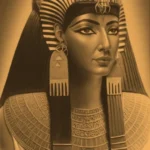
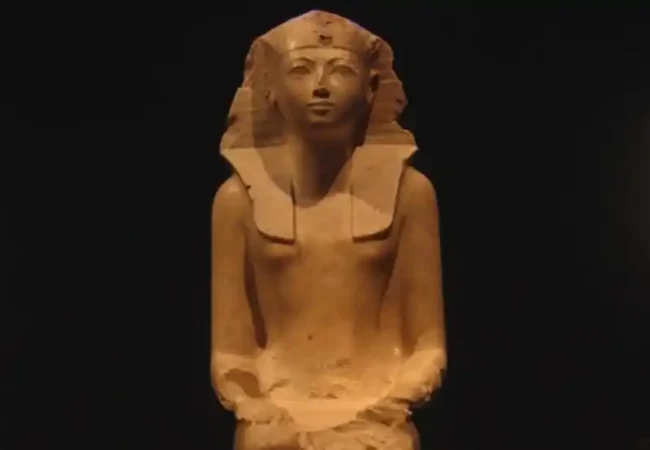
Among these great figures are also Queen Hatshepsut, one of the longest-reigning most cunning, and most influential women in Egyptian history Akhenaten the controversial pharaoh who changed the course of religion; and his famous wife Nefertiti, with her captivating presence.
This dynasty is unique in that it was one of the few in which two women ascended the throne of Egypt as fully empowered pharaohs. Both Hatshepsut and Nefertiti left indelible marks on history.
The history of the tree of the kings of the 18th Dynasty of ancient Egypt began with Ahmose I, who was likely the son or brother of Kamose, the last king of the Seventeenth Dynasty.
He went down in history as the one who expelled the Hyksos from Egypt and reunited the country thus heralding the end of chaos and the beginning of a new era for the New Kingdom of Egypt.
Alongside him was his wife Queen Ahmose-Nefertari who was immortalized as one of the most revered women even being dubbed the “Grandmother of the 18th Dynasty.”
She was sanctified after her death. Among the most notable events that took place during this dynasty are the following:
Amenhotep III is believed to have shared the throne for up to twelve years with his son Amenhotep IV. However this remains a matter of widespread debate among scholars.
Some believe it was a long-term partnership while others believe it never occurred. In his fifth year as ruler Amenhotep IV adopted a new name, Akhenaten, meaning “living spirit of the Aten,” and moved his seat of government to a new city he named Akhetaten (present-day Tell el-Amarna).
During his reign, the sun disc Aten was elevated to supreme deity and gradually became the sole god worshipped — a shift that raised profound questions about whether this was true monotheism or simply a change in religious focus
Some historians consider Akhenaten the first to unite the gods into a single religion while others believe that he did not completely abolish the Egyptian gods, but rather limited their role to the new deity.
This period was later considered by Egyptians to be an anomalous departure from tradition and was called the “Amarna Period,” which was followed by political chaos and ambiguity.
After Akhenaten’s death two mysterious figures emerged, Smenkhkare and Neferneferuaten. The latter was most likely Queen Nefertiti herself who assumed power as pharaoh.
This dynasty ended with Tutankhamun ascending the throne, but he died young and left no descendants.
The mummies of his two infant daughters (Nos. 317A and 317B) remain the final evidence of the royal lineage of the 18th Dynasty.
The end of the tree of the kings of the 18th Dynasty of ancient Egypt saw the rise of two kings who were not of pure royal lineage, but rather statesmen Ay and Horemheb.
Ay’s connection to the royal family may have stemmed from his marriage or kinship to Yuya and Tuya, the parents of Queen Tiye which gave him a prominent position in the palace.
Ay is also believed to have attempted to consolidate his power by marrying Ankhesenamun the widow and half-sister of the young king Tutankhamun. However this marriage was short-lived as she soon disappeared from the scene.
Ay married Tey, the woman who had been Nefertiti’s nanny during her childhood, indicating that he attempted to exploit his connections with the palace to increase his chances of legitimacy.
However Ay’s reign lasted only a few years, and he was succeeded by Horemheb the experienced military commander whom Tutankhamun is said to have trusted and perhaps even chosen as his successor if he failed to produce an heir.
Some accounts indicate that Horemheb seized the throne by force after Ay’s death especially since Ay’s likely heir Nakhtmin died before succeeding him.
After years of rule Horemheb died without a legitimate heir choosing to hand over the throne to his powerful vizier Paramessu who later became Ramesses I ushering in the Nineteenth Dynasty.
The tree of the kings of the 18th Dynasty of ancient Egypt is as follows, in order: Ahmose I, Amenhotep I, Thutmose I, Thutmose II, Hatshepsut, Thutmose III, Amenhotep II, Thutmose IV, Amenhotep III, Akhenaten, Smenkhkare, Neferneferuaten, Tutankhamun, Ay, and Horemheb.
The 18th Dynasty is one of the most important pharaonic dynasties that ruled Egypt from 1550-1292 BC. It is considered the beginning of the New Kingdom in Egypt and witnessed significant developments in art, architecture, and religion.
Yes, in the Valley of the Kings in 1914 AD.
Finally, during the reign of Thutmose I the 18th Dynasty empire conquered Lower Nubia while Egyptian influence reached the Fourth Cataract during the reign of Thutmose III.
Nubia which the Egyptians called Kush was rich in gold, hides, ivory, and high-quality cattle and horses.
The Egyptians also built important temples, including the Temple of Amun at Jebel Barkal in Napata which Taharqa later expanded.
This demonstrates the deep relationship between Egypt and Nubia during the era of the tree of the kings of the 18th Dynasty of ancient Egypt.


Explore our top-rated Egypt travel packages and embark on an unforgettable journey. From the Pyramids of Cairo to the magical temples of Luxor, Aswan, and Abu Simbel, discover expertly curated tours designed for your perfect Egyptian adventure