
Catacombs of Kom El Shoqafa: Ancient Underground Tombs of Alexandria
Imagine descending deep into the earth, into a dark and mysterious world...



The Roman Amphitheater in Alexandria, located in the Kom El-Dikka district, is Egypt’s only surviving Roman amphitheater and a remarkable architectural relic of the city’s Greco-Roman past. Accidentally uncovered in 1960 by a Polish archaeological team searching for the tomb of Alexander the Great, the structure is celebrated for its distinctive C-shaped white marble seating tiers and superior acoustic engineering. Surrounded by related ruins such as ancient Roman baths and the mosaic-floored Villa of the Birds, the amphitheater serves as a major archaeological highlight for visitors exploring Alexandria’s rich classical heritage.
Key Takeaways
Discovery at Kom El-Dikka: The amphitheater was famously unearthed in 1960 by a Polish archaeological expedition working in the Kom El-Dikka (“hill of rubble”) district while originally searching for the tomb of Alexander the Great.
Distinctive C-Shaped Design: Unlike traditional full-circle Roman arenas, the Alexandria structure features a unique C-shaped configuration with multiple tiers of white marble seating, meticulously engineered to optimize sound projection and acoustics.
Multi-Functional Purpose: Due to its relatively intimate scale compared to massive Western imperial amphitheaters, researchers suggest it was utilized for musical performances, poetic contests, theatrical events, or official public assemblies.
Surrounding Archaeological Complex: The amphitheater site is part of a broader historical zone that includes well-preserved 2nd-to-4th-century Roman baths and the nearby “Villa of the Birds,” famous for its intricate mosaic floors.
Seismic Damage and Restoration: The structure suffered significant structural damage from severe earthquakes in the 4th and 7th centuries AD before undergoing historical restoration phases and eventually being preserved as a premier open-air museum.
Modern Tourism Landmark: Today, the Kom El-Dikka archaeological park stands as one of Alexandria’s most popular tourist destinations, offering travelers a direct connection to Egypt’s vibrant Roman imperial history.
Nothing quite compares to the ancient grandeur of a Roman amphitheater, and none exemplify this more than the amphitheater in Alexandria, Egypt. This stunning structure has been standing for almost two millennia, yet it still stands as one of the most impressive structures from this era.
Built in 1st century AD by Emperor Augustus, the amphitheater was part of his plan to transform Alexandria into a major cultural center. In this article, we will explore the history and significance behind this captivating archaeological site.
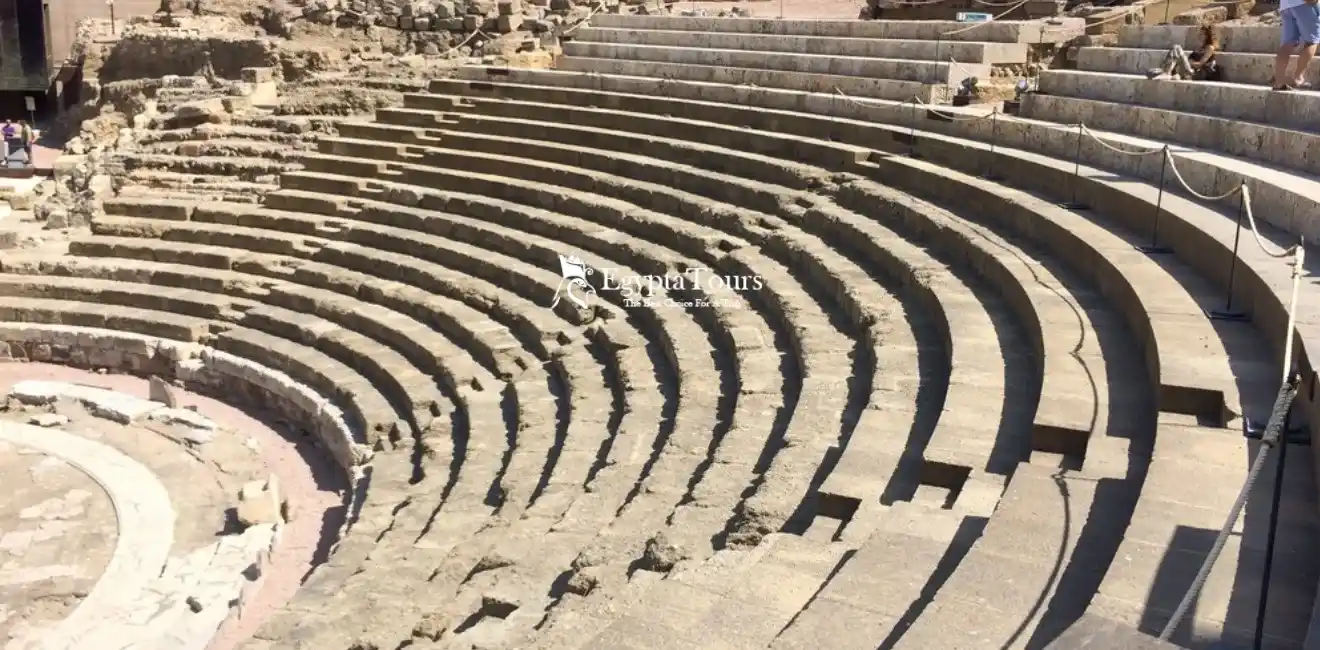
Roman-Amphitheater-Alexandria-Greco-Roman-history-site-EgyptaTours
The Roman Amphitheater in Alexandria is one of the most well-preserved ancient Roman monuments in Egypt. It was built in the 2nd century AD and could seat up to 12,000 people. The amphitheater was used for a variety of events such as gladiator fights, plays, and public executions.
The exterior of the amphitheater is made of marble and granite while the interior is made of brick and concrete. The seating area is divided into three sections: the ima cavea (upper seats), media cavea (middle seats), and summa cavea (lower seats). The stage area is surrounded by a porticus with columns.
The Roman Amphitheater in Alexandria was damaged by earthquakes in the 4th and 7th centuries AD but was later restored by the Arabs in the 8th century. It continued to be used into the Mamluk period but fell into ruin after that. Today, it is one of the main tourist attractions in Alexandria.
The Amphitheatre of Pompeii, photographed in the 19th century, is considered one of the earliest surviving Roman amphitheaters.
The exact time and place where amphitheaters first appeared is still unclear. Historical sources mention temporary wooden amphitheaters that were set up in the Forum Romanus for gladiatorial games starting from the second century BC. These early wooden structures are often seen as the starting point that later developed into permanent stone amphitheaters.
In Historia Naturalis, Pliny the Elder states that the amphitheater was first created during the spectacles organized by Gaius Scribonius Curio in 53 BC. According to him, two wooden semicircular theatres were rotated toward each other to form a single circular space, while the audience remained seated. Although this event may explain the origin of the term amphitheatric, it cannot be considered the beginning of the architectural idea itself, since earlier stone structures known as spectacular or Amphitheatre already existed.
Jean-Claude Golvin suggests that the earliest stone amphitheaters were built in Campania, particularly in Capua, Cumae and Liternum where construction dates to the late second century BC. One of the most well-studied early examples is the amphitheater of Pompeii which is securely dated to shortly after 70 BC.
Only a small number of other early amphitheaters are known: those at Abella, Teanum and Cales belong to the Sullan period (ending in 78 BC), while Puteoli and Telesia date to the Augustan age (27 BC–14 AD). Amphitheaters at Sutrium, Carmo and Ucubi were built around 40–30 BC and those at Antioch and Phaestum (Phase I) date to the mid-first century BC.
During the Imperial period, amphitheaters became a central feature of Roman cities. As urban centers competed to display their importance through monumental public buildings, amphitheaters grew larger and more richly decorated. Many Imperial amphitheaters could hold between 40,000 and 60,000 spectators while the largest examples may have accommodated up to 100,000 people. In terms of seating capacity, only hippodromes exceeded them.
These structures typically had multi-storey arcaded façades and were lavishly adorned with marble and stucco as well as statues and relief sculptures. In some cases, amphitheaters were even partially constructed from marble.
As the Roman Empire expanded, amphitheaters were mainly concentrated in the Latin-speaking Western provinces. In the Eastern regions, public spectacles were more commonly held in theatres or stadia instead. In the West, amphitheaters played a role in Romanization, serving as spaces for the Imperial cult and as symbols of Roman civic identity.
They were often funded by private benefactors or local authorities in colonies and provincial capitals, where the presence of an amphitheater reflected Roman municipal status. In Roman North Africa, a large number of smaller and more modest amphitheaters were built with much of the architectural expertise provided by the Roman military.
Several factors contributed to the gradual end of amphitheater construction. Gladiatorial munera began to disappear from public life during the third century, largely due to economic difficulties, philosophical criticism and opposition from the growing Christian religion whose followers viewed such spectacles as immoral and wasteful. Animal hunts (venationes) continued until the sixth century, but they became increasingly rare and expensive.
The rise of Christianity also changed ideas of public generosity. While a pagan Roman often acted as a homo civicus, gaining honor through funding public games and buildings, Christians were more likely to see themselves as homo interior, focusing on spiritual rewards and directing their charity toward almsgiving rather than spectacles or monumental construction.
As a result, amphitheaters gradually lost their function and the financial support needed for their upkeep. The final known amphitheater was built in 523 in Pavia during the reign of Theodoric. After venationes ended, amphitheaters were mainly used for public executions and punishments. Once even this role declined, many structures were abandoned, dismantled for building materials, demolished to make room for new buildings or damaged through neglect and vandalism. Some amphitheaters were converted into fortresses or fortified settlements as seen at Leptis Magna, Sabratha, Arles and Pola.
In the 12th century, the Frangipani family even fortified the Colosseum during political conflicts in Rome. Other amphitheaters were transformed into Christian churches including those at Arles, Nîmes, Tarragona and Salona, while the Colosseum itself became a Christian shrine in the 18th century.
Today, many surviving amphitheaters are protected as historical monuments and several have become major tourist attractions.
The Roman Amphitheater in Alexandria is one of the most popular tourist attractions in Egypt. It is located in the city center at Kom El-Dikka. , near the Egyptian Museum. The amphitheater was built in the 2nd century AD and is one of the largest amphitheaters in the world. It has a seating capacity of over 30,000 people.

Roman-Amphitheater-Alexandria-ancient-theater-ruins-EgyptaTours
The Roman amphitheater in Alexandria was designed by the architect Decimus Junius Brutus. The Amphitheater is located in the eastern part of the city, close to the Royal Library of Alexandria.
It was built during the reign of Augustus Caesar, between 29 BCE and 14 CE. The Amphitheater could seat up to 10,000 spectators and was used for gladiatorial fights, public executions, and other entertainment.
The Amphitheater was built using marble from nearby quarries. It consisted of a circular arena surrounded by a colonnade with three stories of seating. The ground level had fifty rows of seats, while the upper levels had twenty rows each. There were also sixty-six private boxes for VIPs on the second level. The third level had a covered walkway that allowed spectators to view the action from above.
The exterior of the Amphitheater was decorated with reliefs depicting scenes from mythology and history. On the north side, there was a relief of Nero Claudius Drusus fighting Germanic tribesmen. On the south side, there was a relief of Augustus Caesar riding in a triumphal procession.
The Roman amphitheater in Alexandria was one of the largest and most impressive buildings in the city. It remained in use until the 4th century CE when it was damaged by an earthquake.
During the excavation of Alexander the Great’s tomb by a Polish archaeological expedition in 1960, workers uncovered solid iron columns beneath the surface, indicating that a significant structure might be buried below.
Soon after, experts from the Greco-Roman Museum and the Polish excavation team officially announced the discovery of the Roman Amphitheatre of Alexandria, regarded as one of the most important Roman monuments in Egypt in the 20th century.
While visiting the Roman Amphitheatre of Alexandria, professional tour guides share the fascinating history of Kom El Dikka, the district where the amphitheater is located. The name Kom El Dikka translates from Arabic as “hill of rubble” or “mountain of benches.” The area received this name in the 20th century when the historian El Neweiry observed piles of rubble resembling large benches. These deposits were partly due to the digging of the Mahmoudiya Canal which connects Alexandria to the Nile.
A Roman amphitheater such as the Amphitheatre of El Jem in Tunisia, is generally made up of three main elements: the cavea, the arena and the vomitorium.
The cavea, a Latin term meaning “enclosure,” refers to the seating area of the amphitheater. It is formed of concentric rows of seats that surround the arena. These seating rows could be supported by a system of arches, carved directly into a natural hillside or constructed using materials taken from the arena itself.
The cavea was usually organized into three horizontal zones that reflected the social hierarchy of Roman society. The ima cavea formed the lowest section closest to the arena and was typically reserved for members of the upper classes. Above it was the media cavea which was open to the general public and mainly occupied by men. The summa cavea, located at the highest level, was generally designated for women and children.
The first row of seating was known as the prima cavea while the last row was referred to as the cavea ultima. Vertically, the seating area was divided into wedge-shaped sections called cunei. Each cuneus (Latin for “wedge,” plural cunei) was separated by stairways known as scalae, which helped organize movement within the seating area.
Amphitheaters also featured arched passageways at the level of the arena and within the cavea, known as vomitoria (from the Latin meaning “to spew forth”). These passages were designed to allow large numbers of spectators to enter and leave the amphitheater efficiently, ensuring smooth crowd movement during events.

Tours-To-Roman-Amphitheater-in-Alexandria-EgyptaTours
The Roman Amphitheater in Alexandria is one of the most popular tourist attractions in Egypt. The amphitheater was built in the 2nd century AD and is one of the largest amphitheaters in the world. The amphitheater could seat up to 50,000 people and was used for gladiatorial contests, public speeches, and other events.
| Category Name |
|---|
| Alexandria Tour Packages |
| Cairo Short Breaks |
| Day Tours |
| Egypt Honeymoon Packages |
| Egypt Travel Packages |
| Luxor Short Breaks |
| Nile Cruises |
| Egypt Sahara Tour Packages |
Today, the Roman Amphitheater is a major tourist attraction in Alexandria. The amphitheater is open to the public and there are several tours that take visitors to the site. Visitors can explore the amphitheater and learn about its history. There are also several shops and restaurants near the amphitheater
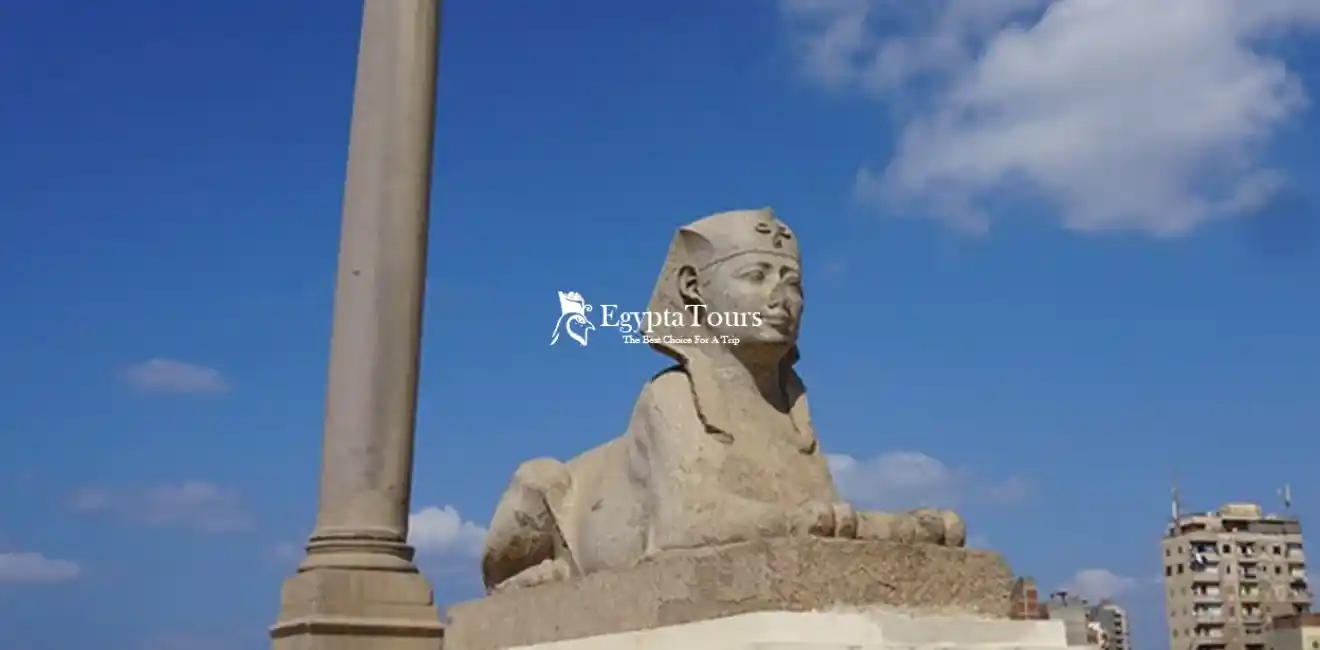
Archaeological-remains-Roman-attractions-Alexandria-EgyptaTours
-The Roman Amphitheater in Alexandria is one of the most popular tourist attractions in Egypt.
-Built in the 2nd century AD, this ancient Roman structure is one of the largest amphitheaters in the world.
– Visitors can explore the theater’s three tiers of seating, marvel at its massive size, and learn about its history through informational displays.
– The Roman Amphitheater is just one of many fascinating Roman attractions in Egypt. Others include the Temple of Isis at Philae, the ruins of Pompey’s Pillar, and the Valley of the Kings.
– Whether you’re a history buff or just looking for a unique cultural experience, a visit to Egypt’s Roman attractions is sure to be unforgettable.
he Roman Amphitheater in Alexandria is one of the most popular tourist attractions in Egypt. The amphitheater was built in the 3rd century AD and is the only remaining example of a Roman amphitheater in Egypt. The amphitheater was used for gladiatorial games, public executions, and other entertainment.
The Roman Amphitheater is one of the best preserved ancient buildings in Alexandria.
It is also one of the largest buildings from the Roman period in Egypt. The amphitheater could seat up to 7,000 people. The seats are arranged in a semi-circular shape around the arena. There are four entrances to the amphitheater, two on each side.
The arena of the amphitheater was used for different types of entertainment, including gladiatorial games, public executions, and animal fights. The floor
of the arena is made of sand, which would have absorbed blood during executions and fights. There are also two large basins at either end of the arena that were probably used to hold water for animals or for washing away blood. The Roman Amphitheater is one of the most popular tourist attractions in Alexandria. It is a must-see for anyone interested in ancient history or architecture.
The Flavian Amphitheatre in Rome, commonly known as the Colosseum, is the largest and most famous Roman amphitheater. Built between 72 and 80 AD, it remains one of the most powerful symbols of ancient Rome. The structure measures 188 by 156 meters, while the arena itself is 86 by 54 meters. Commissioned by Emperor Vespasian, the amphitheater was completed and officially opened in 80 AD by his son Titus, who presented it as a gift to the people of Rome.
The Amphitheatre of Pompeii is among the oldest Roman amphitheaters still in existence. It is located in the ancient city of Pompeii and was buried, along with Pompeii and the nearby city of Herculaneum, during the eruption of Mount Vesuvius in 79 AD. The amphitheater is especially significant because it is considered the earliest surviving Roman amphitheater constructed entirely of stone.
Another notable Roman amphitheater was the Faleria, built in 43 AD in Picenum (modern Falerone), Italy. The structure measured 178.8 × 106.2 meters, featuring an elliptical arena. The amphitheater had twelve entrances, four leading directly to the arena and seating arranged in eight rows divided into three sections. Today, only the exterior wall remains while the arena is completely covered with grass up to the podium.
The Amphitheatre of Capua, the third-largest Roman amphitheater, measured 169.9 × 139.6 meters. Located in Capua (modern Santa Maria Capua Vetere), Italy, it was constructed by Augustus in the first century BC and could accommodate up to 60,000 spectators. This amphitheater is historically significant as the arena where Spartacus fought in 73 BC. The structure was eventually destroyed by the Vandals during their invasion of Rome in 456 AD.
The Julia Caesarea amphitheater, ranked as the fourth-largest, was built after the era of Julius Caesar in Mauretania between 25 BC and 23 AD by the Roman-appointed ruler Juba II and his son Ptolemy. The site is now modern-day Cherchell, Algeria. Although the structure has not survived, historical records indicate building dimensions of 168 × 88 meters with an arena measuring 72.1 × 45.8 meters.
The fifth-largest Roman amphitheater is located in the province of Sevilla, Spain. Known as the Italica amphitheater, it measures 156.5 × 134 meters with an arena dimension of 71.2 × 46.2 meters. Constructed during the reign of Emperor Hadrian (117–138 AD), it could hold up to 25,000 spectators and remains well-preserved to this day.
The Amphitheatre of El Jem in Tunisia, measuring 148 × 122 meters, is one of the largest and best-preserved Roman amphitheaters. With a capacity of 35,000 spectators, it is a free-standing stone amphitheater built entirely of stone blocks, structurally similar to the Colosseum in Rome. Much of the tiered seating, podium, arena and underground passages remain intact. Some seating areas are still usable and the amphitheater continues to host concerts and music festivals, making it a living example of Roman architectural heritage.

Roman-Amphitheater-Alexandria-cultural-heritage-site-EgyptaTours
Comparisons made by contemporary researchers between the Alexandria amphitheater and other Roman theatres in Italy, Greece and the Theatre of Garash in Tunisia revealed a unique C-shaped design, making it the only amphitheater that allowed spectators to view performances from any angle.
The relatively small size of the amphitheater, accommodating only 600 spectators, suggests that it was intended for private performances or as the Greeks did as a conference hall for critical official meetings, rather than public entertainment.
To the north of the amphitheater, visitors can see Roman baths, constructed from the 2nd to 4th centuries AD, while to the west, lies the “Villa of the Birds.” Built during the reign of Emperor Hadrian who ruled Egypt in the 2nd century AD, this villa is notable for its main room featuring a stunning mosaic floor depicting various birds in intricate designs, hence its name.
The Roman Amphitheater in Alexandria offers a glimpse into Egypt’s Greco-Roman past. Built in the 2nd century AD, it was mainly used for performances, reflecting the cultural life of that era.
You’ll find the Roman Amphitheater in the Kom El-Dikka area of Alexandria, Egypt. This region is known for its archaeological richness and proximity to other historical sites.
The amphitheater is noteworthy for its semi-circular design, comprising 13 tiers of white marble seating. Each tier was carefully constructed to reflect sound perfectly, ensuring optimal acoustics for performances.
Yes, guided tours are available and recommended. They provide insights into the amphitheater’s history and significance, enhancing your understanding of the site.
Plan to spend about 1 to 2 hours at the amphitheater. This allows ample time to explore the site and appreciate its architecture and history.
Absolutely! Photography is allowed, so feel free to capture the essence of this ancient marvel. Remember to respect any guidelines provided by the site.
Yes, there is a nominal entrance fee for visitors. The fees contribute to the preservation of the site and its surroundings.
Definitely. The amphitheater is near other attractions like the Alexandria National Museum and the Catacombs of Kom El Shoqafa. These sites offer a broader look into Alexandria’s storied past.
The Roman Amphitheater is open daily from 9 AM to 5 PM. It’s wise to check ahead for any changes during public holidays.
The amphitheater has some accessibility features, but parts of it might be challenging for visitors with mobility issues. It’s best to contact the site ahead of your visit for specific accommodations.
Considering Alexandria’s bustling nature, reaching the amphitheater by taxi or local transportation is often the most convenient option. It’s well-connected and easy to find.



Explore our top-rated Egypt travel packages and embark on an unforgettable journey. From the Pyramids of Cairo to the magical temples of Luxor, Aswan, and Abu Simbel, discover expertly curated tours designed for your perfect Egyptian adventure





Unlock the true wonders of Egypt with confidence. We combine expert local knowledge, seamless logistics, and round-the-clock support to deliver flawless, responsible, and unforgettable travel experiences.