



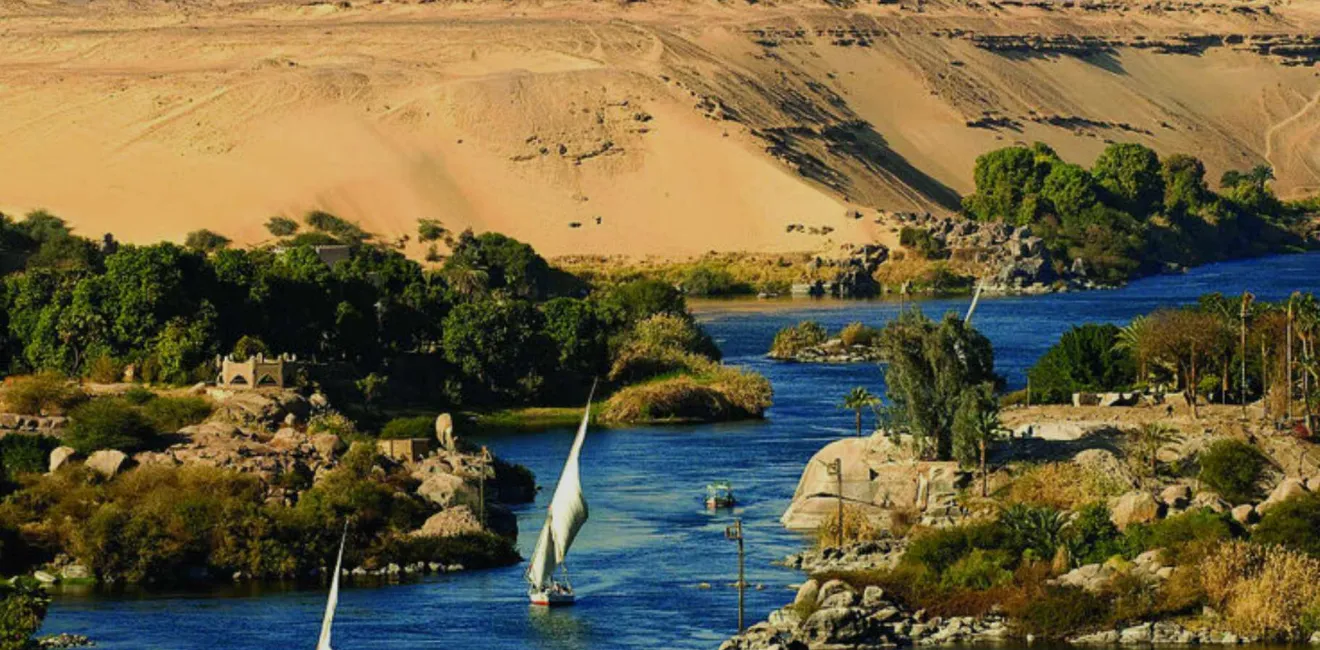
The Nile Valley in Egypt
The Nile Valley in Egypt is one of the most important geographical locations in the world. It is the area adjacent to the Nile River, characterized by its population density and fertile soil for agriculture.
The Pharaonic civilization was established on the banks of the valley. The Greek historian Herodotus described Egypt by saying, “Egypt is the gift of the Nile,” due to its profound impact on the social and economic life of Egypt.
The Nile Valley in Egypt was the basis of life for the ancient Egyptians through agriculture, trade, and transportation; it was their source of life. The Nile River was considered sacred to them, as they named its flood after the god Hapi in their beliefs. The ancient Egyptians also gave it many titles, including “Giver of Goodness” and “Bringer of Life.”
The Nile helped the ancient Egyptians organize their lives. Through it, they learned to calculate days, seasons, and years, which developed their way of thinking and taught them to adapt to changes in their environment, especially during the flood season. Thus, the Nile established the pillars of stability, paving the way for the emergence of ancient Egyptian civilization.
Agriculture on the Banks of the Nile and Its Role in the Economy

Agriculture-on-the-Banks-of-tThe-Nile-Valley-in-Egypt-and-Its-Role-in-the-Economy
Agriculture originated on the banks of the Nile long ago, especially in the Valley and Delta region, which, after the deposition of Nile sediments, turned into soil rich in materials suitable for agriculture. The agricultural season began after the floodwaters, which inundated the fields with water and silt, receded.
The Egyptians built canals and channels to cultivate many crops such as wheat, barley, vegetables, and legumes, which were their main food source. This also helped the economy grow through internal and external trade with their surplus food, and this was a source for the rise of the Egyptian civilization.
Major Cities that Arose in the Nile Valley

Major-Cities-that-Arose-in-The-Nile-Valley-in-Egypt-EgyptaTours
Many cities were established on the banks of the valley, which were centers of ancient Egyptian civilization, including:
- Memphis: Established around 3150 BC, located south of Cairo in an area called Mit Rahina, and was the ancient capital of Egypt.
- Thebes: Established around 5000 years ago, now called Luxor, and was the capital of Egypt during the New Kingdom era.
- Rakotis: Established around 331 BC, known today as Alexandria, and was an important cultural center, especially during the Ptolemaic era.
- Swenett: Established around 3000 BC, now known as Aswan, and had an important strategic location for transport and trade.
The Role of the Nile in Trade and Transport Throughout History
Trade was one of the social and economic activities practiced by the ancient Egyptians. The credit for its prosperity goes to the Nile River, which was considered the main transportation route for importing and exporting goods with neighboring countries. The goal was to obtain raw materials such as wood and stones used in building historical sites.
The Annual Floods and Their Impact on Agriculture
The ancient Egyptians excelled in calculating days and years and knew the dates of the floods, so they prepared for them well. The floodwaters were the main source for agriculture. The flood began from the south heading north, carrying along the Nile Valley in Egypt water rich in silt that deposited on the banks, which helped in the growth of various agricultural crops.
According to the beliefs of the ancient Egyptians, the flood was not the result of rainfall on the plateaus but was a satisfaction from the god of the floods, named Hapi. The ancient Egyptians adapted to this natural phenomenon; when the floodwaters exceeded the limit, they built a series of dams to protect their crops and homes.
Religious Life Associated with the Nile River
The ancient Egyptians were connected to the Nile River since ancient times, and this is clearly evident in their folk heritage and beliefs. They gave it many titles such as “Great Lord of Sustenance” and “Creator of Beings,” due to its essential role in their economic and social lives, as they considered it a symbol of life and blessing.
According to their religious beliefs, there was a close connection between the Nile River and the idea of resurrection in the other world. They used to place fishing tools, boats, and nets in the tombs of the deceased for them to use on their journey after death.
Animals and Plants in the Nile Valley Environment

Animals-and-Plants-in-the-Nile-Valley-Environment-EgyptaTours
The living organisms in the Nile River are diverse, from plants and aquatic animals that were used for food, such as:
- Tilapia fish.
- Nile perch.
- Catfish.
- Papyrus plant.
- Colocynth plant.
- Lupin plant.
- Garlic plant.
- Ivy plant.
- Wheat plant.
- Barley plant.
- Dye plants.
- Ornamental plants.
- Black cumin plant.
- Celery herbs.
- Doum palm tree.
- Olive tree.
- The sacred ibis bird.
The Role of the Nile Valley in Building Temples and Pyramids
The Nile Valley in Egypt is the basis for building Egyptian temples and archaeological sites, most notably the pyramids. According to recent studies, a buried branch of the Nile River was discovered next to the pyramids. It was used as a waterway to transport building materials from the south to the north on boats via the river, such as huge stones and logs.
How did the Nile help the Ancient Egyptians to Settle?
The presence of the Nile Valley in Egypt helped the ancient Egyptians to settle on its banks, enabling them to:
- Achieve social and economic development through agriculture and trade.
- Practice river sports on the banks of the Nile Valley.
- Perform religious rituals in the Nile River according to their religious beliefs.
Thus, the Nile River contributed to providing all the requirements of life for the ancient Egyptians, which helped in the emergence of the ancient Egyptian civilization.
The Nile Valley as a Contemporary Tourist and Cultural Destination

The-Nile-Valley-as-a-Contemporary-Tourist-and-Cultural-Destination-EgyptaTours
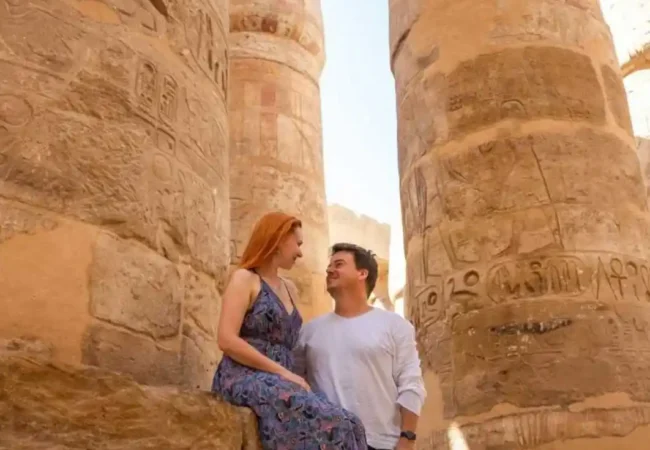
The banks of the Nile Valley are like an open-air museum as they include a number of tourist attractions such as:
- Karnak Temple.
- Valley of the Kings.
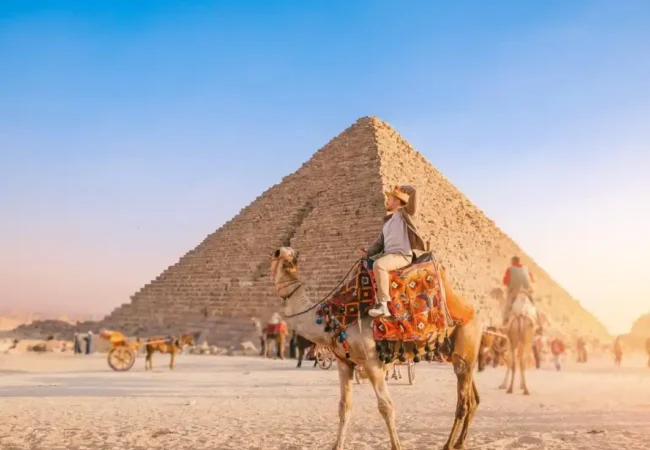
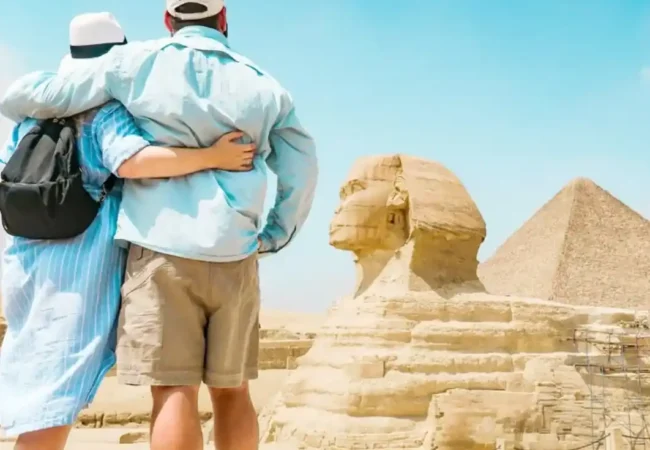
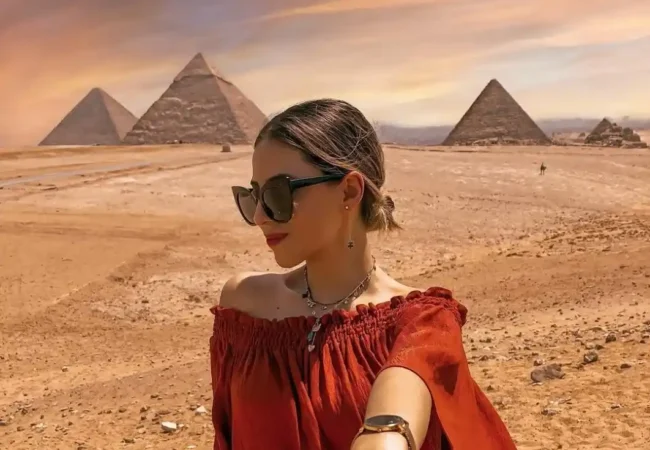
- Pyramids of Giza.
- Abu Simbel Temple.
- Hatshepsut Temple.
- Luxor Temple.
- Kom Ombo Temple.
- Dendera Temple.
- Temple of Horus.
- The Nubian Village.
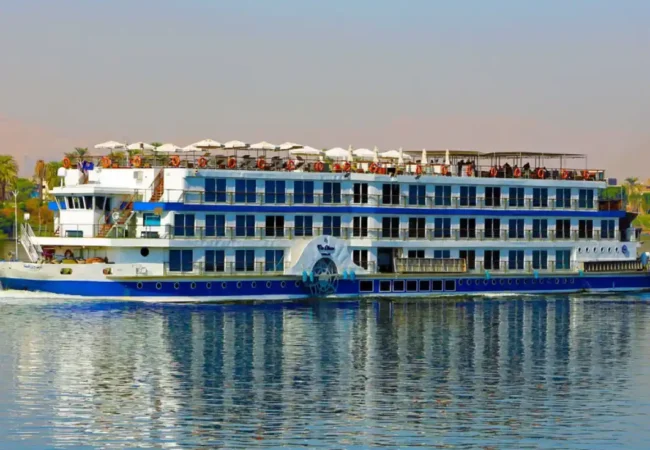
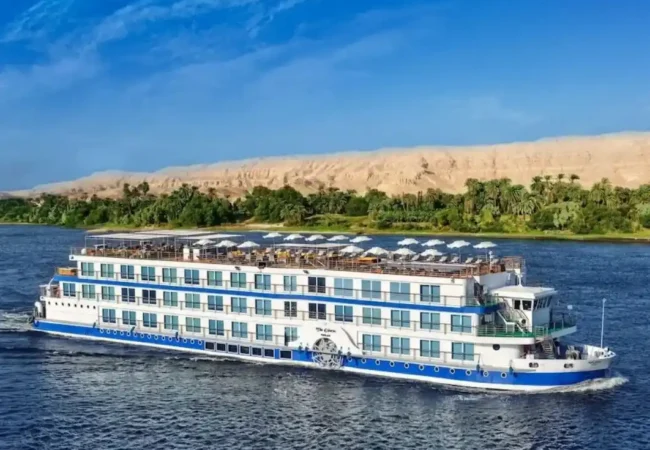
- Boat trips.
Conclusion
The Nile Valley in Egypt is the country’s lifeline and one of the pillars that helped build the ancient Egyptian civilization. Its fertile soil contributed to the prosperity of agriculture, and it enabled the development of trade and transport. Thanks to it, the most important historical sites were built. In the present time, the Nile River has become a tourist and cultural destination that connects the past with the present.
FAQs
What is Nile Valley best known for?
It is the main source of agriculture and national income for Egypt, in addition to containing a number of archaeological sites of the ancient Egyptian civilization.
What are 5 facts about the Nile river?
The Nile is the longest river in the world, passes through 11 countries, has two main tributaries (the White Nile and the Blue Nile), is characterized by great biodiversity, and was the basis of ancient Egyptian civilization.
Why was the Nile Valley so important to Egypt?
The Nile Valley in Egypt was important for being the source of water and agriculture, in addition to being a main route for transport and trade.
What food did they grow in the Nile Valley?
The ancient Egyptians grew wheat, barley, garlic, onions, lentils, and beans.
Can you swim in the Nile river?
Swimming in the Nile River is not recommended due to some risks such as parasitic diseases and strong water currents.
Are there crocodiles in the Nile river?
Yes, there are crocodiles in the Nile River in Egypt, specifically in the southern regions such as Aswan and Lake Nasser.
Is the Nile freshwater or saltwater?
The Nile River is a freshwater river, as it originates from freshwater lakes in central Africa.
About EgyptaTours

EgyptaTours is a name synonymous with trust, excellence, and unforgettable travel experiences, proudly standing as one of the leading travel agencies in Egypt. Renowned for its deep expertise, personalized service, and carefully crafted itineraries, EgyptaTours serves as the ultimate gateway to discovering Egypt in its most authentic and inspiring form.