The God Khnum
Khnum, also written Khnemu and pronounced /kəˈnuːm/, whose name in Ancient Egyptian...



The pharaohs believed animals could carry divine qualities, which is why many gods were represented with animal features. Dogs and jackals became sacred symbols connected to death and resurrection.
The Symbolism of the Dog and the Jackal in Ancient Egypt The dog or the jackal was not just an ordinary animal it carried profound symbolism and a special place in the rituals of life and death.
Although cats stole the spotlight at the time dogs received their share of appreciation.
They were mummified and buried with their owners as family members, sometimes even placed inside the same coffins.
The Pharaonic cemetery of Abydos located in Sohag Governorate and dating back thousands of years reveals an area designated by the ancients for the burial of dogs that had passed away before their owners buried them next to the graves of women and dwarves.
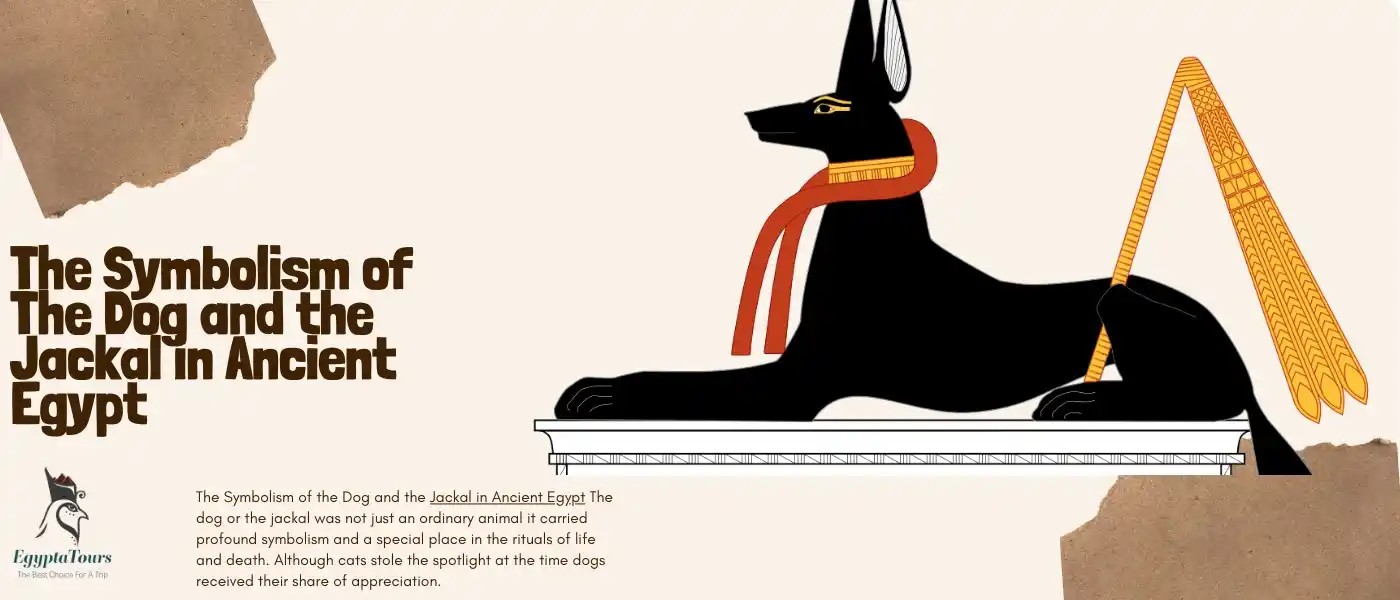
The-Symbolism-of-the-Dog-and-the-Jackal-in-Ancient-Egypt
The symbolism of the dog and the jackal in ancient Egypt was a religious symbol that reflected the pharaohs’ understanding of the concept of protection and loyalty after death.
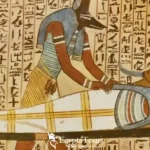
The dog was associated with the god Anubis, the guardian of tombs and guide of souls in the afterlife. Anubis took the form of a jackal, a symbol of vigilance amidst the darkness.
Amid the ancient sands tombs dedicated to dogs emerged revealing the rare spiritual and human status of this animal in pharaonic society.
A small ivory statue of a dog found among temple ruins remains a vivid testament to the symbolism of the dog and the jackal in ancient Egypt and their profound relationship with humans.
The word “Ewyu” came to mean dog derived from the sound of its barking. It’s as if the pharaohs wanted to give it its name from its sound.
Dogs were not just animals in Egyptian life they were true partners in the fields and battles in guarding homes and tombs, and even in tracking enemies in tasks similar to what we know today as police dogs.
Although Pharaonic inscriptions and murals depicted clear images of dogs accurately distinguishing their species remains complex because the Pharaohs did not use breed names as we do today.
However some representations date back to modern breeds such as the Saluki Ibiza, Greyhound, Mastiff, and the Pharaonic dog.
All of this reflects the symbolism of the dog and the jackal in ancient Egypt, not only as a religious symbol, but also as an integral part of everyday life. The symbolism of the dog and the jackal in ancient Egypt is evident in every aspect of their civilization from language to the battlefield.
The Ibizan Hound is one of the most prominent dogs clearly depicted in Egyptian murals.
Many researchers agree that it is of pure Egyptian origin despite some sources claiming that it came with the Phoenicians in the 7th century BC from the island of Ibiza.
However these claims lack archaeological evidence confirming the breed’s presence on that island which increases the likelihood that its true origins are from the Nile Valley.
Remarkably the ancient Egyptians not only used dogs, but also gave them names and adjectives that reflected their feelings toward them such as “the brave,” “the trustworthy,” “the good shepherd,” “the north wind,” and even disparaging names such as “useless.”
Dogs were sometimes used as negative symbols appearing in scenes to signify submission or humiliation, as in the depiction of prisoners as “the king’s dogs.”
Nevertheless they were treated with respect adorned with luxurious leather collars inscribed with their names and those of their owners.
This rich contrast reveals the symbolism of dogs and jackals in ancient Egypt as creatures that blended protection and prestige with spiritual and social symbolism.
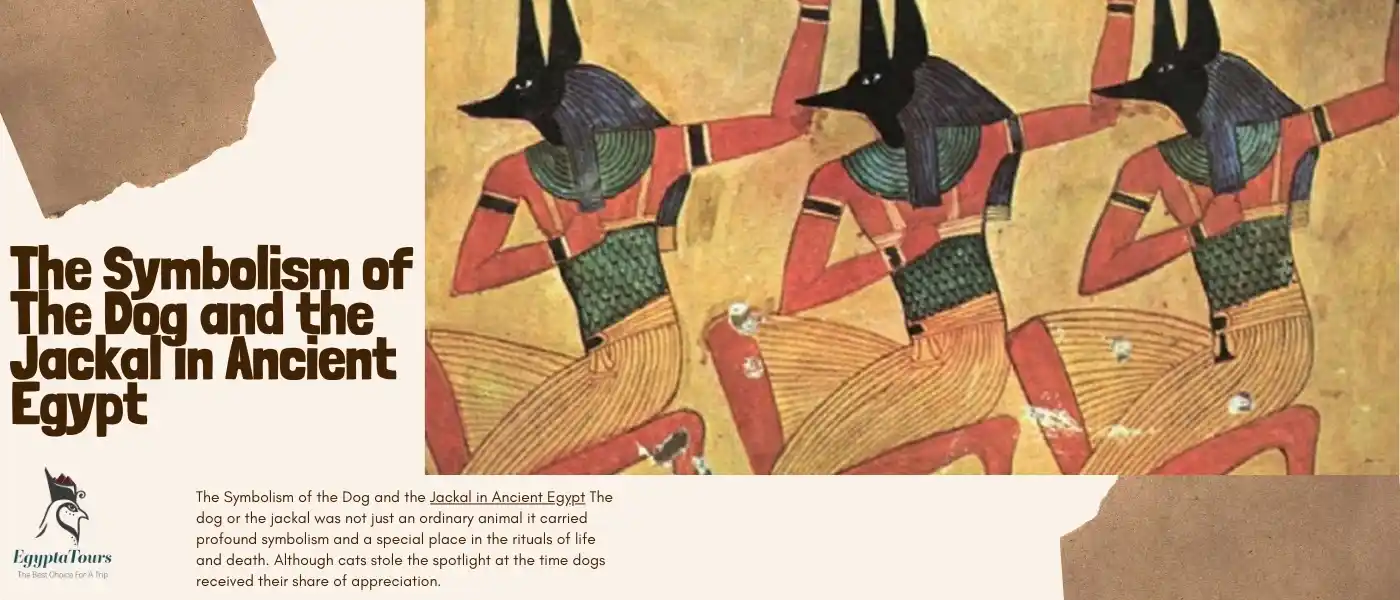
The-Symbolism-of-the-Dog-and-the-Jackal-in-Ancient-Egypt-and-the-God-Anubis-EgyptaTours
In the imagination of the ancient Egyptians the god Anubis assumed a majestic form with a strong muted body and the head of a watchful dog. He was a symbol of protection in the afterlife and a guide for souls on their eternal journey to the afterlife.
This image did not arise from a vacuum but rather stemmed from a close observation of the behavior of dogs that patrolled graves, guarding them from predators and preventing wolves from desecrating the remains of the dead.
From this came the idea of linking the dog with death, and this animal became a sacred symbol for the pharaohs.
Conveying the meaning of safety and loyalty in the face of the unknown, the symbolism of the dog and the jackal was formed in ancient Egypt as a bridge between the world of the living and the realms of the dead.
Because they believed in its spiritual and functional role the symbolism of the dog and the jackal appeared in ancient Egyptian myths and rituals remaining immortal in temple inscriptions and the surfaces of coffins.
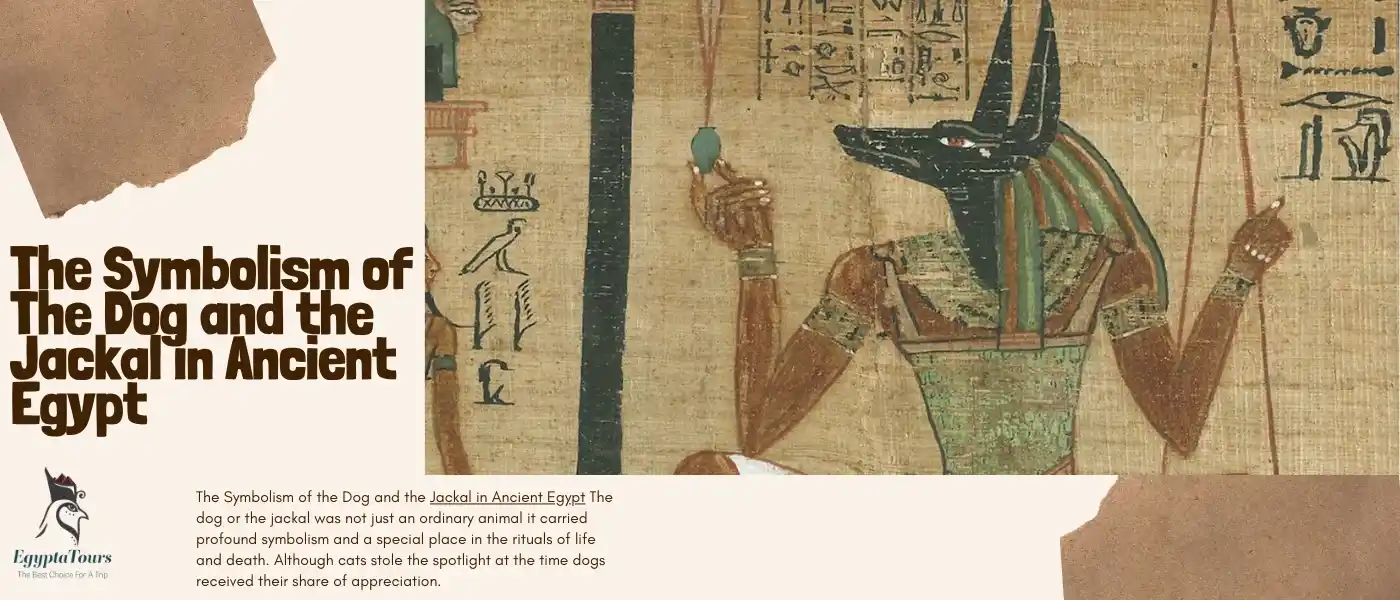
The-God-Anubis-in-Ancient-Egypt-EgyptaTours
Anubis was not just a black-robed jackal-headed god. He was a symbol of the transformations in ancient Egyptian belief as his roles changed over the ages just as the seasons changed.
In the early days of history specifically since the First Dynasty Anubis appeared as a sacred guardian of tombs overseeing the secrets of mummification, and bearing responsibility for the fate of souls after death.
With the advent of the Middle Kingdom Osiris began to infiltrate the scene assuming the title of Lord of the Underworld.
However Anubis did not disappear remaining the guide of souls on their eternal journey.
Despite his great stature, and despite his frequent appearance in stories and myths Anubis remained a powerful presence in belief and ritual. His black color was carefully chosen it represents the color of life after death the color of the soil that gives life to plants, and the color of the body after it has been mummified and prepared for immortality.
He had a spiritual brother named Wepwawet who also represented the symbolism of the dog and jackal in ancient Egypt with a white or gray dog’s head until the two figures became confused in people’s minds over time.
His consort was Anput and his daughter Kebeshet was the goddess of purification and snakes. Among all these symbols Anubis remains the core of the symbolism of the dog and jackal in ancient Egypt representing protection passage, and new beginnings after death.
The symbolism of the dog and jackal in ancient Egypt was strongly manifested in the figure of Anubis who assumed this defensive role and transformed from a predator into a guardian of souls. Here are the most important stages of this symbolism and transformations:
Animals held a very high status in ancient Egypt including dogs.
The ancients considered them deities representing power, and they participated in various rituals and worship during this period in Egypt’s history.
One of the distinctive characteristics of Egyptian deities during this time was their depiction with dog heads which reflects the symbolism of the dog and jackal in ancient Egypt.
This demonstrates the prevalent belief among the pharaohs that the deity could be embodied in the form of living animals, just as they were represented in the statues and idols they made.
A study issued by the Center for Western Thought confirmed that this belief was not merely religious fantasy, but rather an essential part of the Egyptians’ understanding of the world around them.
They viewed animals as possessing divine attributes associated with strength, wisdom, and the ability to protect humans.
The jackal in ancient Egypt was a symbol of the sacred protection of the dead. It appeared in ancient Egypt as a god guarding graves and guiding souls on their journey to the afterlife.
Protection is also linked to immortality in the afterlife, and the ancient Egyptians held it in high esteem.
Archaeologists have determined that the animal chosen to embody the god Anubis was none other than the African jackal a canine creature that lived in the Nile Valley.
The ancient Egyptians attributed a sacred character to this creature due to its guarding and vigilant qualities around tombs. Anubis appeared since the beginning of the Old Kingdom as a god who protected graves and prevented their desecration.
He was also responsible for mummification rituals.
In concluding our discussion of the symbolism of the dog and the jackal in ancient Egypt we can see the philosophical and religious depth the ancient Egyptians attached to these creatures.
Their meanings transcended the confines of familiar animals to become sacred symbols closely linked to the world of the gods and the dead.
The choice of the dog and the jackal was not arbitrary, but rather reflected a cultural experience that every creature has a role to play in the cycle of life and resurrection. Therefore studying these symbols provides us with a unique window into the ancient Egyptian mindset.



Explore our top-rated Egypt travel packages and embark on an unforgettable journey. From the Pyramids of Cairo to the magical temples of Luxor, Aswan, and Abu Simbel, discover expertly curated tours designed for your perfect Egyptian adventure