$1,527/
Per Person
On your journey to Egypt, a new story begins in a country filled with spirit, history, and warmth. From the moment you arrive, you’ll feel that you’re stepping into a truly unique experience. We’re here to make every step more comfortable for you, we make sure your days flow smoothly without worrying about transportation, planning, or any details that might distract you. Every moment of this trip is crafted for you to relax and enjoy your time your own way.
Embark on an unforgettable Egypt Cultural Sightseeing in 10 Days journey that takes you deep into the heart of one of the world’s oldest civilizations. From the iconic Pyramids of Giza and the Sphinx to the priceless collections of the Egyptian Museum, Cairo offers a powerful introduction to Egypt’s ancient and Islamic heritage. Wander through historic neighborhoods, explore bustling bazaars, and experience the rich traditions that continue to shape daily life along the Nile.
Egypt Cultural Sightseeing in 10 Days Along the Nile

Egypt-Cultural-Sightseeing-In-10-Days-Kom-Ombo-Temple-EgyptaTours
Continue your cultural adventure by traveling south to Luxor and Aswan, where temples and tombs reveal the grandeur of ancient Egypt. Visit Karnak Temple, the Valley of the Kings, Hatshepsut Temple, and the beautifully preserved temples of Edfu and Kom Ombo. In Aswan, discover Philae Temple and enjoy the serene beauty of the Nile. Carefully planned sightseeing, knowledgeable guides, and comfortable accommodations ensure these 10 days offer a deep, meaningful connection to Egypt’s history, culture, and enduring legacy.
Included and Excluded
- Meet and assist service upon arrival and departure at Cairo International Airport.
- Assistance with passport control and luggage procedures.
- All airport and hotel transfers by modern air-conditioned vehicles.
- Accommodation in Cairo at a 5 Stars hotel (with breakfast).
- Accommodation on a luxury Nile Cruise (full board).
- Cairo Nile Dinner Cruise with belly dancing and folklore show.
- Domestic transportation between Cairo, Luxor, and Aswan as per itinerary.
- All sightseeing tours mentioned in the itinerary.
- Professional English-speaking Egyptologist tour guide throughout the tour.
- Entrance fees to all mentioned historical sites and museums.
- All meals as stated in the itinerary.
- All service charges and applicable taxes.
- International airfare to and from Egypt.
- Egypt entry visa.
- Travel insurance.
- Optional tours not mentioned in the itinerary.
- Personal expenses (laundry, phone calls, shopping, etc.).
- Beverages during meals and on the Nile Cruise unless specified.
- Tipping (gratuities for guides, drivers, cruise staff).
Highlights of the Tour
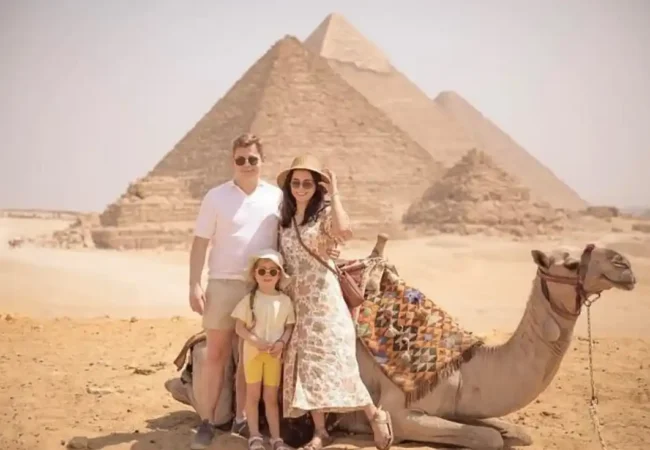
- Visit the Great Pyramids of Giza and the Sphinx.
- Explore the Egyptian Museum and its ancient treasures.
- Discover Islamic Cairo and Khan El Khalili Bazaar.
- Travel to Luxor, the world’s greatest open-air museum.
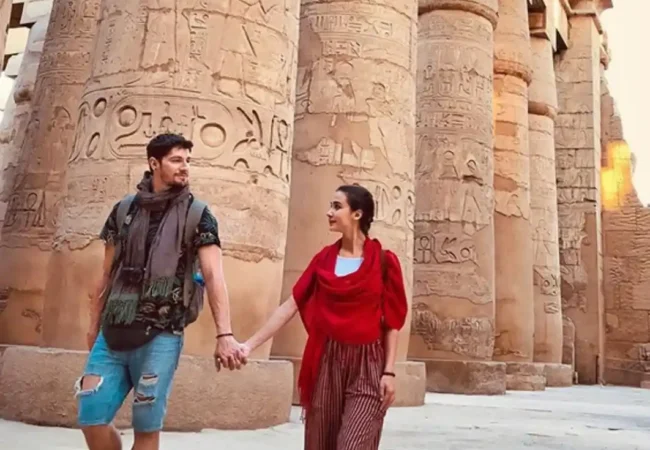
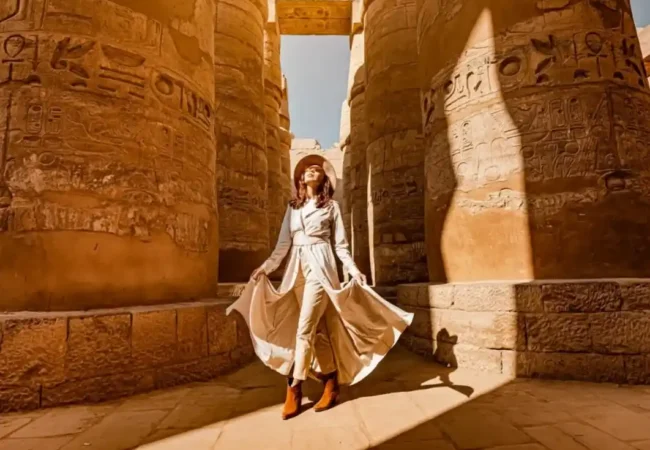
- Visit Karnak Temple and Luxor Temple.
- Explore the Valley of the Kings and Hatshepsut Temple.
- See the Colossi of Memnon.
- Cruise along the Nile between Luxor and Aswan.
- Visit Edfu Temple and Kom Ombo Temple.
- Discover Philae Temple in Aswan.
- Experience traditional Nubian culture in Aswan.
- Enjoy guided cultural sightseeing with expert Egyptologists.
Tour Itinerary
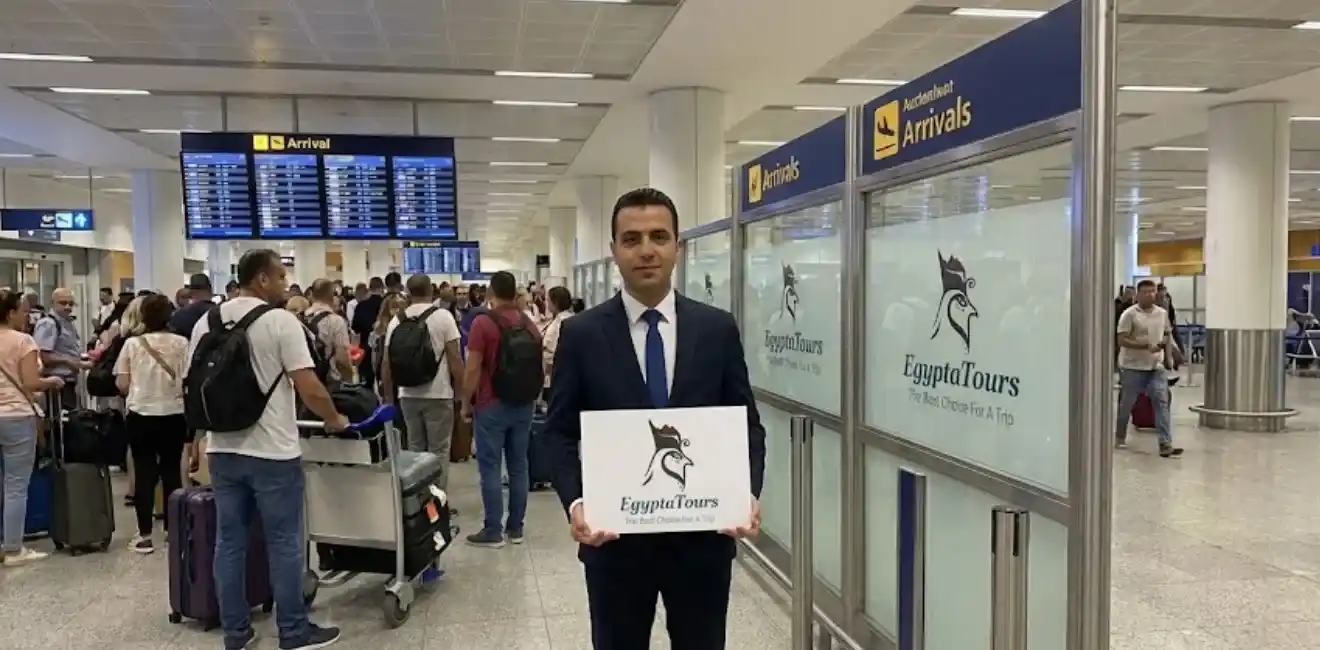 When you arrive at Cairo airport, our tour guide will be waiting for you to welcome and help you with completing all of your passport formalities and luggage identification.
Then you will be transferred by A/C vehicles to a 5* hotel to have a rest.
When you arrive at Cairo airport, our tour guide will be waiting for you to welcome and help you with completing all of your passport formalities and luggage identification.
Then you will be transferred by A/C vehicles to a 5* hotel to have a rest.
Dinner time:
In the evening you will be transferred to have a dinner cruise in the Nile River while enjoying a wonderful belly dancing show with a folklore band inspired by the traditions of Egypt’s whirling dervishes.
After that our tour guide will accompany you to the hotel to spend your night and prepare for the next day.
- Meals: Dinner.
- Overnight: Cairo Hotel.
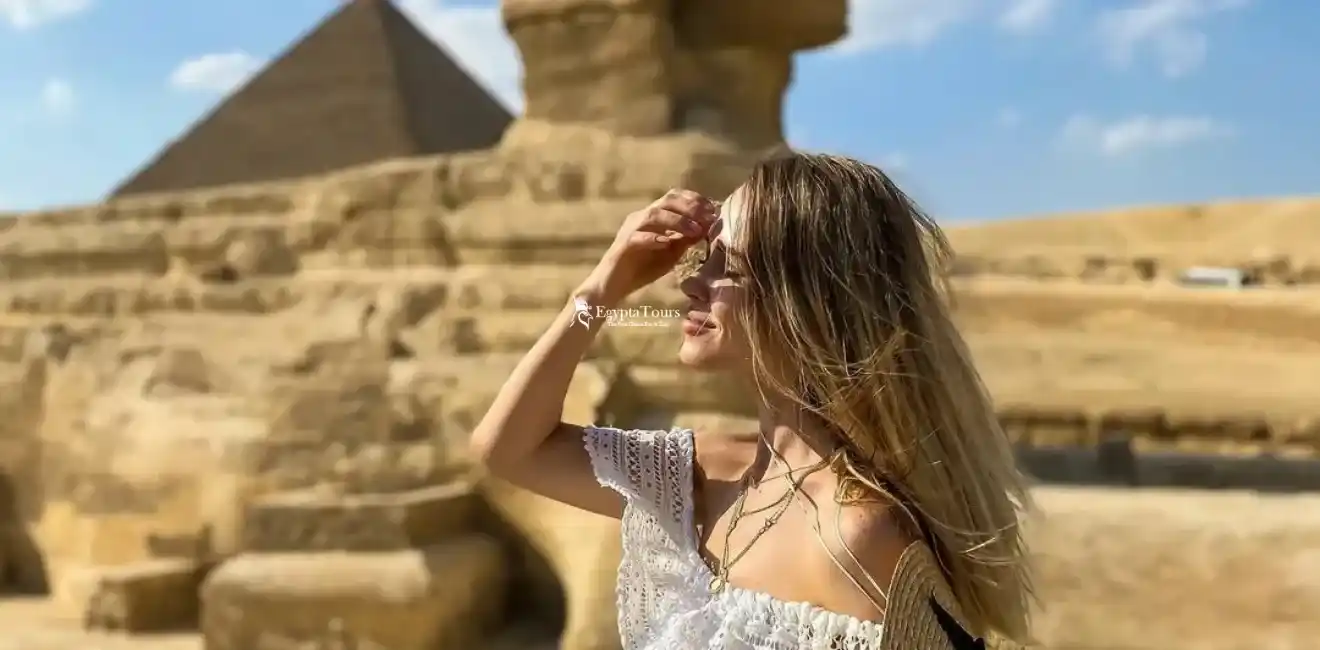 Have your breakfast and head with our tour guide to enjoy a great excursion to:
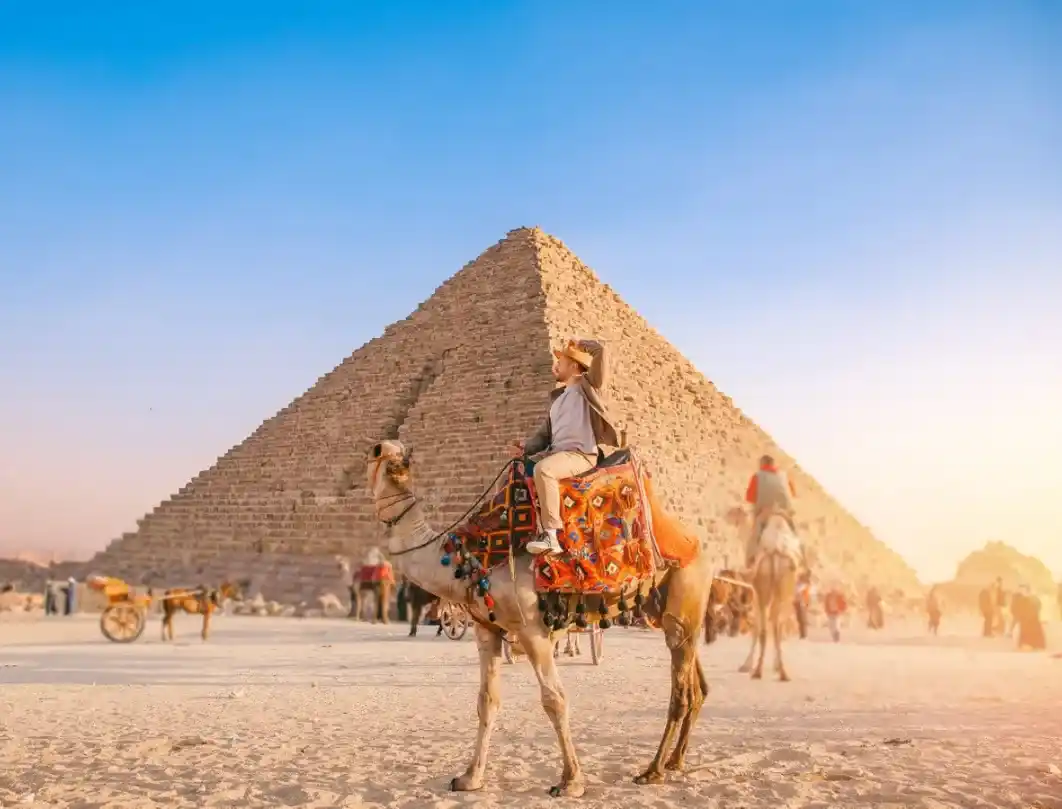
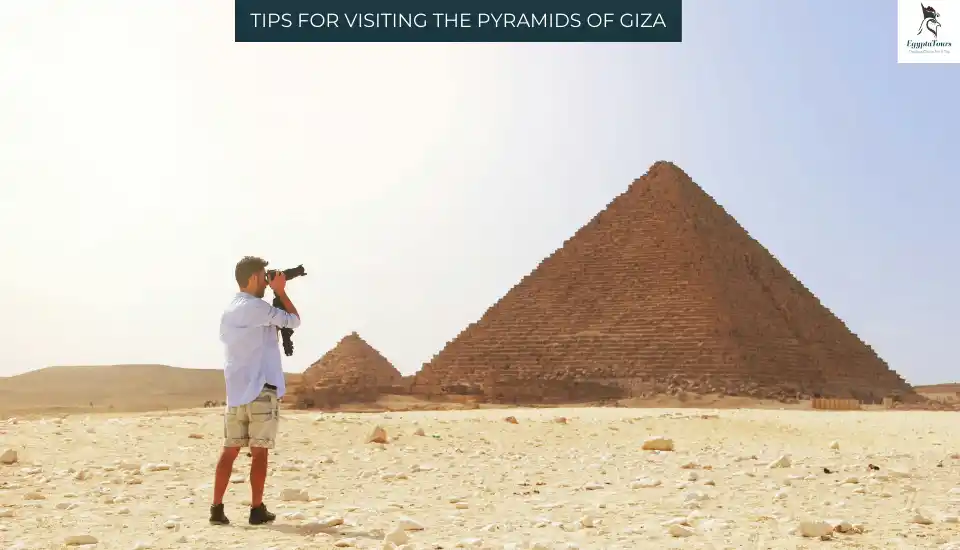
Giza Pyramids:
Ancient Egyptians believed that the pyramid was a means to help the deceased's soul reach the heavens with the god Ra. Sometimes, the sun's rays can be seen between the clouds, taking the pyramidal shape, which was one of the many means to help them ascend to the heavens.
The Great Pyramid Of Giza, Khufu pyramid:
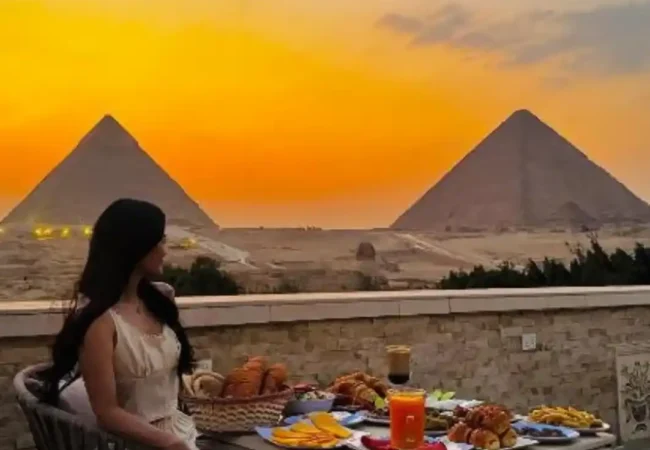
The construction of the Great Pyramid is a major cultural leap in ancient Egypt's history. Khufu was influenced by his father Sneferu, and the pyramid remained the tallest man-made structure for over 3800 years, originally 146.5 meters high.
The Great Sphinx:
The Great Sphinx is a large stone statue carved from limestone, depicting a mythical creature with a human head and a lion's body in a reclining position. The statue faces directly from west to east, located on the Giza Plateau on the west bank of the Nile River in Giza, Egypt.
The Valley Temple:
The Valley Temple of Khafre is a very old temple in Egypt, built around 2570 BCE. It was an important place for ceremonies when a pharaoh died. The temple was the starting point for the pharaoh's journey to the afterlife.
The Grand Egyptian Museum:
The Grand Egyptian Museum idea started in the 1990s when Farouk Hosni was the Minister of Culture. He wanted a new museum because the old one in Tahrir Square was too small and not modern.
Lunch time:
The lunch will be served at one of the most famous restaurants in Giza.
Saqqara Step Pyramid:
The Step Pyramid of Djoser is the first Egyptian pyramid, consisting of six mastabas stacked on top of each other, representing a huge development in tomb design at that time. The pyramid stands 62 meters high, with a base area of 109m x 125m, and was covered in polished white limestone.
It's considered the first large stone structure, although the enclosure known as Gisr el-Mudir seems to have preceded it.
- Meals: Breakfast - Lunch.
- Overnight: Cairo Hotel.
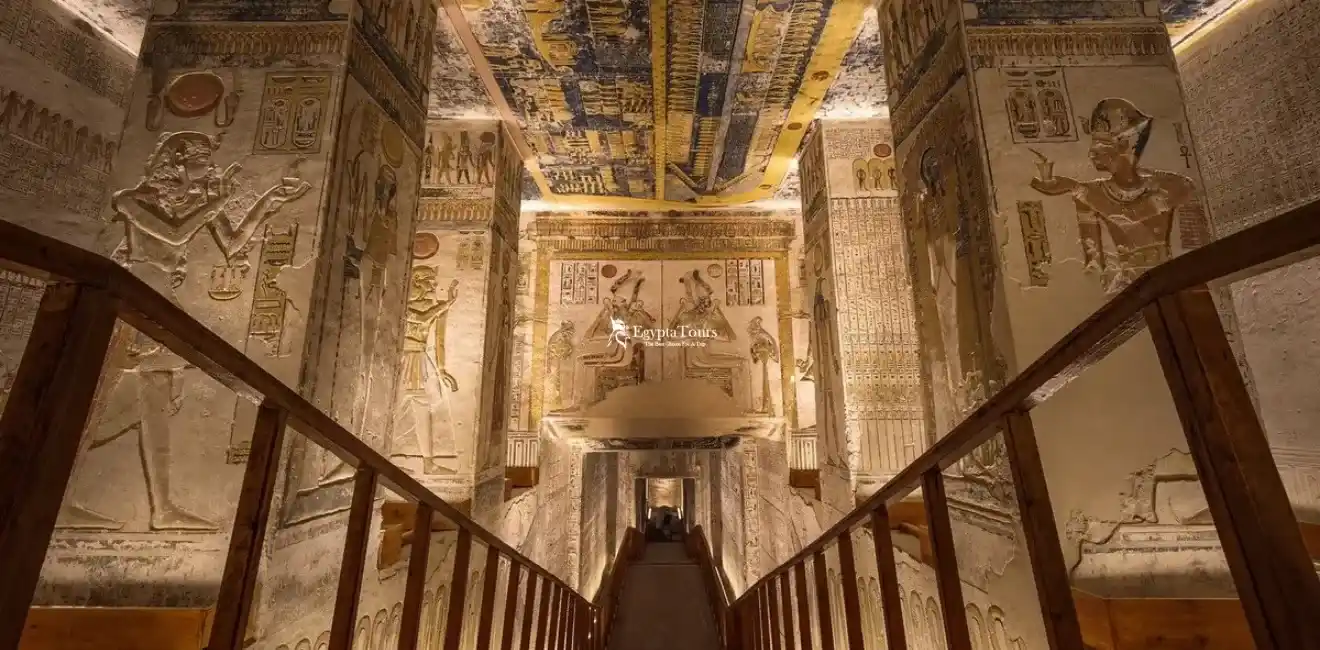 Early in The Morning we will drive you to Cairo International Airport to Catch Your Flight to Luxor City Then you will join your tour guide to explore the highlights of Luxor by visiting:
The Valley of the Kings:
The Valley of the Kings is used for constructing tombs for pharaohs and nobles of the New Kingdom during the 18th to 20th dynasties. It's located on the west bank of the Nile River, opposite Thebes (modern Luxor).
Hatshepsut Temple:
The Temple of Hatshepsut is notable for its reliefs depicting her maritime expeditions to Punt, trading and bringing back incense and myrrh. Pharaohs offered incense to their gods for favor. The expeditions also transported woods, trees, rare animals, and leopard skins, which were prized materials obtained from Punt.
Colossi of Memnon:
They are twin statues of Amenhotep III depicting him seated, hands on knees, facing east (southeast).
Then go back to the cruise to have your meals and take a rest.
- Meals: Breakfast - Lunch - Dinner.
- Overnight: on board.
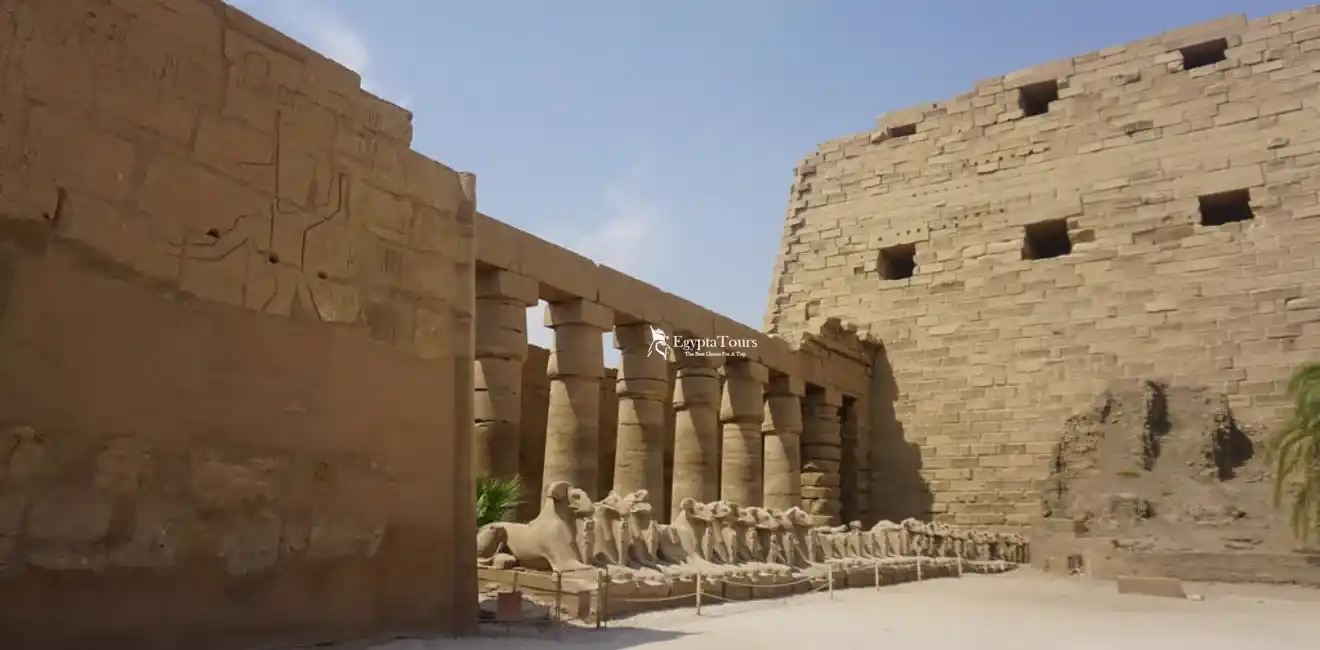 This day you will take your breakfast on board then join your tour guide to visit Luxor east bank highlights including:
The Karnak Temple:
The Karnak temple was named after the city of Karnak, derived from the Arabic word "Khornaq" meaning fortified village. Initially, it was known as "Ipet-isu" or "Per Amun", meaning Temple of Amun or House of Amun.
Luxor Temple:
The night in this temple is particularly enchanting, walking through it or even just gazing at some of its parts adds a different dimension to the visit. And from the gate of Luxor Temple to the gate of Karnak, you feel like you're traveling through time, from one place to another entirely different one.
At the end of the day you will go back to the cruise to have dinner and spend your night.
- Meals: Breakfast - Lunch - Dinner.
- Overnight: Onboard.
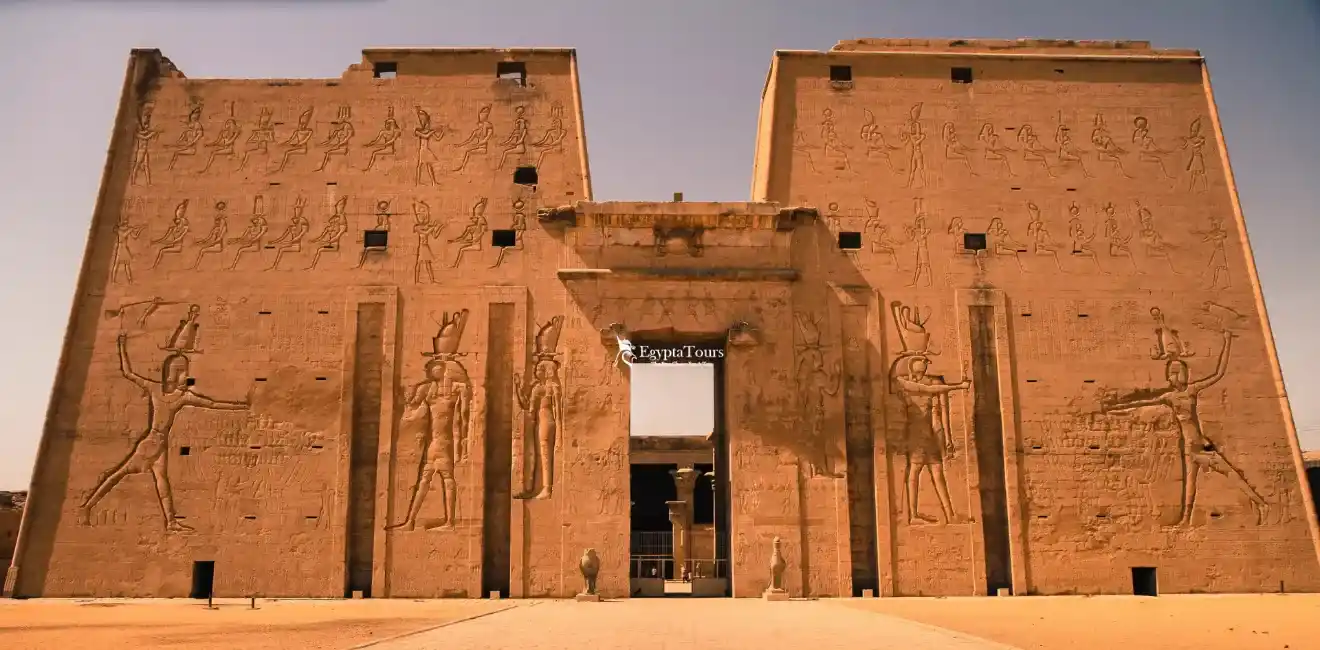 After your breakfast on board the tour guide will accompany you to visit:
Edfu Temple:
It is one of the best-preserved shrines in Egypt. Edfu temple was built during the rule of the Ptolemaic Kingdom between 237 and 57 BC.
In particular, the temple's inscribed building texts "provide details of its construction and preserve information on the mythical interpretation of this and all other temples as the Island of Creation".
You will return to the cruise to have your lunch and dinner while sailing towards Kom Ombo.
- Meals: Breakfast - Lunch - Dinner.
- Overnight: Onboard.
Wake up early and have your breakfast then join your tour guide to visit:
Kom Ombo Temple:
Kom Ombo temple was built during the reign of Ptolemy VI to worship the gods Sobek and Horus. Recently, restoration and renovation works have been carried out in the temple area. But its decoration was not completed until the Roman era, during the time of Emperor Tiberius.
After this visit you will be transferred back to the cruise to have your meals during sailing to Aswan.
- Meals: Breakfast - Lunch - Dinner.
- Overnight: Onboard.
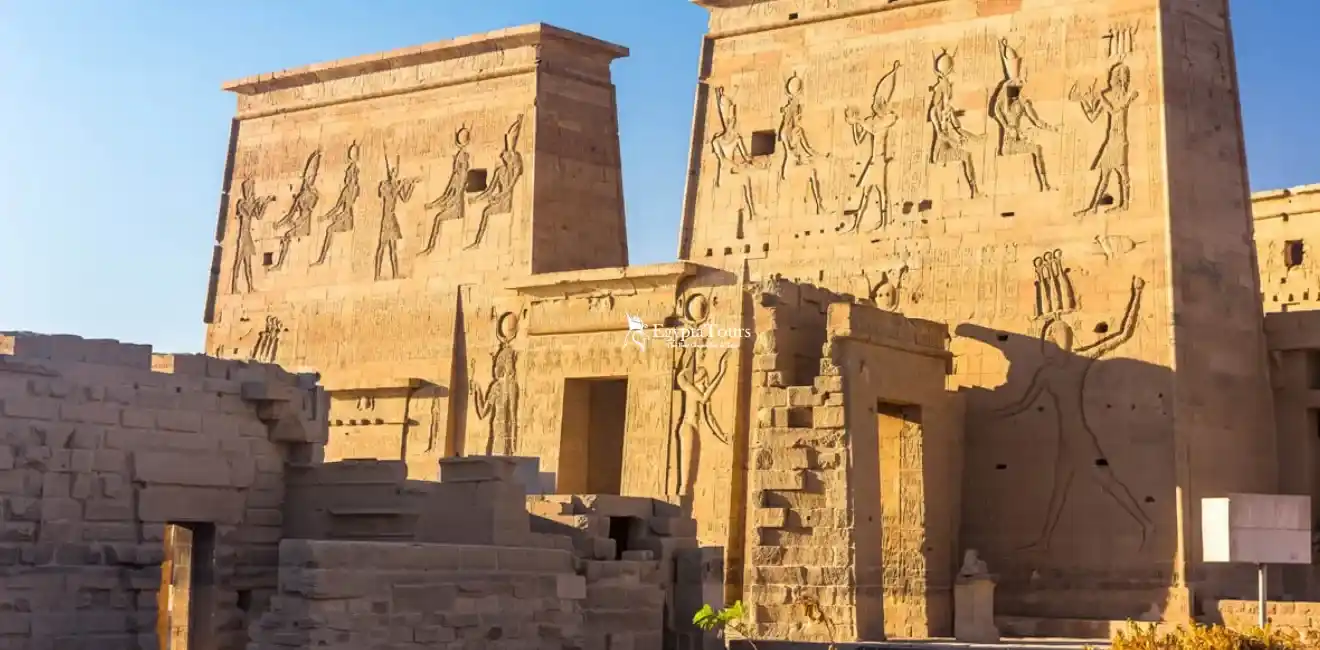 This day you will explore:
The Aswan High Dam:
The Aswan high dam's the backbone of Egypt's Nile water control project, constructed with Soviet assistance starting in 1960. The dam plays a vital role in hydroelectric power, irrigation, and agriculture.
The Unfinished Obelisk:
The Unfinished Obelisk is a pink granite obelisk in Aswan, Egypt, located in the northern part of a quarry near Aswan. It would've stood 41.7 meters tall, weighing around 1168 tons when complete.
Philae Temple:
Philae temple dates back to the 3rd century BC, followed by various eras such as the Greek, Roman, and Byzantine periods, each leaving its mark on the temple walls.
At the end of the day you will go back to the cruise to spend your night.
- Meals: Breakfast - Lunch - Dinner.
- Overnight: Onboard.
This day you will take your breakfast and be transferred to visit:
Abu Simbel Temple:
Abu Simbel is an archaeological site located on the western shore of Lake Nasser, about 290 km southwest of Aswan. It is one of the "Nubian Monuments" listed as a UNESCO World Heritage Site, which stretches from the direction of the river's flow from Abu Simbel to Philae.
- Meals: Breakfast - Lunch - Dinner.
- Overnight: Onboard.
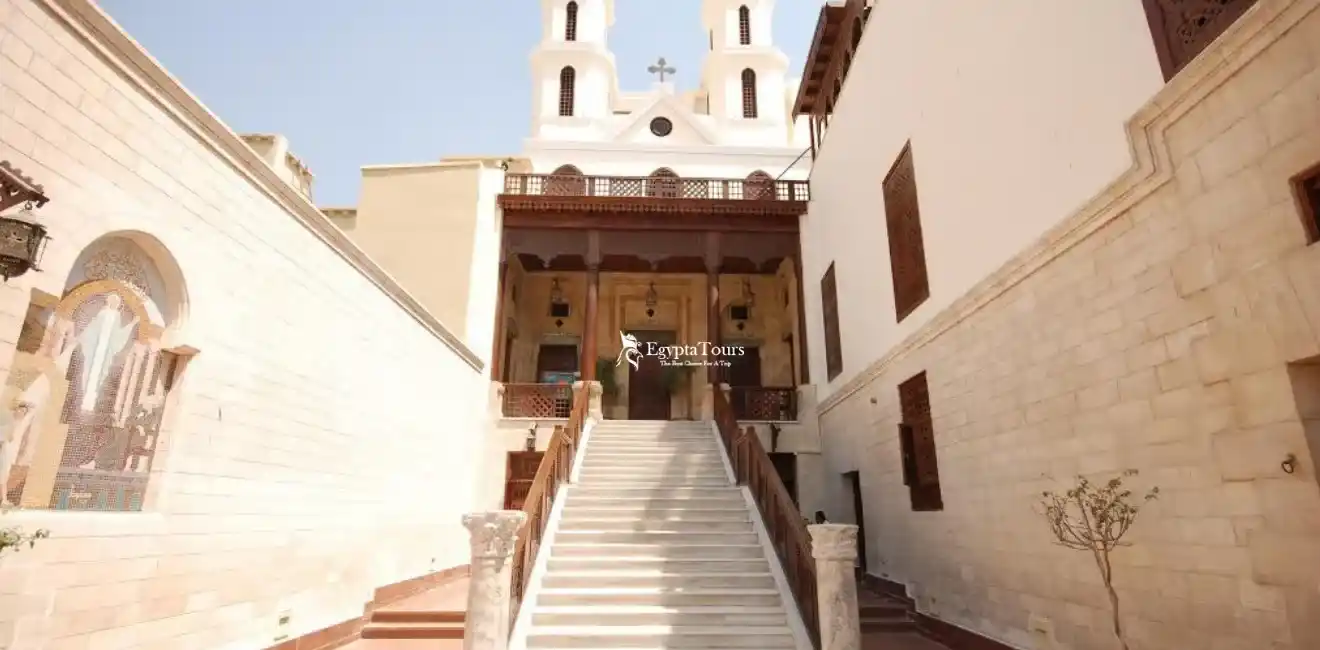 After your breakfast you will check out from the cruise and go back to Cairo and join your tour guide to explore:
The Egyptian Museum:
The Egyptian Museum is the oldest museum in the Middle East.
It houses a unique collection of Egyptian antiquities, including the famous Narmer Palette, The museum also features a large collection of statues, artifacts from the pyramid builders' era, the funerary collection of Yuya and Thuya, and a collection of mummies, papyri, coffins, and jewelry from different ancient eras.
The National Museum Of Egyptian Civilization:
The National museum of Egyptian civilization is a newly constructed museum built in 2017 to showcase the majestic history and culture of Egypt starting from prehistorical times till the current moment. The museum contains up to 40000 pieces of artifacts from all time periods.
Lunch time:
The lunch meal will be served at one of the most wonderful local restaurants in this area, then continue your visit to:
The Hanging Church:
The Hanging Church is one of the oldest and most important religious symbols known among Cairo's tourist landmarks. It is one of the first buildings constructed in the basilica style.
It was named "Hanging" due to its location above the ancient Roman gate of Babylon, giving the impression that the church is suspended in the air.
Ben Ezra Synagogue:
Ben Ezra Synagogue is a rare construction found in the heart of Cairo and established in 882 AD, famous for shedding some light on the Jewish heritage in Egypt. It holds the most magical creations of art and architecture from the Jewish culture.
Amr ibn al-Aas Mosque:
Amr ibn al-Aas Mosque is one of the most beautiful historical mosques in Cairo, built during the rule of Amr ibn al-As in Egypt in the city of Fustat, which was founded by Muslims as the first Islamic capital.
Al-Muizz Street:
Al-Muizz Street, which is considered Great Cairo's main street and the heart of the city, represents an open-air museum of Islamic architecture, with old alleys and streets such as Darb El-Ahmar, Harat Berjuwan, El-Ghouri.
Khan El-Khalili:
Khan El-Khalili, It was a source of inspiration for Egyptian writers and authors like Naguib Mahfouz. The place is a tourist attraction due to the presence of markets, bazaars, shops, and popular restaurants. The khan is built in a square shape, surrounding a large courtyard, similar in shape to a caravanserai.
Dinner time:
During the trip, a dinner meal will be served at one of the most famous local restaurants at Khan El-Khalili at El-Fishawy Café.
After that you will be transferred to check in the hotel to spend your night.
- Meals: Breakfast - Lunch - Dinner.
- Overnight: Cairo.
After your breakfast, our representative will accompany you to the airport to end your journey to Egypt cultural sightseeing in 10 days.
Frequently Asked & Questions
It is preferable to visit Egypt in winter and autumn, because of the beautiful and moderate weather.
There are various activities you can do in Cairo such as exploring:
Traditional Markets and Shopping
During your trip, you can enjoy exploring Egypt’s traditional markets in both Cairo and Luxor. These markets are full of handicrafts, souvenirs, jewelry, textiles, and local products, offering a chance to experience the lively atmosphere, colorful displays, and friendly vendors. You can try bargaining, discover unique treasures, and enjoy the vibrant culture that makes shopping in Egypt a memorable part of your journey.
experience Food and Popular Cafes
Try popular dishes like koshari, fateh, ta'amia, and sweets like baklava and kunafeh. Don't miss the experience of mint tea or Arabic coffee in old cafes like Al-Fishawi.
Interaction with Locals
Meet craftsmen and learn about traditional crafts. Watch folk music bands or small street performances.
You can have Dinner in the middle of the Nile River on a Nile cruise with the special charm of the moon on the water. Attend small workshops for arts or local cooking. Participate in musical performances or folklore shows.
The best time to stroll through markets or take photos is before sunset. You can capture moon photos at night with city lights or during a dinner cruise.
It's recommended to wear comfortable clothing suitable for the city's weather, comfortable shoes for long walks, and don't forget sunglasses and a hat to protect you from the sun.
The Temple of Hatshepsut is notable for its reliefs depicting her maritime expeditions to Punt, trading and bringing back incense and myrrh. Pharaohs offered incense to their gods for favor. The expeditions also transported woods, trees, rare animals, and leopard skins, which were prized materials obtained from Punt.
The National Museum of Egyptian Civilization is a large museum in Fustat, Cairo, spanning 33.5 acres. It houses around 50,000 artifacts showcasing the development of Egyptian civilization and achievements in various fields. The museum displays models, photographs, manuscripts, artworks, and artifacts from different eras, including the Stone Age, Pharaonic, Greco-Roman, Coptic, Arab, Sudanese, and modern periods.
The Egyptian Museum is the oldest antiquities museum in the Middle East, and is designed in a classical style with two floors.
It houses a unique collection of Egyptian antiquities, including the famous Narmer Palette, The museum also features a large collection of statues, artifacts from the pyramid builders' era, the funerary collection of Yuya and Thuya, and a collection of mummies, papyri, coffins, and jewelry from different ancient eras, With over 180,000 artifacts.
The night in this temple is particularly charming, walking through it or even just gazing at some of its parts adds a different dimension to the visit. And from the gate of Luxor Temple to the gate of Karnak, you feel like you're traveling through time, from one place to another entirely different one.




 21
21  22
22  22
22  5
5  26
26  20
20