The ancient Egyptian civilization has long been a focal point of global attention, which has prompted the pressing question about the Race of Ancient Egyptians.
The matter goes beyond mere features and skin color, delving into the historical depth and genetic analysis of the people who authored the first pages of human civilization.
With us, you will learn about all the historical and scientific evidence that has conclusively clarified the Race of Ancient Egyptians, without bias or debate.
Who Were the Ancient Egyptians? Their Origins and Ethnic Composition
Who-Were-the-Ancient-Egyptians-Their-Origins-and-Ethnic-EgyptaTours
The ancient Egyptians were the inhabitants of the Nile Valley from the beginning of the dynastic era until the end of the Pharaonic period. They were characterized by physical diversity and variations in skin color. During these eras, one of the greatest civilizations in history was built.
As for their origins and composition:
- The prevailing view, supported by numerous studies, confirms that the origins of the ancient Egyptians trace back to the indigenous peoples of North Africa.
- They were a mixture of inhabitants from Northeast Africa, with influences from the southern regions of Africa and some from the Near East.
- DNA extracted from mummies shows a closer genetic affinity to the inhabitants of the Near East, while showing a notable difference from the populations of sub-Saharan Africa.
How Ancient Egyptian Characteristics Appear in Art and Inscriptions
How-Ancient-Egyptian-Characteristics-Appear-in-Art-and-Inscriptions-EgyptaTours
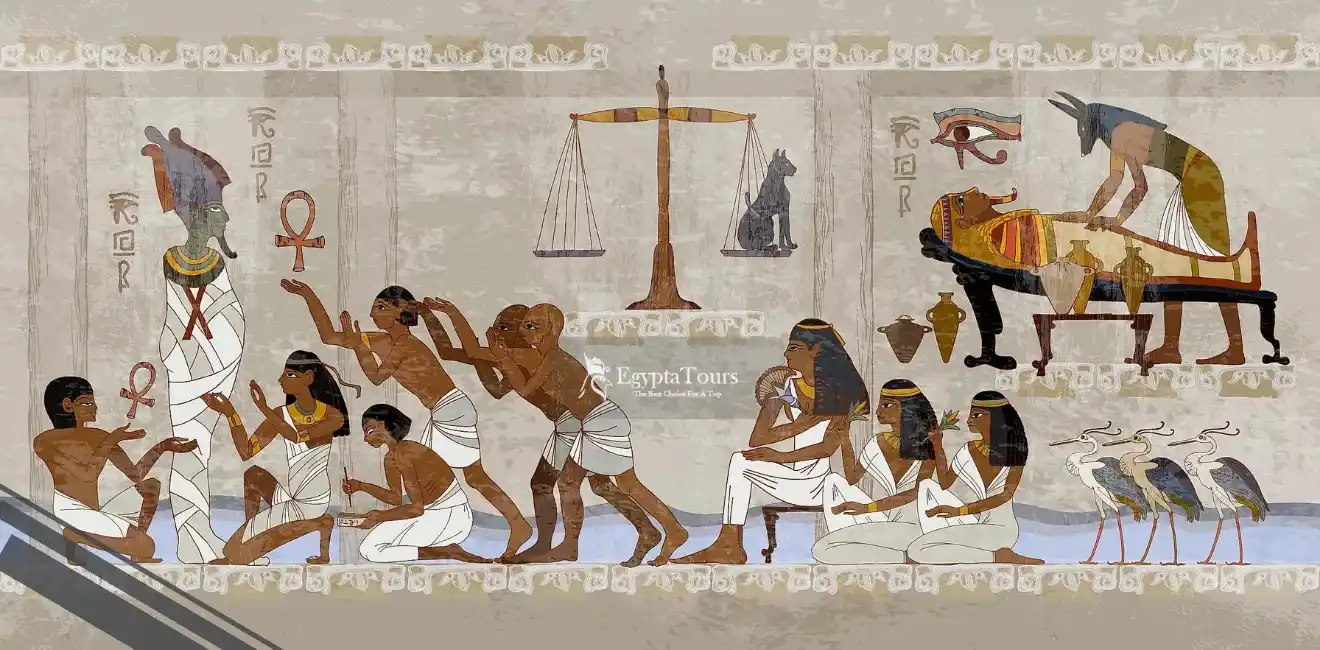
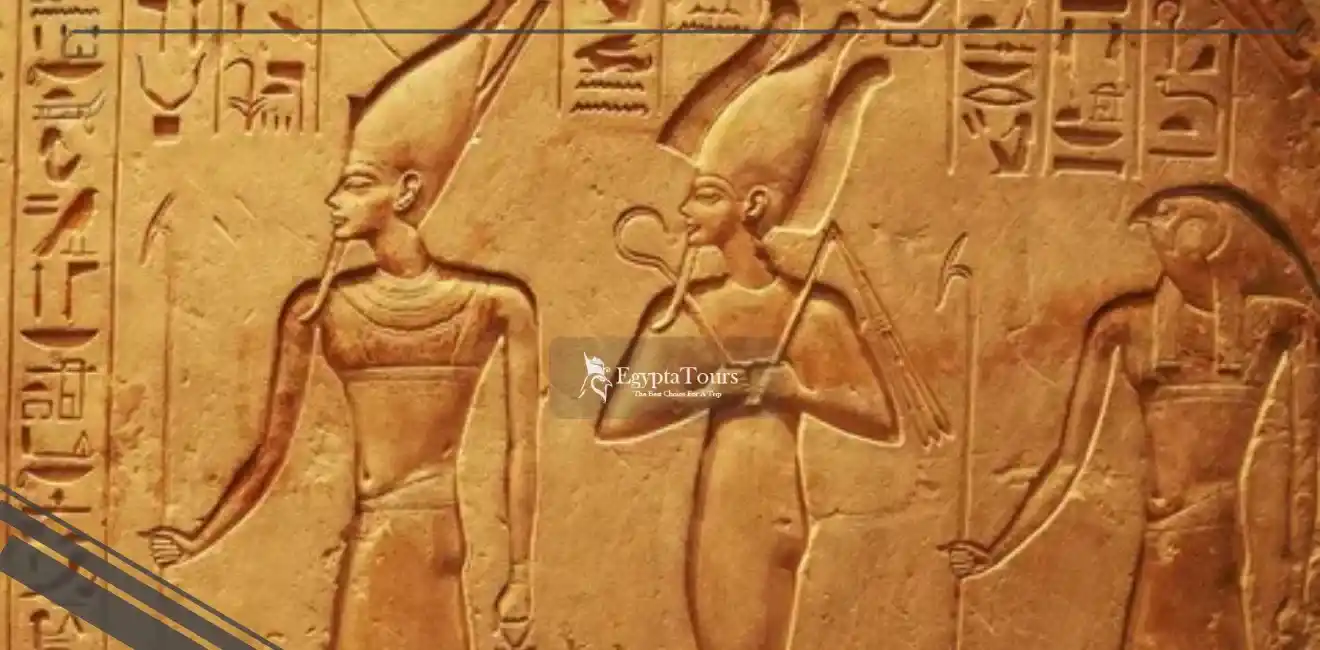
The identity and Race of Ancient Egyptians are prominently featured in their art and inscriptions, which clearly express their ethnic and cultural identity as follows:
First, in Egyptian art, the ancient Egyptians conveyed many of their characteristics. It was not realistic art in the modern sense but was expressive, representing symbols or a specific function.
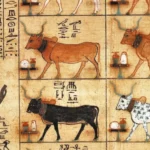
Second, regarding physical features in inscriptions, men’s skin color was depicted as a reddish-brown, which expressed activity and physical strength. In contrast, women were painted with a lighter color, either beige or yellow, as an indication of their domestic work, which would make their skin fairer. Meanwhile, facial features were shown with medium, straight noses and almond-shaped eyes.
Third, what distinguished the ancient Egyptians is that in their artwork, they depicted other peoples with different features and distinct skin colors. They distinguished Nubians with dark skin and curly hair, while Asiatics appeared in Egyptian art with light skin and prominent noses. Europeans were characterized by fair skin and colored eyes. Therefore, the ancient Egyptians maintained their distinct ethnic and cultural identity.
Early Migrations to Egypt and Their Effect on Ethnicity
In prehistoric times, Egypt witnessed numerous migrations that shaped its unique ethnic composition. Many people came from the southern region, such as Nubia and sub-Saharan Africa, as well as from the east, including Mesopotamia and the Levant.
From the west, waves of people came from the vast Sahara. These multiple migrations contributed significantly to the blending of various ethnic traits and influenced different aspects of life, including the social system and language. Consequently, this interaction affected the Egyptian identity, making it very distinctive.
Ethnic Differences Between Ancient Egyptians and Neighboring Populations
What distinguished the ancient Egyptians from neighboring populations was their unique composition, which was shaped by Egypt’s geographical location at the crossroads of Asia and Africa. Their features were a blend of North African traits with various Middle Eastern elements.
The ancient Egyptians were clearly different from those around them. The nature of the Egyptians also saw regional variations; the southern inhabitants were more closely linked to their African origins, while the northern populations had stronger ties to the Middle East.
Comparison Between Ancient Egyptians and Other African Civilizations
The ancient Egyptians were distinguished by a unique civilizational identity, which saw early development in architectural, linguistic, and political organization. Although other African civilizations were rich and authentic, they emerged after the ancient Egyptian civilization.
Regarding the comparison, we clarify the following:
- The race and origins of the ancient Egyptians reflect a mixture of African and Asiatic peoples. Their physical features and traits appear as a range, including wheat-colored skin, medium noses, and straight or wavy hair. Other African civilizations, such as the inhabitants of Mali, Carthage, and Nubia, are often shown with darker features, curly hair, and broad noses.
- The culture and language of the ancient Egyptians were based on the ancient Egyptian language, which is a branch of the Afroasiatic languages. They also had hieroglyphic and demotic writing. In contrast, other civilizations had diverse languages such as Amazigh and Cushitic, and their writing relied on oral traditions.
- Ancient Egyptian architecture was significantly distinguished from other civilizations. It included unparalleled landmarks around the world, most notably the massive pyramids and royal tombs. While other African civilizations included Nubian pyramids and then the various kingdoms that appeared later.
How Did the Ancient Egyptians Deal with Concepts of Beauty and Race?
The ancient Egyptian approach to the concepts of beauty and race reflected their clear vision of themselves and the world around them, as they relied on a symbolic and cultural style. Judgments of beauty were not tied to skin type or color but were based on harmony, order, cleanliness, and other factors.
Art expressed beauty by using ideal features and harmonious colors. With regard to the Race of Ancient Egyptians, they distinguished themselves from others without any recorded racism. The ancient Egyptian considered himself one of the pillars of the Egyptian civilization and a symbol of it. Beauty was linked to virtues and harmony, transcending the idea of physical appearance, which was a manifestation of the ancient Egyptians’ race.
The Role of Climate and Geography in Shaping the Physical Characteristics of the Ancient Egyptians
Both climate and geography played a vital role in shaping the physical characteristics of the Egyptians due to the influence of nature on physical composition over the ages. We clarify the following points:
- Egypt experiences a hot, dry climate, with most of its regions located in a desert climate. These conditions played a prominent role in forming physical characteristics through biological adaptation.
- There are characteristics that resulted from the nature of the surrounding environment, where tall and slender individuals appeared, who could adapt to high temperatures. There were also those with wheat-colored skin, which offered more protection from the scorching sun and helped maintain vitamin D stores. On the other hand, we find the appearance of medium-sized noses, which enhance the balance of heat and humidity.
- The presence of the Nile and the stability around it contributed to obtaining stable food systems, which played an effective role in maintaining bone health. All of the above confirms the difference in the Race of Ancient Egyptians from other peoples.
FAQs
Are Egyptians African or Arab?
Egyptians’ origins trace back to the indigenous Africans, specifically the inhabitants of the Nile Valley. Therefore, they are not Arabs, as Arabs did not have a presence in Egypt before the Islamic conquest.
What races are there in Egypt?
Egypt includes a unique composition of inhabitants that has formed over the ages as a result of migrations, cultural fusions, and multiple conquests. It contains Nubians, Arabs, Copts, Turks, and others.
Who was the black queen of Egypt?
The term “black queen” has been applied to Queen Nefertari, who is said to have Nubian or southern origins. She married King Ramesses II and is known for her striking beauty in ancient Egyptian art, often depicted with dark skin and beautiful features.
Are Nubians indigenous to Egypt?
Yes, of course, the Nubians represent one of the indigenous inhabitants of Egypt, particularly in the southern region. They have roots that extend deep for thousands of years.