Hermopolis: Ancient City of Thoth
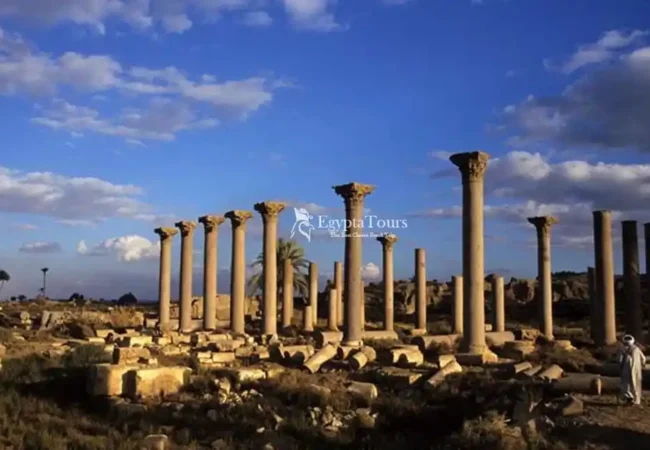
The village of Ashmunein is located within the Mallawi district of Minya...



Besides farming, the economy included trade and local production of goods. Egyptians exchanged surplus products and imported luxury items from regions like Nubia and the Levant. Workshops produced items such as linen, pottery, tools, jewelry, and papyrus, supporting both daily life and exports.
The ancient Egyptian economy was well organized and focused on the fertile Nile and a strong government. It combined local self sufficiency with state planning to support big building projects, trade and a complex society. Farming was the main part of the economy, supported by taxes and workers, while temples controlled large lands and influenced both politics and money.
Workshops produced goods and trade with other regions brought luxury items. Even with simple technology, Egypt’s smart use of resources and strong government kept the country rich for thousands of years, creating an advanced economy closely linked to religion and politics.
The ancient Egyptian economy was very well organized and helped create one of the greatest civilizations of the ancient world. It was based on using all the natural resources around them and on a system of careful planning, where the government controlled and managed every detail very closely.
The ancient Egyptian economy was one of the most sophisticated and organized economic systems in history. It formed the basis for a civilization that lasted thousands of years and achieved accomplishments that continue to amaze the world to this day. The ancient Egyptians relied entirely on their natural resources, most notably the Nile River, which was their lifeline and source of food and prosperity.
The economic system was a balanced blend of strict centralization imposed by the state through an organized bureaucracy, and the self-sufficiency enjoyed by villages and local communities.
This balance enabled the state to finance major projects such as the construction of pyramids and temples, support its powerful army, and ensure social stability during times of prosperity and crisis alike.
The Egyptian economy was based on meticulous planning, with the state managing agriculture, collecting taxes, distributing resources, and controlling domestic and foreign trade, making it a unique economic model in the ancient world.
The ancient Egyptian economy operated according to a system known as a command economy, where all economic activities were subject to central oversight and management, led by the pharaoh and assisted by a vast apparatus of scribes and officials.
Agricultural land was redivided annually based on the Nile’s flood level. Surveyors measured fields and accurately estimated expected yields, determining the amount of taxes due, often in the form of crops such as wheat and barley, or other products such as oils and honey.
These resources were stored in the state’s vast warehouses, from where they were later distributed to workers involved in national projects, to the army, and to the general public during times of drought or poor production.
Although peasants managed their fields themselves, a significant portion of their harvest was allocated to the state or temples, reflecting the extent of central authority’s control over agricultural production.
This system helped ensure stable food supplies, prevent famine, and support the massive projects that immortalized ancient Egypt’s history.
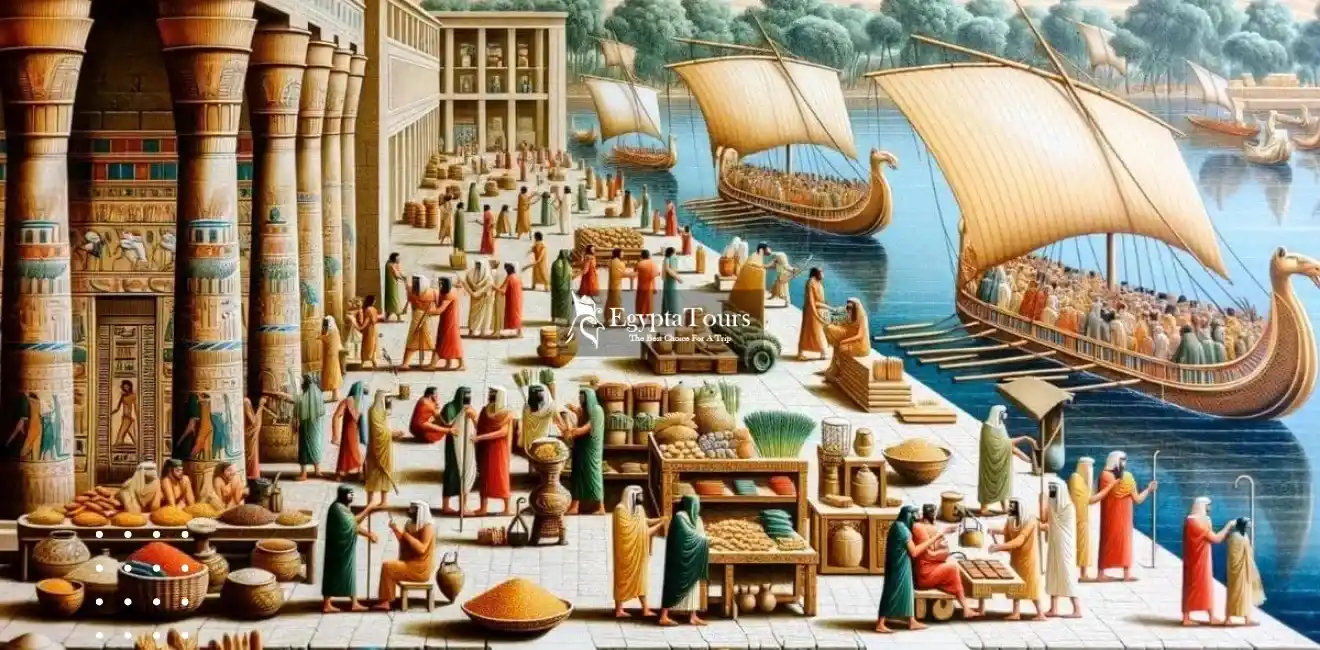
Politics-and-Ancient-Egyptian-Economy-EgyptaTours
Politics was closely linked to the ancient Egyptian economy, as the pharaoh was considered the divine ruler and supreme owner of all land. This notion, derived from religious doctrine, granted him absolute authority over all economic resources, as he was viewed as the agent of the gods on earth. However, the pharaoh was not the sole authority over the economy.
Nobles and high priests also owned vast tracts of land, especially the major temples, which played a significant economic role.
During the New Kingdom, the power of the priests of Amun reached such an extent that they controlled approximately one-third of Egypt’s land. This granted them vast resources that enabled them to finance their own projects, employ thousands of workers and craftsmen, and sometimes challenge the authority of the pharaoh himself.
This concentration of wealth in the hands of a few elites helped the economy flourish at times, but it also created a state of political and economic competition that affected the state’s long-term balance.
Egypt was mostly able to provide for itself as families kept many goods for the future or traded them in markets, which helped the economy continue. Most of the people, more than nine out of ten, lived in the first two thousand years of Ancient Egypt’s history.
Religion in Ancient Egypt was very important in shaping people’s beliefs. All the land was thought to belong to the gods, like Osiris and his son Horus and later to the pharaoh on Earth. But near the start of the Ptolemaic period, land could be freely bought and sold.
Most people worked as farmers on the lands of wealthy families and temples. Farmers had to pay a labor tax and work on irrigation or building projects without pay. Slavery existed everywhere, but it was less harsh and mainly used in the mining industry.
During Egypt’s New Kingdom (1570–1070 BC), about one third of all land belonged to the priests of Amun, who had many workers. The number of foreign slaves grew as the economy grew. All the government officials, priests, traders and craftsmen lived in cities along the Nile.
The rich people in ancient Egypt spent a lot of time and effort on mining. Precious metals and gems were only owned by the wealthy. Gems, silver, gold, copper, bronze and iron were very expensive and only nobles and rich people had them, while poor people used stone and wooden tools.
Stone for tombs and temples was used by all social classes in Ancient Egypt. They also mined natron for thousands of years, which was used as a cleaning product for the home and body and for mummification as a drying material.
The food and goods from farming, fishing, crafting and mining were first used by the producers themselves. After landlords and tax collectors took their share, the rest was traded in markets by barter for consumers and professional traders, who worked for large estates and the government. Around 526 BC, written notes for grain became a type of money. Later, coins were introduced, but grain banks still helped farmers and traders.
In the Ptolemaic era, the central bank in Alexandria kept records of all the granary banks and payments could be moved from one account to another. They also recorded credit entries with the owner’s name in one book, while debit entries were recorded differently. Metals like gold, copper and silver were mostly used for trade with foreign merchants and paying mercenaries.
The treasures taken from wars were also an important source of income when Egypt won. Soldiers who showed bravery in battles like Kadesh or Megiddo were rewarded with gold necklaces, bracelets and land. Defeated nations had to pay tribute and gifts were exchanged between pharaohs and foreign kings, usually benefiting Egypt. Ancient Egyptian civilization was one of the richest cultures in history in every way.
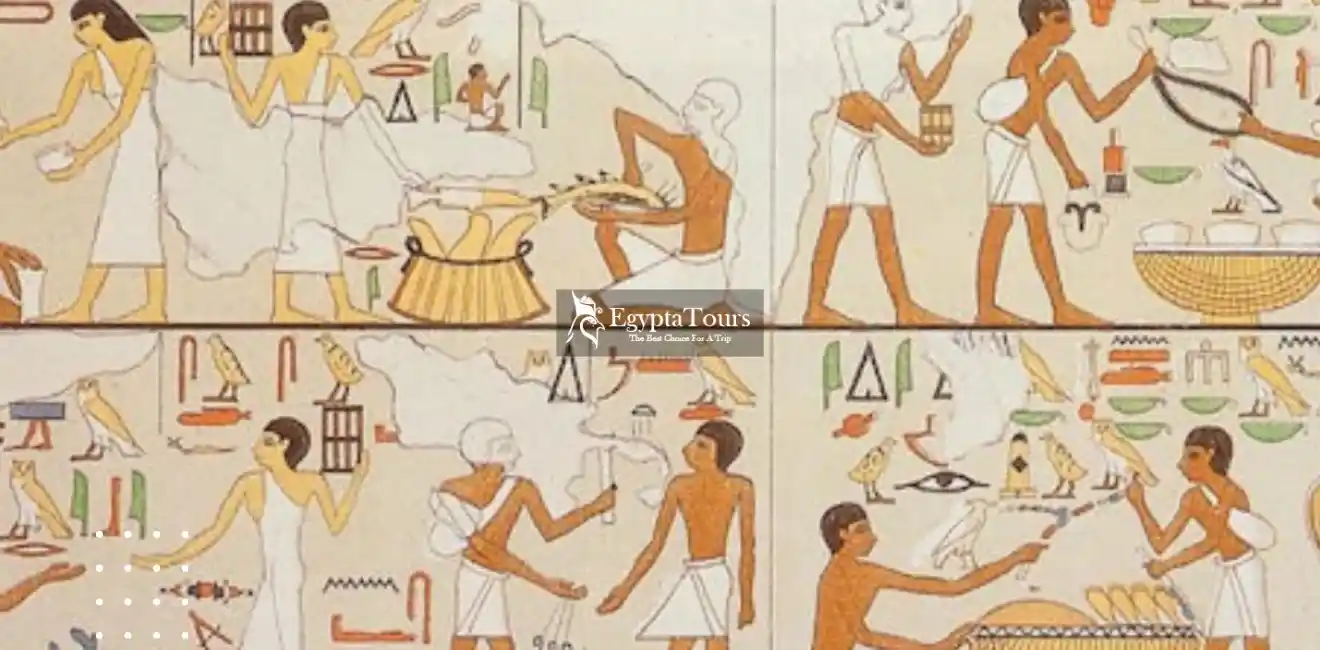
Ancient-Egyptian-farmers-and-Economy-EgyptaTours
Agriculture was the cornerstone of the ancient Egyptian economy, The annual flow of the Nile River provided mineral-rich soil, allowing for abundant production of grains, vegetables, and fruits, in addition to livestock breeding and fishing. Egyptians also grew wheat and barley as staple crops, along with legumes and vegetables such as onions, garlic, and leeks, and fruits such as figs, grapes, and dates.
Although agricultural tools were relatively primitive, the regular flooding of the Nile compensated for this lack of technology and allowed farmers to generate food surpluses for trade or storage in state warehousing.
Fishing on the Nile was an additional means of securing food, while hunting was considered a recreational activity limited to the wealthy.
This agricultural system was also a major source of tax revenue, which the state relied on to finance its major projects.
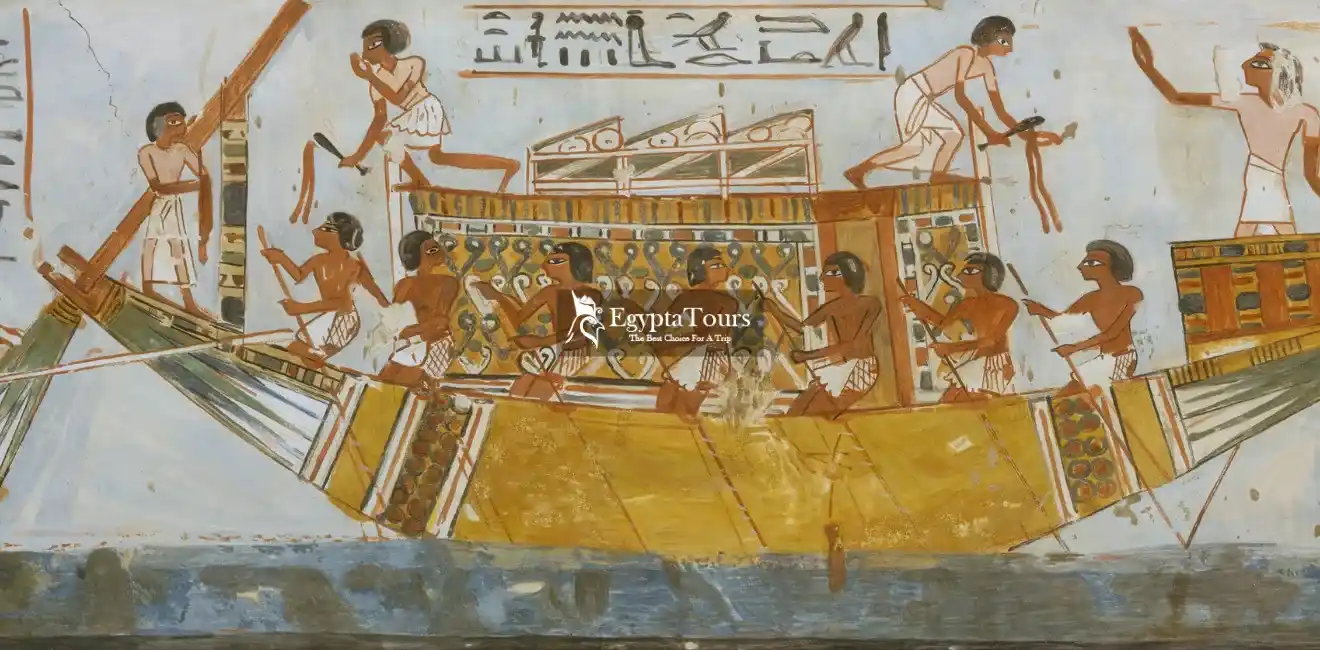
Industries-and-Crafts-and-Their-Role-in-the-Economy-EgyptaTours
Handicrafts and crafts played a significant role in supporting the ancient Egyptian economy. Families produced a variety of goods from local raw materials.
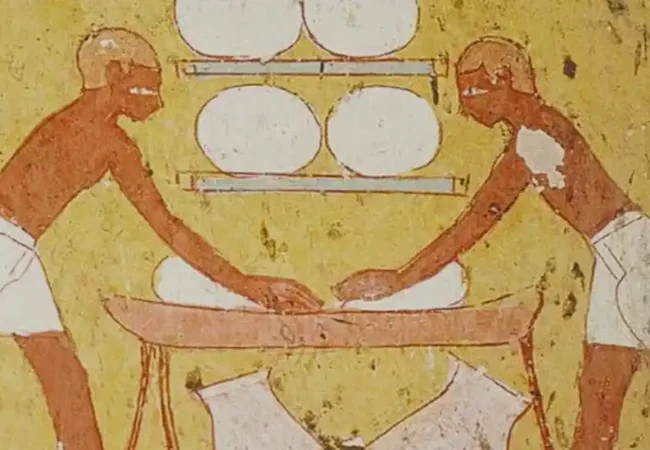
Men grew flax, while women spun it into threads that were woven into fabrics and clothing. Women also participated in food preparation, such as grinding grain, baking bread, and brewing beer.
In addition to home production, small workshops operated by skilled craftsmen emerged, producing wooden tools, furniture, pottery, and metal products, These workshops were often funded by nobles or temples.
These industries were used as goods for trade with neighboring regions, helping to diversify sources of income and enhance Egypt’s economic standing.
Ancient Egyptian society relied on natural and human-made energy sources available in its environment.
Humans, along with animals, were the primary source of power for agricultural work, crafts, and transportation.
The Egyptians harnessed livestock, particularly oxen and donkeys, to plow fields, pull carts, and carry goods., Horses were used only by the nobility and the military, due to their high value and strategic role in warfare.
In addition to these sources, the Egyptians harnessed the sun’s rays to dry the mud bricks used in construction, They also used fire to cook food, smelt metals, and make pottery.
Winds were also present in sailing across the Nile, where sailboats were a key tool for transportation and trade, This reflects the ancient Egyptians’ awareness of the importance of harnessing natural elements to serve their needs.
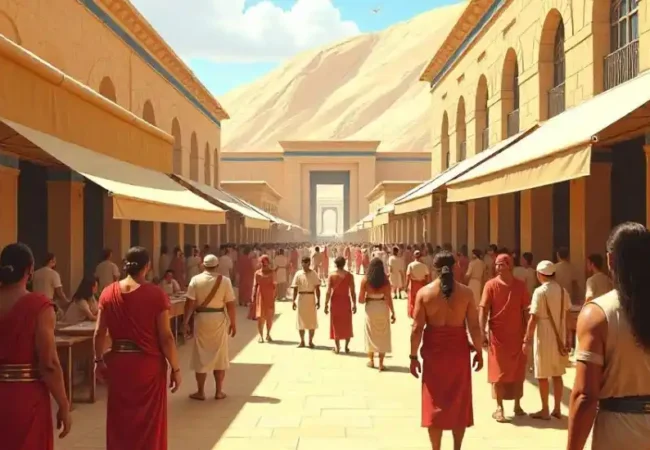
Trade constituted an important component of the ancient Egyptian economy, which relied in its early days on the barter system. Agricultural surpluses, such as grains and vegetables, or handicrafts such as textiles and pottery, were exchanged for other goods that met the needs of the family or community.
With the increase in economic activity, grains themselves began to function similar to money, being measured and offered as a means of payment before coins entered the market in later periods due to contact with neighboring civilizations.
Foreign trade extended to distant regions, including Nubia in the south and the Levant in the north, bringing rare woods, copper, and precious stones to Egypt, as well as luxury goods that cemented the country’s position as a regional economic power and made its markets a meeting place for the exchange of goods and cultures.
The ancient Egyptians recognized the economic and architectural value of the mineral resources inherent in their lands, so they conducted organized mining operations in the Eastern Desert and Sinai in search of gold, copper, bronze, and precious stones.
These precious resources were primarily directed to the service of the state and the wealthy classes, being used to manufacture jewelry and luxury items, and to finance major construction projects.
The common people, however, continued to rely more heavily on stone and wooden tools for their daily lives. In addition to precious metals, Egyptians extracted limestone and granite, which were essential materials for the construction of temples, obelisks, and royal tombs, reflecting the simultaneous interweaving of economic, architectural, and religious aspects.
Handicrafts and traditional crafts provided support for the ancient Egyptian economy. Small workshops spread throughout villages and cities, where families produced textiles and clothing from linen, utilizing women’s skills in spinning threads and weaving cloth. Other industries also flourished, such as the production of bread and beer, wooden furniture, pottery, and metal tools.
In many cases, these workshops were funded by the nobility or temples, which were themselves powerful economic centers.
Production destinations varied between local consumption, meeting the needs of temples and palaces, and bartering for other goods in the markets. Thus, industries and crafts formed an integrated production network, increased self-sufficiency, and contributed to the prosperity of economic and social life.
Egypt’s wealth came mainly from farming, helped by the Nile’s regular floods, which made the soil very fertile. Even though farming tools were simple, the fertile land allowed crops to grow well, producing extra food that could be stored or traded. Farmers grew grains, vegetables and raised animals, which were the main part of Egypt’s economy and provided the healthiest foods. Fishing was also important, as the Nile had many fish that added to people’s diets.
Egypt’s economy grew through small-scale production, like making linen, beer, pottery and metal goods, mostly done by families or small workshops. Bigger workshops appeared in cities, supported by rich people or the government, helping trades and skills to develop.
Trade grew a lot during the New Kingdom, connecting Egypt with Nubia, Syria and the Levant. Through these trade routes, Egypt got luxury items and materials like cedar, gold, ivory and copper. This flow of wealth helped Egypt invest in religious and cultural projects, like temples, monuments and tombs, which created jobs for workers and showed off Egypt’s culture.
The economy of ancient Egypt was made up of self-sufficient villages and large temple lands. Villages were mostly independent, with families growing their own food, making clothes and producing other basic goods. Most trade happened locally, with extra goods being traded in markets, creating smaller economies. However, these villages were part of a bigger system that needed regular taxes, usually paid in grain or animals, to support the central economy.
On the other hand, there were large temple lands, especially important during the New Kingdom. Temples owned large areas of land and had their own workers. They didn’t have to pay taxes, which helped them grow rich and hire many people, including skilled workers, farmers and managers.
Big public projects, like building temples, grain storage and workshops, were usually paid for by wealthy estates or the government. This system showed the social and economic differences in Egypt, with clear divisions between independent villagers and the workers who served the rich and religious institutions.
In conclusion, this article demonstrates that the ancient Egyptian economy is a comprehensive model of human innovation, administrative creativity, and the combination of natural elements and organizational power. The combination of human and animal energy, solar heat, and wind created a unique system.
The state also relied on precise organization in agriculture, mining, crafts, and trade, whether through barter or non-monetary reserves, with the introduction of metal coins in later stages.
The ancient Egyptian economy was not entirely self-sufficient. International trade included exchanges with regions such as Nubia and the Levant, and the culmination of these relationships brought in permeable wood, precious metals, and luxury items.
Metal coins were not used until later periods, but initially they relied on a barter system, with grain used as a means of payment.
The ancient Egyptian economy was primarily based on three main sources: agriculture, trade, and a centralized tax system. It relied solely on agriculture, which received support from the Nile flooding, enabling the production of a food surplus. A portion of this surplus was then marketed domestically and abroad, while taxes were collected in the form of crops and service work to support the state.


Explore our top-rated Egypt travel packages and embark on an unforgettable journey. From the Pyramids of Cairo to the magical temples of Luxor, Aswan, and Abu Simbel, discover expertly curated tours designed for your perfect Egyptian adventure