Ancient Egypt Tomb Robbers are considered a theft of eternity or a violation of the sacred, because the tomb in ancient Egypt contained everything the deceased needed in their afterlife. If its contents, especially statues or treasures, are stolen, it means the tomb owner is unable to achieve eternity. Despite the punishment for theft being well-known in ancient Egypt, theft is a significant part of Egypt’s past, so it was necessary to put an end to Ancient Egypt Tomb Robbers.
Tombs Contents
Tombs-Contents-Ancient-Egypt-Tomb-Robbers-EgyptaTours
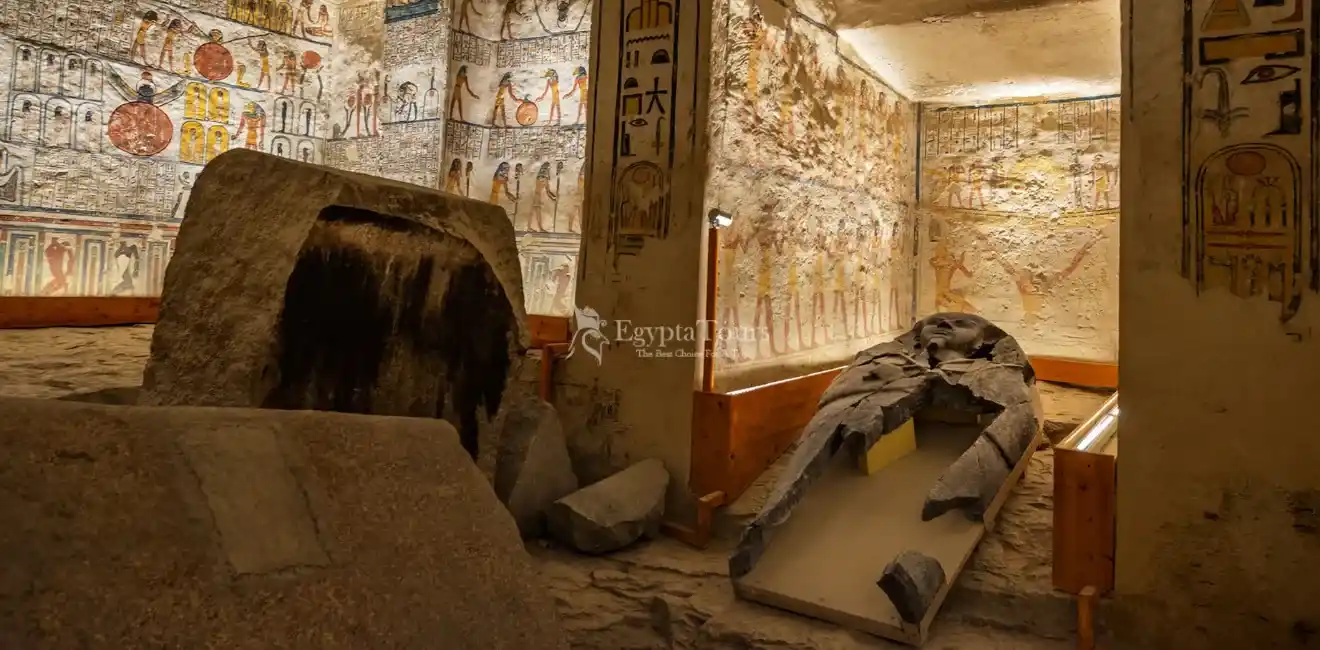
Tombs contain all the possessions used by the dead person in his lifetime, including food vessels, cosmetics, beds, chairs, money, gold, stone vessels, combs, slate palettes, and coffins that preserve the deceased’s body (mummy). They may also contain multiple empty coffins, statues of various sizes, sometimes decorated with gold or made of gold itself, masks like the one found in Tutankhamun‘s tomb, funerary objects, canopic jars for preserving internal organs, chariots, awards and prizes received by the deceased, papyrus, and many other items that fill the tomb.
The Importance of Tombs
Tombs in ancient Egypt were not just tombs, but they were sacred spaces for the afterlife, reflecting their beliefs in resurrection and eternity. The deceased’s body would be revived, and they’d embark on a new journey in their tomb after being judged by the scales of justice and the feather of Ma’at.
The quality of the furnishings was believed to ensure a comfortable life after death. Thus, tombs were designed to preserve the body and belongings forever, serving as eternal dwellings for the deceased, who prepared themselves materially and morally to secure a safe, everlasting life.
Tomb Robberies In Ancient Egypt
Ancient-Egypt-Tomb-Robbers-EgyptaTours
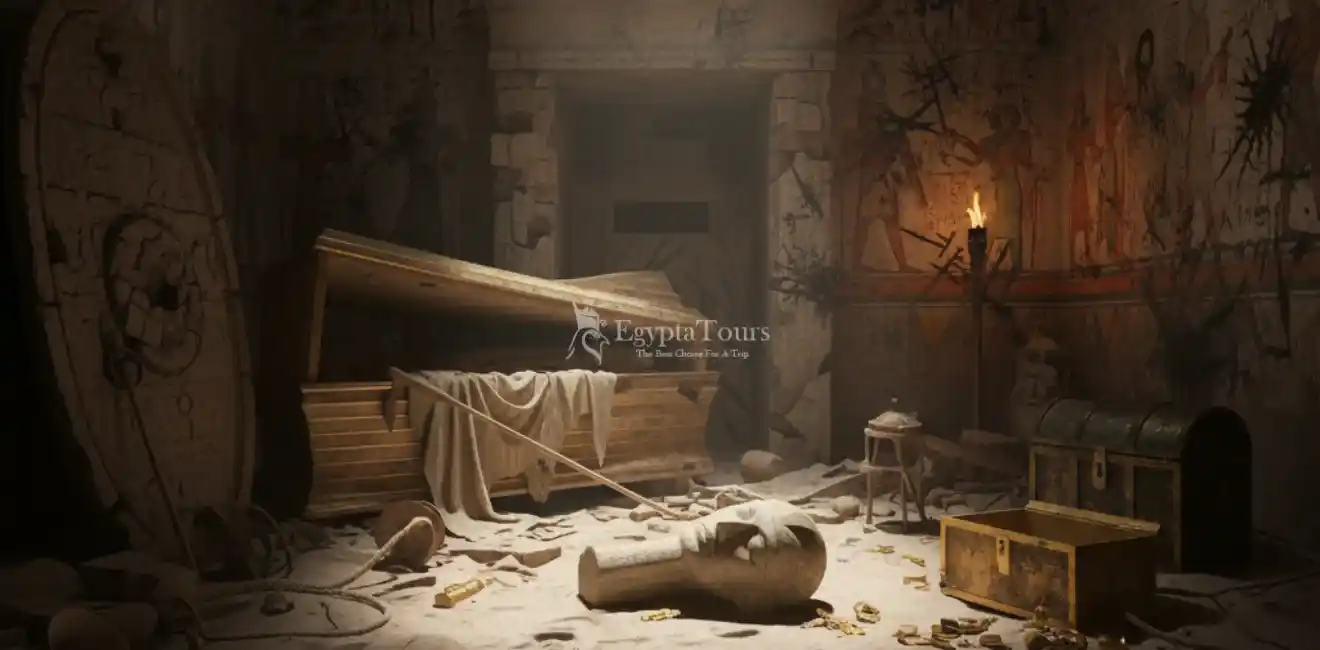
The Egyptians believed in resurrection after death and that the tomb was the deceased’s home, so they thought the dead person, being alive in their tomb, could prevent theft. However, this didn’t stop the robberies, as the allure of gold, coffins, precious stone amulets, and strange artifacts was too great. The use of precious stones, protective amulets, and gold or silver in the mummy’s wrapping made even the body vulnerable to theft. Thieves would often attack tombs shortly after burial, in collaboration with some tomb guards, to get a head start on the robbery.
Due to the high value of the treasures, it was easy to bribe the officials in charge of the tomb. Since Egyptian society was not monetary-based, it was difficult to sell or trade these treasures, making it hard for thieves to exchange them for goods like grain without being reported. Instead, thieves would sell them to corrupt officials in exchange for material goods.
The officials would then melt down the gold and reuse it. Thieves could overcome obstacles in the tomb, and the location of tombs like the pyramids was well-known, making them vulnerable to robbery.
The Places That were Robbed In Ancient Egypt
The-Places-That-were-Robbed-In-Ancient-Egypt-EgyptaTours
Many robberies occurred in ancient Egypt, especially the theft of royal tombs. Thieves in the fourth dynasty attacked the tomb of Queen Hetepheres, wife of King Sneferu, and the theft occurred during the reign of her son Khufu. The king could not do anything but secretly transfer the tomb to the Giza area and dug a well next to his pyramid to store the furniture. Since then, priests have been reciting the rituals of the curse of tomb robbers so that no one can steal it.
Robberies During The Reign Of Ramses IX:
Robberies occurred during the reign of Ramses IX, where some attempted to steal royal tombs in Thebes, such as the tombs of Sekhemre and Queen Isis, wife of King Ramses III. The mayor of the western shore of Thebes, Pawera, reported the theft of the tombs, and at that time, the vizier and the pharaoh’s cupbearer formed an investigative committee to check on the tombs, which numbered ten.
They actually discovered that the tomb had been attacked and identified the perpetrator, who was a builder in the Temple of Amun-Re. The ancient texts recorded that they investigated him and recorded his statements.
Valley Of The Kings Robbery:
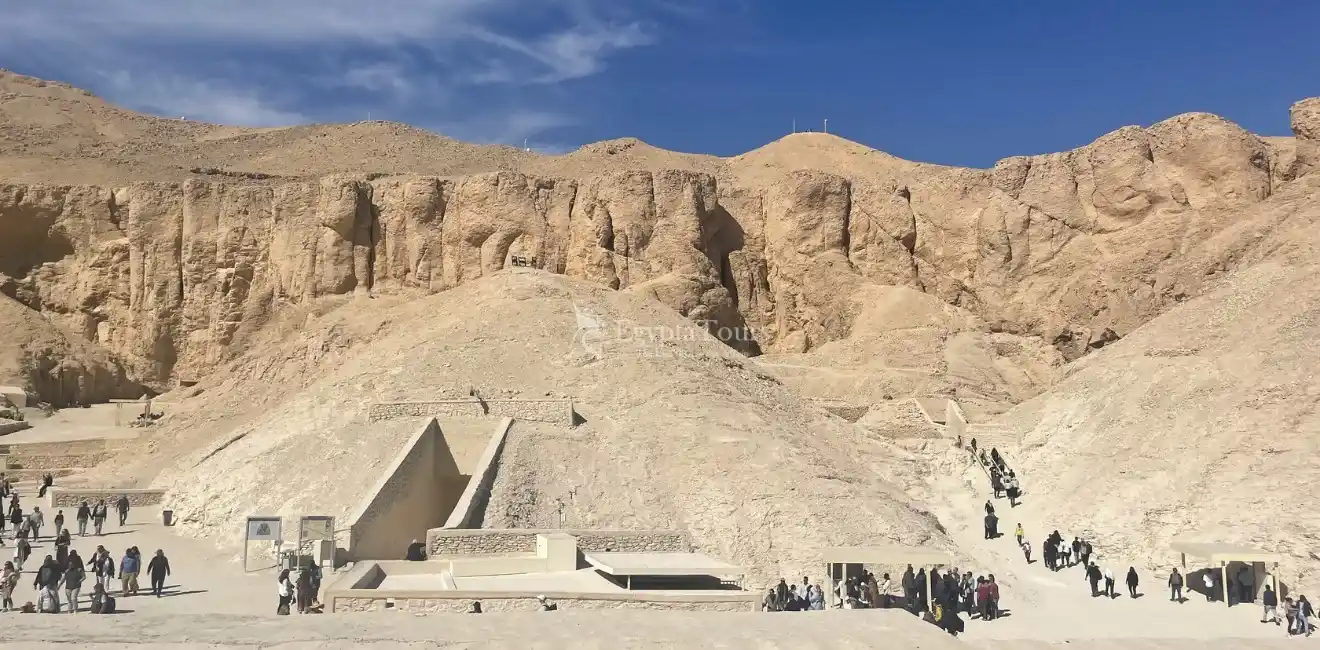
Most tombs in the Valley of the Kings were robbed, including Tutankhamun’s. Explorers knew about the robbery from the detailed inventories left by the kings. During Psusennes I’s reign, tomb robbery was common, the Ancient Egypt Tomb Robbers were digging tunnels to reach hidden treasures and planning to escape from security.
The most common times for Ancient Egypt Tomb Robbers were during transitional periods with weak rulers. Often, the very people responsible for burial, like mortuary priests, were the thieves, stealing jewelry. An example is the tomb of Nefermaat, where everything was destroyed, the mummy was stolen, and broken.
Nefertiti Robbery:
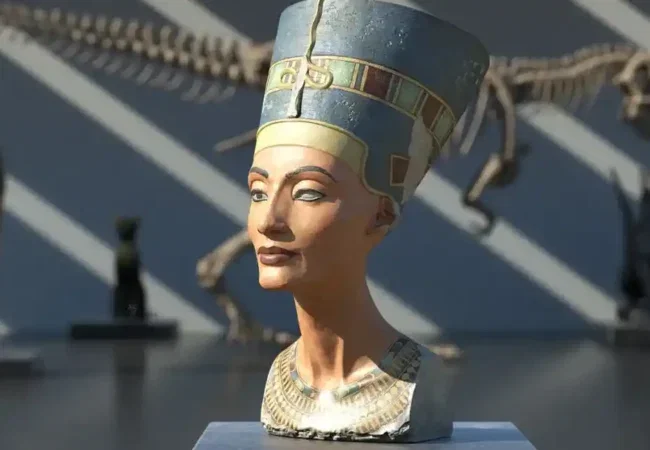
The robbery of artifacts like the head of Nefertiti and the osetta SRtone suggests that thieves were not limited to Egyptians, and it’s possible that some Egyptians collaborated with foreigners.
The Pyramids Robbery:
And also the robbery of The Pyramids where no treasures were found inside the pyramid, even though it was a tomb, and not even the royal mummies were found. Although curses were widespread on tomb doors, warning against robbery and threatening severe punishment for perpetrators, they didn’t prevent the Ancient Egypt Tomb Robbers from stealing.
It was not only Egyptians who robbed, but also foreigners, such as the theft case committed by a foreigner, “Pekamen.” The texts also mention the robbery of the tomb of Ramses VI, and they discovered this theft because of the thieves’ disagreement on dividing the loot among themselves.
Ancient Egypt Tomb Robbers reasons
The reasons behind tomb robberies in ancient Egypt were complex and multifaceted. For some, it might have been a psychological issue, driving them to loot and destroy tombs. Others were motivated by poverty, corruption, or greed, particularly during times of weak leadership or economic hardship, like the transitional periods.
The workers of Deir el-Medina, for instance, were involved in tomb robberies due to delayed payments and economic struggles. Corrupt officials, including tomb guards, were also complicit, prioritizing wealth over their duties. Additionally, some individuals might not have been deterred by curses or religious beliefs, leading them to steal from tombs.
Ancient Egypt Tomb Robbers’ Sayings.
One of the Ancient Egypt Tomb Robbers once said:
“We went to plunder the tombs as we were accustomed, and we found the pyramid tomb of King Sobek em Sauf. This tomb is different from the pyramids and nobles’ tombs we usually rob, so we took our copper tools and forced our way into the king’s pyramid through its internal part.
We located the underground chambers, took candles in our hands, and went down. We found the god lying in the last burial chamber, and we found the burial place of Queen Nub Kha’as, his wife, next to him, protected and guarded by plaster and covered with rubble.
We opened their sarcophagi and coffins, and we found the noble mummy equipped with a sword, and around his neck were numerous amulets and golden jewelry, and he was wearing a golden head covering. The noble king’s mummy was completely covered in gold, and his coffins were adorned with gold and silver inside and out and inlaid with precious stones.
We collected the gold we found on the god’s mummy, including the amulets and jewelry around his neck, and then set fire to their coffins. A few days later, the officials of the Thebes district heard that we were stealing in the west, so they arrested me and imprisoned me in the office of the mayor of Thebes.
I took the twenty golden deben that were my share and gave them to Khimobi, the scribe of the district on the Thebes quay, so he released me, and I joined my colleagues, and they compensated me with another share, and thus I got accustomed to robbing tombs.”
Punishment Of Ancient Egypt Tomb Robbers
The tomb robbers didn’t care about the consequences of their actions, even after warnings were left on the tombs. One inscription reads, “Do not harm the possessions of others, cut stones from the quarries, and build your tomb with what your hands have cut.” This is from the teachings of King Khiti IV.
Another inscription from the tomb of judge Hetep Mer I Akht, from the reign of King Ni User Re of the Fifth Dynasty, says, “I built it from my own possessions, without seizing anything from others, in a visible place where there was no other tomb, and those who enter it and harm it will be judged before the great god.”
An inscription on the tomb of the high priest of King Menkaure says, “Anyone who loves the king and the god Anubis, who is above his mountain, should not harm the contents of this tomb.”
Inscriptions from the Fifth and Sixth Dynasties warn thieves that they will be judged by the great god for their actions.
Severe punishments were imposed on tomb robbers, such as the punishment decreed by King Seti I, where the thief’s nose and ears would be cut off, and they would be forced to farm state lands for the rest of their lives, giving rise to the term “penal servitude”.
The Mayer Papyrus records that caught thieves were tortured on their feet and hands to confess how they stole. Inscriptions also describe how thieves were caught.
What They Did To Avoid Ancient Egypt Tomb Robbers
The workers who built the tomb of Ramses VI covered the tomb of Tutankhamun with debris, hiding it from view, and it remained intact until its discovery by Carter in 1922.
The pyramids were designed to prevent theft by using granite blocks at the entrance, making it difficult for thieves. However, it’s possible that thefts still occurred, as personal belongings were not found in the pyramid, suggesting a possible hidden entrance.
Authorities took measures to prevent theft, including inscribing curses on doors and filling tombs with traps and debris to block access to the main burial chamber.
Despite these efforts, the location of tombs didn’t prevent theft. Workers responsible for sealing tombs had access to the hidden treasures and were often the last to leave, making it difficult to detect if they searched the tombs they were supposed to protect.
FAQs
What did the tombs contain?
Tombs contain all the furniture used by the dead person in his lifetime, including food vessels, cosmetics, beds, chairs, money, gold, stone vessels, combs, slate palettes, and coffins that preserve the deceased’s body (mummy). They may also contain multiple empty coffins, statues of various sizes, sometimes decorated with gold or made of gold itself, masks like the one found in Tutankhamun’s tomb, funerary objects, canopic jars for preserving internal organs, chariots, awards and prizes received by the deceased, papyrus, and many other items that fill the tomb.
What was the importance of tombs?
They were sacred spaces for the afterlife, reflecting their beliefs in resurrection and eternity. The deceased’s body would be revived, and they’d embark on a new journey in their tomb after being judged by the scales of justice and the feather of Ma’at. The quality of the furnishings was believed to ensure a comfortable life after death. Thus, tombs were designed to preserve the body and belongings forever, serving as eternal dwellings for the deceased, who prepared themselves materially and morally to secure a safe, everlasting life.
Why did the robbers steal the tombs?
The reasons behind tomb robberies in ancient Egypt were complex and multifaceted. For some, it might have been a psychological issue, driving them to loot and destroy tombs. Others were motivated by poverty, corruption, or greed, particularly during times of weak leadership or economic hardship, like the transitional periods. The workers of Deir el-Medina, for instance, were involved in tomb robberies due to delayed payments and economic struggles. Corrupt officials, including tomb guards, were also complicit, prioritizing wealth over their duties. Additionally, some individuals might not have been deterred by curses or religious beliefs, leading them to steal from tombs.
What are the places that were robbed in ancient Egypt?
Many robberies occurred in ancient Egypt, especially the theft of royal tombs. Thieves in the fourth dynasty attacked the tomb of Queen Hetepheres, wife of King Sneferu, and the theft occurred during the reign of her son Khufu. The king could not do anything but secretly transfer the tomb to the Giza area and dug a well next to his pyramid to store the furniture. Since then, priests have been reciting the rituals of the curse of tomb robbers so that no one can steal it.
How did the robbery occur during the reign of Ramses IX?
Some attempted to steal royal tombs in Thebes, such as the tombs of Sekhemre and Queen Isis, wife of King Ramses III. The mayor of the western shore of Thebes, Pawera, reported the theft of the tombs, and at that time, the vizier and the pharaoh’s cupbearer formed an investigative committee to check on the tombs, which numbered ten. They actually discovered that the tomb had been attacked and identified the perpetrator, who was a builder in the Temple of Amun-Re. The ancient texts recorded that they investigated him and recorded his statements.
What was the Punishment of Robbers?
The tomb robbers didn’t care about the consequences of their actions, even after warnings were left on the tombs. One inscription reads, “Do not harm the possessions of others, cut stones from the quarries, and build your tomb with what your hands have cut.” This is from the teachings of King Khiti IV.
Another inscription from the tomb of judge Hetep Mer I Akht, from the reign of King Ni User Re of the Fifth Dynasty, says, “I built it from my own possessions, without seizing anything from others, in a visible place where there was no other tomb, and those who enter it and harm it will be judged before the great god.”
An inscription on the tomb of the high priest of King Menkaure says, “Anyone who loves the king and the god Anubis, who is above his mountain, should not harm the contents of this tomb.”
Inscriptions from the Fifth and Sixth Dynasties warn thieves that they will be judged by the great god for their actions.
Severe punishments were imposed on tomb robbers, such as the punishment decreed by King Seti I, where the thief’s nose and ears would be cut off, and they would be forced to farm state lands for the rest of their lives, giving rise to the term “penal servitude”.
The Mayer Papyrus records that caught thieves were tortured on their feet and hands to confess how they stole. Inscriptions also describe how thieves were caught.