The Ouroboros Symbol
The Ouroboros is one of the oldest symbols to emerge in world...



Xerxes I was a prominent ruler of the Achaemenid Empire (486–465 BCE), best remembered for his massive but ultimately unsuccessful invasion of Greece. While his reign began with suppressing revolts in Egypt and Babylon and transitioned into monumental building projects in Persepolis, his legacy is a complex one. Severe military defeats, heavy taxation, and brutal court intrigues eventually sparked the decline of the Persian Empire and led to his assassination.
Key Takeaways
Powerful Lineage: Born to Darius the Great and Atossa (the daughter of Cyrus the Great), the young prince inherited the throne through an exceptionally strong royal bloodline.
The Greek Invasion: He led one of ancient history’s largest military campaigns against Greece in 480 BCE, fighting legendary battles at Thermopylae and Salamis.
Monumental Builder: Following his military campaigns, he focused on expanding the capital of Persepolis, completing the grand Apadana and building his own lavish palaces.
A Ruthless Ruler: His reign was marked by strict control, high taxes, and the violent suppression of rebellions in key territories like Babylon and Egypt.
The Empire’s Decline: The king’s massive military losses in Greece drained the empire’s resources, culminating in his assassination by his own court officials in 465 BCE.
Xerxes I, famously known to history as xerxes the great, was a Persian king who ruled from 486 to 465 BCE (born around 519 BCE and died in 465 BCE in Persepolis, Iran).) was a Persian king who ruled from 486 to 465 BCE. He was the son of King Darius I and became king after him. The Persian monarch is most famous for leading a very large attack on Greece in 480 BCE by crossing the Hellespont. This war included important battles such as Thermopylae, Salamis and Plataea. In the end, he was defeated and this loss marked the start of the decline of the Achaemenid Empire.
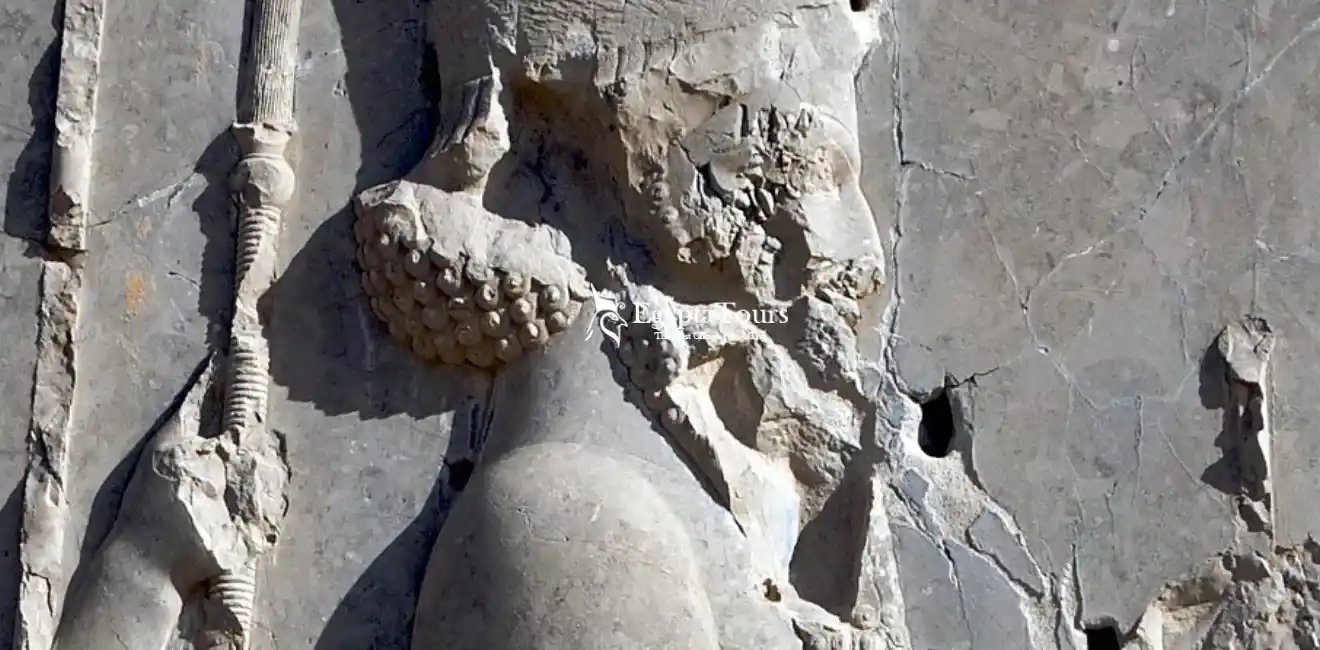
Life -of -Xerxes
His father was Darius the Great, who ruled the Achaemenid Empire from 522 to 486 BC. Although Darius was the king, he was not from the family of Cyrus the Great, who founded the empire. The future king’s mother was Atossa the daughter of Cyrus the Great. Darius and Atossa got married in 522 BC, and their son was born around 518 BC.
According to the Greek text First Alcibiades, Persian princes had a special way of being raised and educated. When they were young, they were cared for by eunuchs. From the age of seven, they learned how to ride horses and hunt. When they turned fourteen, four teachers from noble families taught them important values, such as being wise, fair, careful and brave.
Persian princes also learned the basic ideas of the Zoroastrian religion. They were taught to tell the truth, to be brave and to control themselves. The text also says that for Persians, fear was seen as a form of slavery. When they were 16 or 17 years old, they began a required 10 year national service.
During this time, they practiced skills like archery and javelin throwing, competed for rewards and went hunting. After that, they served in the army for about 25 years. Later, they became elders and advisers to the king. During this period, royal families including Xerxes’ family, often married within their own circles.
This way of educating Persian nobles is supported by the Greek writer Xenophon, who wrote about Cyrus the Younger, a Persian prince from the 5th century BC whom he knew well. The historian Stoneman believes that the young prince likely received the same kind of upbringing and education.
It is not known whether he could read or write, because Persians preferred to pass history by speaking rather than writing it down. Stoneman also suggests that Xerxes’ education was probably similar to that of later Iranian kings, such as Abbas the Great of the Safavid Empire in the 17th century AD. From 498 BC, Xerxes lived in the royal palace in Babylon.
While Darius was getting ready for another war against Greece, a rebellion started in Egypt in 486 BC. The revolt happened because of high taxes and because skilled workers were forced to move to help build royal palaces in Susa and Persepolis.
According to Persian law, the king had to choose an heir before going on dangerous military campaigns. When Darius planned to go to Egypt in 487– 486 BC, he prepared his tomb at Naqsh-e Rostam, near Persepolis and chose Xerxes, his oldest son with Atossa, to succeed him. Because of poor health, Darius was unable to lead the campaign and died in October 486 BC at the age of 64.
Artobazan said that he should become king because he was the oldest of all Darius’s sons. The prince, however, said that he had a stronger right to the throne because his mother Atossa was the daughter of Cyrus, who had given freedom to the Persian people. Xerxes was supported by Demaratus, a Spartan king living in exile in Persia at that time. Demaratus explained that in Sparta, the eldest son was not always the heir. According to Spartan law, the son who was born after his father became king was the one who should inherit the throne.
Some modern historians believe that Darius chose Xerxes as king because of the special respect and honor given to Cyrus the Great and his daughter Atossa.
Artobazan was born when Darius was still an ordinary man, before he became king. Xerxes, however, was the oldest son born after Darius became king. Also, Artobazan’s mother was not from a royal family, while Xerxes’ mother was the daughter of Cyrus, the founder of the Achaemenid Empire.
The new ruler became king and took over from his father in October–December 486 BC, when he was about 32 years old. The change of power went smoothly, partly because his mother Atossa was very respected. No one at court, in the royal family, or in the empire challenged his right to be king.

Xerxes -had- to- deal- with -Revolts -in -Babylon -and -Egypt
One of the new king’s first jobs was to handle a revolt in Egypt. The rebellion had started while Darius was king, but he died before he could stop it. He led the Persian army to put down the revolt around 484 BC. However, the trouble did not end, because another rebellion started in Babylon, spearheaded by the rebel leader shamash eriba.
Both Cyrus and Darius had treated Babylon as an important part of the empire and called themselves King of Babylon. But the Achaemenid ruler stopped using this title and called himself ‘King of the Persians and the Medes’ instead. He split Babylon into smaller provinces and increased taxes a lot. These actions, along with his efforts to raise the city’s importance, seem to have caused a series of revolts.
The sovereign seemed to take the revolt as a personal insult. The city was surrounded and some reports said that Xerxes destroyed a sacred statue of Marduk. Modern historians disagree and think that even Xerxes would not have done something so disrespectful. In any case, the uprisings were crushed violently. Xerxes had planned to continue his father’s plans for a second invasion of Greece, but the rebellions delayed his preparations.
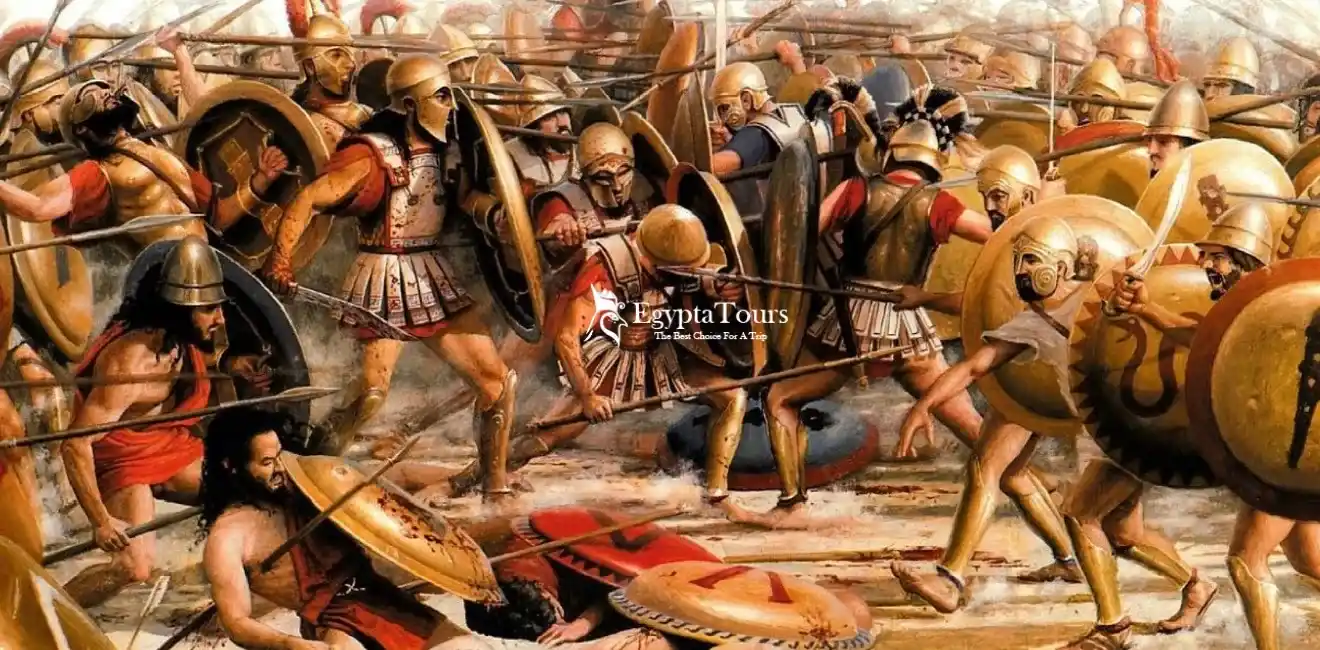
War -against -the -Greeks
Once the empire was peaceful again, Xerxes would have liked to focus on peaceful activities. But many people around him wanted him to start fighting again. His cousin and brother in law, Mardonius, with the help of some Greeks living in exile, encouraged him to get revenge for the defeat Darius had suffered at the hands of the Greeks at Marathon in 490 BC.
The easily influenced Xerxes gave in to pressure from his advisors and began careful planning for war, which took three years (484 – 481 BC). Herodotus says that nothing like this had ever been done before. Soldiers were raised from all parts of the empire, and a navy was built to support the army. The attention and effort put into this preparation show that the king saw it as a very important operation, not a small one.
Xerxes led his army from Sardis to the Hellespont and built two bridges of boats across the strait. A storm destroyed the bridges, and Xerxes even punished the sea by having it whipped. After the bridges were rebuilt, he watched his army cross for seven days. According to Herodotus, the army had 5,000,000 men, but modern estimates suggest about 360,000, supported by 700 to 800 ships.
Big construction projects helped the crossing, including a channel dug across the Isthmus of Actium to avoid the peaks of Mount Athos. Even so, the size of the army did not help much, because they had wrong information about the land and because Greek people were united in defending their country.
After a few victories, like the Battle of Thermopylae in mid August 480 BC, Xerxes entered Attica and looted Athens on September 21. But on September 29, he lost a naval battle at Salamis that he had started.
Without a navy to bring supplies, he had to retreat and return to Asia, leaving Mardonius in Thessaly. In an unclear battle near Plataea on August 27, 479 BC, Mardonius was killed, forcing the occupying army to leave. Fighting continued for 13 more years, but after that, Xerxes was only lightly involved.
Withdrawal to Persia of Xerxes

Withdrawal- to -Persia -of -Xerxes
Upset by this failure, which historians see as the start of the Achaemenid Empire’s decline, Xerxes went back to Susa and Persepolis. He used up more of the empire’s large resources by taxing people many times and starting big building projects.
In the capital city of Persepolis, Darius’ builders, following a big, organized plan, had already started building a huge terrace for the Apadana (a hall for audiences) the Tripylon, a palace and a treasury. When Xerxes became king, he put the decorated brick on the outside of the Apadana and finished his father’s palace. Then he built more monuments: his own palace, southeast of Darius’ and similar in design, and a strange building called the Harem by archaeologists, a row of small, identical rooms that might have been Xerxes’ treasury.
He also started building the Hall of a Hundred Columns, or Throne Room, but he only finished the floor and the bottom parts of the walls. The rest of the walls and the decorations of this huge hall were done later by Artaxerxes I. These buildings showed a move toward very large structures and a style that was maybe more showy than the usual style during Darius’ time.
Not much is known about the last years of Xerxes’ life. After losing in Greece, he became quiet and got involved in palace intrigues where he was mostly just a tool. Because of the queen’s orders, he killed all of his brother’s family. In 465 BCE, he was killed along with his oldest son by members of his court, including his minister Artabanus. Another son, Artaxerxes I, managed to keep power.
To prepare his army for the invasion of Greece, To build his forces, the king made people from across his empire join the army. Among them were the five sons of Pythias, a governor of Lydia. Pythias asked if his oldest son could stay behind to inherit his position. Outraged, he thought Pythias did not believe the invasion would succeed. He reportedly had Pythias’ son killed in a cruel way, displayed the body along the road, and made the army march between the pieces.
The Persian leader was also said to have affairs with women. He tried to pursue the wife of his brother, Masistes, but she refused him. Instead, he had a relationship with Artaynte, Masistes’ daughter. During this time, the king wore a beautiful robe that his wife, Amestris, had made for him. Artaynte wanted the robe, but he knew giving it to her would reveal the affair to Amestris. After trying other gifts and failing, he finally gave her the robe.
Amestris was very angry. She blamed Artaynte’s mother for her daughter’s actions and demanded that the mother be brought to her. The ruler tried to stop her, but Amestris insisted. When the mother was in her hands, Amestris had her badly injured by the royal guards. Masistes rebelled against this, but Xerxes killed him and the people helping him.
In August 465 BC, probably between August 4 and 8, Artabanus, the commander of the king’s bodyguard and the most powerful official in the Persian court, killed Xerxes with the help of a eunuch named Aspamitres.
Although Artabanus from Hyrcania had the same name as Xerxes’ famous uncle, he became powerful because he was popular in the religious parts of the court and in palace intrigues. He put his seven sons in important positions and planned to remove the Achaemenid kings from power.
Greek historians tell different stories about what happened. According to Ctesias, Artabanus accused the Crown Prince Darius, Xerxes’ oldest son, of killing Xerxes and convinced another son, Artaxerxes, to kill Darius to take revenge.
But according to Aristotle, Artabanus killed Darius first and then Xerxes. When Artaxerxes found out, he killed Artabanus and his sons. The general Megabyzus also took part in these events and his choice to change sides probably helped the Achaemenids keep control of the Persian throne.
Xerxes I (born around 519 BCE and died in 465 BCE in Persepolis, Iran) was a Persian king who ruled from 486 to 465 BCE. He was the son of King Darius I and became king after him.
While Darius was getting ready for another war against Greece, a rebellion started in Egypt in 486 BC. The revolt happened because of high taxes and because skilled workers were forced to move to help build royal palaces in Susa and Persepolis.
To establish his authority, he called himself King of the Persians and the Medes, split Babylon into smaller provinces, and drastically increased taxes to punish the rebels.
In the capital city of Persepolis, Darius’ builders, following a big, organized plan, had already started building a huge terrace for the Apadana (a hall for audiences) the Tripylon, a palace and a treasury. When Xerxes became king, he put the decorated brick on the outside of the Apadana and finished his father’s palace. Then he built more monuments: his own palace, southeast of Darius’ and similar in design, and a strange building called the Harem by archaeologists, a row of small, identical rooms that might have been Xerxes’ treasury.



Confidently choose your perfect Egyptian adventure from our selection of trusted, expert-curated tours.


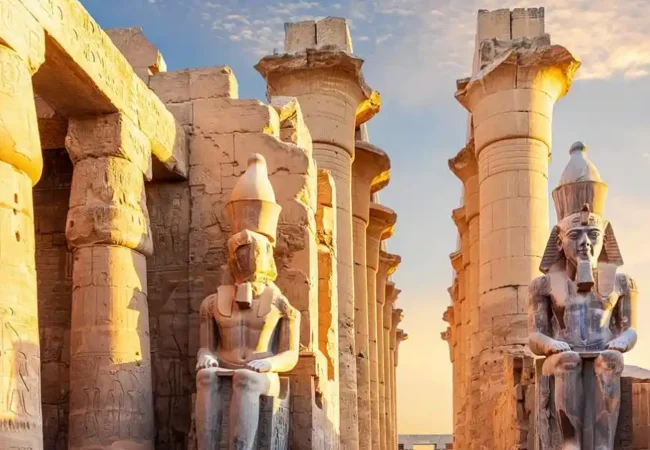


Unlock the true wonders of Egypt with confidence. We combine expert local knowledge, seamless logistics, and round-the-clock support to deliver flawless, responsible, and unforgettable travel experiences.